AQA · GCSE · Psychology
Psychological Problems
This study guide provides a comprehensive, exam-focused breakdown of the AQA GCSE Psychology topic, Psychological Problems. It covers the core areas of Depression and Addiction, focusing on the characteristics, explanations, and treatments that are essential for securing top marks."
- 7 min read
- 3 worked examples
- 4 practice questions
Study Notes
Overview
Welcome to the AQA GCSE Psychology guide for Paper 2, Section D: Psychological Problems. This topic is a cornerstone of the specification, requiring candidates to understand the clinical characteristics, underlying explanations, and therapeutic interventions for both Unipolar Depression and Addiction. Examiners are looking for precise, evidence-based knowledge, particularly your ability to distinguish between biological and cognitive approaches to depression, and the learning theory basis of addiction. This guide will equip you with the detailed knowledge and evaluation skills needed to tackle AO1 (description), AO2 (application), and AO3 (evaluation) questions with confidence. We will dissect key studies like Kaij (1960) and Wiles (2013), master the ABC model, and clarify the often-confused principles of conditioning. Pay close attention to the examiner commentary and common pitfalls to turn good answers into great ones.

Depression: Characteristics & Explanations
Defining Depression
What it is: Unipolar depression is a mood disorder characterized by a persistent low mood and a loss of interest or pleasure in everyday activities. For an exam answer, it is crucial to move beyond a common-sense definition and use the official diagnostic criteria.
Specific Knowledge: The ICD-10 (International Classification of Diseases, 10th Revision) is the diagnostic manual used in the UK. To be awarded marks, candidates must reference it. A diagnosis requires at least five symptoms to be present for at least two weeks, including at least one core symptom.
- Core Symptoms: Persistent low mood, loss of interest/pleasure (anhedonia), fatigue/low energy.
- Other Symptoms: Disturbed sleep, changes in appetite/weight, feelings of worthlessness or guilt, poor concentration, psychomotor agitation or retardation, recurrent thoughts of death or suicide.
The Biological Explanation (Nature)
What it is: This perspective argues that depression is caused by physiological factors, primarily genetics and neurochemistry. The core idea is that individuals can inherit a predisposition to developing depression.
Key Study: Kaij (1960) conducted a twin study in Sweden to investigate the genetic basis of alcohol abuse, but the methodology is a classic example used to explain the heritability of disorders like depression. Kaij found that the concordance rate (the probability of both twins having the disorder) was significantly higher for monozygotic (MZ) twins, who share 100% of their DNA, than for dizygotic (DZ) twins, who share 50% of their DNA. For depression, similar studies have found MZ concordance rates of around 46% compared to 20% for DZ twins.
Why it matters: This evidence suggests a genetic vulnerability. However, since the concordance rate for MZ twins is not 100%, it proves that genes are not the only factor; environmental triggers must also play a role. This is a critical evaluation point.
The Cognitive Explanation (Nurture)
What it is: This perspective, championed by Albert Ellis, argues that depression is not caused by events themselves, but by the irrational way people think about those events.
Key Model: Ellis's ABC Model is a fundamental concept.
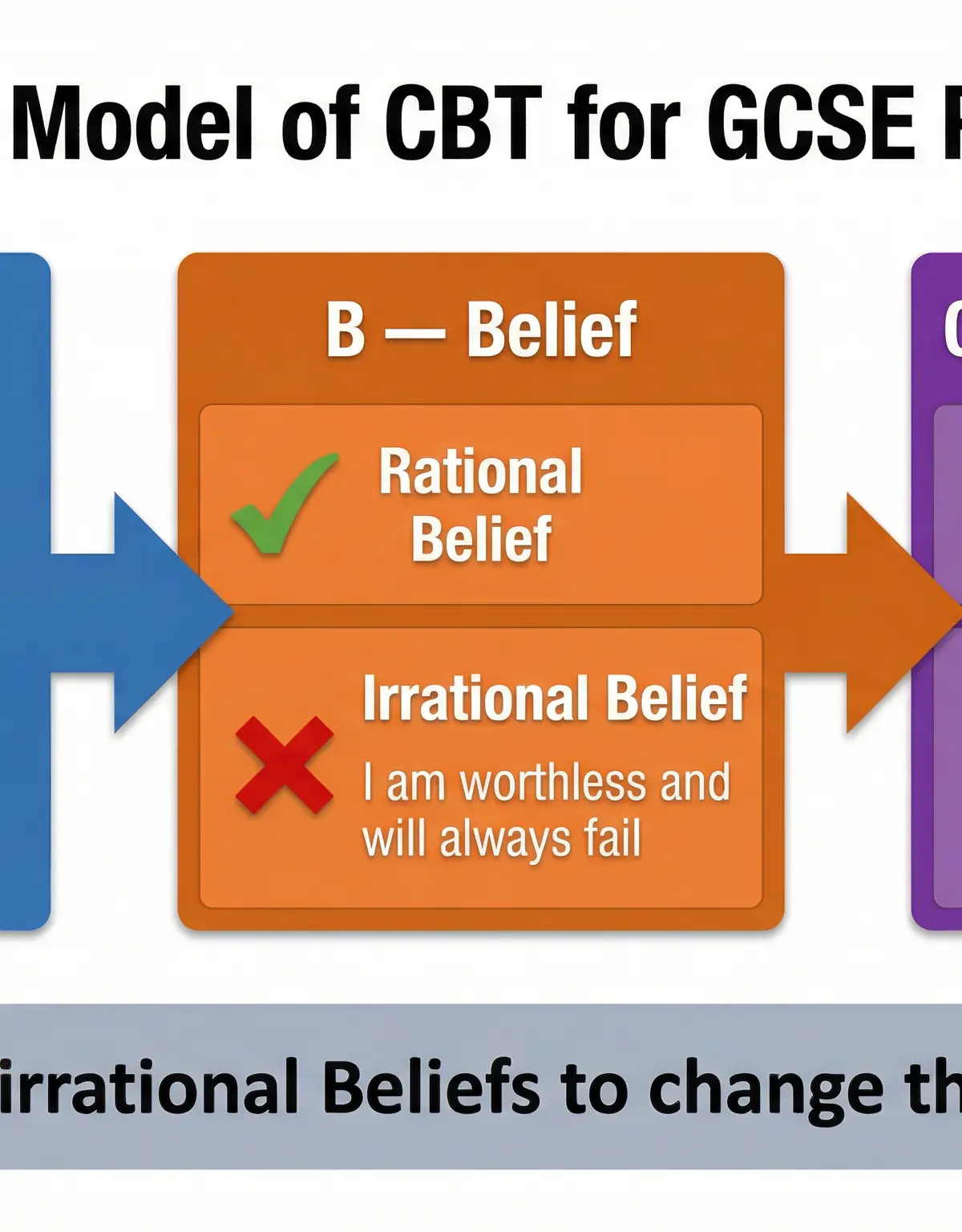
- A - Activating Event: An external event occurs (e.g., you fail a test).
- B - Belief: You interpret the event. This can be rational ('I didn't revise enough, I'll do better next time') or irrational ('I'm a complete failure and will never succeed'). Ellis called these irrational beliefs 'musturbatory thinking' – the idea that we must be perfect or must be approved of by everyone.
- C - Consequence: The irrational belief leads to unhealthy emotional and behavioural consequences, such as depression.
Why it matters: This model provides a framework for therapy (CBT) by suggesting that changing irrational beliefs can alleviate depression. It empowers the individual, but can also be seen as blaming the patient for their own thinking patterns.
Addiction: Characteristics & Explanations
Defining Addiction
What it is: Addiction is a condition where an individual is physically and/or psychologically dependent on a substance or activity. Again, use ICD-10 criteria for marks.
Specific Knowledge: Key characteristics include: a strong desire or compulsion to take the substance; difficulties in controlling substance-taking behaviour; a physiological withdrawal state when substance use is reduced; evidence of tolerance (needing increased doses for the same effect); progressive neglect of other interests; and persisting with use despite clear evidence of harmful consequences.
The Learning Explanation (Nurture)
What it is: This explanation posits that addiction is a learned behaviour, acquired through conditioning.
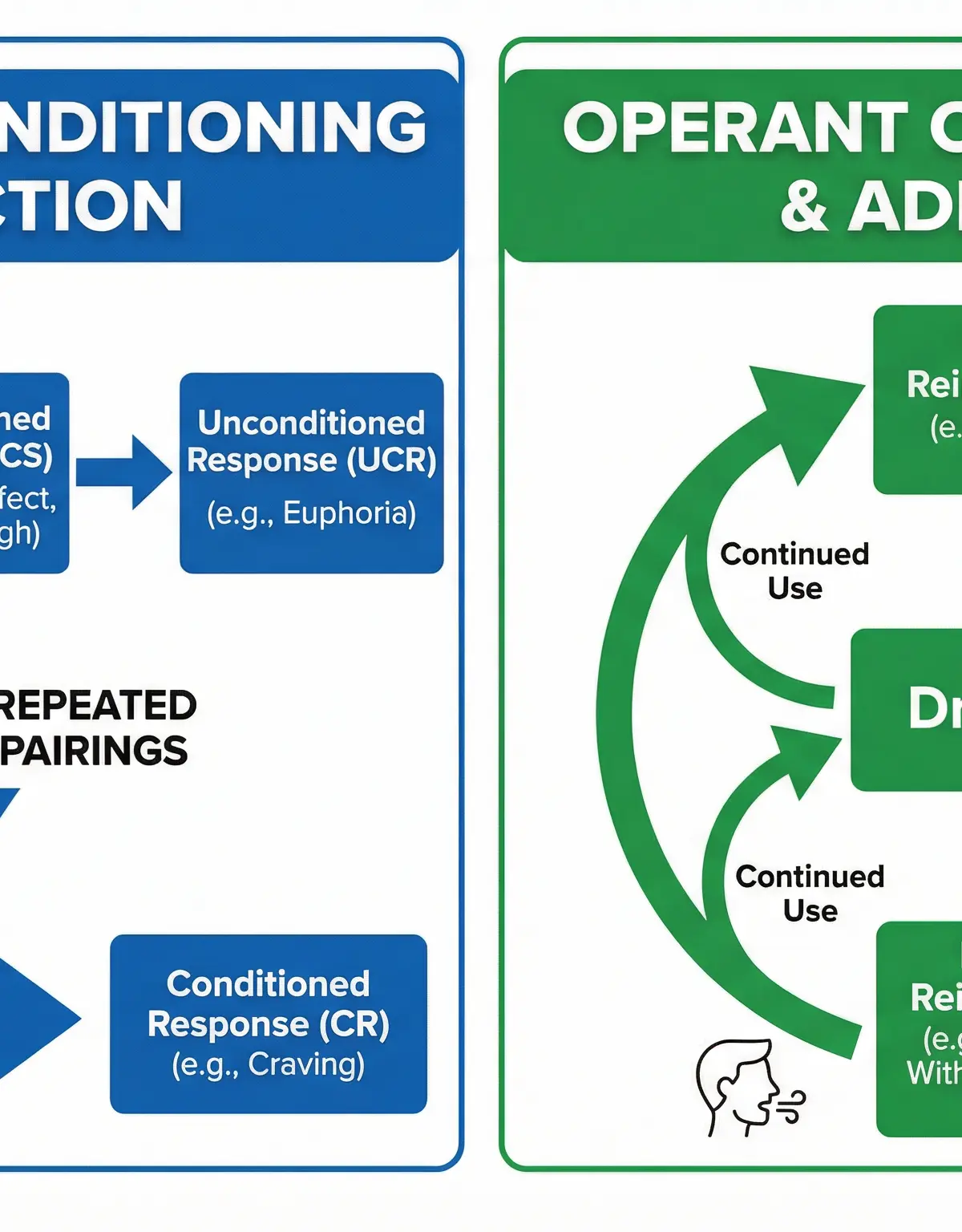
- Classical Conditioning: Explains the initiation of addiction. A neutral stimulus (e.g., a pub) is repeatedly paired with an unconditioned stimulus (alcohol), which produces an unconditioned response (pleasure). Over time, the neutral stimulus becomes a conditioned stimulus, producing a conditioned response of craving on its own.
- Operant Conditioning: Explains the maintenance of addiction. The behaviour (taking the drug) is shaped by its consequences.
- Positive Reinforcement: The drug creates a feeling of euphoria, which is a pleasant consequence, making the behaviour more likely to be repeated.
- Negative Reinforcement: The drug removes the unpleasant symptoms of withdrawal, which is also a reinforcing consequence.
Treatments for Psychological Problems
Cognitive Behavioural Therapy (CBT) for Depression
What it is: A talking therapy based on the cognitive model. The therapist and client work together to identify and challenge the client's irrational thoughts (the 'B' in the ABC model) and replace them with more rational ones. This process is known as 'disputing'. The therapy also involves behavioural components, such as setting homework tasks to test new, more rational beliefs in the real world.
Key Study: Wiles et al. (2013) found that for patients with treatment-resistant depression, adding CBT to their usual care (including antidepressants) was more effective at reducing depressive symptoms than usual care alone. This provides strong evidence for its effectiveness.
Drug Therapy for Depression
What it is: A biological treatment that aims to correct neurochemical imbalances. The most common type are Selective Serotonin Reuptake Inhibitors (SSRIs). They work by blocking the reuptake of the neurotransmitter serotonin at the presynaptic neuron, increasing its concentration in the synapse and making it more available to the postsynaptic neuron. This is believed to improve mood.
Evaluation: Drug therapy is often quick and easy to administer, but it can have side effects (e.g., nausea, insomnia) and does not address the underlying cognitive causes of depression. Relapse rates can be high once the medication is stopped."
Worked Examples
3 worked examples — open one to explore the question and available guidance.
Practice Questions
Test your understanding — click to reveal model answers
Outline the characteristics of addiction as defined by ICD-10. (4 marks)
Hint: Think about the key signs that show someone is dependent on a substance.
Using an example, explain how classical conditioning can be used to understand addiction. (4 marks)
Hint: Remember the UCS, UCR, NS, CS, CR sequence.
Evaluate the cognitive explanation of depression. (6 marks)
Hint: Think about the strengths (e.g., therapy) and weaknesses (e.g., what it ignores).
Compare the biological and cognitive explanations of depression. (8 marks)
Hint: Focus on similarities and differences. Consider their core ideas, the evidence they use, and the treatments they lead to.