OCR · GCSE · Psychology
Psychological Problems
This study guide provides a comprehensive, exam-focused overview of Psychological Problems for OCR GCSE Psychology (J203). It delves into the core topics of depression and addiction, breaking down the key biological and psychological explanations, essential named studies like Caspi et al. (2003) and Young (2007), and the therapies that examiners expect you to know inside-out."
- 8 min read
- 3 worked examples
- 5 practice questions
Study Notes
Overview
This unit, 'Psychological Problems', is a cornerstone of the OCR GCSE Psychology specification. It requires candidates to move beyond common-sense understandings of mental health and engage with scientific explanations for two specific disorders: unipolar depression and addiction. Examiners are looking for precise, evidence-based knowledge. This means you must be able to clearly distinguish between biological explanations (genetics, neurochemistry) and psychological explanations (cognitive, learning), and evaluate the treatments that arise from them. Mastery of the two key studies — Caspi et al. (2003) on the 5-HTT gene and Young (2007) on CBT for internet addiction — is non-negotiable for achieving high marks. This guide will equip you with the detailed knowledge and exam technique required to analyse, apply, and evaluate these concepts effectively.
Key Concepts: Depression
Biological Explanations for Depression
Genetic Vulnerability: The idea that some individuals are born with a genetic predisposition to developing depression. This does not mean depression is guaranteed, but that their genetic makeup makes them more susceptible if they encounter certain environmental triggers.
The Diathesis-Stress Model: This is a crucial concept for evaluation. It proposes that a disorder like depression is the result of an interaction between a pre-existing vulnerability (the diathesis) and a stressful life event (the stress). It is a powerful way to explain why one person might develop depression after a stressful event while another does not.
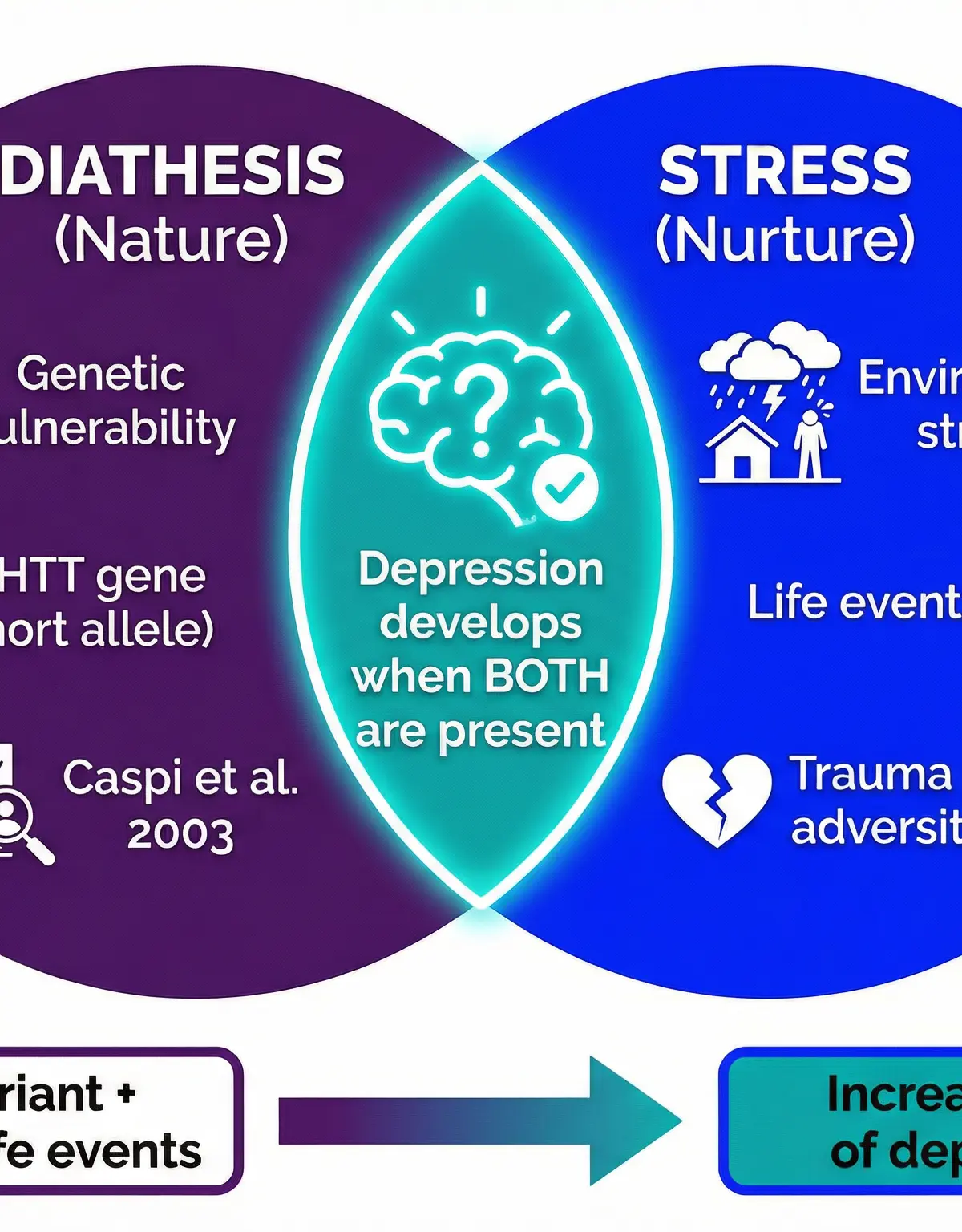
Specific Knowledge: The key study is Caspi et al. (2003). This longitudinal study in New Zealand investigated the role of the 5-HTT gene (the serotonin transporter gene). Caspi found that individuals with one or two copies of the short allele of this gene were significantly more likely to develop depression following stressful life events than those with two long alleles. This provides strong evidence for the diathesis-stress model.
Neurochemical Factors: This explanation focuses on neurotransmitters, particularly serotonin. The monoamine hypothesis suggests that low levels of serotonin are linked to the symptoms of unipolar depression. This imbalance can disrupt mood regulation, sleep, and appetite.
Psychological Explanations for Depression
Cognitive Theory: This approach argues that depression is caused by faulty or irrational thinking patterns. The key theorist is Albert Ellis, who developed the ABC Model.
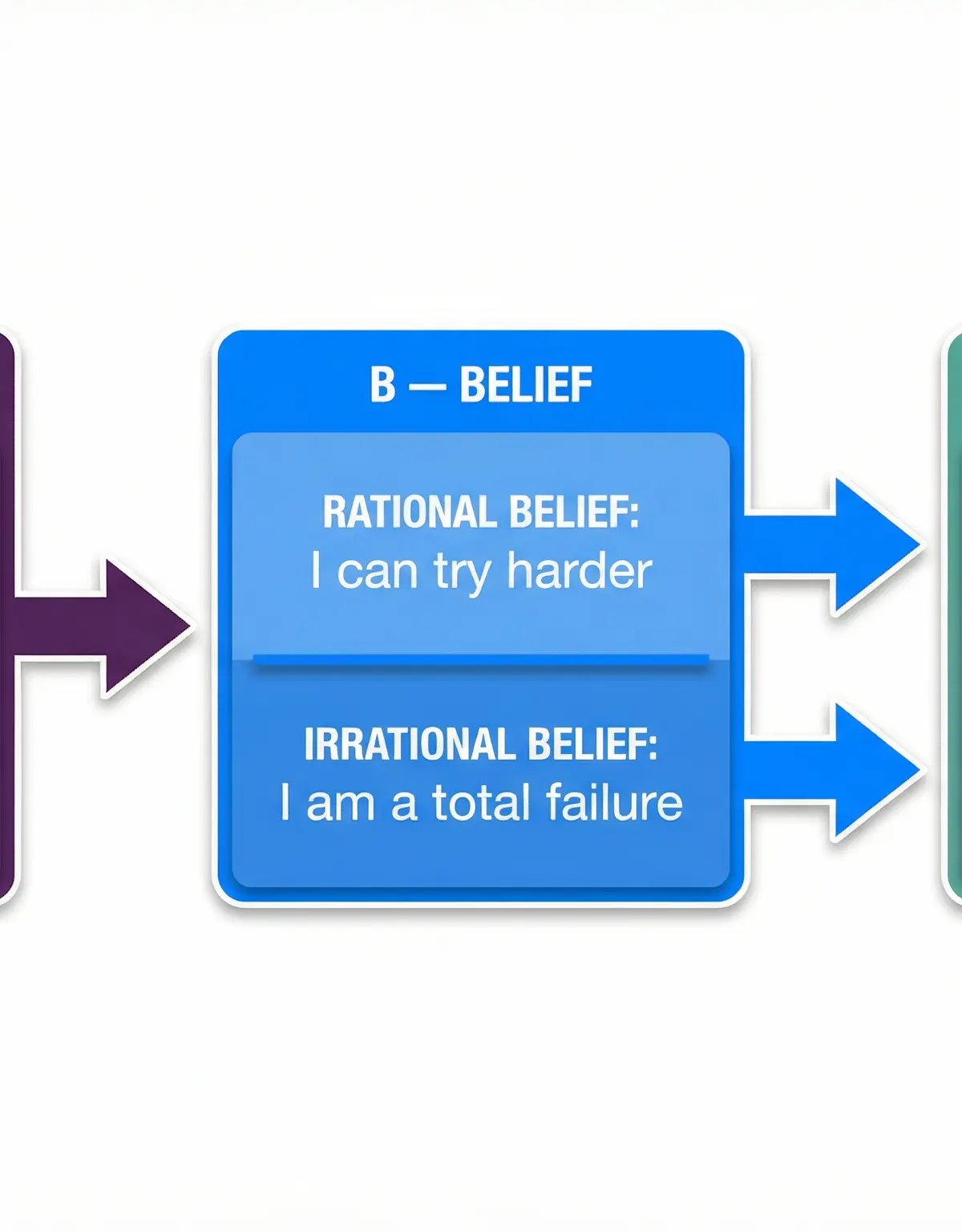
The ABC Model: This model breaks down the process of becoming depressed into three stages:
- A - Activating Event: A negative external event (e.g., failing a test).
- B - Beliefs: The interpretation of that event. This can be rational ('I can do better next time') or irrational ('I am a failure and will never succeed').
- C - Consequences: The emotional and behavioural outcome. Rational beliefs lead to healthy emotions (e.g., disappointment), while irrational beliefs lead to unhealthy emotions (e.g., depression).
Treatments for Depression
Biological Treatment (Drug Therapy): The most common treatment is Selective Serotonin Reuptake Inhibitors (SSRIs). These drugs work by blocking the reuptake of serotonin from the synapse into the presynaptic neuron, thereby increasing the amount of serotonin available to stimulate the postsynaptic neuron. This helps to regulate mood. Candidates must be able to name SSRIs and explain this mechanism.
Psychological Treatment (CBT): Cognitive Behavioural Therapy is a talking therapy that aims to identify and challenge the irrational thoughts identified in the ABC model. The therapist helps the patient to replace these faulty beliefs with more rational, positive ones. This requires active participation and motivation from the patient, which is a key evaluation point.
Key Concepts: Addiction
Biological Explanations for Addiction
Neurochemical Factors: The biological explanation for addiction centres on the role of dopamine and the brain's reward pathway. When an individual engages in a rewarding behaviour (e.g., using a drug, gambling, or even excessive internet use), dopamine is released in a part of the brain called the nucleus accumbens, creating a powerful feeling of pleasure. The brain adapts to this repeated stimulation by becoming less sensitive (downregulation), leading to tolerance (needing more of the substance/behaviour for the same effect) and withdrawal symptoms when it is stopped.
Psychological Explanations for Addiction
Learning Theory: Addiction can be explained through principles of operant conditioning. The initial positive reinforcement (the 'high' or feeling of reward) encourages the behaviour to be repeated. Over time, the motivation shifts to negative reinforcement, where the individual continues the behaviour to avoid the unpleasant withdrawal symptoms. This creates a powerful cycle of dependence.
Treatments for Addiction
Psychological Treatment (CBT): The key study for this section is Young (2007), which investigated the effectiveness of CBT for internet addiction. Young used a sample of 114 participants and found that a course of CBT specifically adapted for this problem led to significant and lasting improvements in their ability to control their internet use. The therapy focuses on identifying triggers, managing cravings, and developing alternative coping strategies.
Key Individuals
Aaron Beck
Role: A key figure in the development of cognitive therapy. His work on cognitive biases (like catastrophising and overgeneralisation) is fundamental to understanding the psychological explanation of depression.
Key Actions: Developed the Cognitive Triad, which posits that depressed individuals have negative views of themselves, the world, and the future.
Impact: Beck's work forms the foundation of modern CBT and shifted the focus of psychology towards the importance of internal mental processes in mental illness.
Kimberly Young
Role: A leading researcher in the field of internet addiction.
Key Actions: Conducted the key study (Young, 2007) demonstrating the effectiveness of CBT for treating internet addiction. She developed a specific model of CBT tailored to this modern psychological problem.
Impact: Her work was pioneering in getting internet addiction recognised as a legitimate clinical issue and established a clear, evidence-based treatment protocol.
Second-Order Concepts
Causation
Depression and addiction are caused by a complex interplay of factors. The diathesis-stress model is the perfect example of this, showing how a biological vulnerability (nature) only leads to depression in the presence of an environmental trigger (nurture). For addiction, the initial cause might be social (peer pressure) or psychological (coping mechanism), but the process is maintained by powerful biological changes in the brain's reward system.
Consequence
The consequences of these disorders are severe and wide-ranging. For the individual, they include impaired functioning, emotional distress, and physical health problems. For society, the consequences include economic costs related to lost productivity and healthcare expenditure. Examiners expect candidates to understand these broader impacts.
Change & Continuity
Our understanding of psychological problems has changed dramatically. The move from purely psychodynamic or behavioural explanations to a more integrated biopsychosocial model is a significant change. However, the continuity lies in the persistence of stigma and the ongoing debate about the medicalisation of behaviour. Is it always helpful to label someone with a disorder?
Significance
Understanding the causes of psychological problems is highly significant as it directly informs treatment. A biological explanation leads to biological treatments like SSRIs, while a cognitive explanation leads to psychological therapies like CBT. The effectiveness of these treatments has had a profound impact on millions of lives.
Source Skills
In OCR GCSE Psychology, 'source skills' refers to your ability to interpret and apply information from a short scenario or 'stem' provided in the exam question. For a 13-mark 'Discuss' question, you must explicitly link your knowledge back to the person in the scenario. For example, if the stem describes 'Sarah', who feels hopeless after losing her job, you must use her situation to illustrate the ABC model. A good answer would state: 'Sarah's activating event (A) is losing her job. Her irrational belief (B) might be "I am useless," leading to the consequence (C) of depression.' This is AO2 application, and it is worth 35% of the marks."
Worked Examples
3 worked examples — open one to explore the question and available guidance.
Practice Questions
Test your understanding — click to reveal model answers
Explain how the cognitive approach understands depression. (9 marks)
Hint: Focus on the ABC model and provide a clear, applied example. Mention key terms like 'irrational beliefs'.
Describe the procedure of Caspi et al.'s (2003) study. (4 marks)
Hint: Think about the sample, what was measured, and over how long.
Evaluate the use of drug therapy to treat depression. (6 marks)
Hint: Provide at least two strengths and two weaknesses. Use P.E.E.L (Point, Evidence, Explain, Link).
Distinguish between dependence and addiction. (3 marks)
Hint: Define each term and then state the key difference.
Outline one strength and one weakness of Young's (2007) study. (4 marks)
Hint: For the weakness, go beyond just saying 'small sample'.