OCR · GCSE · Psychology
The Nature and Function of Sleep
Sleep is one of the most universal yet mysterious human behaviours, and OCR examiners expect candidates to explain precisely how the brain regulates the sleep-wake cycle and why sleep is functionally necessary. This topic bridges biological psychology and cognitive psychology, demanding both accurate AO1 description of mechanisms — from the Suprachiasmatic Nucleus to melatonin secretion — and sophisticated AO3 evaluation of competing theories including Oswald's Restoration Theory and Crick and Mitchison's Reorganisation Theory. Mastering the distinction between circadian and ultradian rhythms, and between the specific restorative roles of REM and NREM sleep, is the difference between a grade 4 and a grade 8 in this section.
- 12 min read
- 5 worked examples
- 5 practice questions
- 10 key terms
Study Notes
Overview
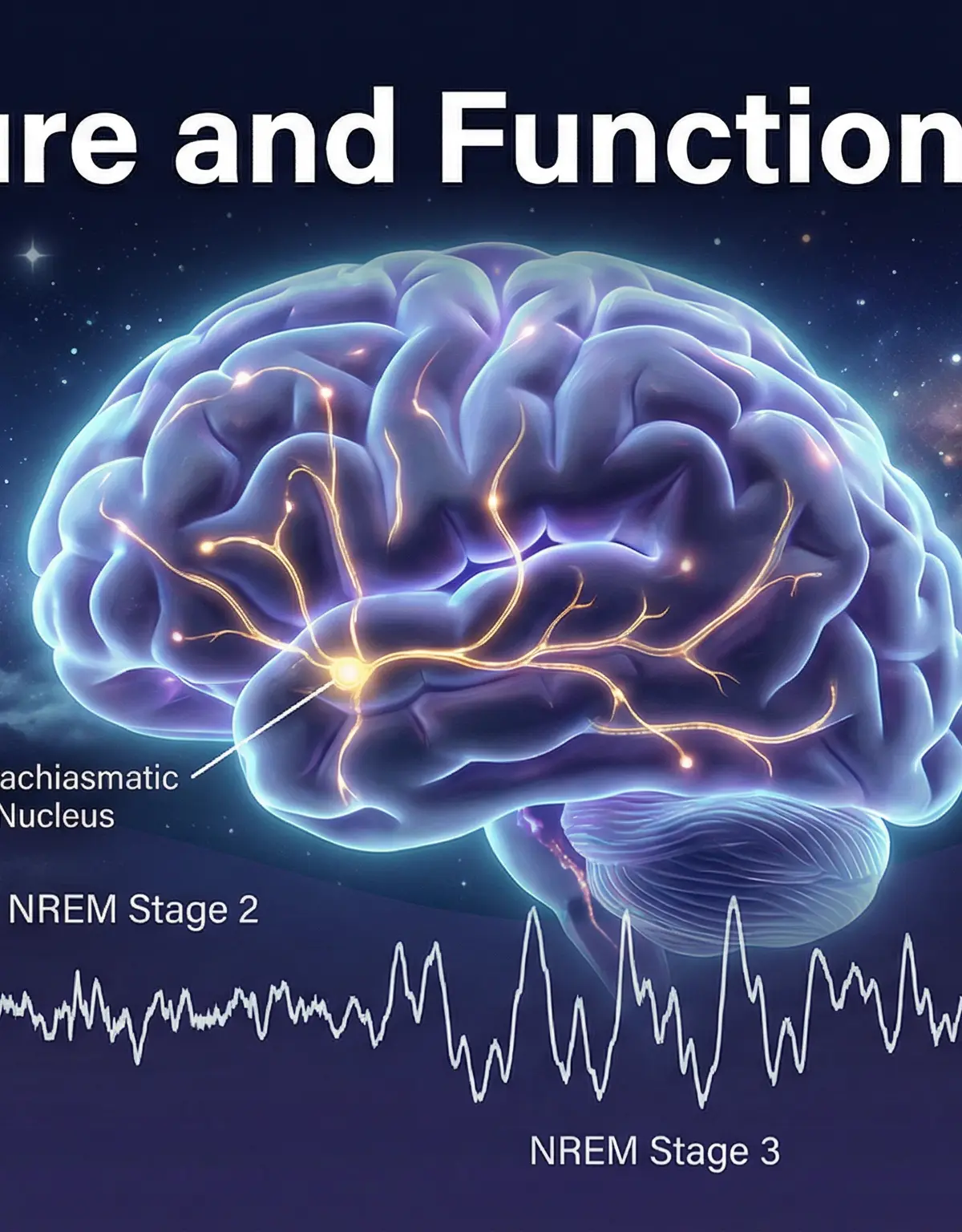
The Nature and Function of Sleep is a core topic within OCR GCSE Psychology that requires candidates to demonstrate precise biological knowledge alongside the ability to evaluate competing theoretical explanations. Sleep is regulated by a circadian rhythm — a 24-hour internal body clock — which is itself controlled by the interaction between endogenous pacemakers (internal biological mechanisms) and exogenous zeitgebers (external environmental cues). Within sleep, an ultradian rhythm of approximately 90-minute cycles structures the night into alternating stages of NREM and REM sleep. OCR examiners expect candidates to explain the regulatory pathway from light detection through to melatonin secretion, to distinguish clearly between the restorative functions of REM and NREM sleep in Oswald's (1966) Restoration Theory, and to articulate the mechanism of reverse learning proposed by Crick and Mitchison (1983). Assessment objectives are weighted AO1: 30%, AO2: 35%, and AO3: 35%, meaning evaluation and application carry the majority of marks.
The Sleep-Wake Cycle: Circadian Regulation
The Suprachiasmatic Nucleus (SCN)
Role: Primary endogenous pacemaker
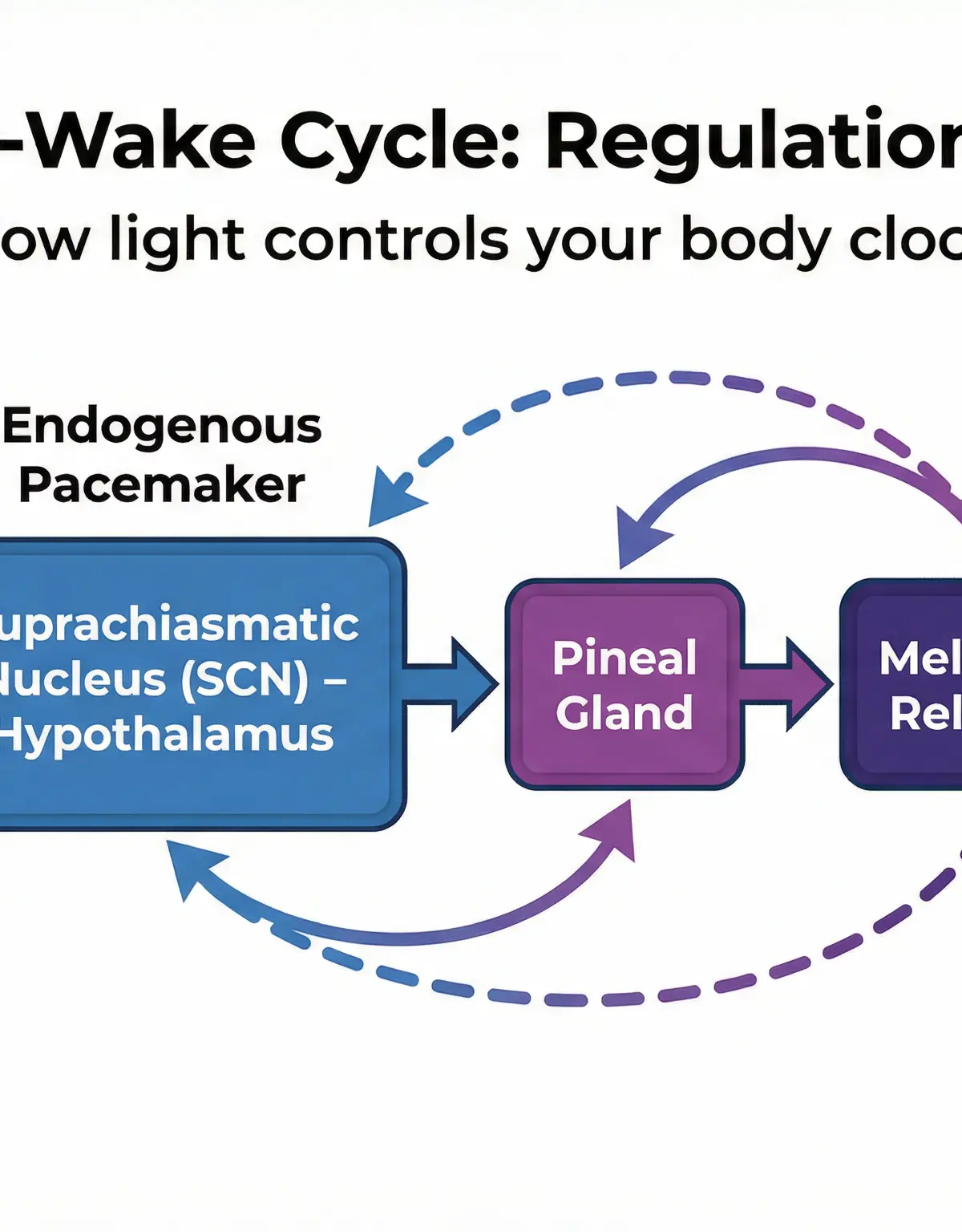
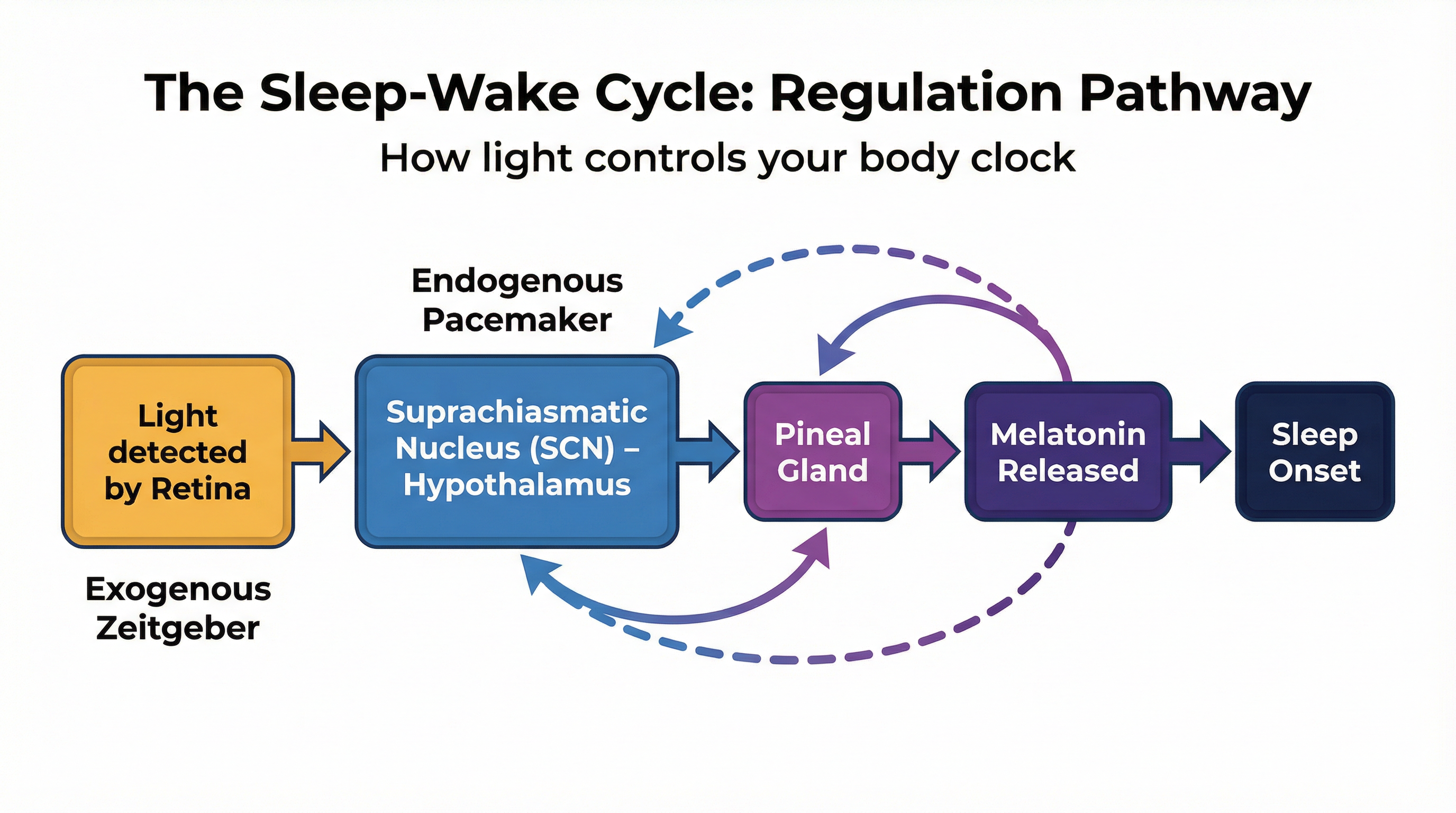
What it does: The SCN is a small cluster of neurons located in the hypothalamus, directly above the optic chiasm. It receives input from photoreceptors in the retina and acts as the body's master clock, regulating the 24-hour circadian rhythm. When light levels fall, the SCN signals the pineal gland to begin melatonin secretion.
Why it matters for the exam: Examiners award marks specifically for identifying the SCN as the endogenous pacemaker and for correctly locating it in the hypothalamus. Candidates who confuse the SCN's role (detection) with the pineal gland's role (secretion) lose marks consistently.
Specific Knowledge: The SCN contains approximately 20,000 neurons. It operates on a near-24-hour cycle even in the absence of external light cues, demonstrating its endogenous (internal) nature. Research by Morgan (1995) showed that transplanting the SCN from hamsters with a mutant 20-hour rhythm into normal hamsters caused the recipients to adopt the 20-hour cycle, confirming the SCN's role as the primary pacemaker.
The Pineal Gland and Melatonin
Role: Melatonin secretion in response to SCN signalling
What it does: When the SCN detects reduced light levels, it sends neural signals to the pineal gland, a small endocrine gland located near the centre of the brain. The pineal gland responds by secreting melatonin into the bloodstream. Melatonin is a hormone that induces drowsiness and lowers body temperature, triggering sleep onset. As light levels increase in the morning, the SCN suppresses pineal gland activity and melatonin levels drop, promoting wakefulness.
Why it matters for the exam: The SCN-pineal gland-melatonin pathway is a frequently examined sequence. Candidates must be able to describe each step in order and use correct terminology throughout.
Exogenous Zeitgebers
Role: External environmental cues that entrain (synchronise) the circadian rhythm
What they are: The most powerful exogenous zeitgeber is light, but others include temperature, social interactions, meal times, and exercise. The term 'zeitgeber' is German for 'time giver.' Examiners specifically credit use of this specialist term over vague phrases like 'external cues.'
Evidence: Research by Siffre (1962, 1972) involved spending extended periods in underground caves without natural light. Without exogenous zeitgebers, Siffre's circadian rhythm drifted to approximately 25 hours, demonstrating both the endogenous nature of the body clock and the importance of external cues in keeping it synchronised to the 24-hour day.
The Structure of Sleep: The Ultradian Rhythm
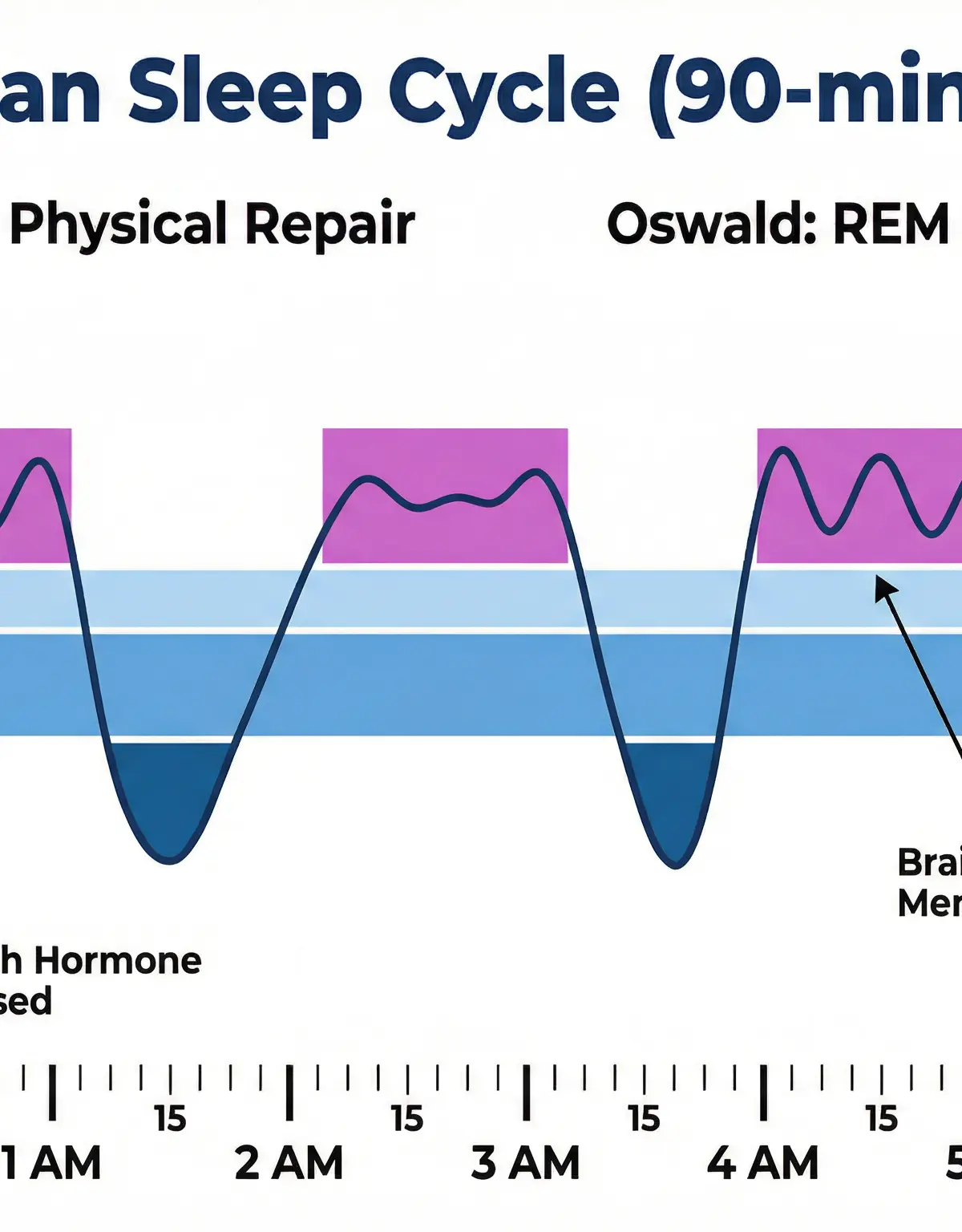
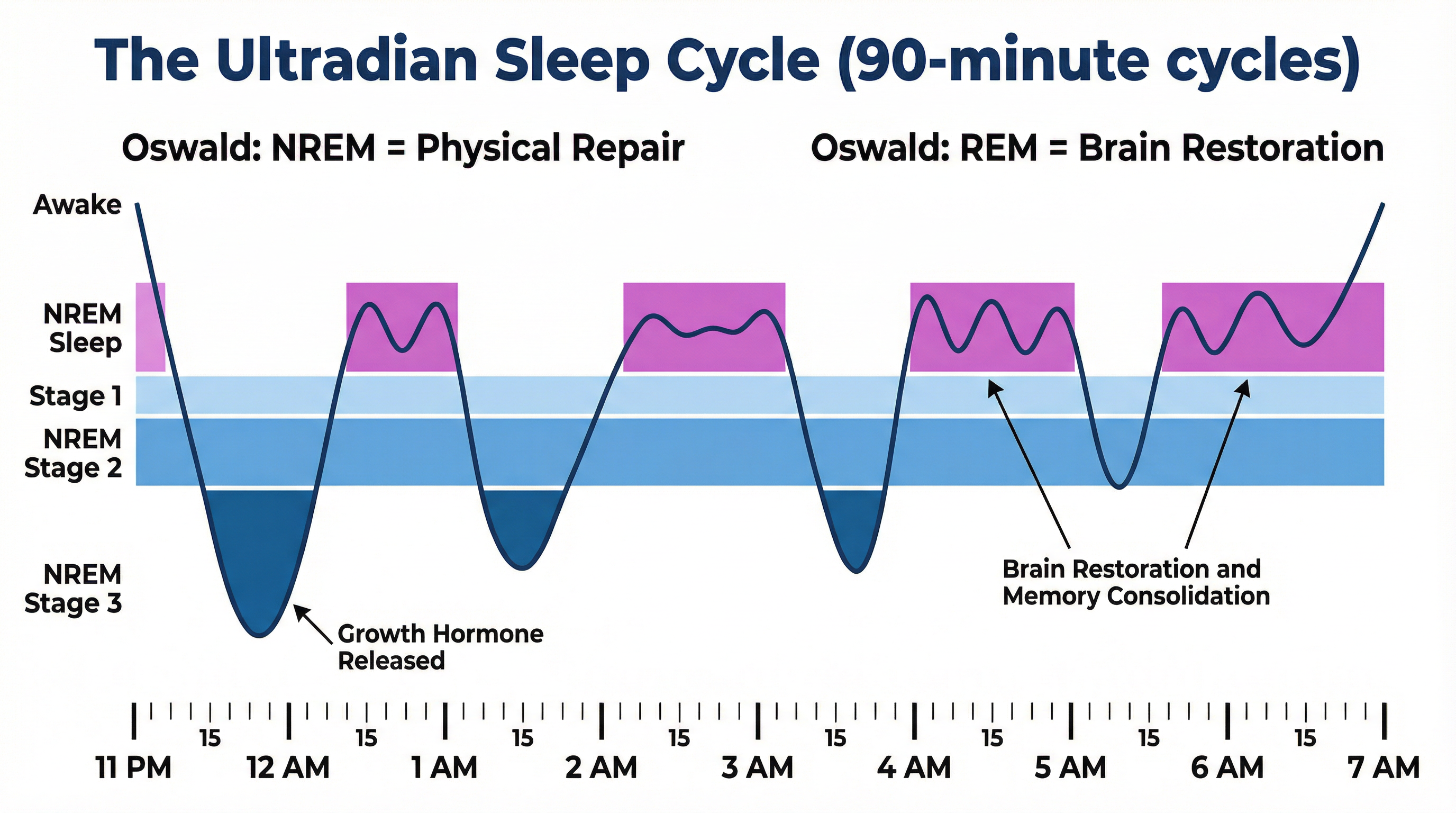
A critical distinction that candidates must demonstrate is between the circadian rhythm (the 24-hour sleep-wake cycle) and the ultradian rhythm (the approximately 90-minute cycles that occur within sleep itself). Describing sleep as purely circadian is a common error that limits marks to Level 1.
Each 90-minute sleep cycle consists of the following stages:
| Stage | Type | Key Features | Theoretical Significance |
|---|---|---|---|
| Stage 1 | NREM | Light sleep, easy to wake, hypnic jerks | Transition to sleep |
| Stage 2 | NREM | Sleep spindles, K-complexes on EEG | Consolidation of procedural memory |
| Stage 3 | NREM (Deep/Slow-Wave) | Delta waves, growth hormone released | Physical restoration (Oswald) |
| REM | REM | Rapid eye movements, vivid dreams, brain highly active | Brain restoration (Oswald); Reverse learning (Crick & Mitchison) |
Over a typical 8-hour night, a sleeper passes through approximately 5 cycles. Crucially, early cycles contain proportionally more NREM Stage 3 (deep sleep), while later cycles contain proportionally more REM sleep. This pattern has important implications for both theories of sleep function.
Theories of Sleep Function
Oswald's Restoration Theory (1966)
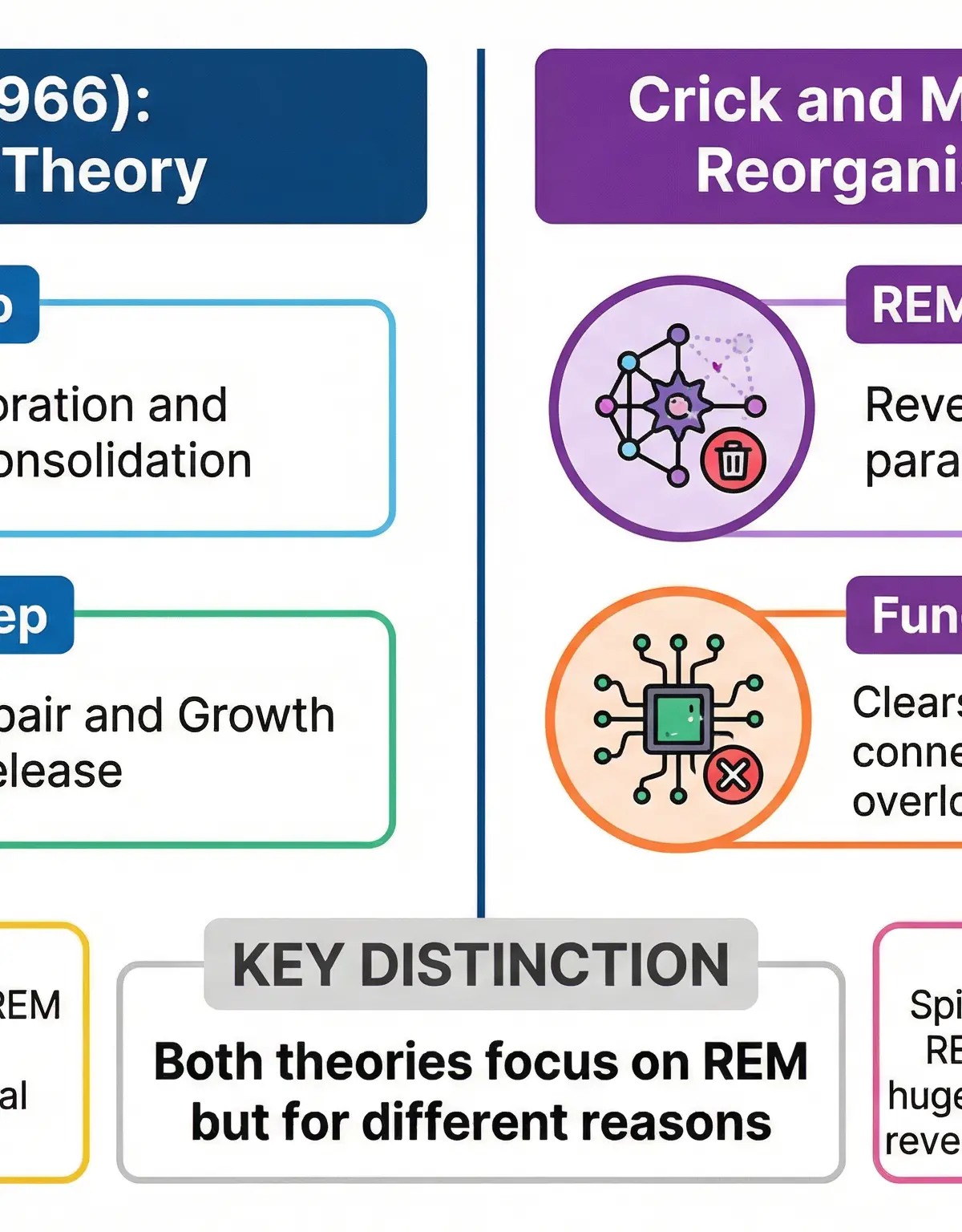
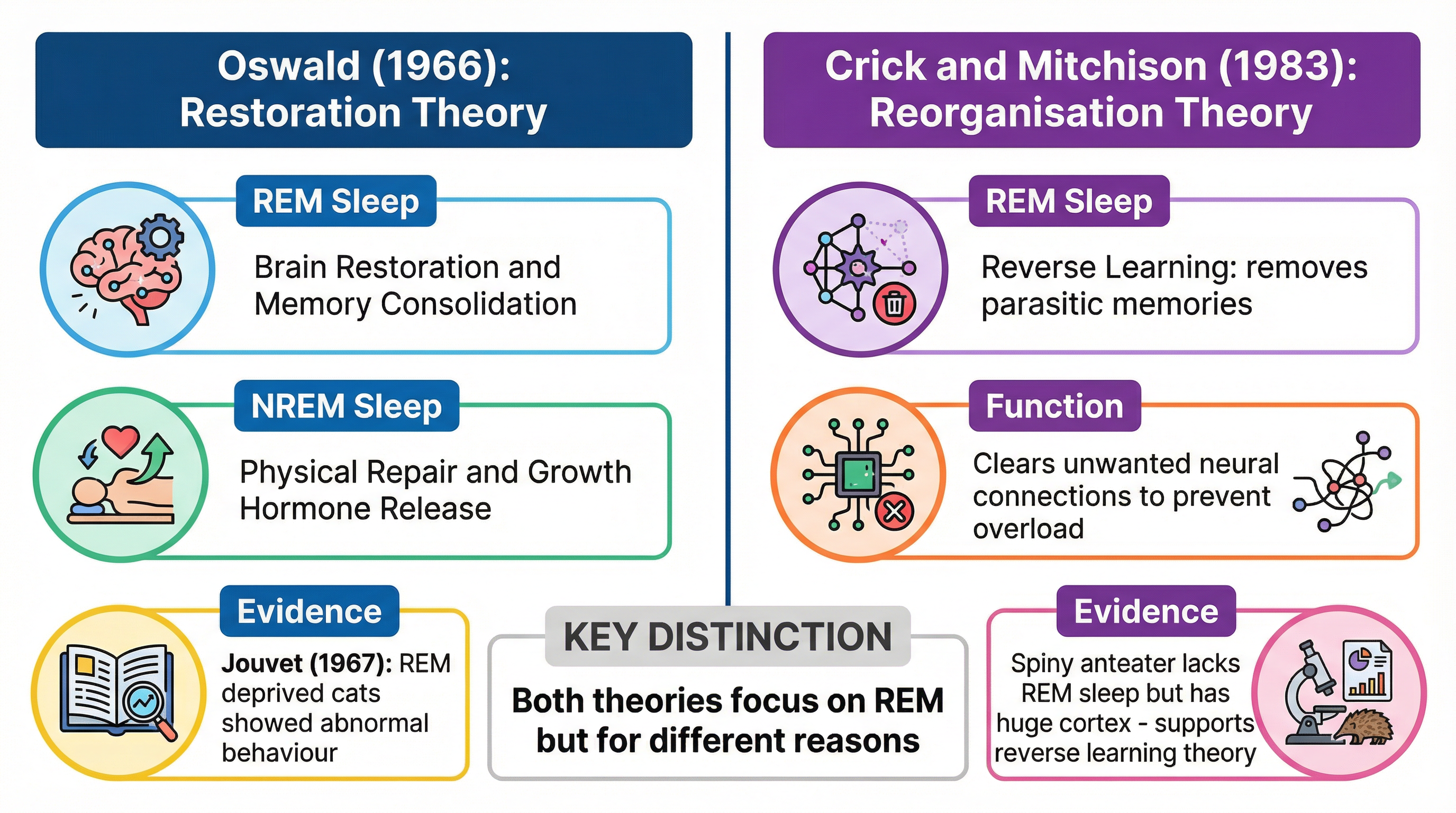
Ian Oswald proposed that the primary function of sleep is restoration — the repair and rebuilding of the body and brain following the wear and tear of wakefulness. His theory distinguishes clearly between the functions of the two main sleep types:
NREM Sleep (Physical Restoration): During NREM Stage 3 (deep sleep), the pituitary gland releases growth hormone. This hormone is essential for tissue repair, muscle growth, bone maintenance, and immune system function. The fact that growth hormone is predominantly released during sleep — and specifically during deep NREM sleep — supports the idea that the body uses this period for physical restoration. Candidates should note that illness typically increases sleep duration, consistent with the body demanding more restorative sleep.
REM Sleep (Brain Restoration): During REM sleep, the brain is almost as metabolically active as during wakefulness. Oswald argued that this period is used to restore neurotransmitter levels, consolidate memories, and process emotional experiences. Supporting evidence comes from Jouvet (1967), who deprived cats of REM sleep using the 'flower pot' method (placing cats on small platforms surrounded by water, so that muscle relaxation during REM caused them to fall in and wake). Cats deprived of REM sleep showed increasingly abnormal behaviour, including hypersexuality and aggression, suggesting REM sleep is essential for normal brain functioning.
Evaluation of Oswald: Supporting evidence includes the finding that premature babies spend up to 90% of their sleep time in REM, consistent with high brain development demands. However, a significant challenge comes from the existence of unihemispheric sleep in dolphins and other cetaceans, which sleep with one brain hemisphere at a time. If restoration were the sole function of sleep, it is unclear why these animals would evolve a mechanism that keeps half the brain continuously awake.
Crick and Mitchison's Reorganisation Theory (1983)
Francis Crick and Graeme Mitchison proposed a fundamentally different account of REM sleep's function. They argued that during the day, the brain forms many neural connections — some functional, some spurious or redundant. These unwanted connections, which they termed parasitic memories, could accumulate and interfere with normal cognitive functioning, leading to hallucinations, obsessions, or cognitive overload.
During REM sleep, Crick and Mitchison proposed that the brain engages in reverse learning: the systematic weakening and removal of these parasitic neural connections. This process clears cognitive 'noise,' maintaining efficient neural organisation. Importantly, this theory implies that we should NOT try to remember our dreams, as dreams are merely the by-product of this clearing process.
Evidence: The spiny anteater (echidna), one of the few mammals that appears to lack REM sleep, has a disproportionately large neocortex relative to its body size compared to other mammals. Crick and Mitchison interpreted this as supporting evidence: without REM sleep to perform reverse learning, the echidna requires a larger cortex to store the accumulation of parasitic memories.
Evaluation of Crick and Mitchison: The theory is challenged by evidence that REM sleep deprivation impairs memory consolidation, which is more consistent with Oswald's restoration account than with a 'clearing' function. Additionally, the echidna evidence is correlational and cannot establish causation — the large cortex may have evolved for other reasons.
Key Individuals
Ian Oswald (1929–2014)
Role: Scottish psychiatrist and sleep researcher at the University of Edinburgh
Key Contribution: Proposed the Restoration Theory of sleep in 1966, arguing that NREM sleep serves physical restoration (via growth hormone release) and REM sleep serves brain restoration and memory consolidation.
Impact: Oswald's theory remains the most widely cited functional account of sleep in GCSE and A-Level specifications. His framework of distinguishing REM and NREM functions is the primary evaluative framework OCR examiners expect candidates to apply.
Francis Crick and Graeme Mitchison
Role: Crick was a Nobel Prize-winning molecular biologist (co-discoverer of DNA structure); Mitchison was a theoretical biologist at Cambridge.
Key Contribution: Proposed the Reorganisation Theory in 1983, introducing the concepts of reverse learning and parasitic memories to explain REM sleep function.
Impact: Their theory provides a direct contrast to Oswald's account and is essential for AO3 evaluation questions. The contrast between 'building' (Oswald) and 'clearing' (Crick and Mitchison) as the function of REM sleep is a high-value evaluative point.
Michel Jouvet (1925–2017)
Role: French neuroscientist at the University of Lyon
Key Contribution: Conducted REM sleep deprivation studies on cats (1967) using the 'flower pot' method. Cats deprived of REM sleep showed behavioural abnormalities, providing experimental support for Oswald's theory.
Impact: Jouvet's research is the primary piece of empirical evidence candidates should cite when supporting Oswald's Restoration Theory in evaluation questions.
Michel Siffre (1939–)
Role: French cave explorer and chronobiologist
Key Contribution: Spent extended periods in underground caves without natural light cues (1962 and 1972). Without exogenous zeitgebers, his circadian rhythm drifted to approximately 25 hours, demonstrating the endogenous nature of the body clock and the importance of light as a zeitgeber.
Impact: Siffre's research is the key evidence for the role of exogenous zeitgebers and is frequently used in AO2 application questions about shift workers or jet lag.
Second-Order Concepts
Causation
The sleep-wake cycle is caused by the interaction between endogenous biological mechanisms (the SCN as pacemaker) and exogenous environmental cues (primarily light as a zeitgeber). Neither factor alone is sufficient: the SCN provides the internal timing mechanism, but without light as a zeitgeber, the rhythm drifts out of synchrony with the 24-hour day, as demonstrated by Siffre's cave studies. Disruption to either component — for example, through shift work (disrupting zeitgebers) or SCN damage — causes sleep disorders.
Consequence
Sleep deprivation has well-documented consequences that map directly onto the two theories. Deprivation of NREM deep sleep impairs immune function, tissue repair, and growth — consistent with Oswald's physical restoration account. Deprivation of REM sleep impairs memory consolidation, emotional regulation, and cognitive performance — consistent with Oswald's brain restoration account and, arguably, with Crick and Mitchison's clearing function. In extreme cases, total sleep deprivation is fatal in animal studies (Rechtschaffen et al., 1983).
Change and Continuity
The proportion of REM sleep changes across the lifespan. Newborns spend approximately 50% of sleep time in REM; adults spend approximately 20–25%. This developmental change is consistent with Oswald's theory — the high REM proportion in infancy reflects intense brain development demands. This continuity of function across the lifespan, despite changing proportions, supports the idea that REM sleep serves a consistent restorative or organisational role.
Significance
Understanding sleep regulation has significant applied implications. Research into circadian rhythms informs the management of jet lag, shift work, and seasonal affective disorder. Understanding sleep function informs treatment of insomnia, sleep apnoea, and REM sleep behaviour disorder. The theoretical debate between restoration and reorganisation theories continues to drive neuroscientific research into memory consolidation and neural plasticity.
Visual Resources
3 diagrams and illustrations
Interactive Diagrams
2 interactive diagrams to visualise key concepts
Conceptual Flow Outline
Sleep regulation pathway: from light detection through to sleep stages and their functions
Diagram could not be rendered
Timeline of key sleep research milestones
Worked Examples
5 worked examples — open one to explore the question and available guidance.
Practice Questions
Test your understanding — click to reveal model answers
Describe the role of melatonin in the sleep-wake cycle. (3 marks)
Hint: Think about which gland produces melatonin, what triggers its production, and what effect it has on the body.
Explain the difference between a circadian rhythm and an ultradian rhythm, using sleep as an example. (4 marks)
Hint: Define each type of rhythm, give the time period for each, and apply both specifically to sleep.
Outline and evaluate Oswald's Restoration Theory of sleep. (9 marks)
Hint: Describe the theory clearly (AO1), then evaluate with supporting evidence AND counter-evidence (AO3). Name specific researchers and studies.
Tom is a student who has been revising late into the night and getting only 4 hours of sleep before his exams. He notices he is struggling to remember information he revised the previous day. Using your knowledge of psychology, explain why Tom is experiencing this difficulty. (4 marks)
Hint: This is an AO2 application question. Name the specific mechanism first, then apply it to Tom's situation using a named theory.
"Crick and Mitchison's Reorganisation Theory provides a better explanation of sleep than Oswald's Restoration Theory." To what extent do you agree with this statement? (13 marks)
Hint: Present evidence for Crick and Mitchison, then evidence for Oswald, then weigh them against each other. Your conclusion must directly address 'to what extent' — don't sit on the fence without justification.