OCR · GCSE · Psychology
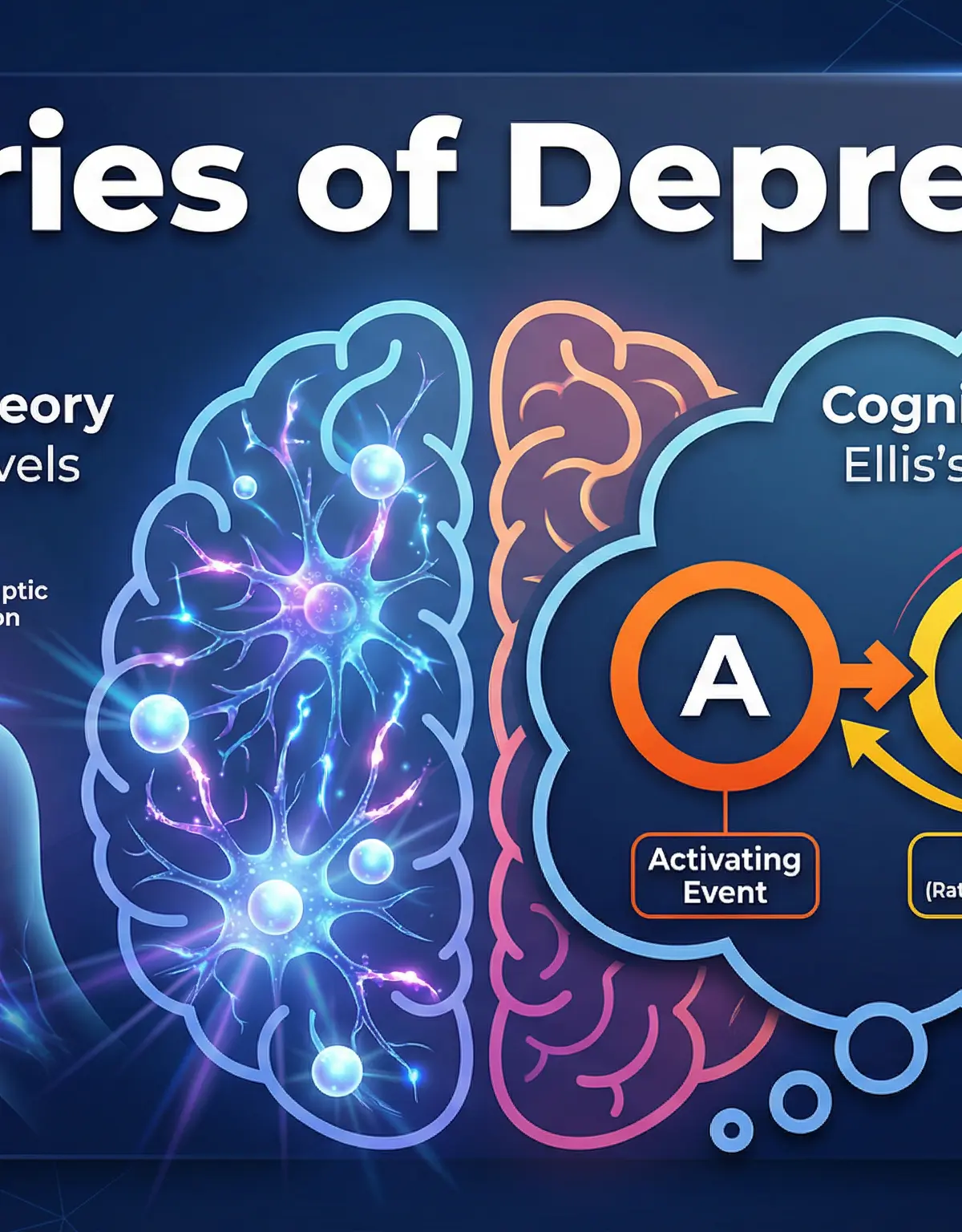
Theories of Depression
This guide provides a comprehensive breakdown of the Biological and Psychological theories of depression for OCR GCSE Psychology (J203). It focuses on the core knowledge required to earn marks, contrasting the role of serotonin with Ellis's ABC model and linking both to the crucial Caspi et al. (2003) study.
- 5 min read
- 2 worked examples
- 2 practice questions
- 6 key terms
Study Notes
Overview
This study guide covers the two core psychological theories required for explaining depression in your OCR GCSE Psychology exam: the Biological explanation (focusing on neurotransmitters) and the Psychological explanation (specifically, Ellis's ABC model of irrational beliefs). Understanding these theories is not just about memorising facts; it is about being able to accurately describe their mechanisms, apply them to novel scenarios (AO2), and critically evaluate their strengths and weaknesses (AO3). Examiners expect candidates to move beyond simplistic statements like 'low serotonin causes depression' to a more nuanced explanation of synaptic transmission. Similarly, for the ABC model, marks are awarded for precisely identifying the Activating event, the irrational Belief, and the emotional Consequence from a case study. This guide will equip you with the detailed knowledge, exam technique, and multi-modal resources to master this topic and achieve top marks.

Key Theories & Studies
The Biological Explanation: The Role of Serotonin
What it is: This theory proposes that depression is caused by a chemical imbalance in the brain, specifically, abnormally low levels of the neurotransmitter serotonin.
Why it matters: It provides a biomedical model of depression, suggesting it is an illness with a physical cause. This has led to the development of effective drug treatments (SSRIs) and helps to reduce the stigma associated with mental illness. For the exam, this is your primary biological explanation.
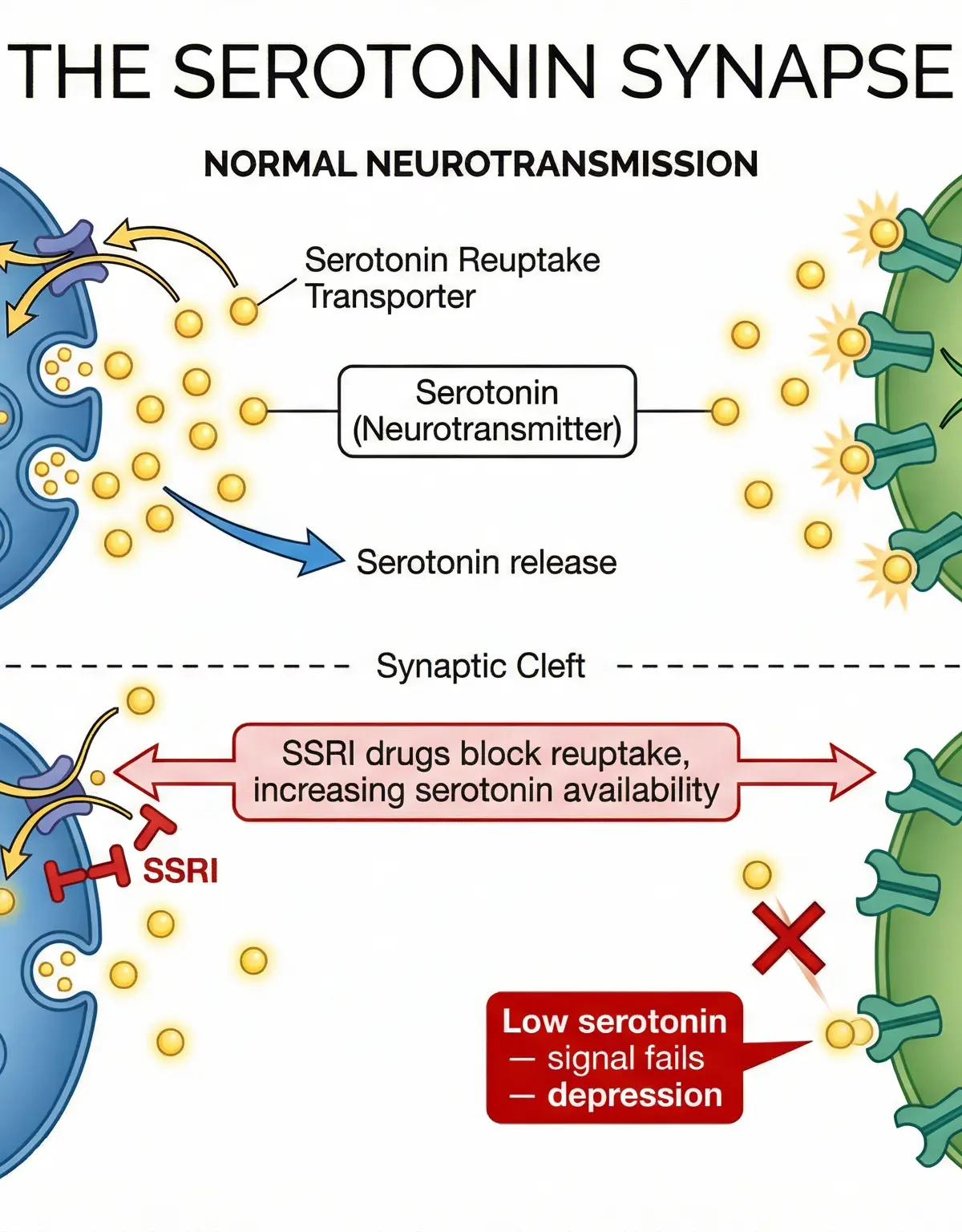
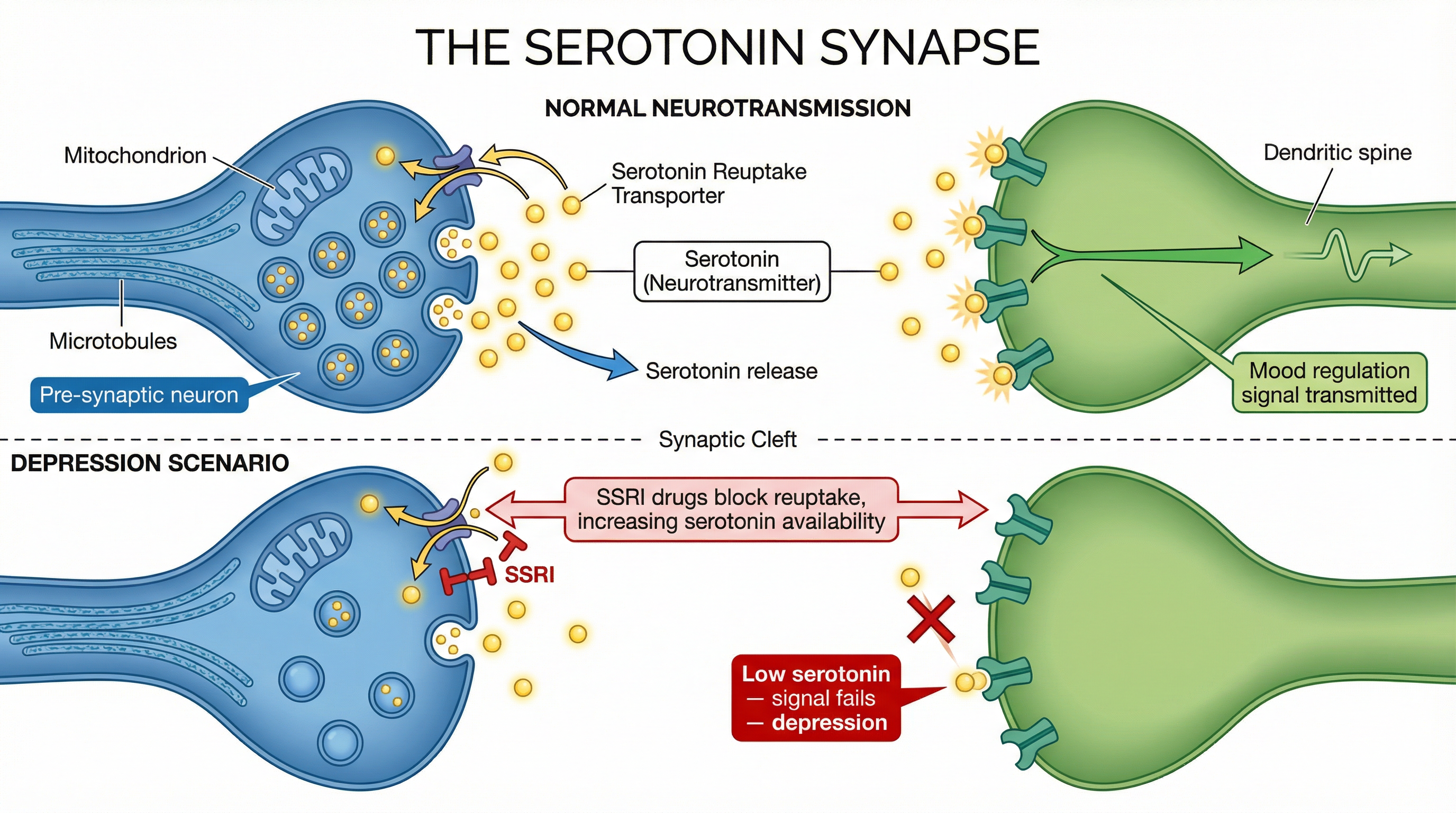
Specific Knowledge: Candidates must be able to explain the process of synaptic transmission and how low serotonin disrupts it. Serotonin is a mood-regulating neurotransmitter. It is released from the pre-synaptic neuron, travels across the synaptic cleft, and binds to receptors on the post-synaptic neuron to transmit a signal. The theory suggests that in individuals with depression, there isn't enough serotonin to successfully transmit this mood-stabilising signal. You must also know about SSRIs (Selective Serotonin Reuptake Inhibitors), which work by blocking the reuptake of serotonin, leaving more of it in the synapse to improve mood.
The Psychological Explanation: Ellis's ABC Model
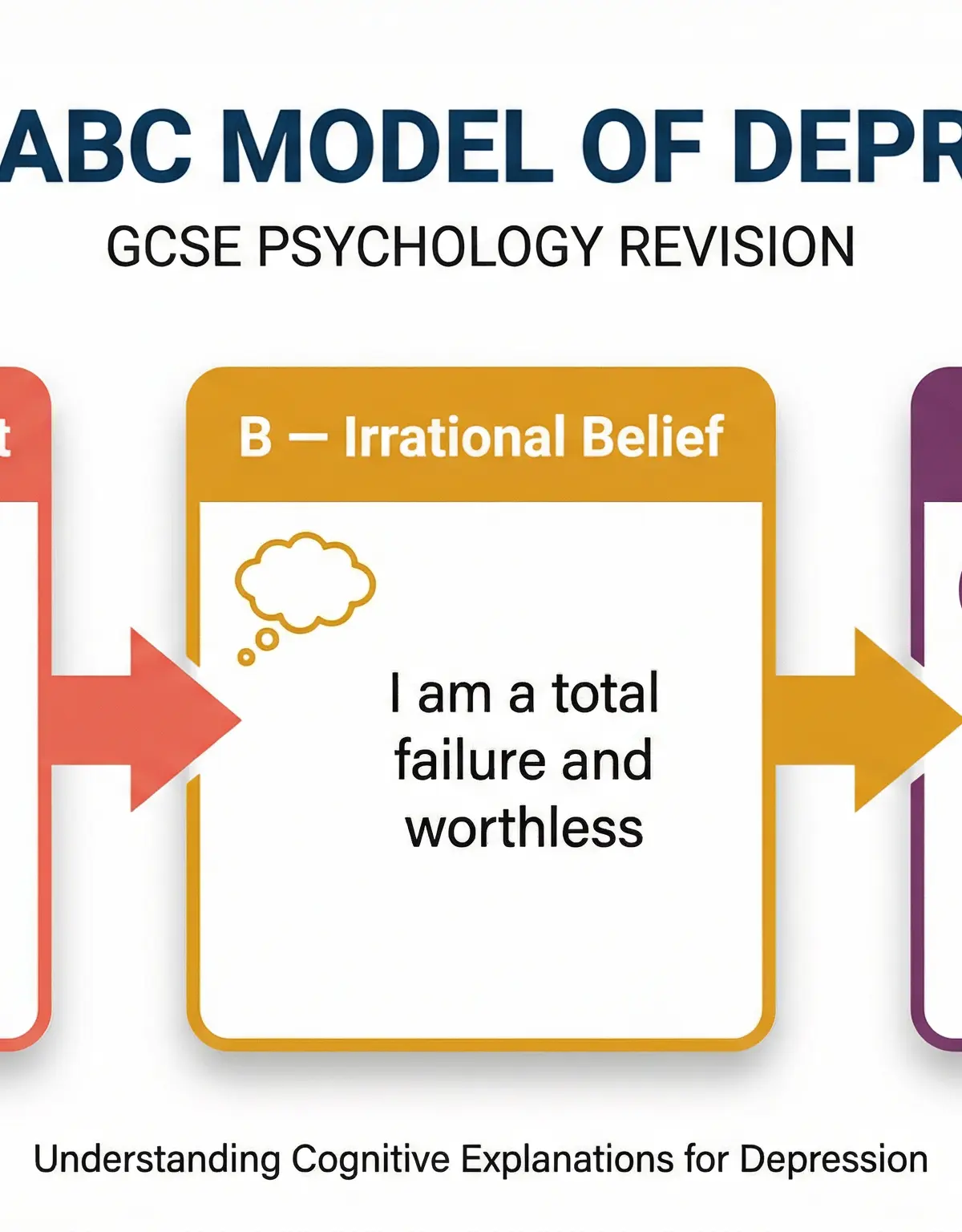
What it is: Developed by Albert Ellis, this cognitive theory argues that it is not life events themselves that cause depression, but the irrational beliefs we hold about them.
Why it matters: This model forms the basis of a highly effective therapy called Rational Emotive Behaviour Therapy (REBT), a type of CBT. It empowers individuals by suggesting they can change their emotional responses by changing their thinking. In the exam, this is your primary psychological explanation.
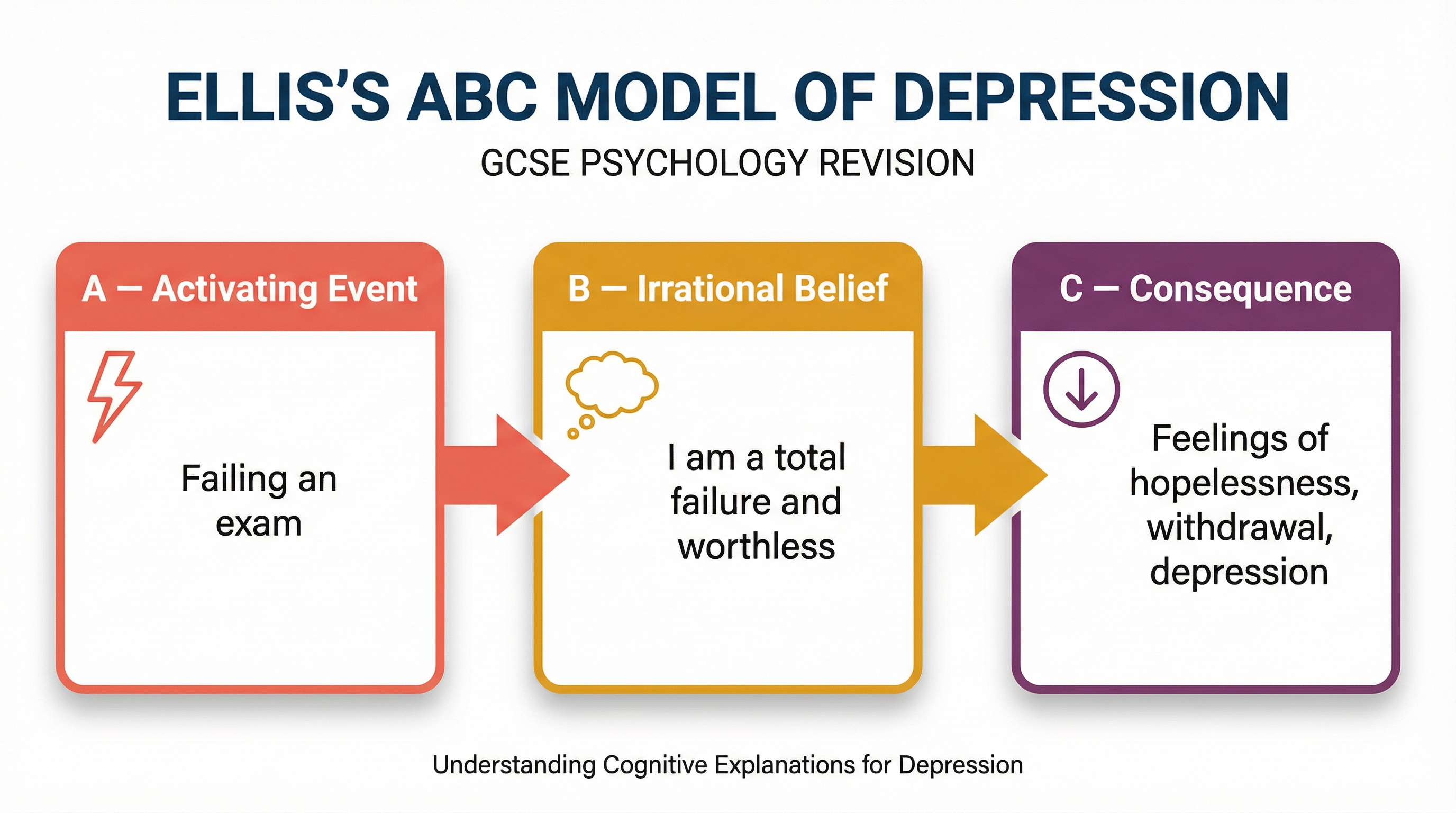
Specific Knowledge: You must know the three components by heart:
- A - Activating Event: A negative event or situation (e.g., failing a test).
- B - Belief: The irrational interpretation of the event (e.g., 'I am a complete failure and will never succeed'). This is the crucial step.
- C - Consequence: The negative emotional and behavioural outcome (e.g., feelings of worthlessness, depression).
Key Study: Caspi et al. (2003) - The Diathesis-Stress Model
What it is: A landmark longitudinal study that investigated the interaction between genes and stressful life events in causing depression.
Why it matters: This study provides powerful evidence for the diathesis-stress model, which suggests that a biological vulnerability (diathesis) combined with an environmental trigger (stress) leads to depression. It brilliantly links the biological and psychological explanations.
Specific Knowledge: Caspi et al. studied a variation in the serotonin transporter gene (5-HTT). They found that individuals with one or two copies of the short allele of this gene were significantly more likely to develop depression following stressful life events than those with two long alleles. Specifically, 43% of those with two short alleles who experienced four or more stressful life events developed depression, compared to just 17% of those with two long alleles. This is not a theory, but a study providing evidence.
Worked Examples
2 worked examples — open one to explore the question and available guidance.
Practice Questions
Test your understanding — click to reveal model answers
Explain the role of irrational beliefs in the psychological explanation of depression. (4 marks)
Hint: Think about the ABC model. What is the specific role of the 'B'?
Outline the findings of the study by Caspi et al. (2003). (4 marks)
Hint: Be precise with the gene and the percentage findings.