OCR · GCSE · Psychology
Treating Psychological Problems
This study guide provides a comprehensive overview of how psychological problems are treated, focusing on the OCR GCSE Psychology specification. It contrasts biological treatments targeting brain chemistry with psychological therapies that address thoughts and behaviours, equipping students with the precise knowledge needed to excel in their exams.
- 6 min read
- 3 worked examples
- 5 practice questions
- 6 key terms
Study Notes
Overview
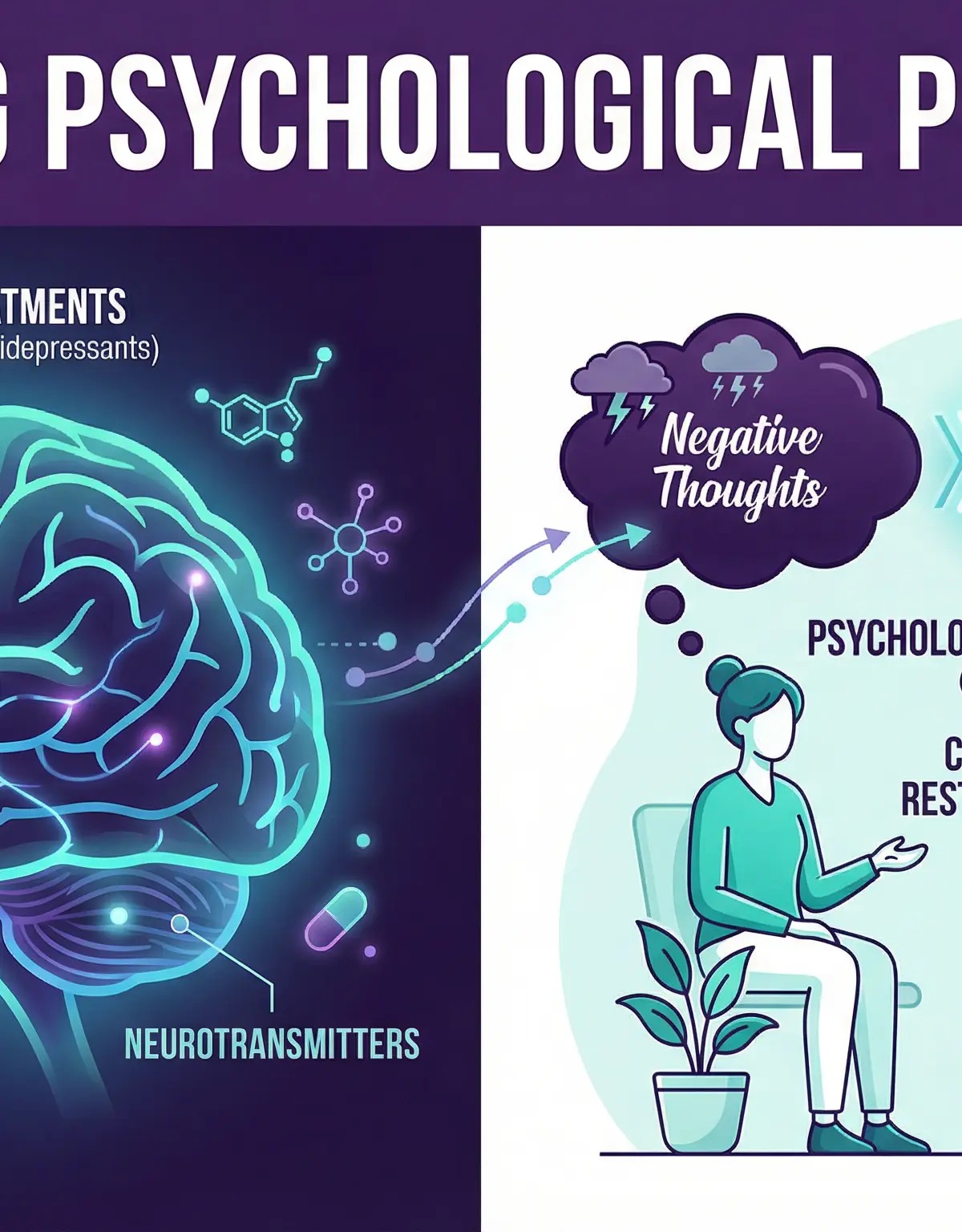
This topic explores the core methods used to treat psychological disorders, specifically Schizophrenia and Depression, as required by the OCR J203 specification. It draws a crucial distinction between biological interventions, which alter neurochemistry, and psychological interventions, which modify cognition and behaviour. For top marks, candidates must not only describe these treatments but also critically evaluate them, applying their knowledge to novel scenarios and supporting their points with two mandatory key studies: Wiles et al. (2013) for CBT and Paul & Lentz (1977) for token economies. Examiners expect precise terminology and a clear understanding of the mechanisms of action, moving beyond simplistic explanations to demonstrate genuine psychological insight.
Biological Treatments
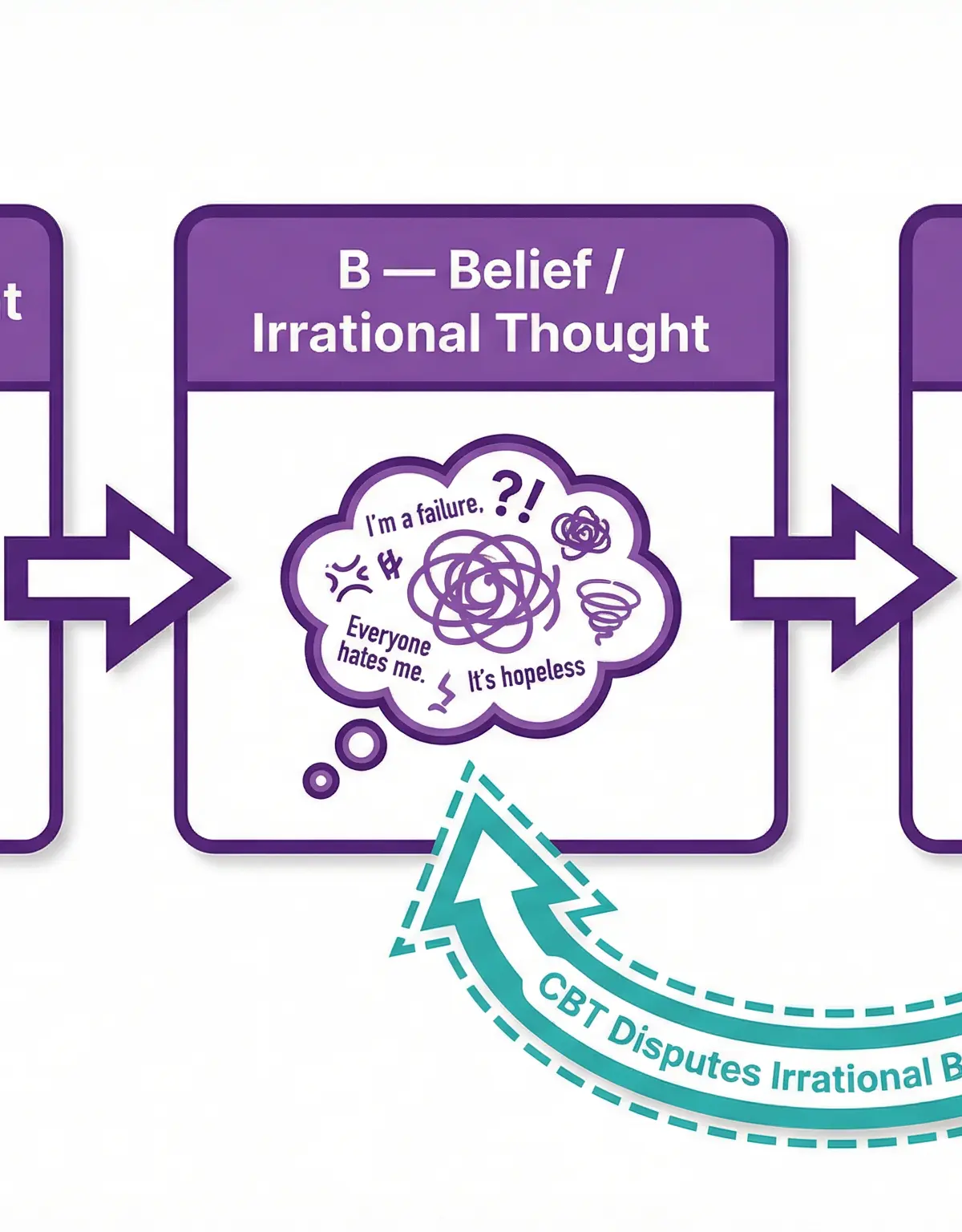
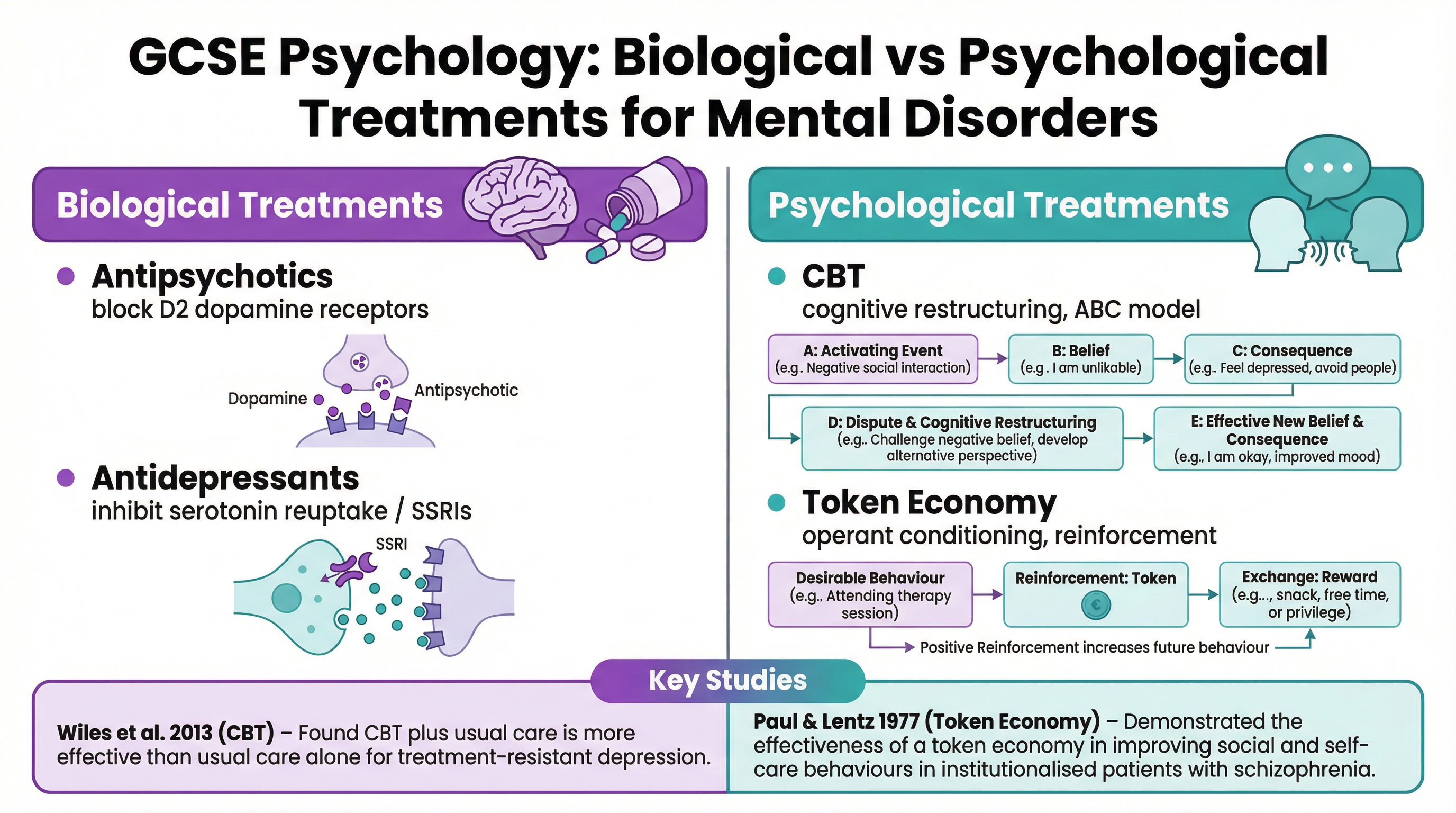
Biological treatments are based on the medical model, which views mental disorders as illnesses with a physical cause. The primary treatments are pharmacological — using drugs to alter brain chemistry.
Antipsychotics
Used for: Primarily Schizophrenia.
Mechanism of Action: Antipsychotics, particularly typical ones like Chlorpromazine, work by acting as dopamine antagonists. They block D2 dopamine receptors at the synapse, preventing the neurotransmitter from binding. This is based on the dopamine hypothesis, which suggests that the positive symptoms of Schizophrenia (e.g., hallucinations, delusions) are caused by excessive dopamine activity. By reducing this stimulation, the drugs can alleviate these symptoms.
Specific Knowledge: Candidates must use the term 'blocking D2 dopamine receptors'. Vague answers like 'correcting a chemical imbalance' will not receive full credit.
Antidepressants
Used for: Primarily Depression.
Mechanism of Action: The most common type are Selective Serotonin Reuptake Inhibitors (SSRIs), such as Fluoxetine. These drugs work by blocking the reuptake of serotonin from the synaptic cleft into the presynaptic neuron. This means that serotonin remains in the synapse for longer, increasing its availability and improving mood. Low levels of serotonin are strongly associated with the symptoms of depression.
Specific Knowledge: Candidates must use the term 'inhibiting serotonin reuptake'. It is a common error to confuse the neurotransmitters, for instance, by stating that antidepressants affect dopamine.
Psychological Treatments
Psychological treatments focus on changing maladaptive thoughts and behaviours. They are often referred to as 'talking therapies'.
Cognitive Behavioural Therapy (CBT)
Used for: Primarily Depression.
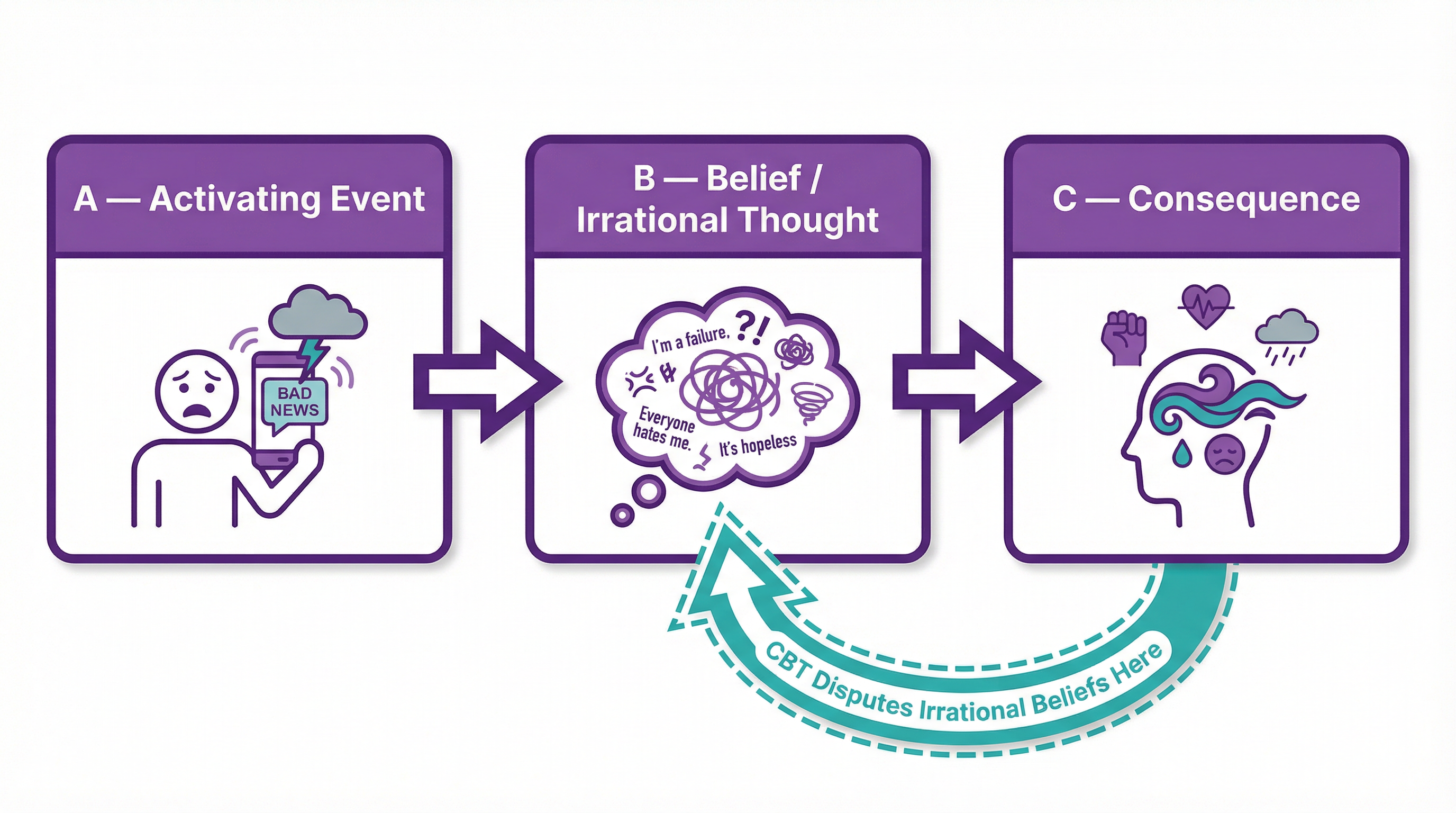
Mechanism of Action: CBT is based on the principle that our thoughts, feelings, and behaviours are interlinked. It aims to identify and challenge irrational or negative thoughts (cognitions) to improve emotional state and behaviour. The core of CBT is the ABC Model:
- A - Activating Event: A situation that triggers a response.
- B - Belief: The individual's interpretation of the event. In depression, this is often irrational and negative (e.g., 'I am a complete failure').
- C - Consequence: The emotional and behavioural outcome of the belief (e.g., feeling hopeless, withdrawing socially).
A therapist helps the client to dispute the irrational belief at stage B, replacing it with a more rational and effective one. This process is known as cognitive restructuring.
Token Economy
Used for: Managing symptoms of Schizophrenia in institutional settings.
Mechanism of Action: This is a behavioural therapy based on the principles of operant conditioning. Desirable behaviours (e.g., maintaining personal hygiene, attending therapy) are identified, and patients are rewarded with tokens (secondary reinforcers) immediately after performing them. These tokens can then be exchanged for desirable goods or privileges (primary reinforcers). This positive reinforcement increases the likelihood that the target behaviours will be repeated, helping to manage the negative symptoms of Schizophrenia like avolition (lack of motivation) and social withdrawal.
Key Studies
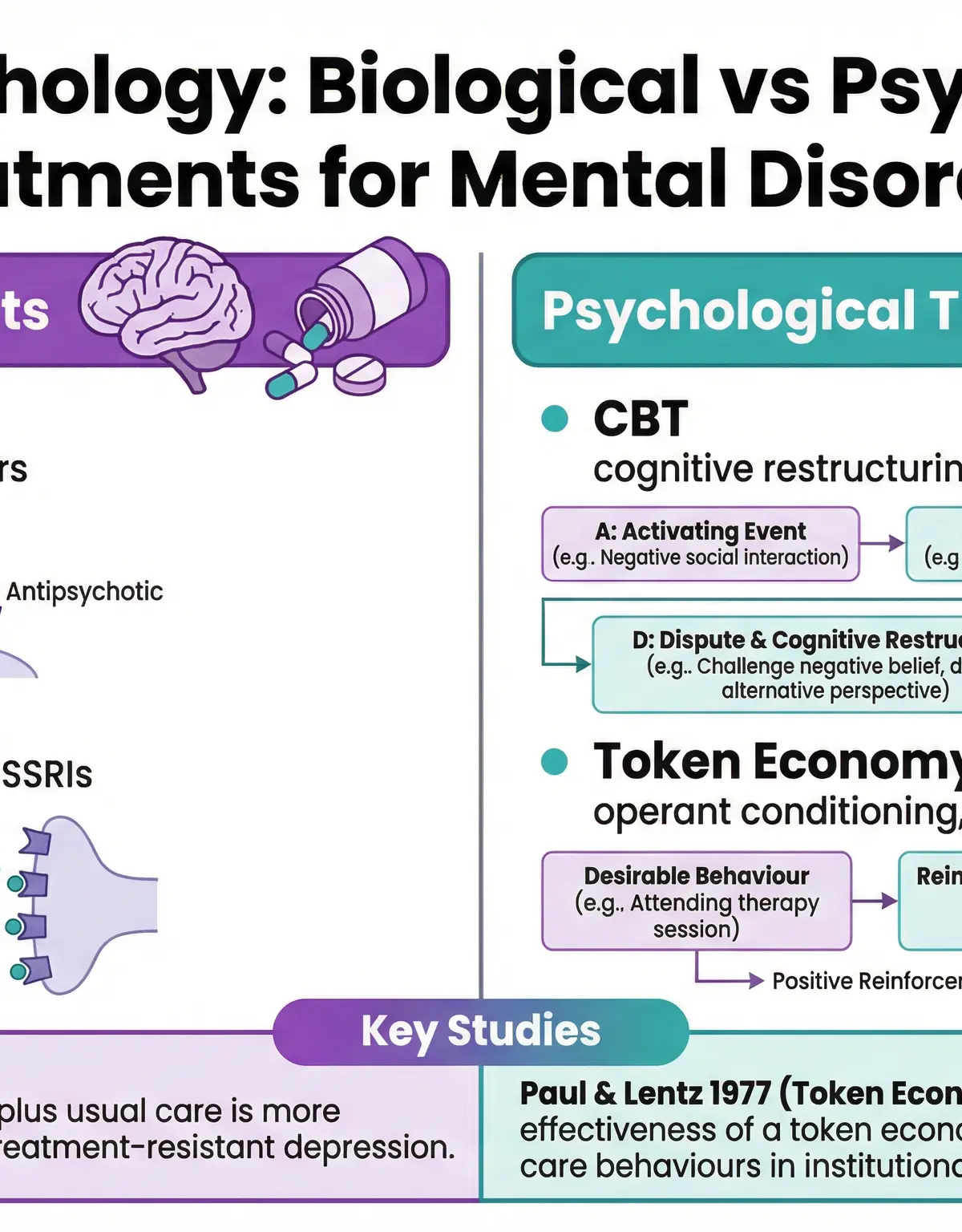
Wiles et al. (2013) - CBT for Treatment-Resistant Depression
Aim: To investigate the effectiveness of CBT as an adjunct (add-on) to usual care (including antidepressants) for patients with treatment-resistant depression.
Procedure: A randomised controlled trial where one group received usual care, and the other received usual care plus CBT.
Findings: 46% of the group receiving CBT showed a significant reduction in depressive symptoms, compared to only 22% in the usual care group.
Conclusion: CBT is an effective additional treatment for patients who do not respond to antidepressant medication alone. This provides strong evidence for a combined approach to treatment.
Paul & Lentz (1977) - Token Economy for Schizophrenia
Aim: To compare the effectiveness of a token economy programme with milieu therapy and standard hospital care for institutionalised patients with Schizophrenia.
Procedure: Researchers observed patients over several years, tracking symptoms and social functioning in the three different treatment groups.
Findings: The token economy group showed the most significant improvement in adaptive behaviours (e.g., self-care, social interaction) and a greater reduction in catatonic behaviour and social withdrawal compared to the other two groups.
Conclusion: Token economies, based on operant conditioning, are a highly effective method for managing the symptoms of Schizophrenia in an institutional setting.
Interactive Diagrams
1 interactive diagram to visualise key concepts
Conceptual Flow Outline
A simplified flowchart of the CBT Disputing process.
Worked Examples
3 worked examples — open one to explore the question and available guidance.
Practice Questions
Test your understanding — click to reveal model answers
Compare the use of a token economy with drug therapy for the treatment of Schizophrenia. (8 marks)
Hint: Focus on similarities and differences. Consider effectiveness for different types of symptoms (positive vs. negative) and ethical issues.
Describe how antidepressants are used to treat depression. (4 marks)
Hint: Name a specific type of antidepressant and explain its precise mechanism of action at the synapse.
Explain one strength and one weakness of Cognitive Behavioural Therapy (CBT) as a treatment for depression. (6 marks)
Hint: For the strength, use evidence from a key study. For the weakness, consider the demands it places on the patient.
What is meant by a 'token economy'? (2 marks)
Hint: Think about the two key components: the token and the behaviour.
Outline the procedure of Paul & Lentz's (1977) study. (4 marks)
Hint: Describe the groups being compared and what was being measured.