AQA · GCSE · Religious Studies
Pilgrimage
This study guide for AQA GCSE Religious Studies offers a deep dive into the topic of Pilgrimage. It explores the theological significance and practices of key pilgrimage sites like Lourdes, Iona, and Mecca, providing students with the detailed knowledge and exam technique required to achieve top marks."
- 5 min read
- 3 worked examples
- 5 practice questions
Study Notes
Overview
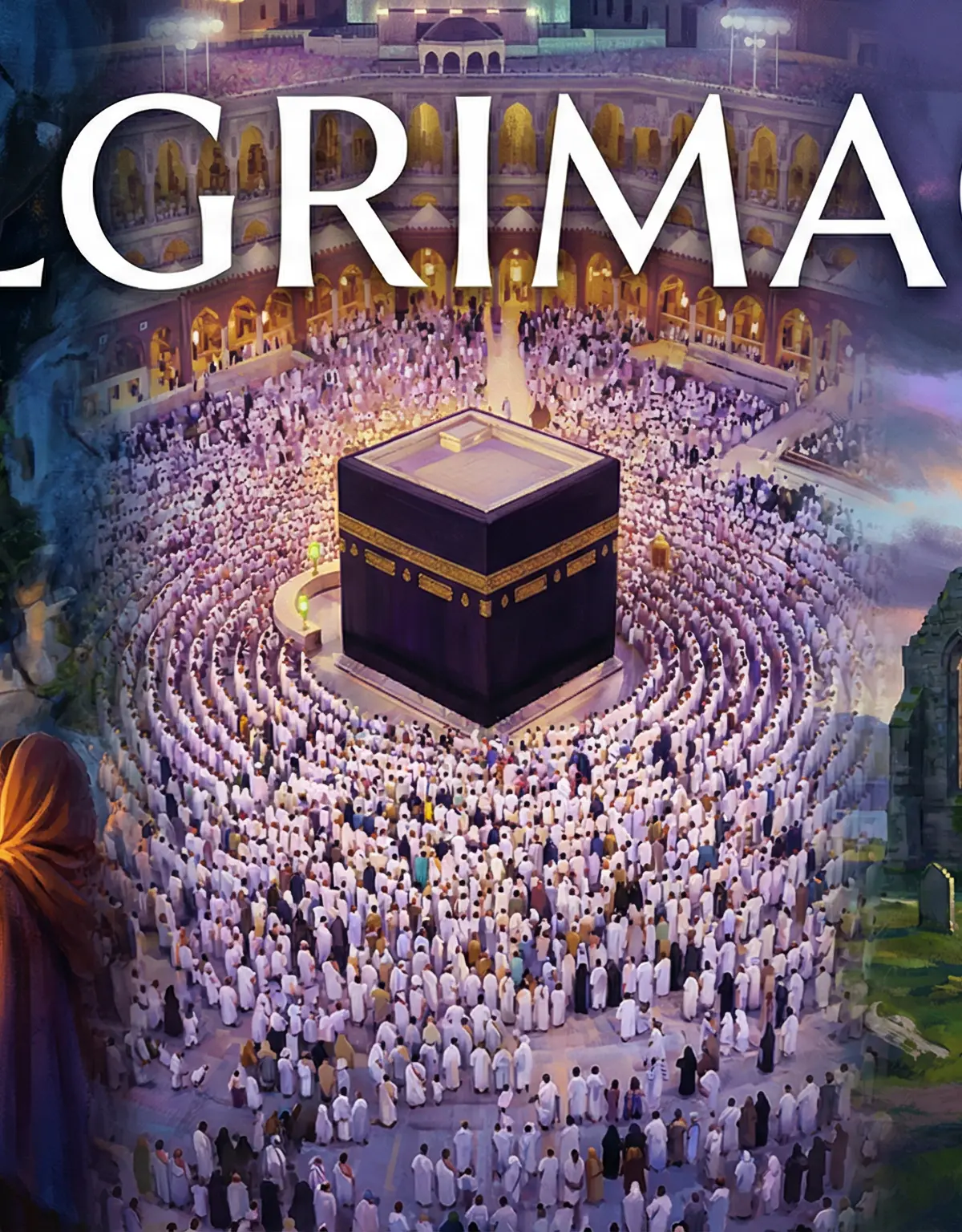
Pilgrimage is a journey of religious significance, and for the AQA GCSE, candidates must demonstrate a nuanced understanding of this practice across Christianity and Islam. This is not simply about describing a journey; it is about analysing the theological motivations and the transformative impact on the believer. Examiners expect candidates to contrast the different purposes of pilgrimage – from the quest for miraculous healing at Lourdes to the ecumenical community focus of Iona, and the obligatory nature of the Hajj in Islam. Mastery of this topic involves linking specific actions at these sites (e.g., bathing in the grotto at Lourdes) to the underlying theology (e.g., spiritual cleansing and Marian intercession). Credit is given for precise use of terminology and for citing specific Sources of Wisdom and Authority (SOWA) to support arguments, moving beyond generic statements to a detailed, analytical approach that will be rewarded with higher marks.

Key Pilgrimage Sites
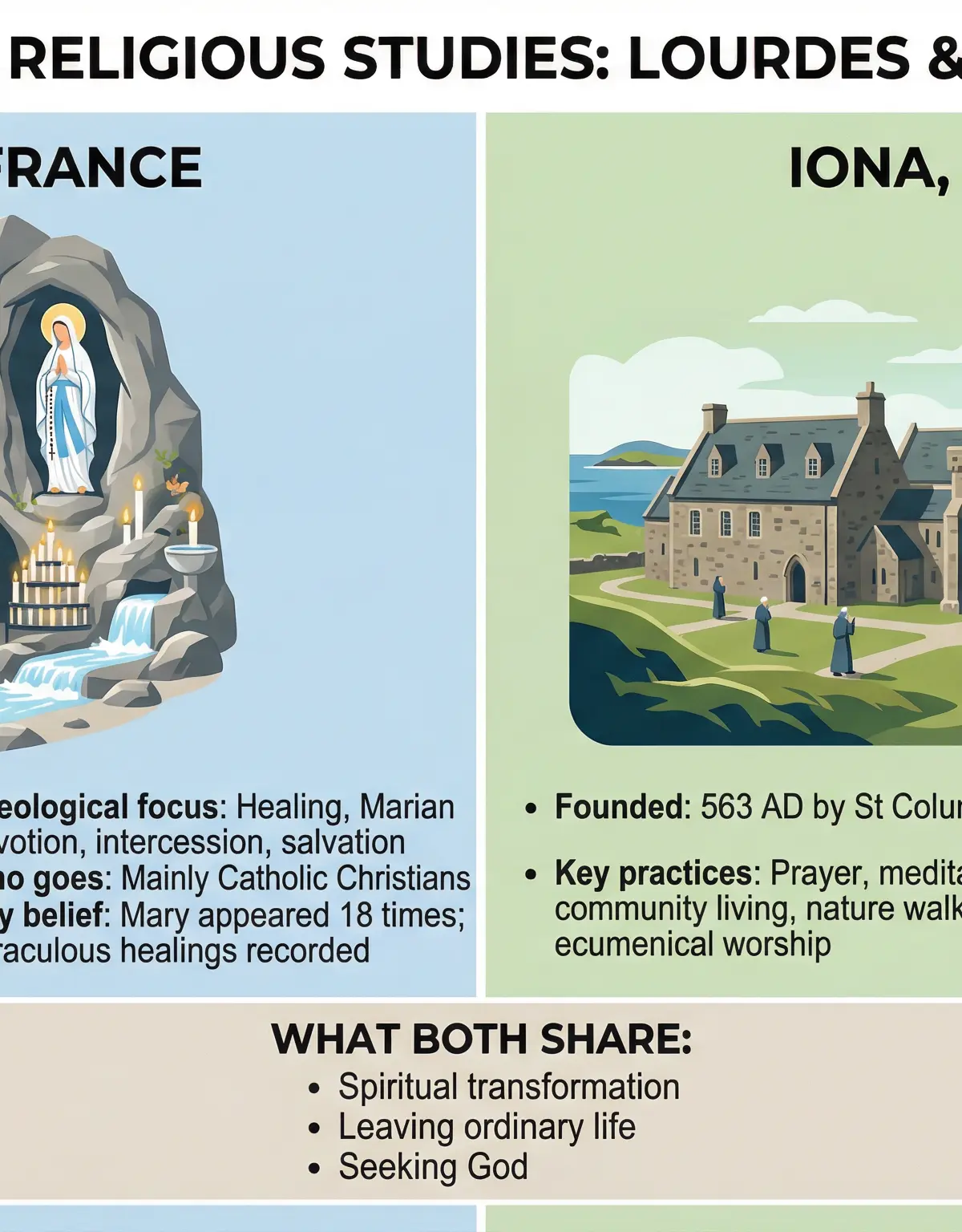
Lourdes, France
What it is: A major Roman Catholic pilgrimage site focused on miraculous healing and devotion to the Virgin Mary.
Why it matters: Lourdes is a prime example of a pilgrimage for intercession and healing. The events of 1858, when Bernadette Soubirous reported 18 apparitions of Mary, are central. Candidates must link the practice of bathing in the spring water to the belief in Mary's power to intercede with God for healing. The 69 officially recognised miracles are key evidence for this belief, but candidates should also be prepared to discuss Protestant critiques regarding the lack of empirical evidence and the potential for idolatry.
Specific Knowledge: Bernadette Soubirous, Grotto of Massabielle, 1858, 69 miracles, anointing of the sick, candlelit processions, Stations of the Cross.
Iona, Scotland
What it is: An ecumenical Christian pilgrimage site focused on community, peace, and spiritual renewal.
Why it matters: Iona provides a crucial contrast to Lourdes. Founded by St. Columba in 563 AD, its modern significance lies with the Iona Community, which welcomes all Christian denominations. The focus is not on miracles but on simplicity, social justice, and reconnecting with God through nature. Candidates should use the term ecumenical and explain the concept of a 'thin place' – where the gap between heaven and earth feels small. This demonstrates a deeper understanding of the different ways pilgrimage can be experienced.
Specific Knowledge: St. Columba, 563 AD, Iona Community, George MacLeod, ecumenism, 'thin place'.
Hajj (Mecca, Saudi Arabia)
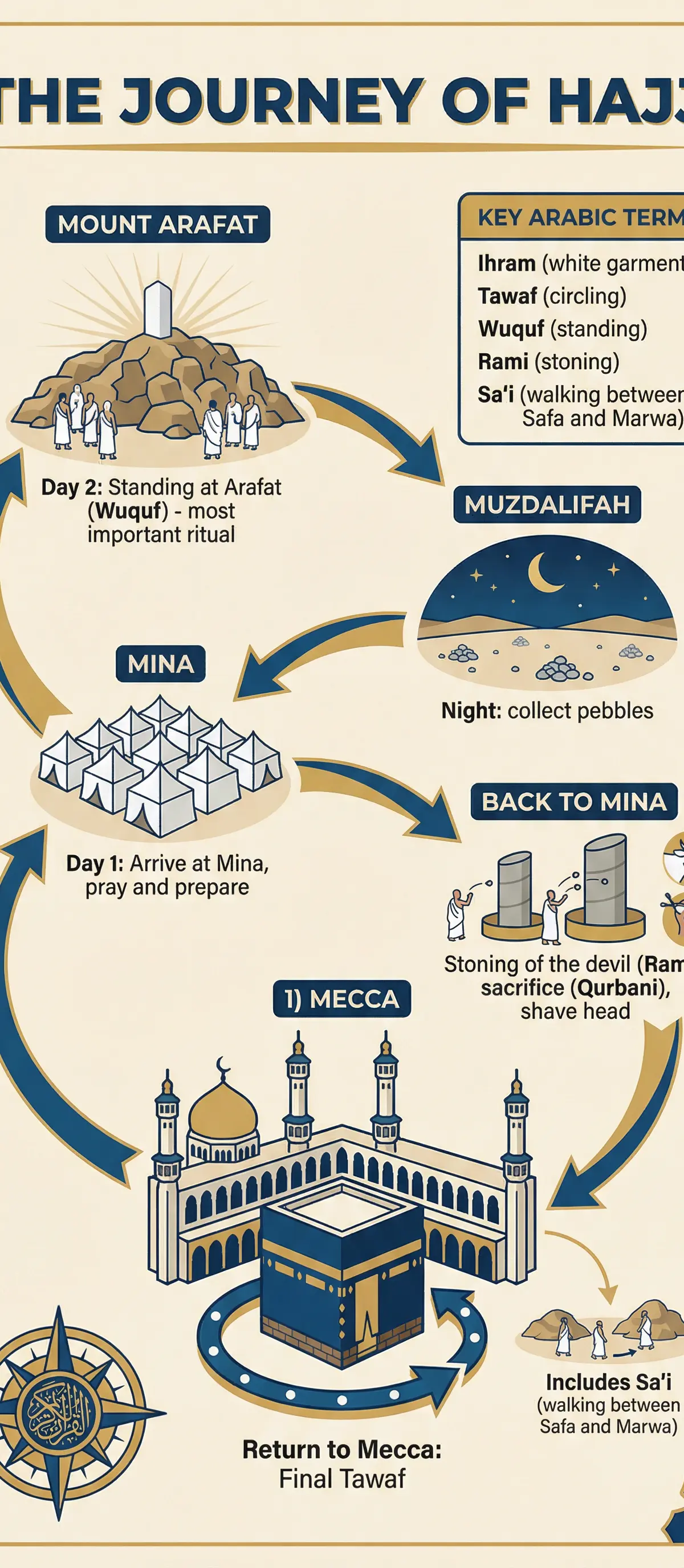
What it is: The obligatory annual pilgrimage to Mecca for all adult Muslims who are physically and financially able.
Why it matters: As one of the Five Pillars of Islam, Hajj is fundamentally different from Christian pilgrimage. It is a compulsory act of worship that expresses submission to Allah and the unity of the Ummah (the worldwide Muslim community). Candidates must know the key rituals and their symbolic meanings, linking them to the story of the Prophet Ibrahim. Using correct Arabic terminology is essential for demonstrating precise knowledge.
Specific Knowledge: Kaaba, Ihram, Tawaf, Sa'i, Mount Arafat (Wuquf), Muzdalifah, Rami (stoning the Jamarat), Qurbani.
Second-Order Concepts
Causation
- Lourdes: The visions of Bernadette Soubirous and the subsequent recognition by the Catholic Church caused Lourdes to become a major pilgrimage site.
- Iona: The historical significance of St. Columba combined with the modern vision of George MacLeod for an ecumenical community caused Iona's revival.
- Hajj: The command in the Qur'an and the example of the Prophet Muhammad are the direct causes for Muslims undertaking Hajj.
Consequence
- Lourdes: Millions of pilgrims visit annually, reinforcing Catholic beliefs in miracles, saints, and Marian devotion. It has also led to a significant infrastructure for supporting the sick and disabled.
- Iona: The Iona Community has become a global movement for peace and social justice, influencing Christian thought far beyond the island itself.
- Hajj: Hajj strengthens the global Muslim Ummah, reinforces core Islamic beliefs, and provides a profound spiritual experience of renewal and forgiveness of sins for the individual.
Change & Continuity
- Change: Pilgrimage has adapted to modern transport, making sites more accessible. The focus of Iona has changed from a monastic centre to an ecumenical community.
- Continuity: The core rituals of Hajj have remained unchanged for over 1,400 years. The belief in the healing power of Lourdes water has been continuous since 1858.
Significance
- Pilgrimage is significant as a physical expression of an inner spiritual journey. It demonstrates commitment, strengthens faith, and connects believers to a wider community and a longer history. For examiners, its significance lies in how it reveals the core beliefs and practices of a religion in action."
Worked Examples
3 worked examples — open one to explore the question and available guidance.
Practice Questions
Test your understanding — click to reveal model answers
Describe two things a pilgrim might do at Lourdes. (4 marks)
Hint: Think about the key practices associated with healing and devotion.
Explain two ways pilgrimage can strengthen a Christian's faith. (5 marks)
Hint: Think about both the individual and the communal aspects of the journey.
Explain two reasons why the Hajj is important to Muslims. (4 marks)
Hint: Connect the Hajj to the core beliefs and duties of Islam.
'The Hajj is more important than any Christian pilgrimage.' Evaluate this statement. (12 marks)
Hint: Focus on the theological status of the pilgrimages. Is one 'compulsory' while the other is 'optional'? What does this mean for their importance?
Explain two contrasting Muslim views on the importance of visiting the graves of holy people. (4 marks)
Hint: This is a synoptic question. Think about the diversity within Islam (Sunni vs. Shia, and Wahhabi interpretations).