AQA · GCSE · Religious Studies
Prayer
This study guide provides a comprehensive analysis of Prayer in Christianity for AQA GCSE Religious Studies. It explores the different forms of prayer, its significance as a means of communication with God, and its role in both personal devotion and communal worship, equipping candidates to excel in their exams.
- 5 min read
- 3 worked examples
- 5 practice questions
- 6 key terms
Study Notes
Overview
Prayer is a foundational practice within Christianity, representing a direct line of communication with God. For AQA GCSE candidates, a thorough understanding of prayer is not merely about knowing definitions; it is about analysing its theological depth and practical application in a Christian's life. Examiners expect candidates to differentiate between liturgical, non-liturgical, and informal prayer, and to explain the significance of the Lord’s Prayer as a model for all Christian worship. This guide will deconstruct the various forms of prayer, analyse the purposes behind it using the ACTS model, and evaluate the classic debate between the merits of private versus corporate worship. Mastery of this topic requires not just factual recall, but the ability to apply specific knowledge and Sources of Wisdom and Authority to construct well-argued responses, particularly in higher-mark evaluation questions. This resource is designed to build that exam-winning confidence.
Types of Christian Prayer
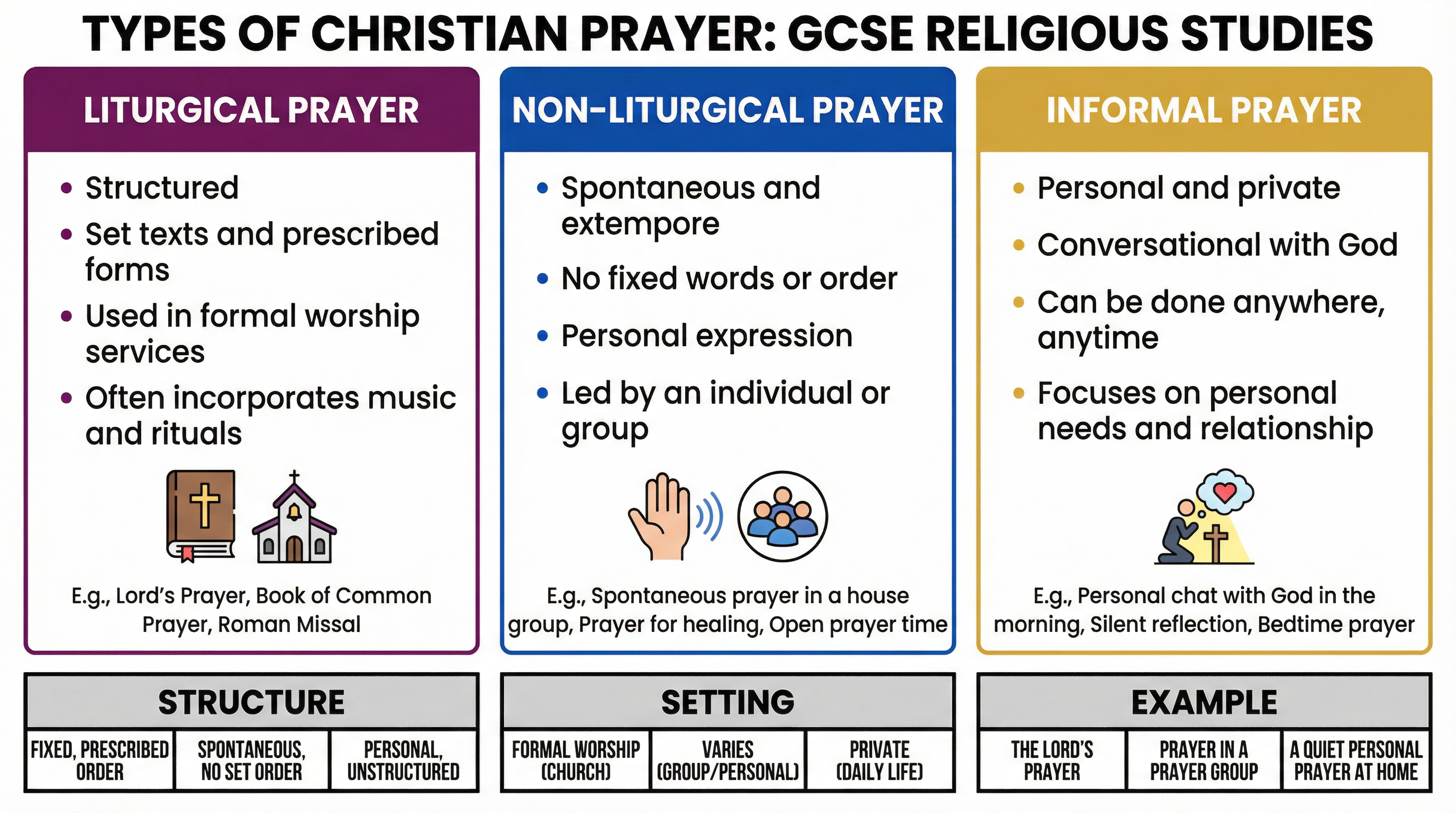
Understanding the distinction between different prayer styles is crucial for earning marks. Examiners frequently ask candidates to compare and contrast these forms, so knowing the key features is essential.
Liturgical Prayer
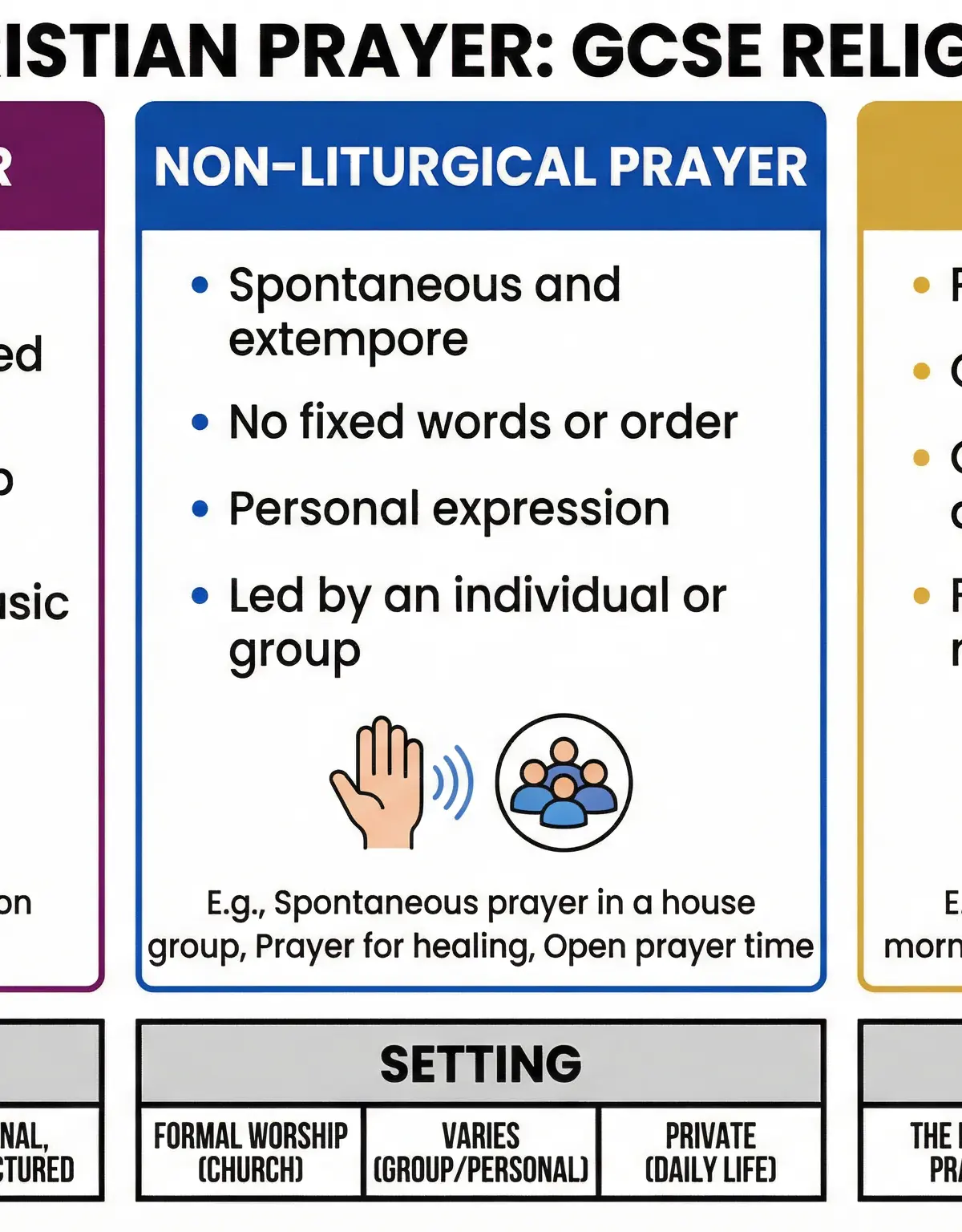
Liturgical prayer involves set texts and established rituals. These prayers are written down and followed by the congregation, often in a formal church service. This creates a sense of unity, tradition, and shared belief across the community and through generations. The key advantage is that it connects the individual to the wider Church. A potential limitation is that some may find the words unrelatable or feel they are not speaking from the heart.
- Example: The Lord's Prayer, Creeds, prayers from the Book of Common Prayer.
- Used by: Anglicans, Roman Catholics, Orthodox Christians.
Non-Liturgical Prayer
Non-liturgical prayer is more spontaneous and does not follow a set text. The person leading the prayer, or individuals in the congregation, will speak in their own words. This form of prayer is often seen as more personal and heartfelt. It allows for greater freedom of expression and can be adapted to specific situations. A limitation is that it can lack the structure and theological depth of liturgical prayers.
- Example: Spontaneous prayer in a house group, extempore prayer during a service.
- Used by: Evangelical, Pentecostal, and Baptist churches.
Informal Prayer
Informal prayer is personal, private, and conversational. It can happen at any time and in any place. It is about an individual sharing their thoughts, feelings, and requests with God in their own words. Jesus himself endorsed this form of prayer in the Sermon on the Mount (Matthew 6:6). It strengthens the personal relationship between a believer and God.
- Example: Saying grace before a meal, a quiet prayer before bed.
- Used by: Christians across all denominations.
The Purpose of Prayer: The ACTS Model
To help structure their prayers and ensure a balanced approach, many Christians use the ACTS model. This is a fantastic memory hook for exams when you need to explain the different reasons why Christians pray.
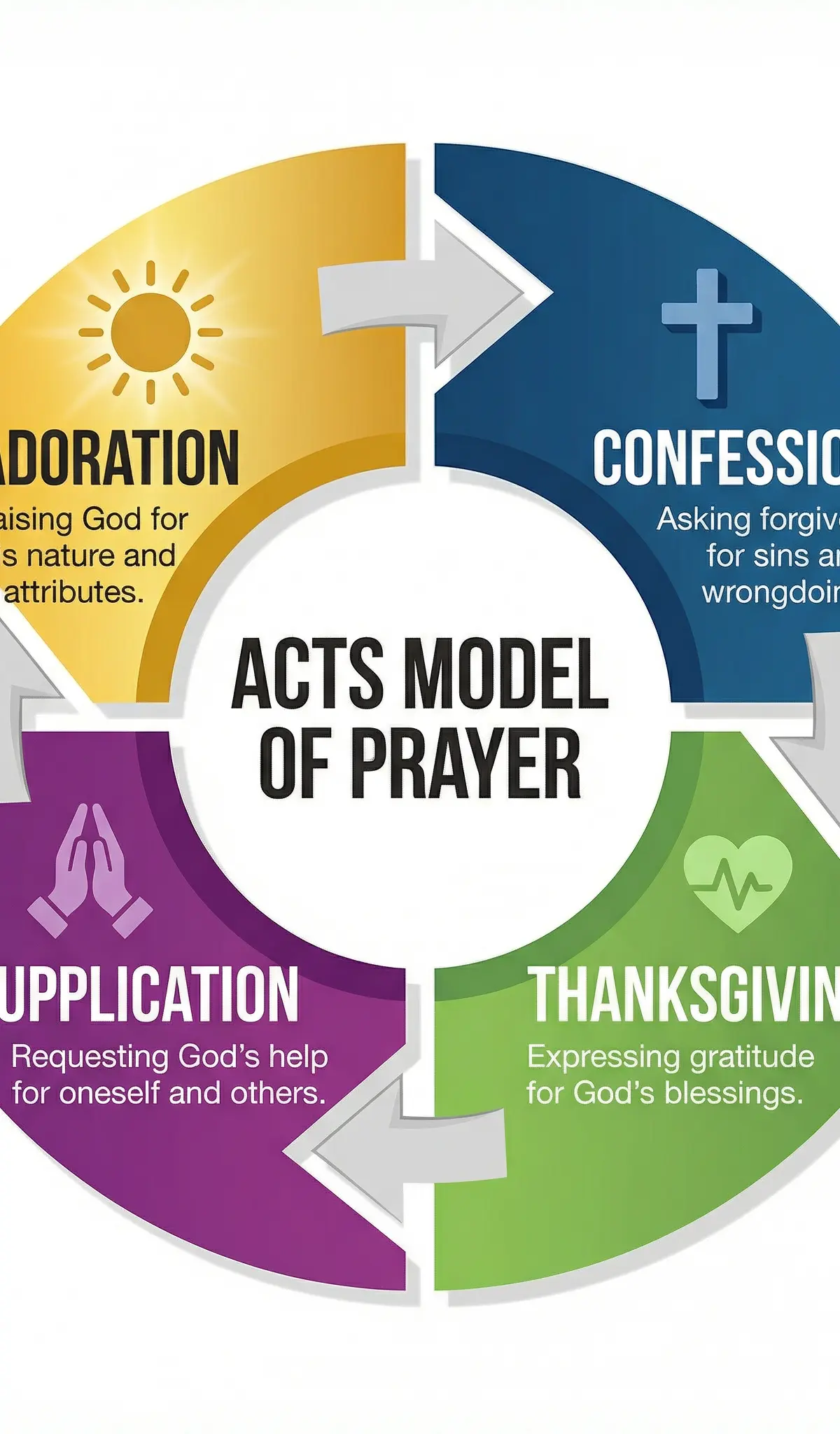
- A - Adoration: Praising God for His nature and attributes (e.g., "Hallowed be your name").
- C - Confession: Admitting one's sins and asking for forgiveness (e.g., "Forgive us our debts").
- T - Thanksgiving: Expressing gratitude for God's blessings and actions (e.g., giving thanks for health or family).
- S - Supplication: Asking God for help, either for oneself (petition) or for others (intercession).
The Lord's Prayer: A Model for All Prayer
The Lord's Prayer (Matthew 6:9-13) is the single most important prayer in Christianity. Jesus gave it to his disciples as a template for how they should pray. It contains all the elements of the ACTS model and establishes key theological concepts, such as the Fatherhood of God. Examiners credit candidates who can explain why it is used, not just quote it.
Podcast: Mastering Prayer for Your GCSE RS Exam
For an in-depth audio breakdown of this topic, including exam tips and a quick-fire quiz, listen to our 10-minute revision podcast.

Interactive Diagrams
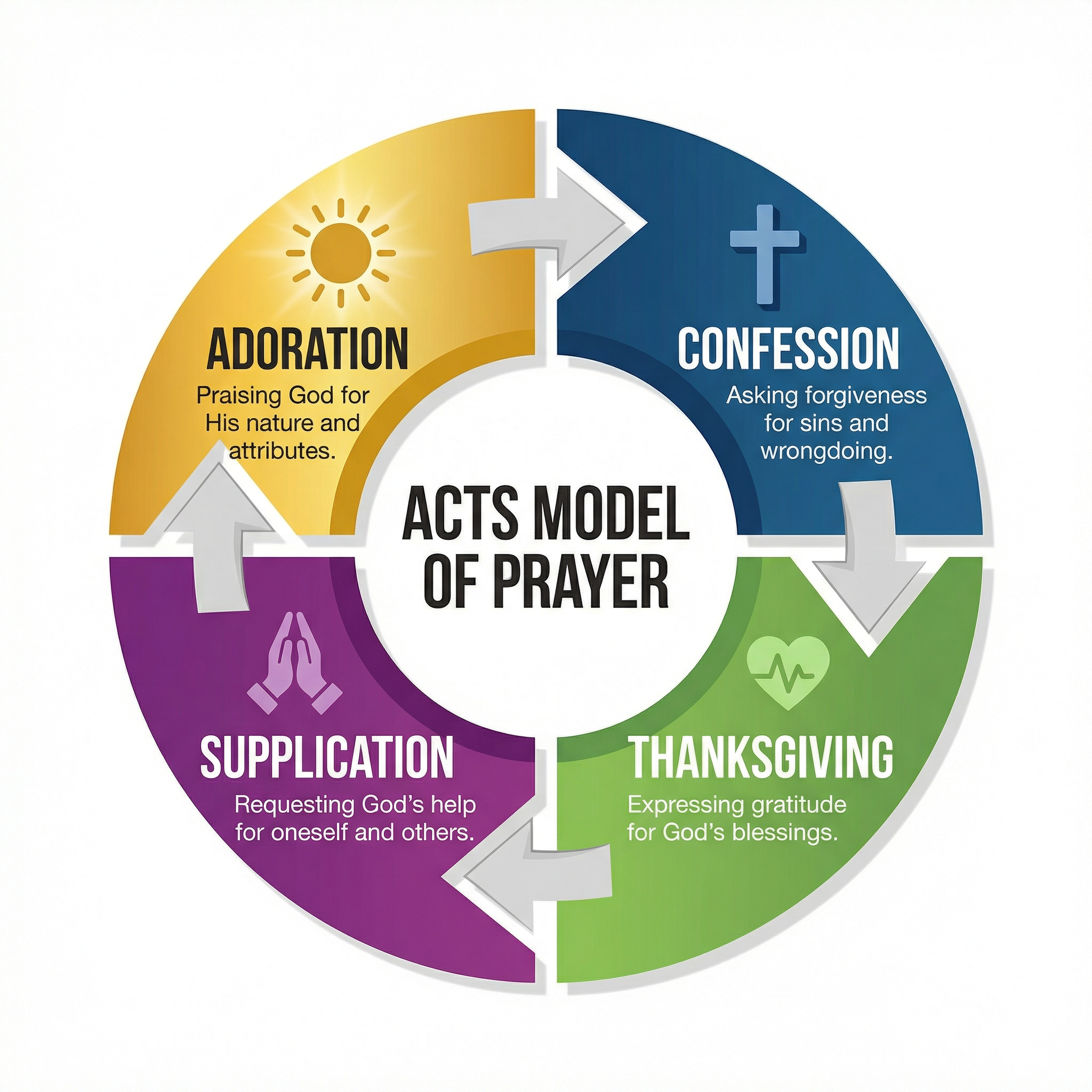
1 interactive diagram to visualise key concepts
Conceptual Flow Outline
A simple flowchart showing the elements of the ACTS model of prayer.
Worked Examples
3 worked examples — open one to explore the question and available guidance.
Practice Questions
Test your understanding — click to reveal model answers
Explain two ways in which prayer is important in Christianity. (4 marks)
Hint: Think about the dual function of prayer: personal and communal.
Explain two contrasting types of worship. Refer to Christian practice in your answer. (5 marks)
Hint: Contrast liturgical worship with non-liturgical worship. Use a Source of Wisdom and Authority.
"The Lord's Prayer is the only prayer a Christian needs." Evaluate this statement. (12 marks)
Hint: Agree with the statement by explaining the perfection of the Lord's Prayer as a model. Disagree by explaining the need for other types of prayer (informal, intercession for specific situations).
Describe what is meant by 'intercession'. (2 marks)
Hint: Define the term and give an example.
Explain two contrasting features of private and public worship. (4 marks)
Hint: Think about setting, structure, and purpose.