AQA · GCSE · Religious Studies
Religious practices of Judaism
This study guide provides a comprehensive analysis of Jewish religious practices for AQA GCSE Religious Studies. It focuses on the core beliefs, rituals, and festivals that shape Jewish life, providing candidates with the precise knowledge and exam technique required to achieve top marks.
- 5 min read
- 3 worked examples
- 5 practice questions
- 6 key terms
Study Notes
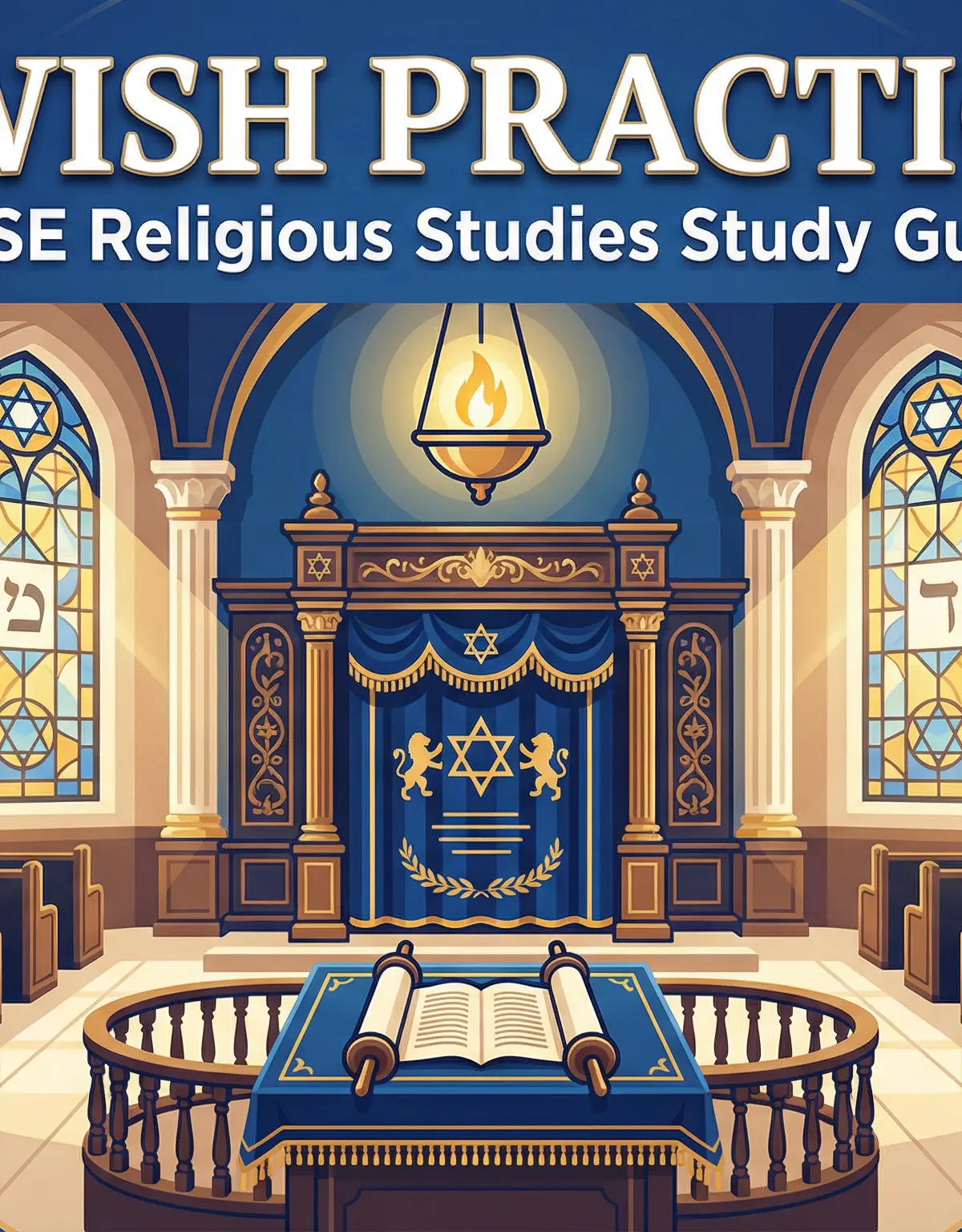
Overview
This unit explores the vibrant and diverse practices that form the heart of Judaism. For AQA GCSE Religious Studies, candidates must demonstrate a precise understanding of how Jewish beliefs are expressed through worship, rituals, and festivals. This is not just about describing what Jews do; it is about explaining why they do it, linking every practice back to core theological concepts like the Covenant, the Mitzvot, and the nature of God. Examiners expect candidates to use specific Hebrew terminology accurately and to distinguish clearly between the practices of Orthodox and Reform Jews. This guide will equip you with the detailed knowledge of the synagogue, Shabbat, major festivals like Pesach and Yom Kippur, and key lifecycle events, ensuring you can analyse and evaluate these practices with the depth required for the highest grades.
The Synagogue: Heart of the Community
The synagogue (Beit Knesset) is the central institution of Jewish life, serving as a house of prayer, assembly, and study. Its design and features are rich with symbolism, all pointing towards God and the Torah.
Key Features of the Synagogue
| Feature | Hebrew Name | Description & Significance | Orthodox vs. Reform Distinction |
|---|---|---|---|
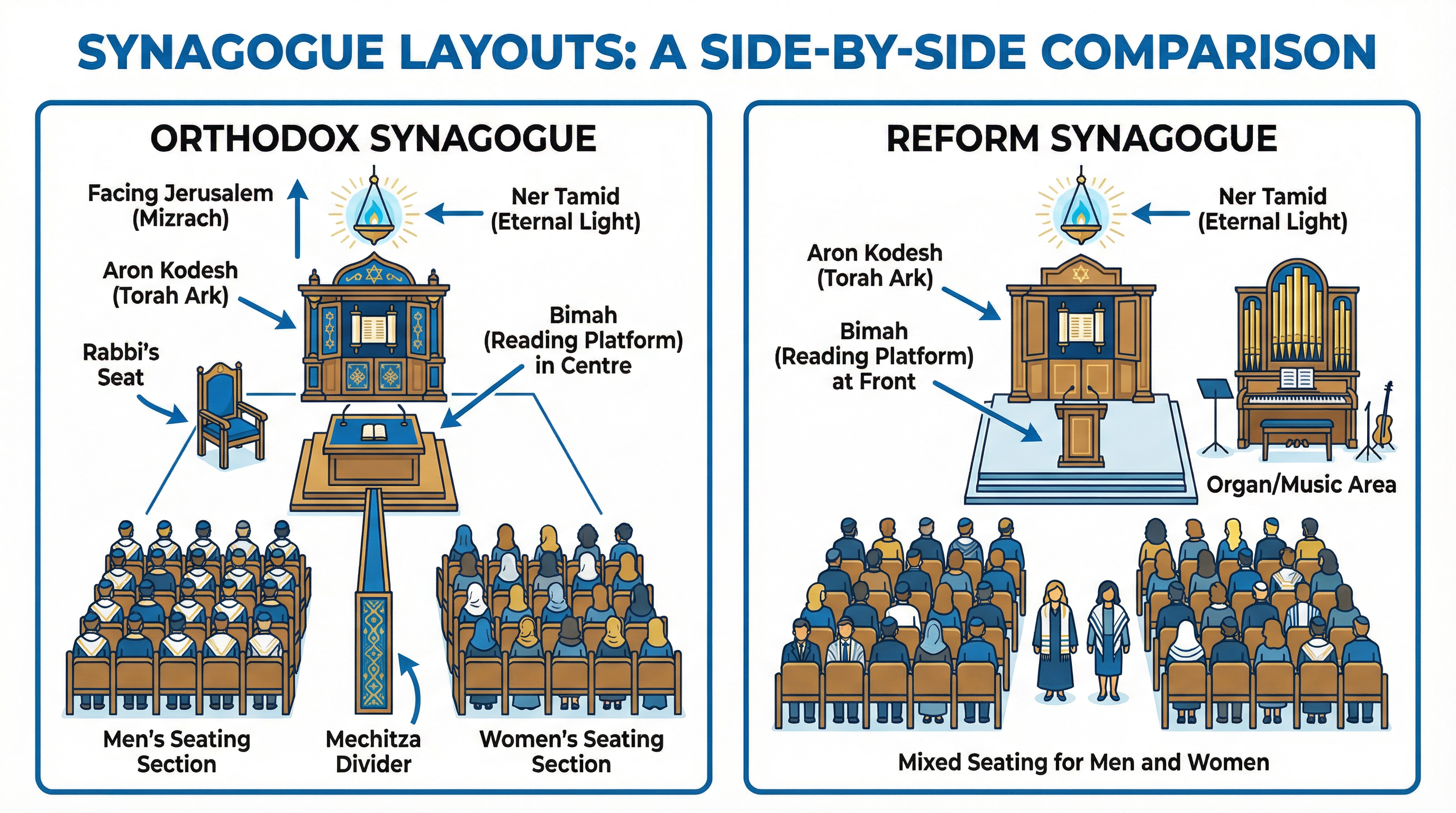
| Holy Ark | Aron Kodesh | The focal point of the synagogue, a cabinet housing the sacred Torah scrolls. It is situated on the wall facing Jerusalem. | Universal feature in all synagogues. |
| Eternal Light | Ner Tamid | A lamp that burns continuously above the Ark, symbolising God's eternal presence and the menorah from the ancient Temple. | Universal feature. |
| Reading Platform | Bimah | The raised platform from which the Torah is read. | Orthodox: Traditionally in the centre of the synagogue. Reform: Usually at the front, near the Aron Kodesh. |
| Seating | - | Arrangement of seating for the congregation. | Orthodox: Men and women sit separately, divided by a partition called a Mechitza. Reform: Men and women sit together (mixed seating). |
| Prayer Quorum | Minyan | The minimum number of people required for a public prayer service. | Orthodox: Ten adult Jewish men (over 13). Reform: Ten adults, including women. |
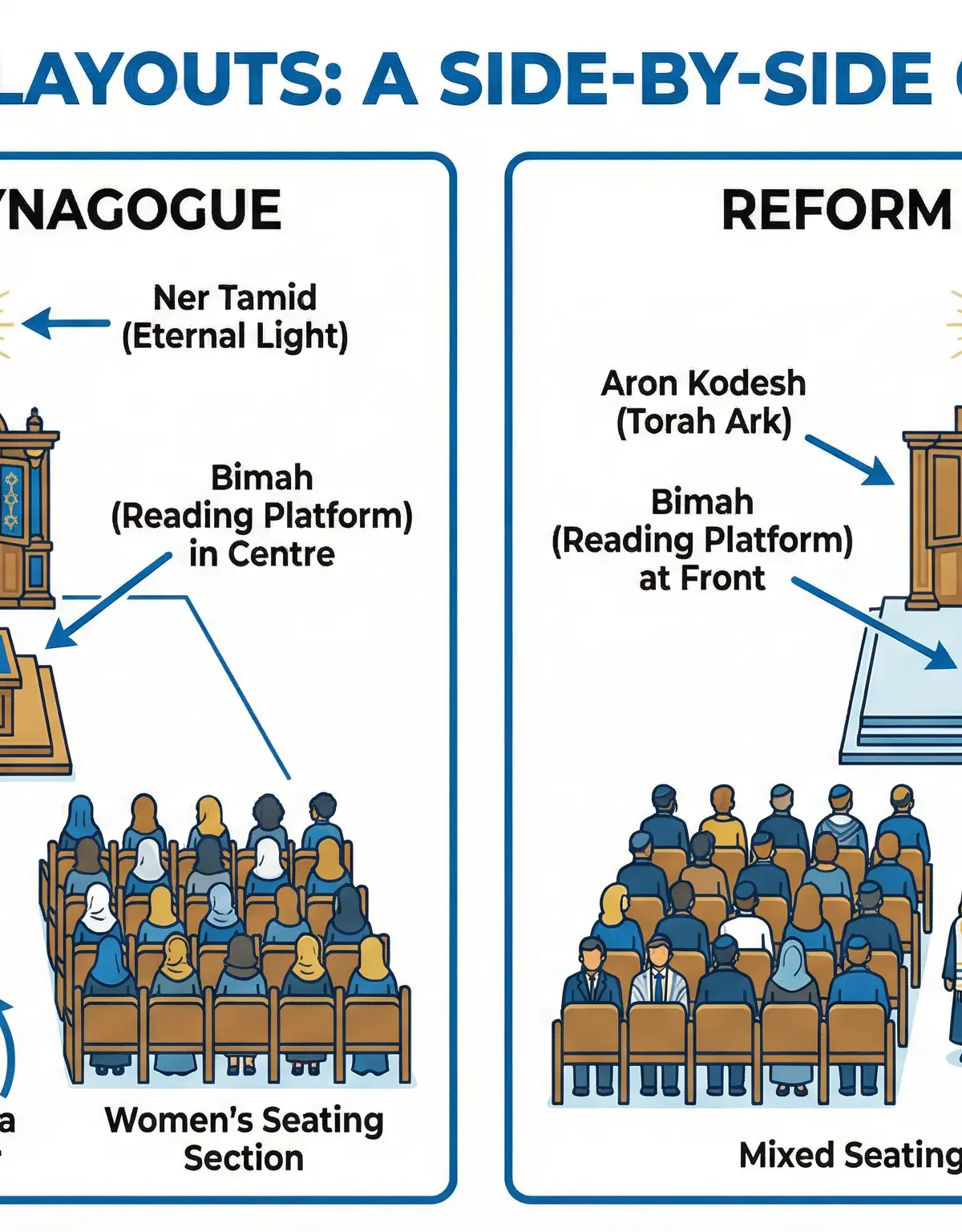
Worship: In the Home and Synagogue
Jewish worship involves both private prayer and public, communal services. The structure of worship is deeply rooted in Jewish law (Halakha) and tradition.
Daily Prayer
Observant Jews pray three times a day, corresponding to the times of sacrifice in the ancient Temple:
- Shacharit: Morning prayer
- Mincha: Afternoon prayer
- Maariv: Evening prayer
During morning prayer, many Jewish men wear the Tallit (a four-cornered prayer shawl with fringes called tzitzit) and Tefillin (small leather boxes containing Torah passages, bound to the forehead and arm). These are direct fulfilments of mitzvot from the Torah.
Shabbat: The Holy Day of Rest
Shabbat is the most important weekly festival, a time of rest and spiritual renewal from sunset on Friday to nightfall on Saturday. It commemorates God resting on the seventh day of creation.
Key Shabbat Observances:
- Lighting Candles: The woman of the house lights two candles before sunset to welcome Shabbat.
- Kiddush: A blessing is recited over a cup of wine.
- HaMotzi: A blessing is said over two loaves of braided bread called challah.
- Forbidden Work: Orthodox Jews refrain from 39 categories of creative work (melakha), including driving, cooking, and writing.
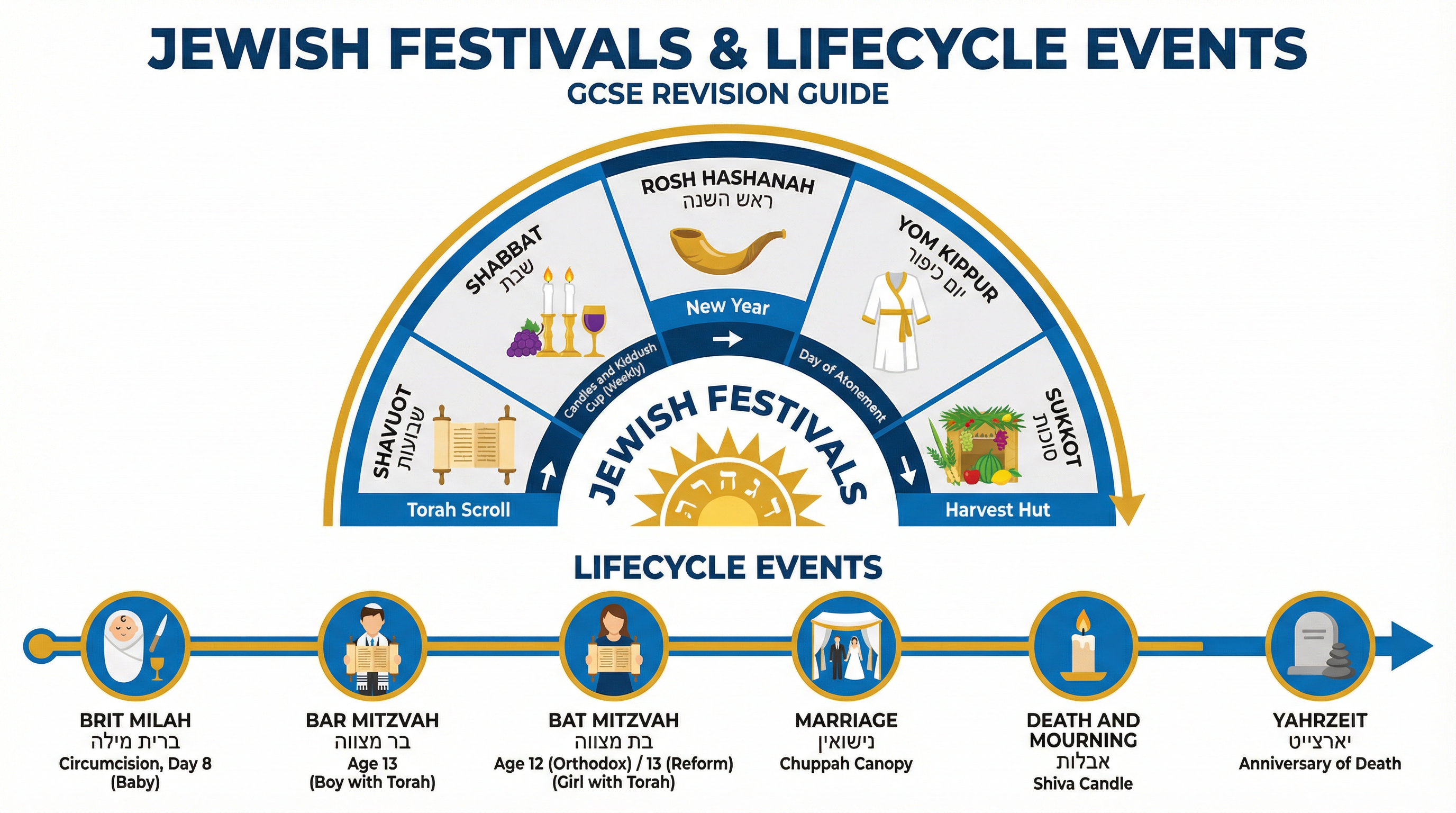
Jewish Festivals & Lifecycle Events
Jewish festivals and lifecycle rituals provide a structure for Jewish life, connecting individuals to their history, community, and covenant with God.
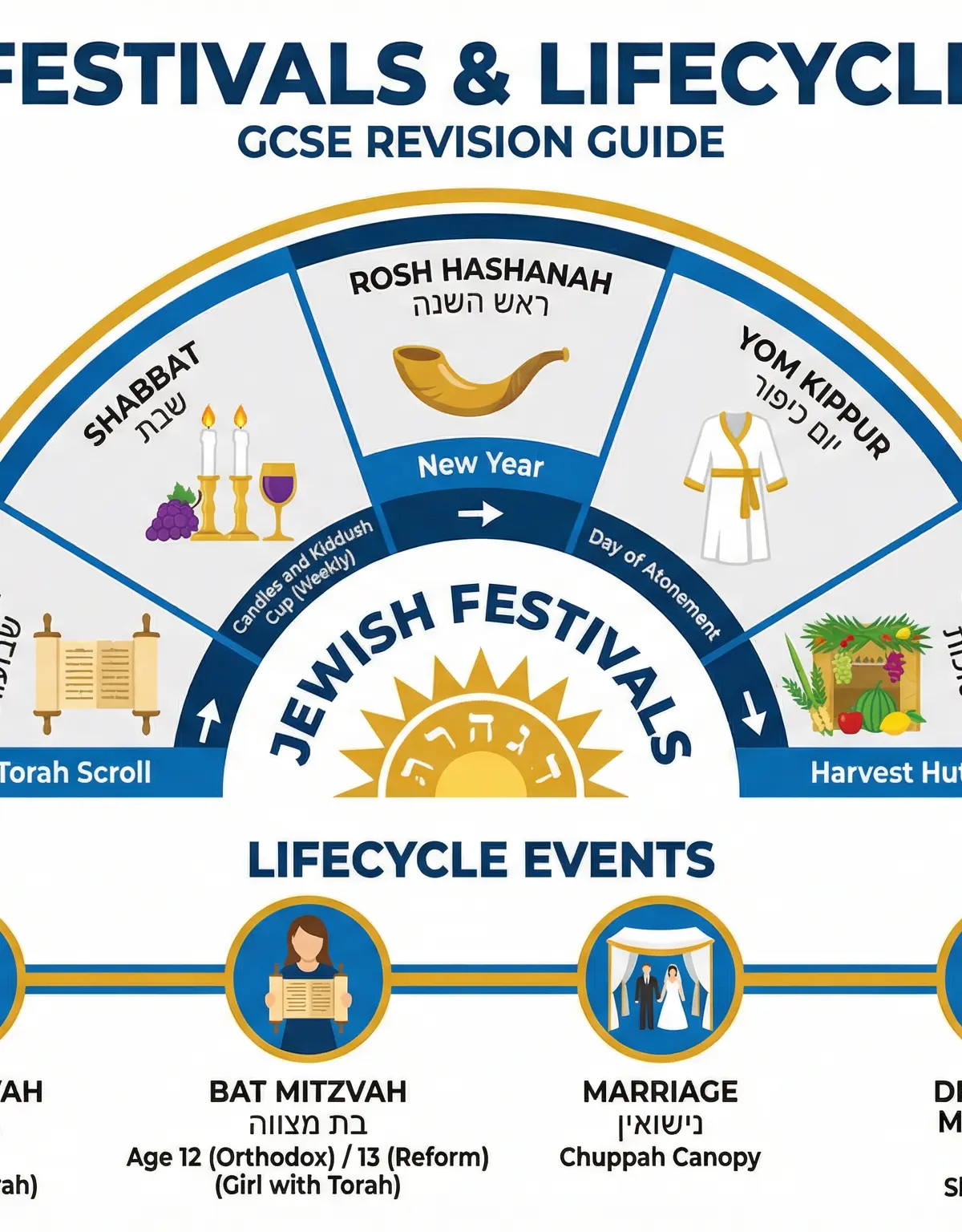
Major Festivals (The Shalosh Regalim or Three Pilgrimage Festivals)
- Pesach (Passover): Commemorates the liberation of the Israelites from slavery in Egypt (the Exodus). The Seder meal is the central ritual, where the story is retold from a book called the Haggadah.
- Shavuot (Festival of Weeks): Celebrates the giving of the Torah to Moses on Mount Sinai. It is traditional to stay up all night studying the Torah.
- Sukkot (Festival of Tabernacles): Remembers the 40 years the Israelites spent wandering in the desert, living in temporary shelters. Jews build a temporary hut (sukkah) and live in it for a week.
The High Holy Days (Yamim Noraim)
- Rosh Hashanah: The Jewish New Year. A time for reflection and judgement, when the shofar (ram's horn) is blown.
- Yom Kippur: The Day of Atonement. The holiest day of the year, marked by a 25-hour fast and prayers for forgiveness.
Lifecycle Events
- Brit Milah: The covenant of circumcision for boys on their eighth day of life, a sign of the covenant with Abraham.
- Bar/Bat Mitzvah: The coming-of-age ceremony. A boy becomes Bar Mitzvah at 13; a girl becomes Bat Mitzvah at 12 (Orthodox) or 13 (Reform).
- Marriage: The wedding ceremony takes place under a Chuppah (canopy), symbolising the couple's new home. A marriage contract (Ketubah) is signed.
- Mourning: Jewish mourning rituals show respect for the dead and provide comfort to the living. The first seven days of intense mourning are called Shiva.
Visual Resources
2 diagrams and illustrations
Interactive Diagrams
1 interactive diagram to visualise key concepts
Conceptual Flow Outline
Flowchart showing how core beliefs and events in the Torah lead to Jewish practices.
Worked Examples
3 worked examples — open one to explore the question and available guidance.
Practice Questions
Test your understanding — click to reveal model answers
Explain two Jewish mourning rituals. (4 marks)
Hint: Think about the different stages of mourning and what happens immediately after death.
Explain two ways in which the events of the Exodus are remembered in the Pesach Seder. (5 marks)
Hint: Focus on the symbolic foods on the Seder plate and link them to the story.
For Jews, celebrating festivals at home is more important than celebrating them in the synagogue. Evaluate this statement. (12 marks)
Hint: Consider festivals that are home-based (Pesach Seder, Shabbat meal) versus those that are synagogue-focused (Yom Kippur, Rosh Hashanah). Argue both sides.
Describe what a Bar Mitzvah is. (2 marks)
Hint: State the age and what it signifies.
Explain two features of a synagogue that show the importance of the Torah. (4 marks)
Hint: Think about where the Torah is kept and where it is read from.