AQA · GCSE · Religious Studies
Terrorism and Weapons of Mass Destruction
This study guide for AQA GCSE Religious Studies (Theme D) critically examines religious responses to Terrorism and Weapons of Mass Destruction. It is designed to help candidates master the key arguments, secure top marks by applying Just War Theory and the Sanctity of Life, and avoid common exam pitfalls.
- 6 min read
- 3 worked examples
- 5 practice questions
- 6 key terms
Study Notes
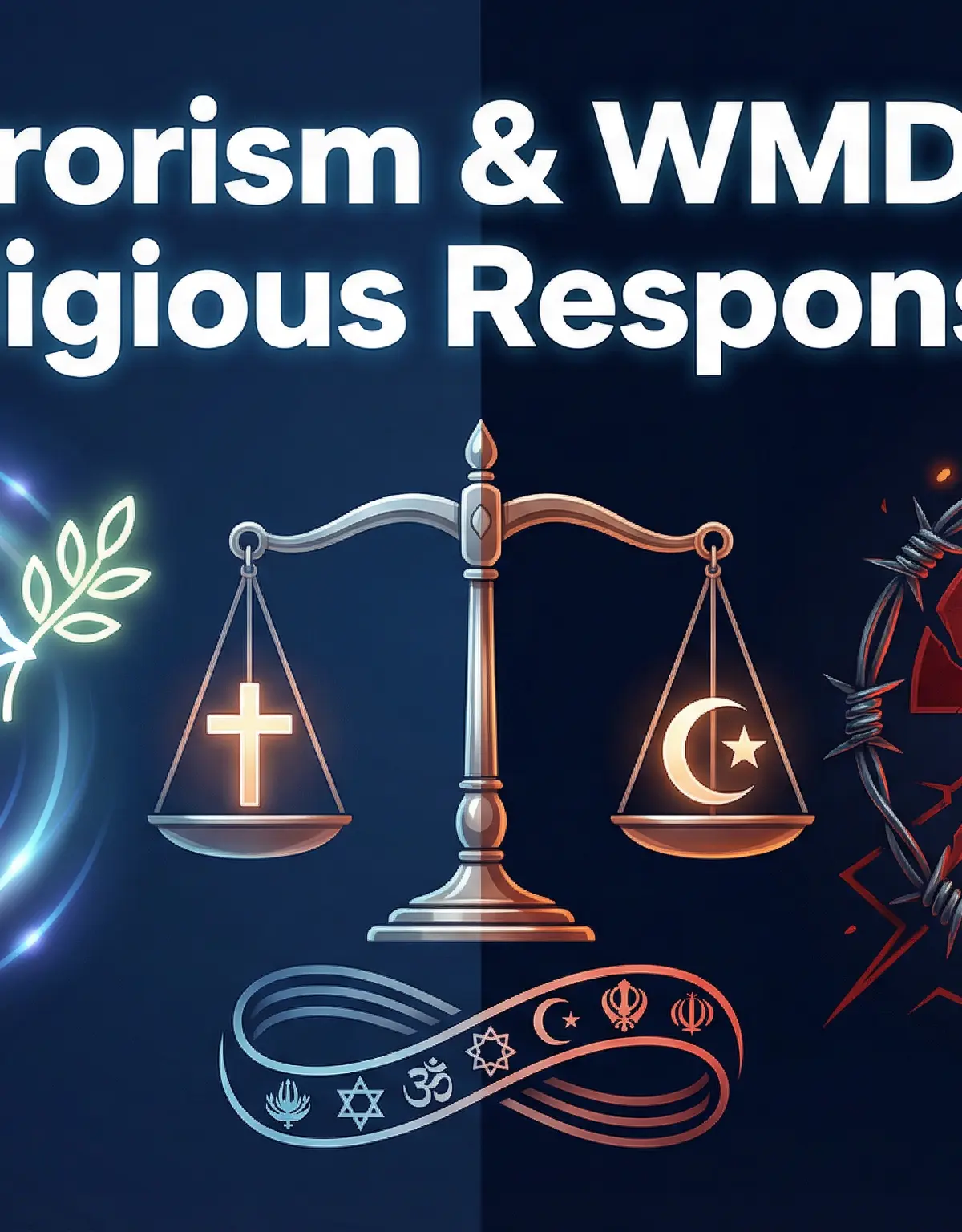
Overview
This unit explores one of the most challenging ethical areas in the AQA specification: the religious response to violence, specifically Terrorism and Weapons of Mass Destruction (WMDs). Examiners expect candidates to move beyond simplistic statements like 'all religions want peace' and engage critically with complex theological frameworks. You will need to analyse the specific nature of terrorism as a tactic, understand the devastating and indiscriminate power of WMDs, and apply religious principles like the Sanctity of Life and Just War Theory. A key focus is the tension between pacifist ideals and the realist argument for deterrence. Marks are awarded for demonstrating a nuanced understanding of diverse religious viewpoints, from the absolute pacifism of the Quakers to the reluctant acceptance of nuclear deterrence by some mainstream denominations. This guide will equip you with the precise knowledge and analytical skills needed to excel.
Key Concepts & Developments
Terrorism: A Unique Moral Problem
What it is: Terrorism is the unlawful use of violence and intimidation, especially against civilians, in the pursuit of political or ideological aims. The key feature that distinguishes it from conventional warfare is the deliberate targeting of non-combatants to create a state of fear or 'terror'.
Why it matters: For religious ethics, this is a profound problem. The principle of the Sanctity of Life—the belief that all life is sacred and a gift from God—is central to both Christianity and Islam. Terrorism directly violates this by intentionally killing innocent people. Candidates must link the tactic of terrorism directly to this core religious belief.
Specific Knowledge: Use Quran 5:32: 'Whoever kills one person... it is as if he has killed all of mankind.' For Christianity, reference the Decalogue ('You shall not murder') and the concept of humans being made in the Imago Dei (Image of God).
Weapons of Mass Destruction (WMDs)
What they are: WMDs are a category of weapons capable of causing death and destruction on a vast scale. They are categorised as Biological (e.g., anthrax, nerve agents), Chemical (e.g., mustard gas), and Nuclear (atomic bombs). Their defining feature is their indiscriminate nature.
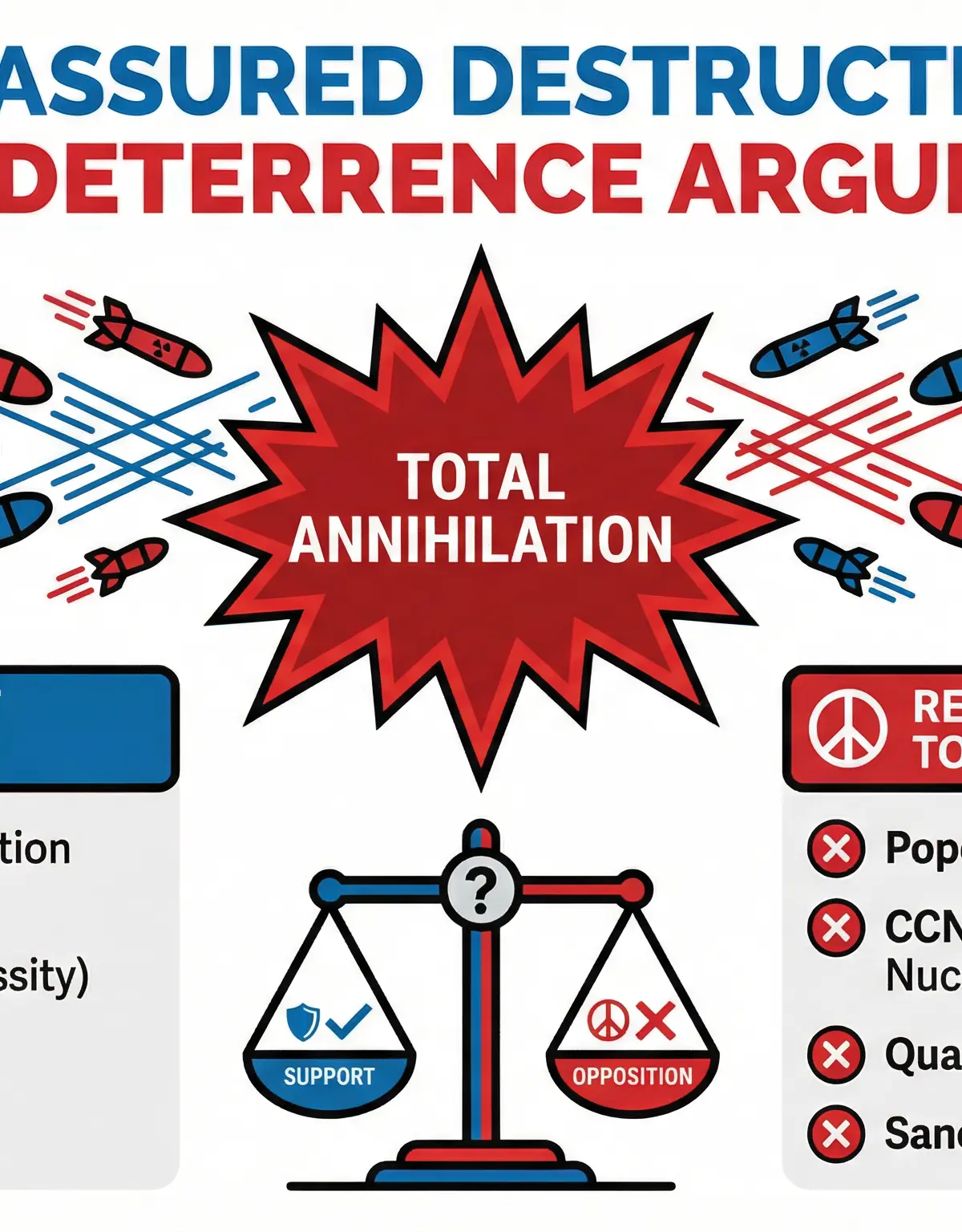
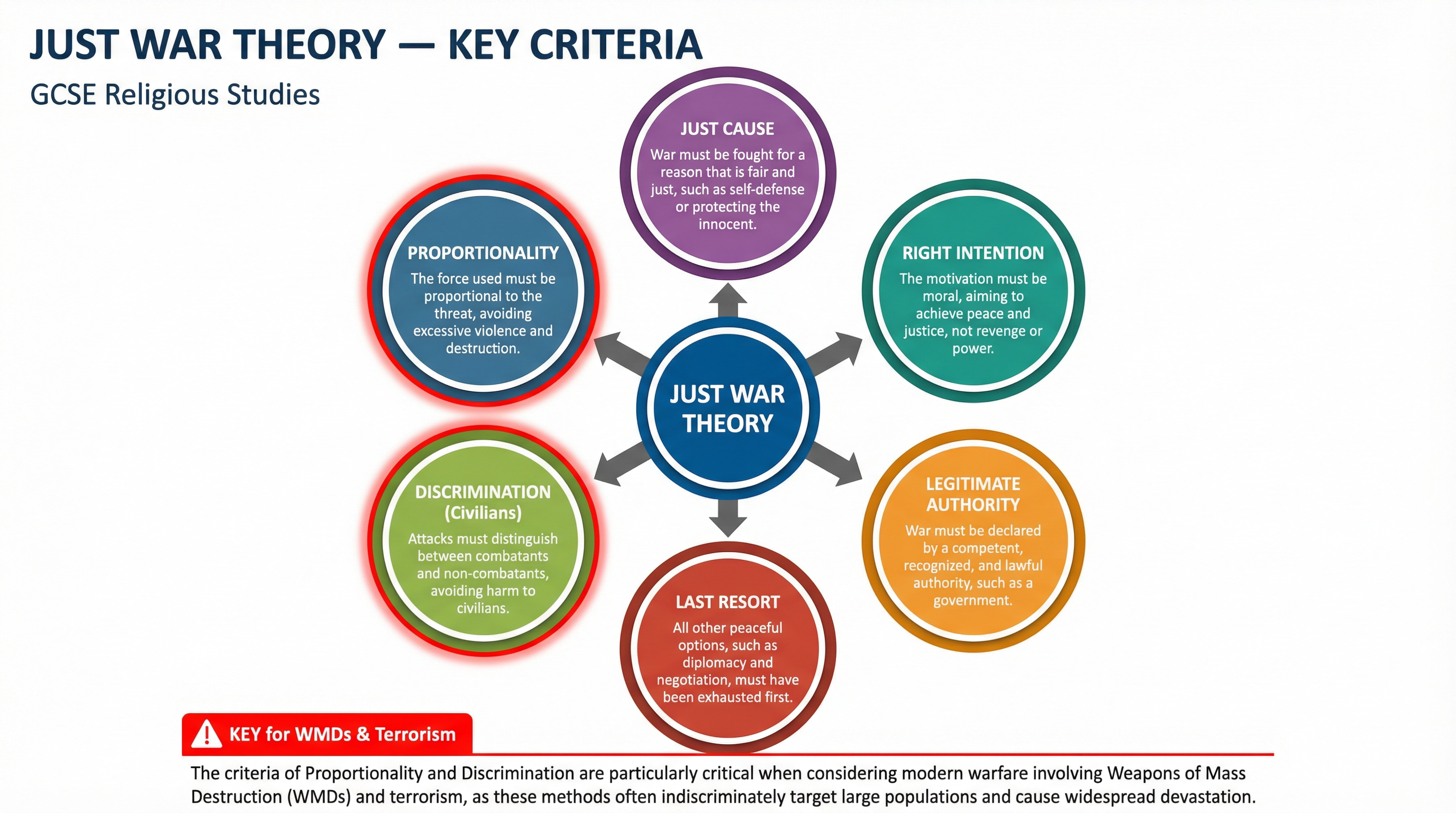
Why it matters: WMDs pose a fundamental challenge to Just War Theory, a framework developed by Christian thinkers like St. Thomas Aquinas to determine if a war can be morally justified. WMDs inherently fail two key Just War criteria:
- Discrimination: They cannot distinguish between soldiers and civilians.
- Proportionality: The level of destruction they cause is grossly disproportionate to any military objective.
Specific Knowledge: Be able to distinguish between biological, chemical, and nuclear weapons. Reference the bombing of Hiroshima as a key historical example of nuclear weapon use.
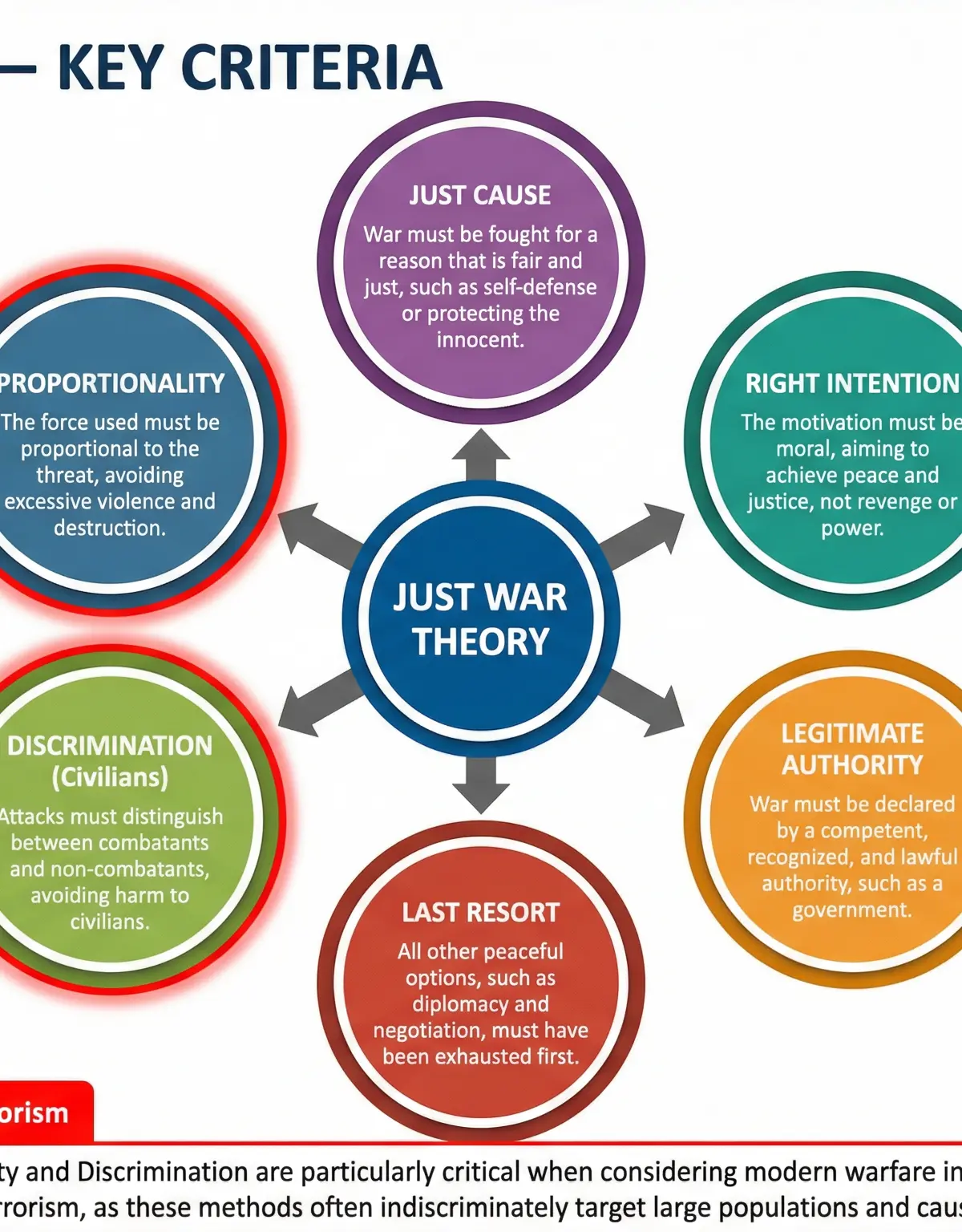
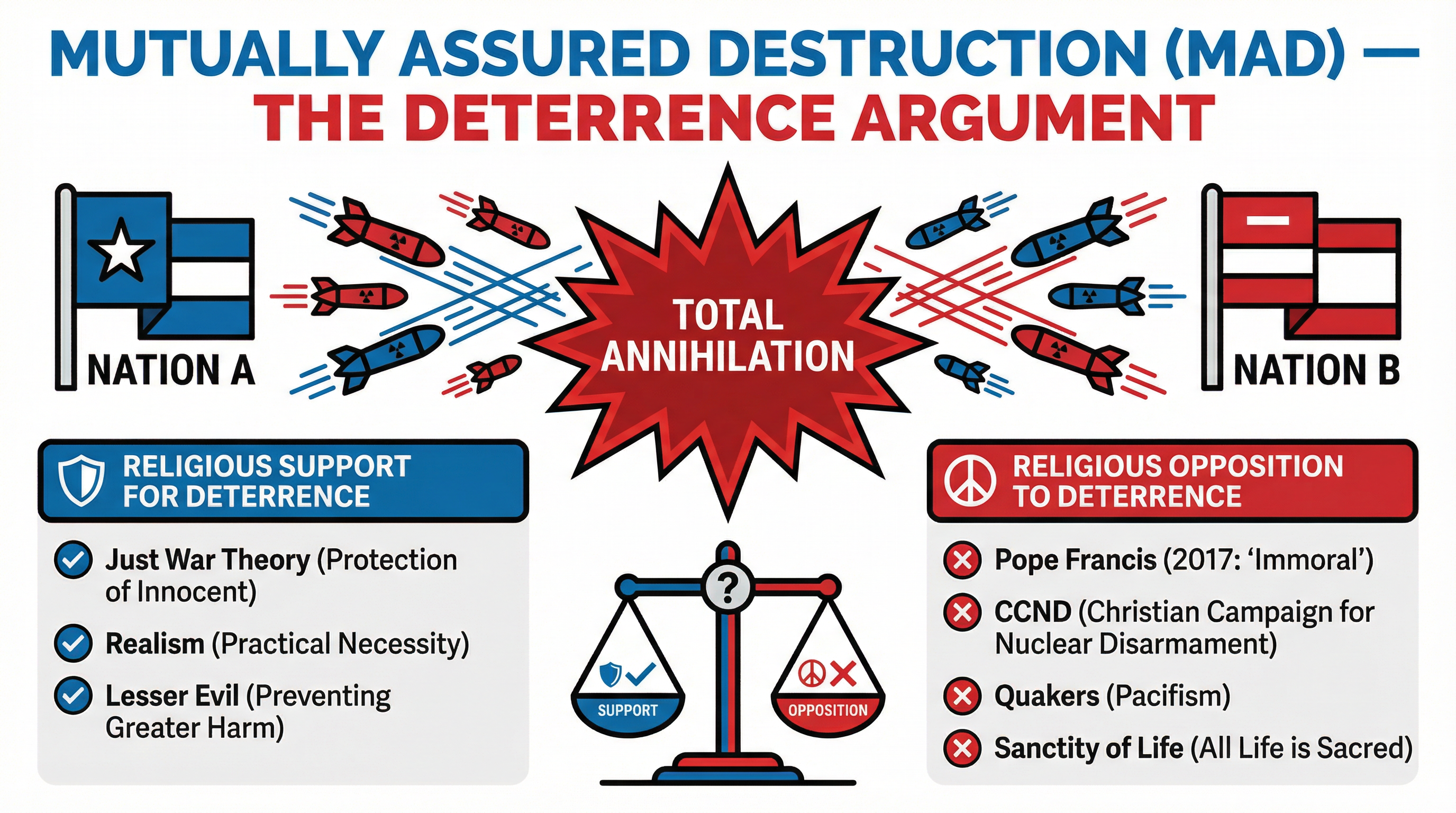
The Deterrence Argument: Mutually Assured Destruction (MAD)
What it is: The theory of nuclear deterrence, or MAD, argues that if two opposing sides possess nuclear weapons, neither will use them because it would lead to their own certain destruction in a retaliatory strike. The argument is that the existence of the weapons prevents their use.
Why it matters: This creates a complex ethical debate. Some religious believers, adopting a realist position, accept deterrence as a 'necessary evil' that maintains peace. The Church of England has historically held this view. However, many others condemn it. Pope Francis declared in 2017 that the possession of nuclear weapons, not just their use, is immoral. This was a significant shift in Catholic teaching.
Specific Knowledge: Name the Christian Campaign for Nuclear Disarmament (CCND) as a group that actively campaigns against the UK's Trident nuclear deterrent. Mention the Quakers (Religious Society of Friends) as an example of an absolute pacifist group that rejects all violence and all weapons.
Second-Order Concepts
Causation
Terrorism is caused by a complex mix of political, social, and ideological factors. Religious ideology can be a powerful motivator, but candidates should avoid simplistic claims that religion 'causes' terrorism. It is more accurate to say that extremist interpretations of religious texts can be used to justify violence.
Consequence
The immediate consequence of terrorism is death, injury, and fear. The long-term consequences can include retaliatory violence, erosion of civil liberties, and increased social division. The consequence of using a WMD would be catastrophic, potentially ending civilisation as we know it.
Change & Continuity
Continuity: The core religious principles of Sanctity of Life and peace have remained constant. Change: The development of WMDs in the 20th century created an entirely new ethical problem that religious thinkers had never before faced. Pope Francis's 2017 declaration represents a significant change in Catholic teaching on deterrence.
Significance
This topic is significant because it forces a confrontation between ancient religious ideals and the realities of modern technology and conflict. It tests the relevance and applicability of religious ethics in the 21st century. For the exam, its significance lies in its high potential for evaluative questions that require nuanced judgement.
Worked Examples
3 worked examples — open one to explore the question and available guidance.
Practice Questions
Test your understanding — click to reveal model answers
'Possessing nuclear weapons is the best way to ensure peace.' Evaluate this statement. (12 marks)
Hint: Think about the deterrence argument (MAD) versus the moral objections from religious perspectives. Use Pope Francis and CCND in your answer.
Explain two similar religious beliefs about the Sanctity of Life. Refer to Christianity and Islam in your answer. (4 marks)
Hint: Both religions believe life is a gift from God. Use a quote from one and a concept from the other.
Explain two reasons why a religious person might be a pacifist. (5 marks)
Hint: Use the Quakers as an example and refer to the teachings of Jesus.
Explain how the Christian Campaign for Nuclear Disarmament (CCND) puts its beliefs into practice. (2 marks)
Hint: Think about what a pressure group does.
Describe the difference between Proportionality and Discrimination in Just War theory. (2 marks)
Hint: One is about the amount of force, the other is about the target.