AQA · GCSE · Religious Studies
The Atonement
The Atonement is a cornerstone of Christian theology, explaining how the death and resurrection of Jesus Christ restores the broken relationship between God and humanity. This guide unpacks the key theological concepts, scriptural evidence, and exam techniques required to achieve top marks in your AQA GCSE Religious Studies exam.
- 7 min read
- 3 worked examples
- 5 practice questions
- 7 key terms
Study Notes
Overview
The Atonement is the theological concept explaining how humanity is reconciled with God through the suffering, death, and resurrection of Jesus Christ. For AQA GCSE candidates, a thorough understanding is essential, as it forms the bedrock of Christian beliefs about sin, salvation, and the nature of God. Examiners expect candidates to move beyond a simple statement that "Jesus died for our sins." Instead, you must be able to explain the theological mechanisms behind this sacrifice, analyse different Christian interpretations, and support your arguments with specific Sources of Wisdom and Authority (SOWA). This study guide will explore the concepts of Original Sin, the different theories of Atonement (Substitution, Ransom, Moral Exemplar), the significance of the Resurrection, and the ongoing debate between salvation through faith versus works. Mastery of this topic requires not just knowledge, but the ability to construct a well-supported theological argument.

Key Concepts & Developments
Original Sin
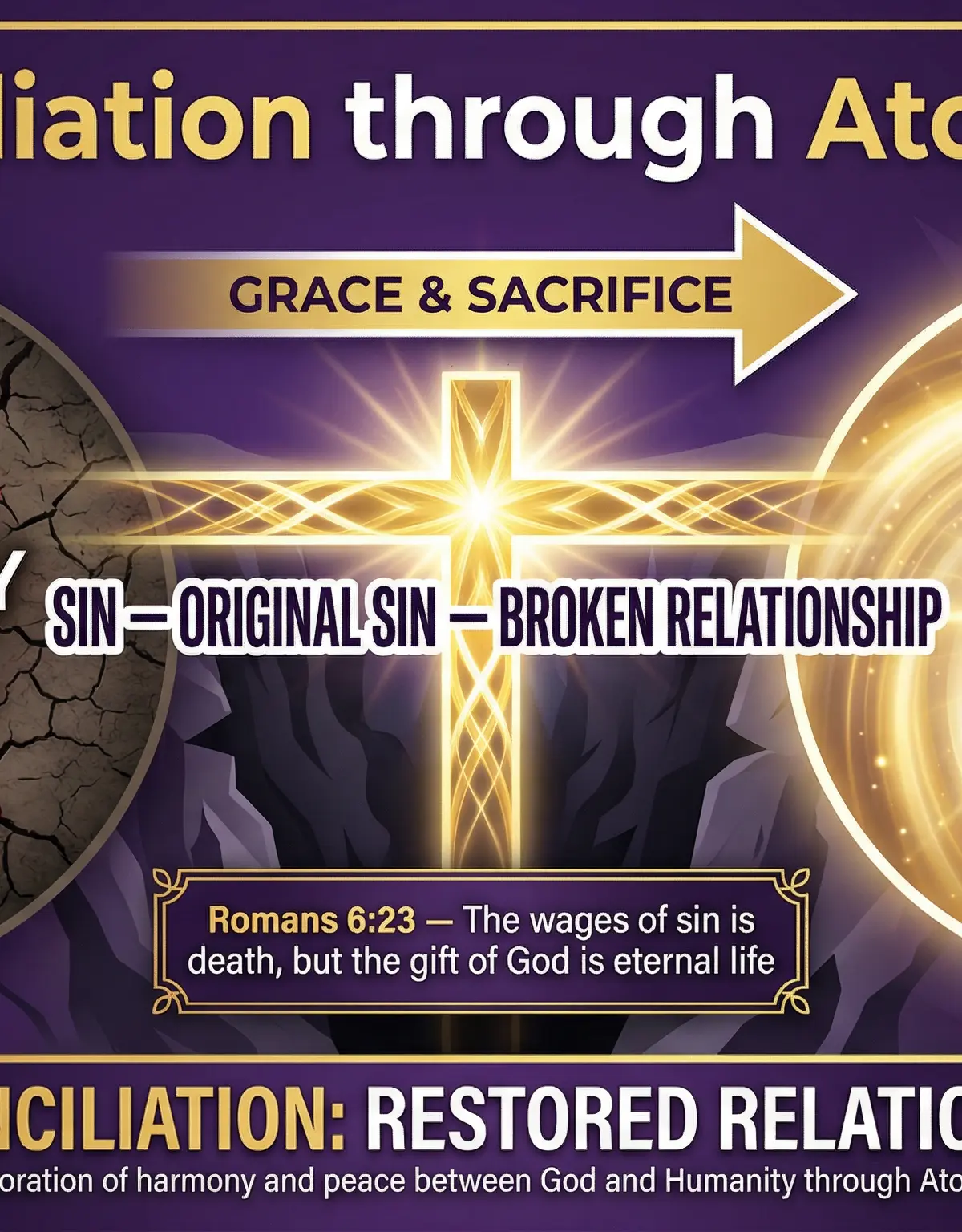
What it is: The Christian doctrine that humanity exists in a state of sin as a result of Adam and Eve's disobedience in the Garden of Eden. This act of rebellion fractured the perfect relationship between God and humanity, introducing sin and death into the world.
Why it matters: Original Sin is the fundamental problem that the Atonement solves. Without understanding this concept of a broken relationship, the need for reconciliation through Jesus' sacrifice makes little sense. Candidates must be able to explain that the Atonement is God's solution to the problem of sin that separates humanity from Him.
Specific Knowledge: Genesis 3 (The Fall), Romans 5:12 - "Therefore, just as sin entered the world through one man, and death through sin, and in this way death came to all people, because all sinned."
The Crucifixion as a Sacrificial Act
What happened: Jesus of Nazareth, believed by Christians to be the Son of God, was executed by crucifixion under the Roman governor Pontius Pilate.
Why it matters: For Christians, this was not merely a historical execution but a pre-ordained, sacrificial act. Jesus' death is understood as the ultimate sacrifice that pays the penalty for human sin, thereby making reconciliation with God possible. Candidates are awarded marks for explaining the theological significance of the event, not just describing it.
Specific Knowledge: John 1:29 - John the Baptist calls Jesus the "Lamb of God, who takes away the sin of the world." This links Jesus' death to the Passover lambs sacrificed in the Old Testament.
The Resurrection
What happened: On the third day after his crucifixion, Christians believe Jesus rose from the dead.
Why it matters: The Resurrection is the ultimate proof of the Atonement's success. It validates Jesus' identity as the Son of God and demonstrates his victory over sin and death. Without the Resurrection, the crucifixion would be a meaningless tragedy. It confirms that the sacrifice was accepted by God and that the promise of eternal life is real.
Specific Knowledge: 1 Corinthians 15:17 - "And if Christ has not been raised, your faith is futile; you are still in your sins." This is a crucial SOWA for explaining the significance of the Resurrection.
Key Theories of Atonement
Substitutionary Atonement
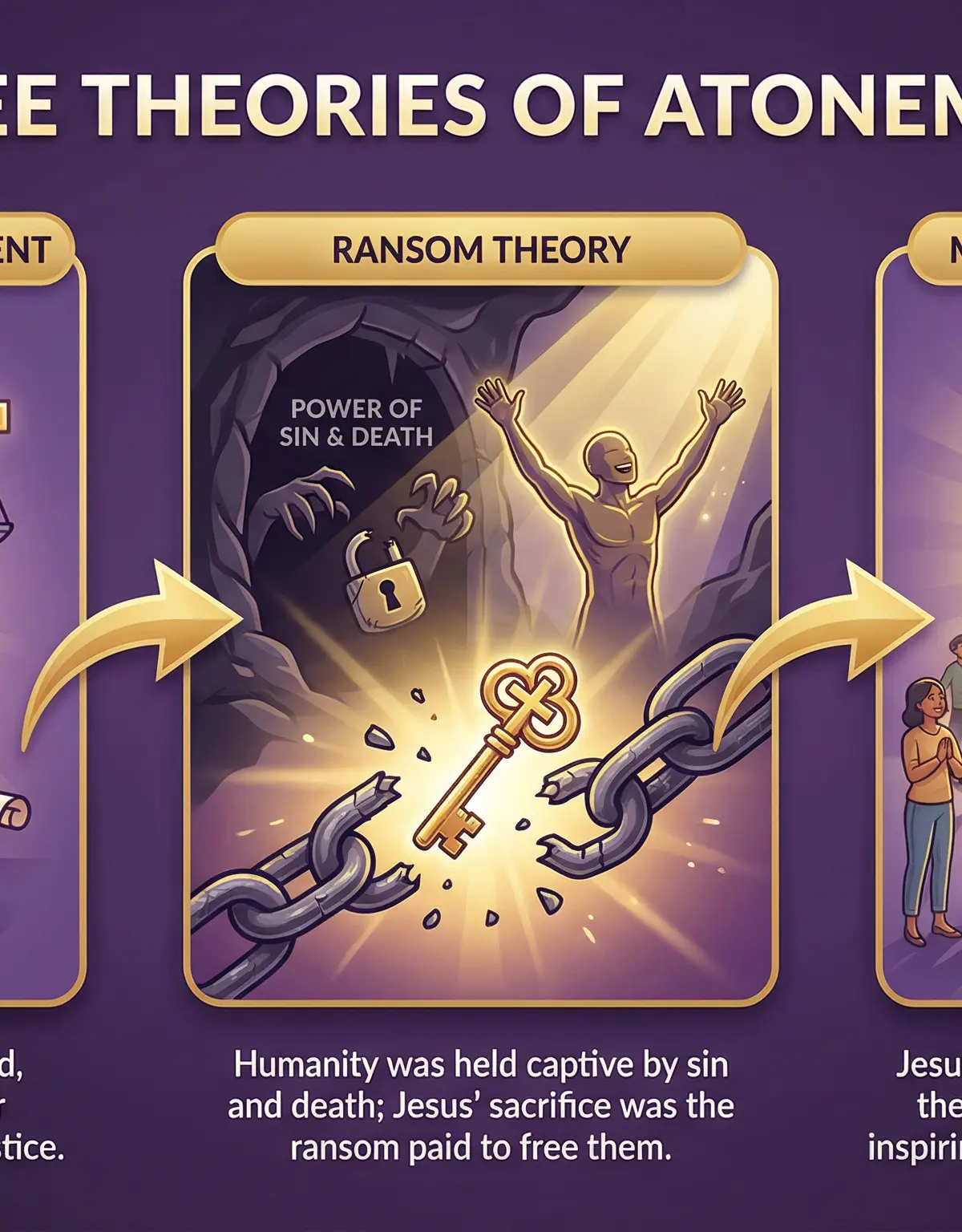
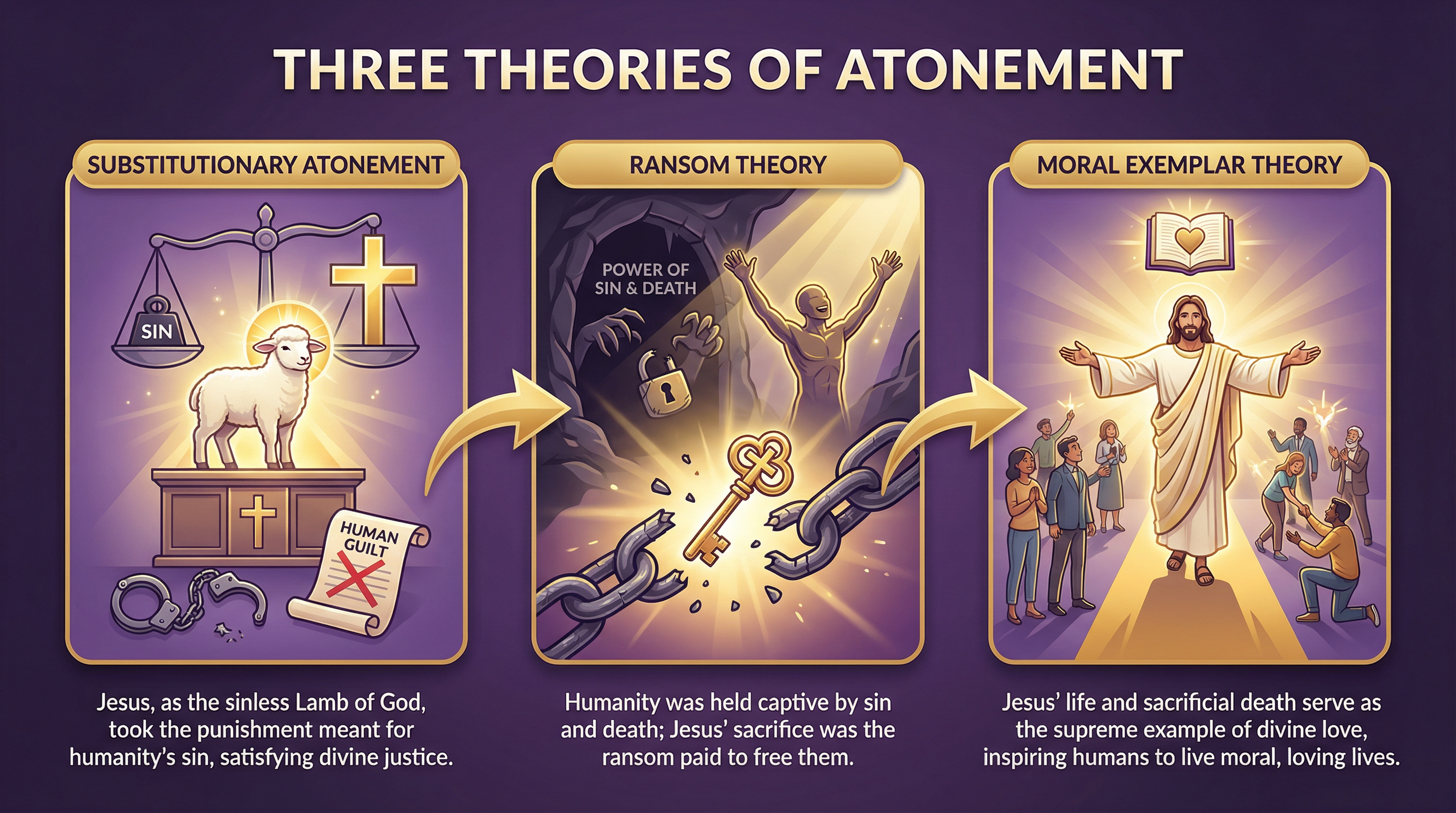
Theory: This view holds that Jesus acted as a substitute for humanity, taking the punishment (death) that we deserved for our sins. Divine justice required a penalty for sin, and Jesus, being perfect and sinless, was the only one qualified to pay it on our behalf.
Impact: This is the most common understanding of the Atonement, particularly in Protestant and Evangelical traditions. It emphasizes God's justice and holiness, showing that sin cannot simply be ignored. It also highlights God's love in providing the substitute.
Ransom Theory
Theory: This early church theory posits that humanity was held captive by Satan, sin, and death. Jesus' death was the 'ransom' paid to liberate humanity from this bondage.
Impact: This theory emphasizes the liberating power of the Atonement. It portrays salvation as a dramatic rescue from hostile forces. While less common today, it is important for understanding the historical development of Christian thought. Mark 10:45 is a key SOWA: "For even the Son of Man did not come to be served, but to serve, and to give his life as a ransom for many."
Moral Exemplar Theory
Theory: Associated with Peter Abelard, this theory argues that the primary purpose of Jesus' life and death was to be the perfect example of love and obedience. His sacrifice is not a legal payment but a profound demonstration of God's love, which inspires humanity to repent and live moral lives.
Impact: This view focuses on the transformative power of the Atonement on the human heart and mind. It shifts the focus from a legal transaction to a moral and relational one. It is often contrasted with Substitutionary Atonement in 12-mark evaluation questions.
Second-Order Concepts
Causation
The primary cause for the Atonement is Original Sin, which created a separation between God and humanity. The immediate trigger for the event itself was the historical context of Jesus' ministry, which brought him into conflict with religious and political authorities. Theologically, however, the ultimate cause is God's divine plan and love, seeking to reconcile humanity to Himself.
Consequence
The immediate consequence was the death of Jesus and the scattering of his disciples. The long-term theological consequences are profound: the possibility of salvation and eternal life for believers, the defeat of sin and death, the establishment of the New Covenant between God and humanity, and the founding of the Christian Church.
Change & Continuity
The Atonement represents a radical change in the relationship between God and humanity, moving from the Old Covenant based on law to the New Covenant based on grace. However, it also shows continuity, fulfilling the prophecies and sacrificial systems of the Old Testament (e.g., the Passover Lamb). The nature of God as holy and just remains, but His mercy is revealed in a new way.
Significance
The Atonement is arguably the most significant event in Christian theology. It is the basis for Christian hope, the core of the gospel message, and the central theme of Christian worship (especially in the Eucharist). It defines the Christian understanding of God's character (just and loving) and the path to salvation.
Source Skills
When using the Bible as a Source of Wisdom and Authority (SOWA), candidates must do more than just quote a verse. To gain credit, you must explain how the verse supports your point. For example, when discussing Substitutionary Atonement, don't just write "John 1:29 says Jesus is the Lamb of God." Instead, write: "The concept of substitution is supported by John 1:29, where John the Baptist refers to Jesus as the 'Lamb of God'. This is significant because it directly links Jesus to the sacrificial lambs in the Old Testament, which were offered as a substitute to pay for the sins of the people." This shows the examiner you understand the context and theological importance of the source.
Visual Resources
2 diagrams and illustrations
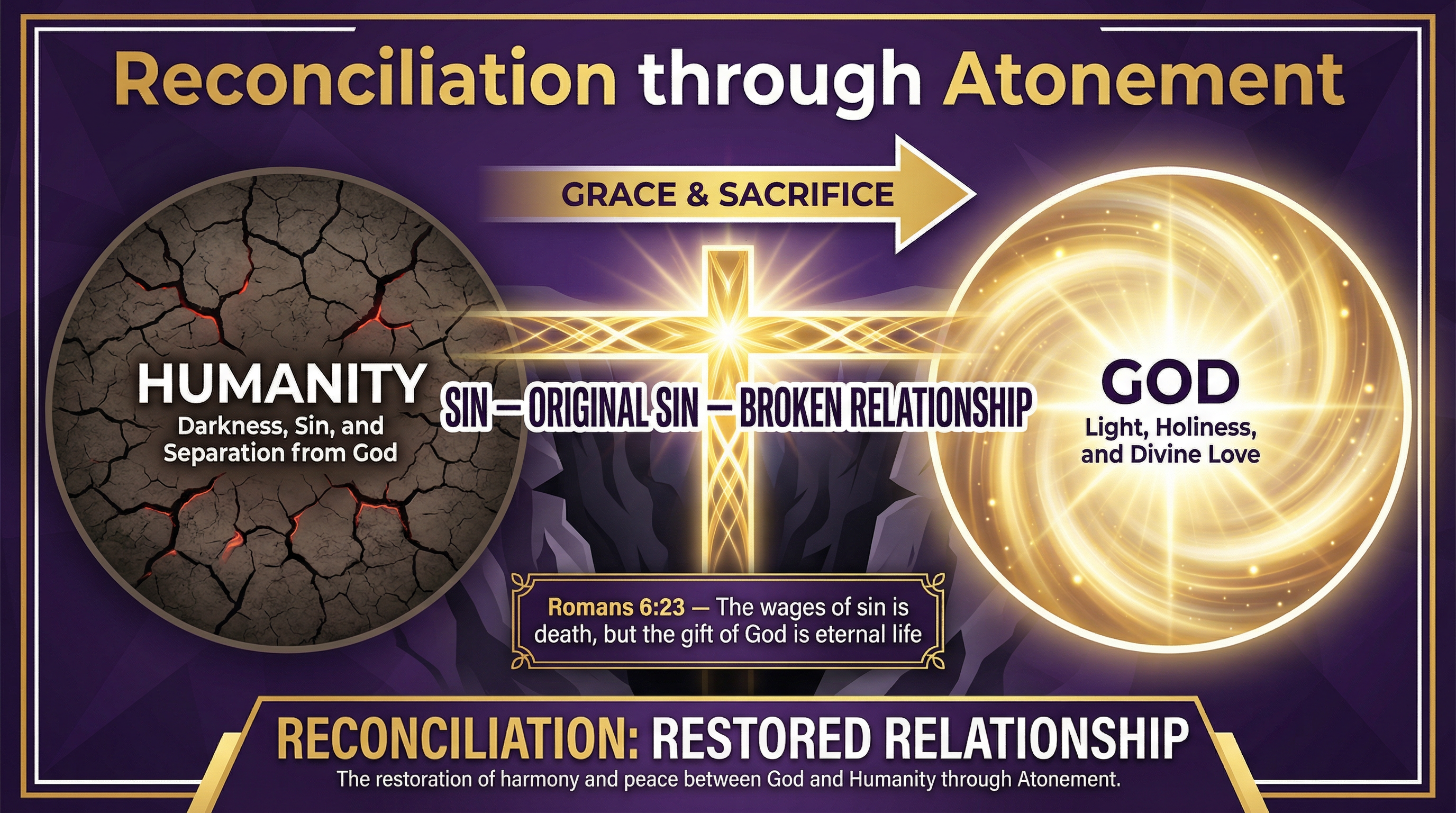
Interactive Diagrams
1 interactive diagram to visualise key concepts
Conceptual Flow Outline
Flowchart showing how the Atonement bridges the separation between Humanity and God.
Worked Examples
3 worked examples — open one to explore the question and available guidance.
Practice Questions
Test your understanding — click to reveal model answers
Describe Christian beliefs about Original Sin. (4 marks)
Hint: Think about the story of Adam and Eve and its consequences.
Explain two of the main theories of the Atonement. (5 marks)
Hint: Choose two from Substitution, Ransom, and Moral Exemplar. You must include a SOWA.
'Salvation is a free gift that cannot be earned.' Evaluate this statement. (12 marks)
Hint: This is a 'faith vs works' question. Contrast the Protestant (sola fide) and Catholic views.
Explain why the Resurrection is important for Christians. (5 marks)
Hint: Give two reasons and include a SOWA.
Explain the role of grace and faith in salvation. (8 marks)
Hint: Define both terms and explain how they work together, referencing different Christian viewpoints.