AQA · GCSE · Religious Studies
The Resurrection
The Resurrection of Jesus is the cornerstone of Christianity, marking his victory over death and providing the foundation for Christian belief in salvation and eternal life. For AQA GCSE candidates, mastering this topic is crucial for understanding core theological concepts and securing high marks in the exam.
- 6 min read
- 3 worked examples
- 5 practice questions
- 6 key terms
Study Notes
Overview
This study guide covers the AQA GCSE Religious Studies topic of The Resurrection. It is the foundational event of the Christian faith, and a thorough understanding is essential for exam success. Examiners expect candidates to know the key biblical narratives (Luke 24, John 20), understand the profound theological significance as explained by St. Paul (1 Corinthians 15), and be able to analyse different Christian interpretations. The Resurrection is not merely a miracle; it is the event that validates Jesus' divinity, defeats sin and death, and offers believers the hope of life after death. This guide will break down the key events, theological concepts, and provide specific exam techniques to help you achieve the highest marks. You will learn to distinguish between the Resurrection and the Ascension, explain its soteriological function, and evaluate the differences between literal and metaphorical interpretations.

Key Events & Developments
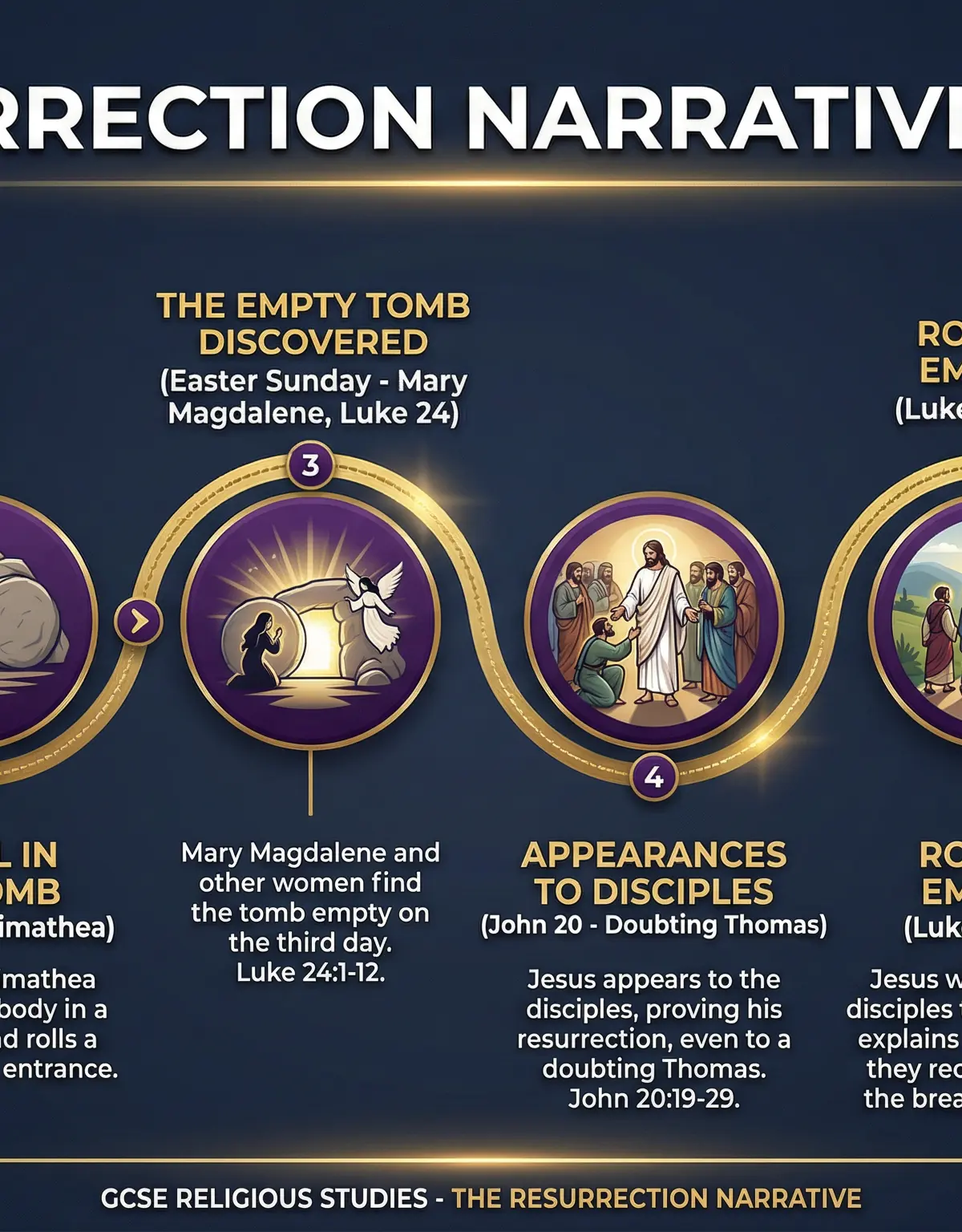
The Empty Tomb (Luke 24:1-12)
Date(s): The third day after the crucifixion (Easter Sunday).
What happened: Mary Magdalene and other women went to Jesus' tomb to anoint his body. They found the large stone rolled away and the tomb was empty. Two men in gleaming clothes (angels) appeared and announced, 'He is not here; he has risen!'.
Why it matters: This is the initial discovery and the first piece of evidence for the Resurrection. It shifts the narrative from mourning to mystery and hope. For the exam, it is the starting point of the Resurrection account and demonstrates the fulfilment of Jesus' own prophecies.
Specific Knowledge: Key individuals: Mary Magdalene, Joanna, Mary the mother of James. Key location: The tomb of Joseph of Arimathea.
The Appearances to the Disciples (John 20:19-29)
Date(s): Over a 40-day period following the Resurrection.
What happened: Jesus appeared multiple times to his disciples in a locked room. He showed them his hands and side. A famous account is that of 'Doubting Thomas', who refused to believe until he could physically touch Jesus' wounds a week later. Upon doing so, he declared, 'My Lord and my God!'.
Why it matters: These appearances are crucial for demonstrating a bodily resurrection, not just a spiritual one. Thomas's doubt and subsequent belief provide powerful testimony. Credit is given for explaining that Jesus appeared in a physical, albeit glorified, form that could be touched and could eat.
Specific Knowledge: The locked room setting, the story of Thomas, Jesus' words: 'Peace be with you.'
Key Individuals
Jesus Christ
Role: The central figure of Christianity, believed by Christians to be the Son of God.
Key Actions: Prophesied his own death and resurrection; willingly underwent crucifixion; rose from the dead on the third day; appeared to his followers.
Impact: His resurrection is the ultimate validation of his life and teachings. It is the basis for the Christian Church and the hope of eternal life for believers. It confirms his victory over sin and death.
St. Paul
Role: An early Christian missionary and apostle whose writings form a significant part of the New Testament.
Key Actions: Wrote extensively on the theological meaning of the Resurrection, most notably in 1 Corinthians 15.
Impact: Paul's writings provide the core theological framework for understanding the Resurrection's importance. His statement, 'And if Christ has not been raised, our preaching is useless and so is your faith' (1 Cor 15:14), is a vital piece of evidence for exam answers. He connects the Resurrection to the future hope of a 'spiritual body' for believers.
Second-Order Concepts
Causation
The Resurrection is presented in Christian theology not as an event with earthly causes, but as a unique, divine act of God. It is the ultimate cause of the Christian faith itself. The cause is God's power and love, demonstrating his plan for salvation.
Consequence
Immediate: The transformation of the disciples from a frightened, defeated group into bold preachers who were willing to die for their faith. The establishment of the Christian Church.
Long-term: The development of Christian theology centered on salvation through Christ. The practice of Sunday worship (on the day of the Resurrection). Christian funeral rites that express hope in a future resurrection. The spread of Christianity globally.
Change & Continuity
Change: The Resurrection fundamentally changed the disciples' understanding of Jesus, confirming him as the divine Son of God. It changed the meaning of death, from a final end to a transition to eternal life. It established a new covenant between God and humanity.
Continuity: It was the fulfilment of Old Testament prophecies and Jesus' own teachings. It continued God's plan of salvation that runs throughout the Bible.
Significance
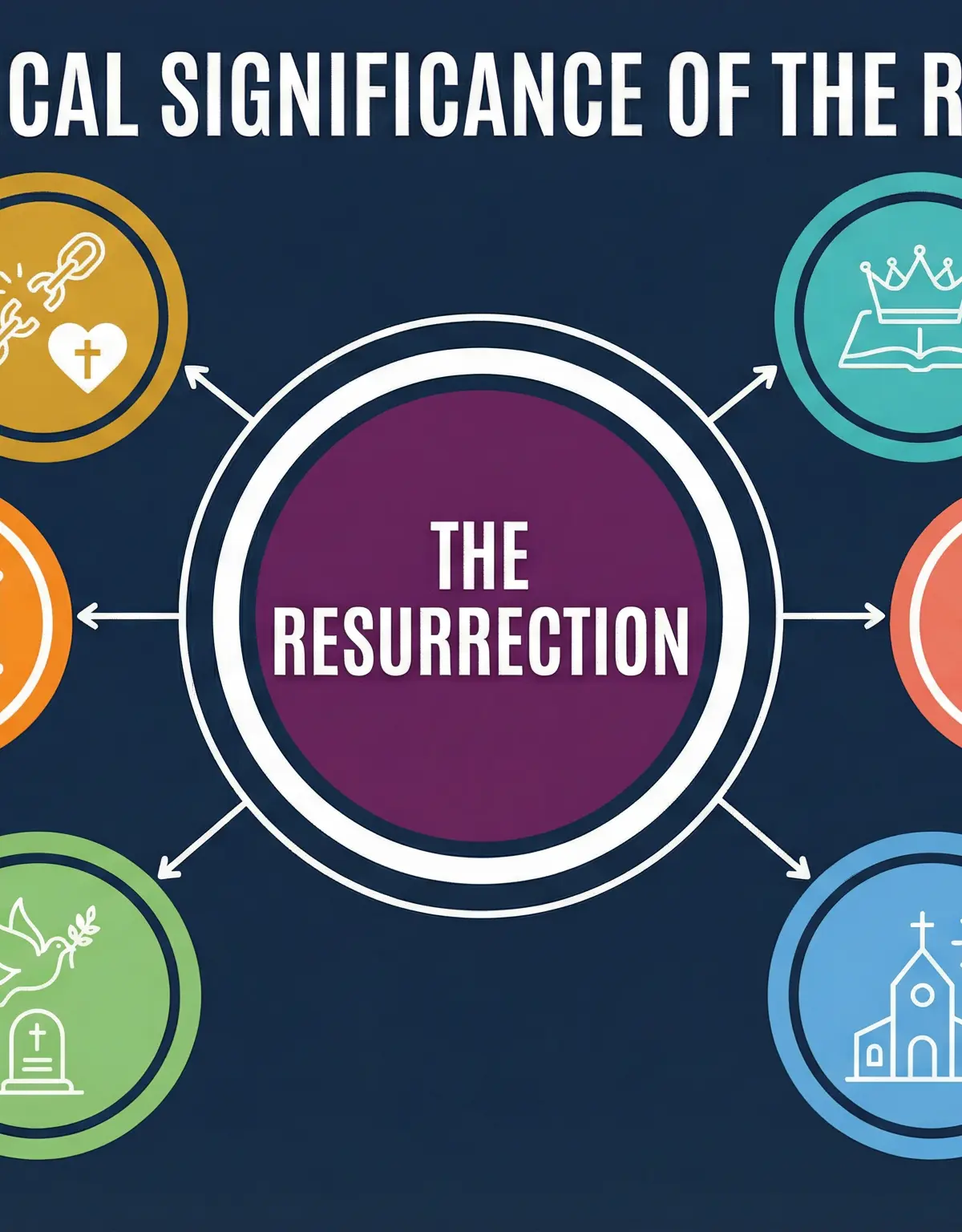
The Resurrection is the single most significant event in Christianity. It is the lynchpin of the faith. Without it, Jesus would be remembered merely as a moral teacher or a failed prophet. With it, he is the saviour of the world, the conqueror of death, and the source of eternal hope. Examiners expect candidates to be able to explain this significance with clarity and precision.
Source Skills
For this topic, the key 'sources' are the 'Sources of Wisdom and Authority' – the Bible. When approaching a question, especially a 12-mark evaluation, you must use the Bible as your primary evidence.
Provenance: The Gospels of Luke and John were written by followers of Jesus in the 1st Century AD. They are faith testimonies, not neutral historical reports. Their purpose is to persuade the reader of the truth of the Resurrection.
Content: You must be able to refer to specific details: the empty tomb, the angels, the appearance to Thomas, the Road to Emmaus. For theological arguments, you must refer to St. Paul's reasoning in 1 Corinthians 15.
Evaluation: In a 12-mark question, you will evaluate different interpretations. You must use these sources to support different points of view (e.g., using John 20 to support a bodily resurrection vs. a Liberal Christian view that the 'spirit' of Jesus lives on).
Visual Resources
2 diagrams and illustrations
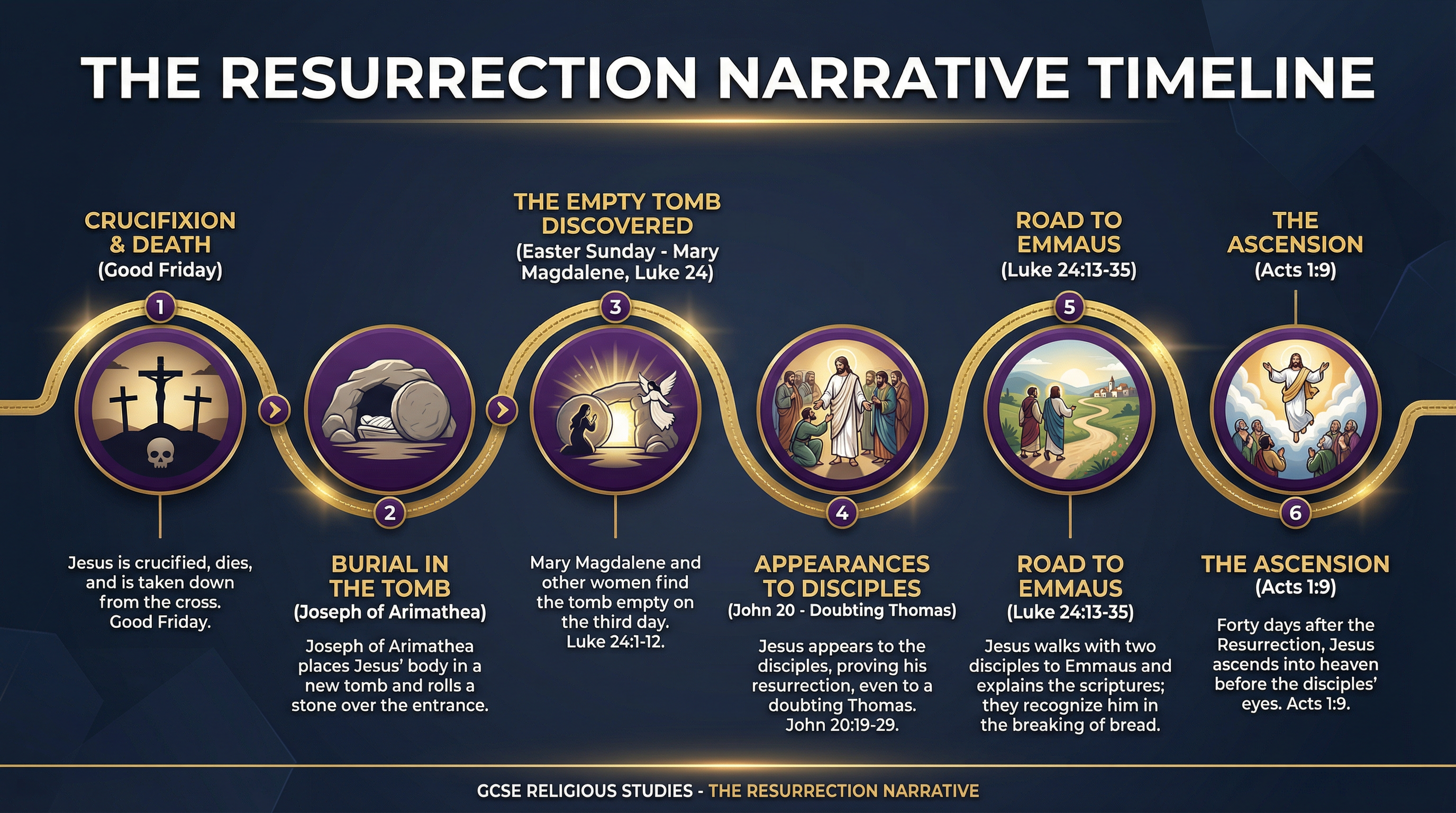
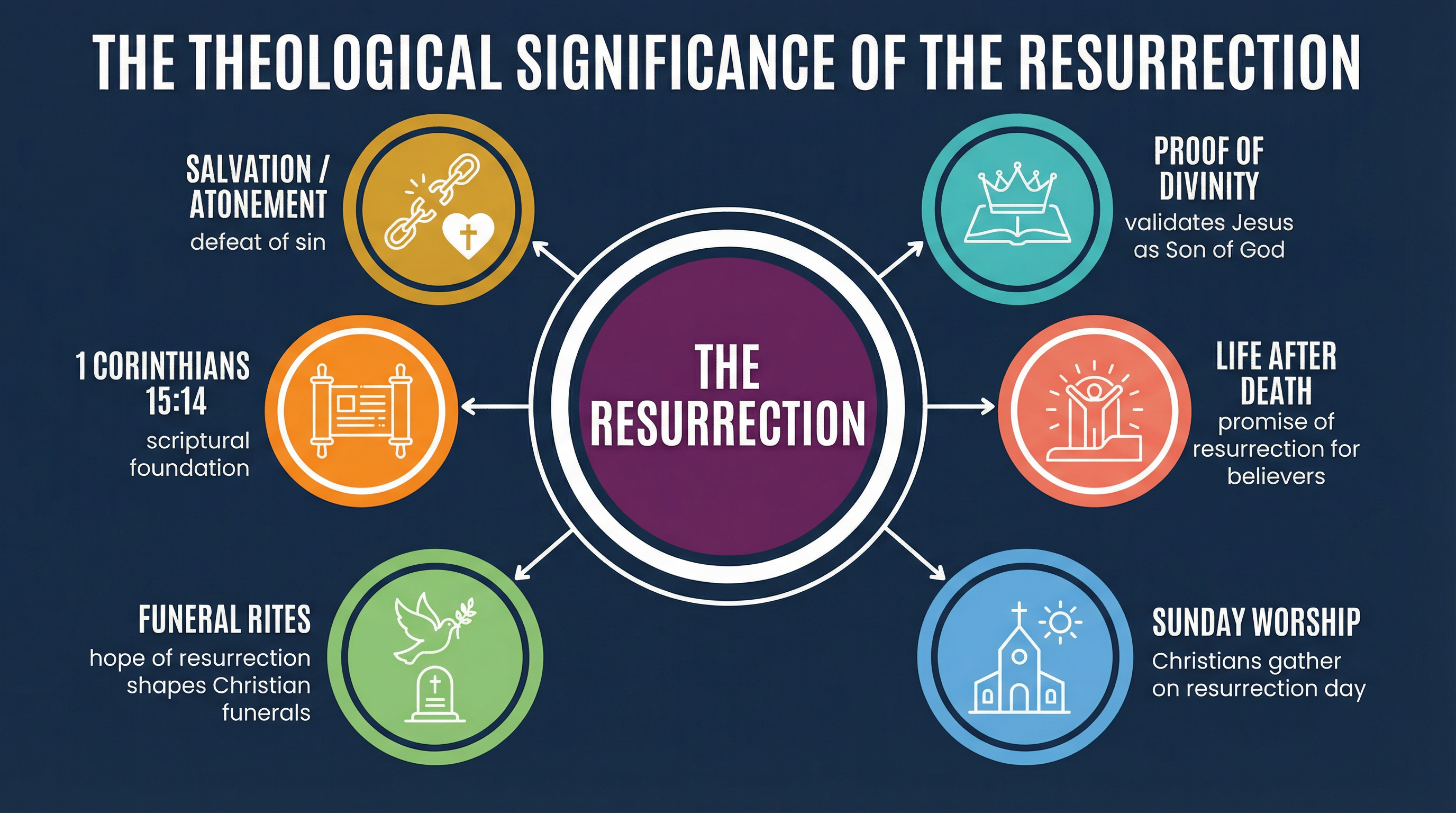
Interactive Diagrams
1 interactive diagram to visualise key concepts
Conceptual Flow Outline
Flowchart showing the Resurrection narrative and its theological consequences.
Worked Examples
3 worked examples — open one to explore the question and available guidance.
Practice Questions
Test your understanding — click to reveal model answers
Explain two of Jesus' resurrection appearances. (5 marks)
Hint: Think about who he appeared to and what happened. Use the Gospels of Luke or John.
Explain two reasons why the Resurrection is important for Christians. (5 marks)
Hint: Use the PEEL structure and think about salvation and life after death.
'Without the Resurrection, there would be no Christian faith.' Evaluate this statement. (12 marks)
Hint: This is a classic 12-mark evaluation. Argue for and against, using scripture and different Christian views. Come to a justified conclusion.
Describe the events of the empty tomb narrative in Luke's Gospel. (4 marks)
Hint: Focus on the key details from Luke 24: who, what, where, and what was said.
Explain how belief in the resurrection might affect a Christian's life. (8 marks)
Hint: Think about daily life, major life events, and their overall worldview. Provide at least three points.