Pearson Edexcel · A-Level · Religious Studies
Islamic Ethics and Moral Principles
This study guide provides a comprehensive overview of Islamic Ethics and Moral Principles for the Edexcel A-Level Religious Studies specification (9RS0/4C). It delves into the core concepts of Shari'ah and Fiqh, the sources of Islamic law, and the key ethical categories, equipping students with the knowledge and skills to excel in their exams."
- 5 min read
- 2 worked examples
- 2 practice questions
Study Notes
Overview
This unit explores the sophisticated framework of Islamic ethics, a tradition rooted in fourteen centuries of theological and legal scholarship. For the Edexcel A-Level exam, candidates are required to demonstrate a precise understanding of Usul al-Fiqh (the principles of jurisprudence) and how these are used to derive ethical rulings on complex moral issues. The study of Islamic ethics is not merely a historical exercise; it is an engagement with a living tradition that continues to shape the lives of over 1.5 billion Muslims worldwide. Examiners expect candidates to move beyond simple descriptions and engage in critical evaluation, analysing the tensions between different schools of thought, such as the Ash'arites and the Mu'tazilites, and the ongoing debate between adherence to tradition (Taqlid) and the necessity of independent reasoning (Ijtihad). A strong performance in this paper requires a firm grasp of the key terminology, the ability to apply ethical principles to specific scenarios, and the skill to construct a well-supported academic argument.

Key Concepts & Developments
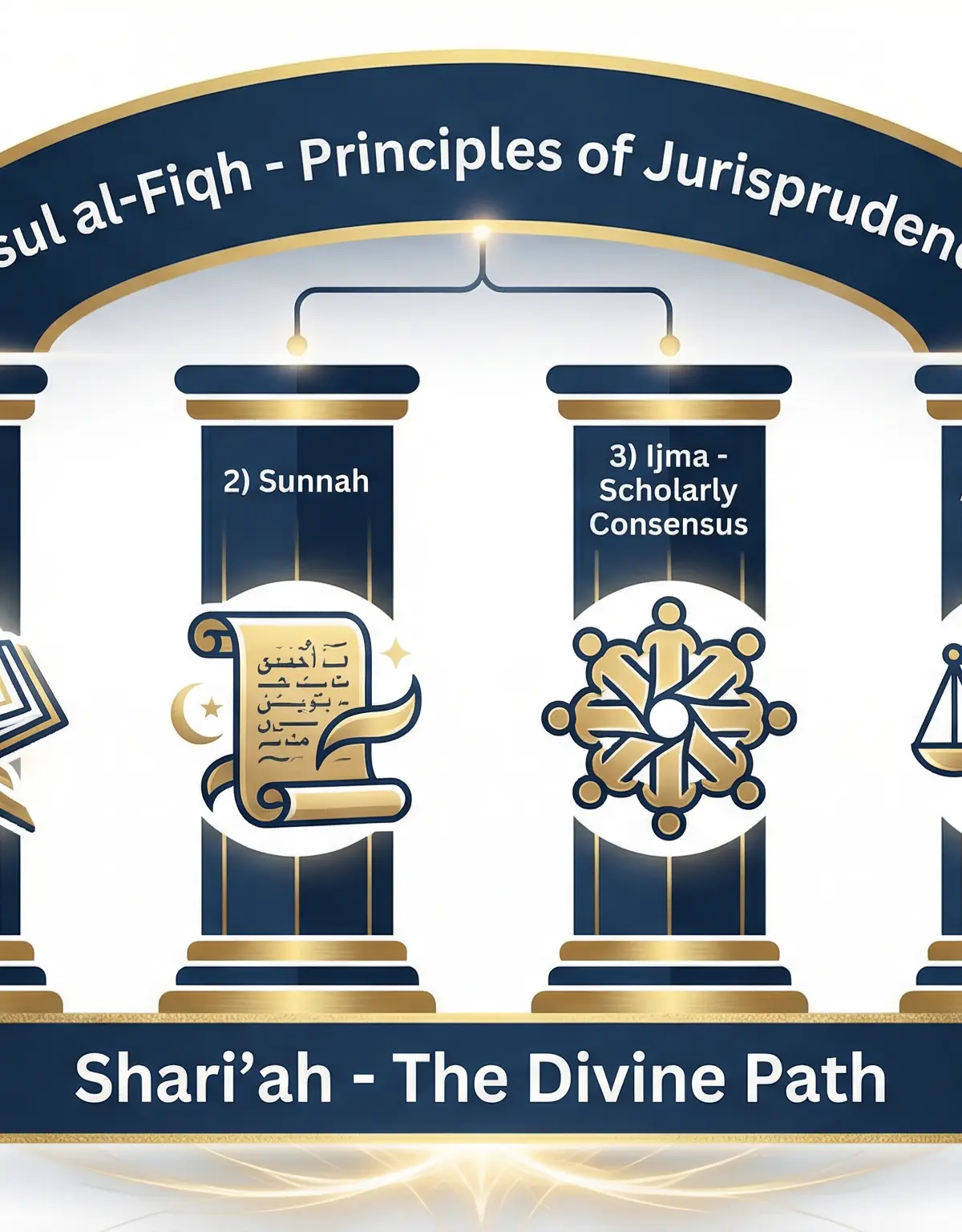
The Four Roots of Usul al-Fiqh
What it is: The methodological principles used by Islamic jurists to derive rulings from the primary sources of Islamic law.
Why it matters: Understanding the four roots is fundamental to comprehending how Islamic law is formulated. Marks are awarded for accurately differentiating between them and explaining their relationship to one another.
Specific Knowledge: Candidates must know the four roots in their order of priority: 1. Qur'an: The direct and verbatim word of God, the highest source of authority. 2. Sunnah: The normative practice of the Prophet Muhammad, recorded in the Hadith. 3. Ijma: The consensus of qualified Islamic scholars on a point of law. 4. Qiyas: Analogical reasoning, used to apply a ruling from an existing situation to a new one.
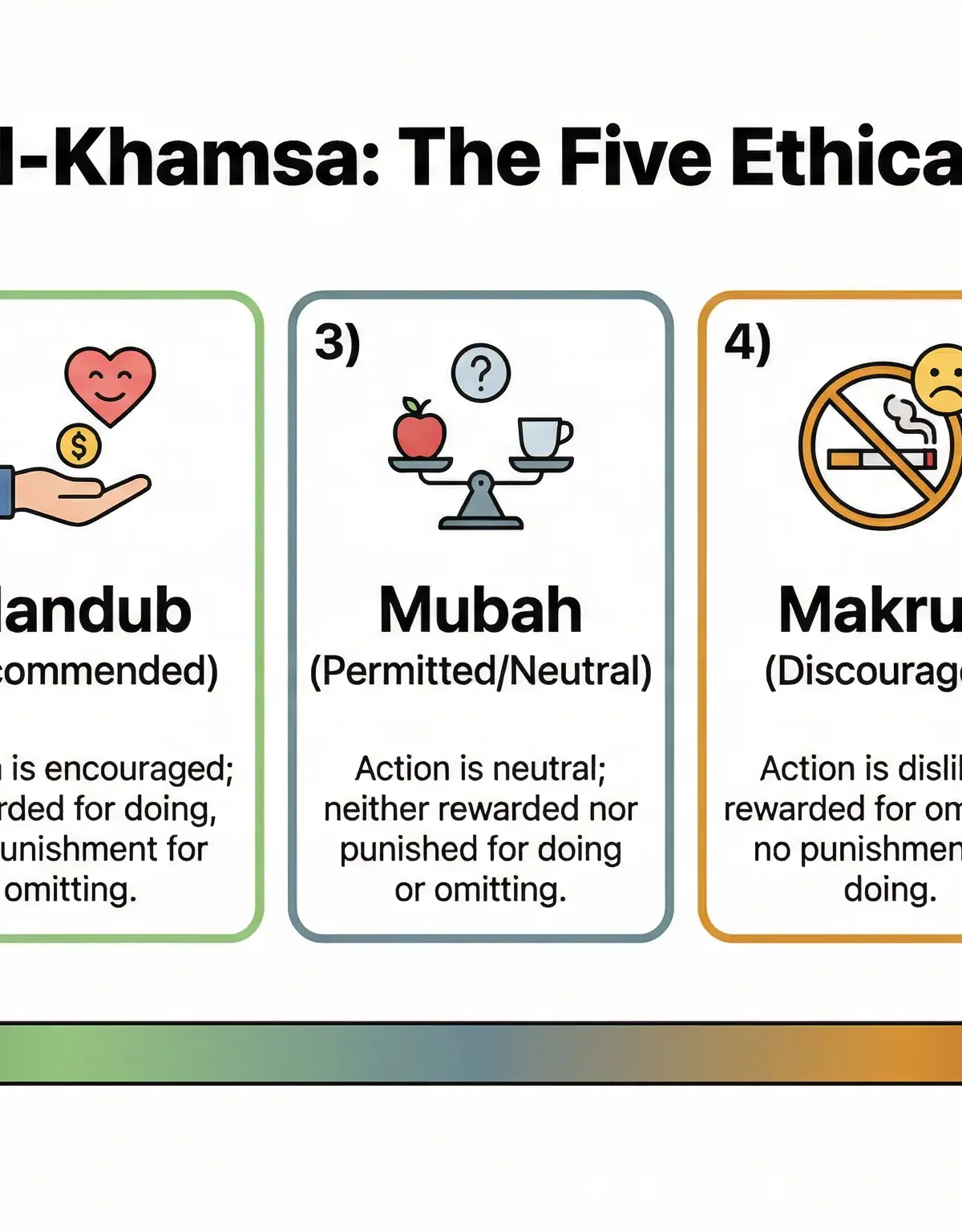
Al-Ahkam Al-Khamsa (The Five Ethical Categories)
What it is: A classification system that categorises all human actions into one of five ethical values.
Why it matters: This framework is the primary tool for moral evaluation in Islamic jurisprudence. Candidates must be able to apply these categories to any given ethical dilemma.
Specific Knowledge: The five categories are: 1. Wajib/Fard (Obligatory): An action that must be performed. 2. Mandub/Mustahabb (Recommended): An action that is encouraged. 3. Mubah (Permissible): An action that is neutral. 4. Makruh (Discouraged): An action that is disliked but not forbidden. 5. Haram (Forbidden): An action that is strictly prohibited.
Ash'arite vs. Mu'tazilite Ethics
What it is: A major theological debate in classical Islam concerning the nature of good and evil and the role of human reason in ethics.
Why it matters: This is a key area for AO2 evaluation. Candidates must be able to explain and evaluate the two positions, using scholarly views to support their arguments.
Specific Knowledge: Ash'arites (Divine Command Theory): Argue that good and evil are determined by God's will alone. An act is good because God commands it. Key scholar: Al-Ghazali. Mu'tazilites (Rationalism): Argue that good and evil are objective, rational categories that human reason can discern. God commands the good because it is good. This view has largely been superseded in Sunni Islam but remains influential in Shia Islam and modern reformist thought.
Key Individuals
Al-Shafi'i (767-820 CE)
Role: Founder of the Shafi'i school of Islamic law and a key architect of Usul al-Fiqh.
Key Actions: Systematised the principles of Islamic jurisprudence, giving a clear methodology for the use of the Qur'an, Sunnah, Ijma, and Qiyas. He is particularly noted for elevating the status of the Sunnah and formalising the role of Ijma.
Impact: His work provided the foundation for the subsequent development of Islamic law and is still studied extensively today. He is a crucial figure for understanding the structure of Islamic legal thought.
Tariq Ramadan (born 1962)
Role: A prominent contemporary European Muslim intellectual and advocate for a reformist interpretation of Islam.
Key Actions: Argues for a "radical reform" of Islamic thought, emphasizing the importance of Ijtihad and a contextual approach to the Islamic sources. He advocates for a "European Islam" that is fully integrated into Western societies while remaining true to its core principles.
Impact: Ramadan is a key scholar for AO2 questions. His work provides a powerful counter-argument to more traditionalist or literalist interpretations of Islamic ethics and law. Candidates can use his views to evaluate the relevance of classical Islamic thought in the modern world."
Worked Examples
2 worked examples — open one to explore the question and available guidance.
Practice Questions
Test your understanding — click to reveal model answers
Examine the significance of Ijma (scholarly consensus) in Islamic legal thought. (10 marks)
Hint: Consider why Ijma was considered necessary and how it functions as a source of law. Use Al-Shafi'i as a key scholar.
Evaluate the claim that Ijtihad is no longer relevant in the modern world. (20 marks)
Hint: Contrast the traditional view of the 'closing of the gate of Ijtihad' with modern reformist arguments. Use Tariq Ramadan and the concept of Maqasid al-Shari'ah.