Pearson Edexcel · GCSE · Religious Studies
The Resurrection
The Resurrection of Jesus Christ is the cornerstone of the Christian faith, validating his divinity and offering believers the promise of eternal life. This guide provides the essential knowledge, sources, and exam technique required to achieve top marks in the Edexcel GCSE Religious Studies exam.
- 7 min read
- 3 worked examples
- 3 practice questions
- 6 key terms
Study Notes
Overview
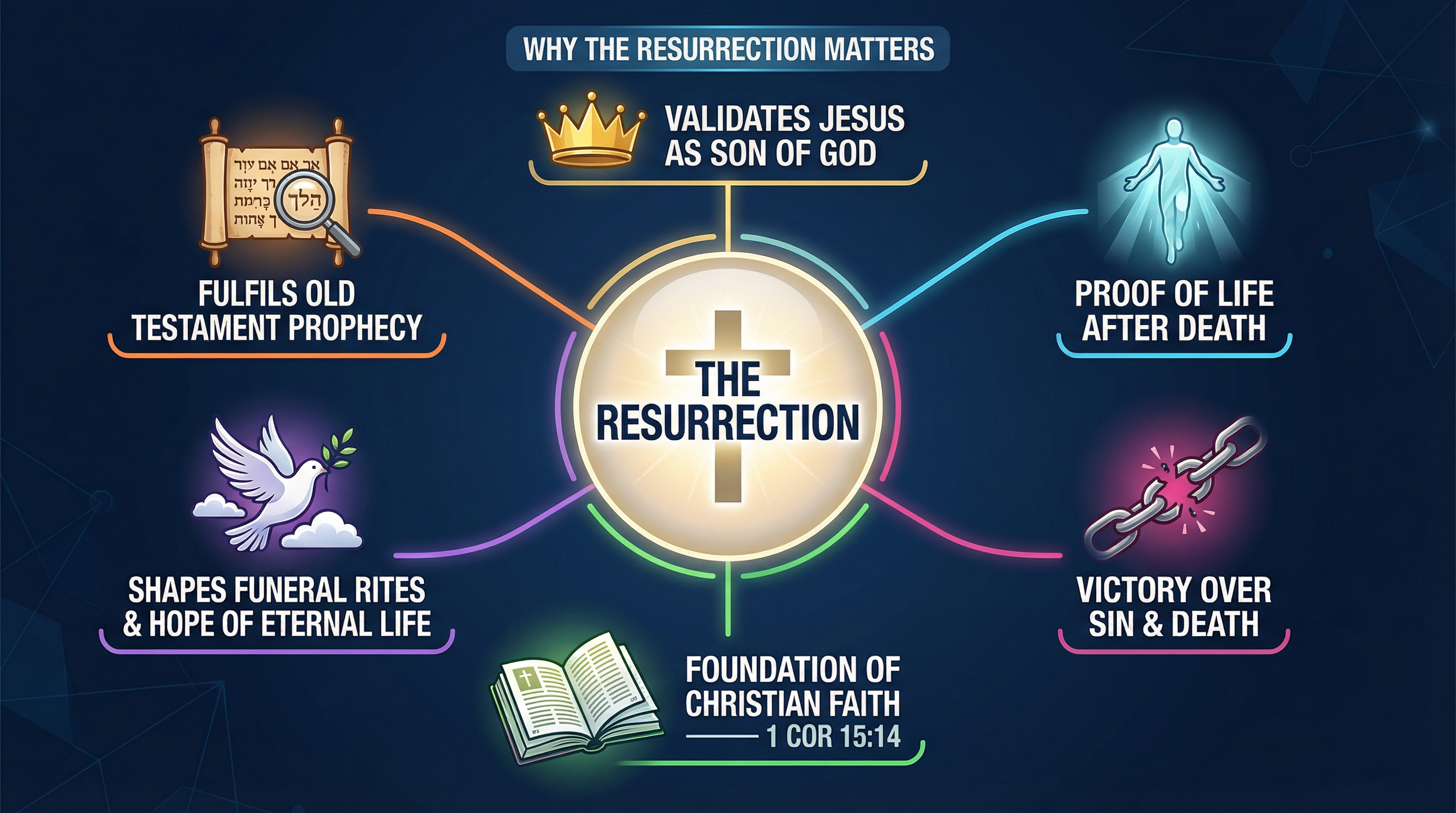
The Resurrection is the central theological event in Christianity, described in the New Testament as Jesus rising bodily from the dead on the third day after his crucifixion. For the Edexcel GCSE, candidates must move beyond simple narrative and engage with the event's profound significance. It is the ultimate validation of Jesus' identity as the Son of God, the completion of the Atonement for sin, and the foundation for the Christian hope of life after death. Examiners expect a precise understanding of the key events, the distinction between physical and theological evidence, and the ability to analyse the Resurrection's impact on Christian beliefs and practices today. Mastery of this topic involves not just knowing the story, but understanding why, according to Christian doctrine, it is the single most important event in human history. Credit is given for fluent use of sources like 1 Corinthians 15 and the Nicene Creed to support arguments.

Key Events & Developments
The Crucifixion and Burial
Date(s): Good Friday
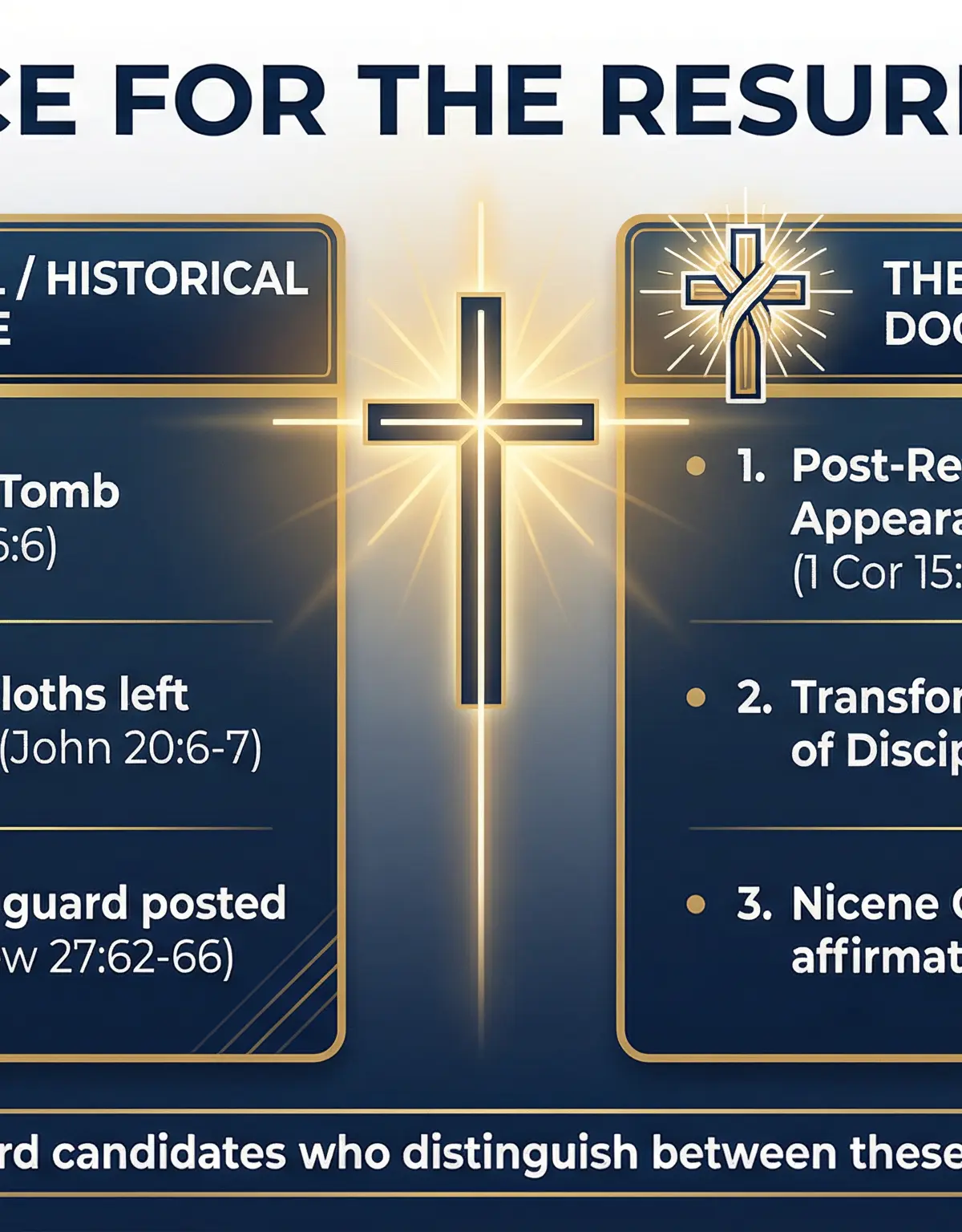
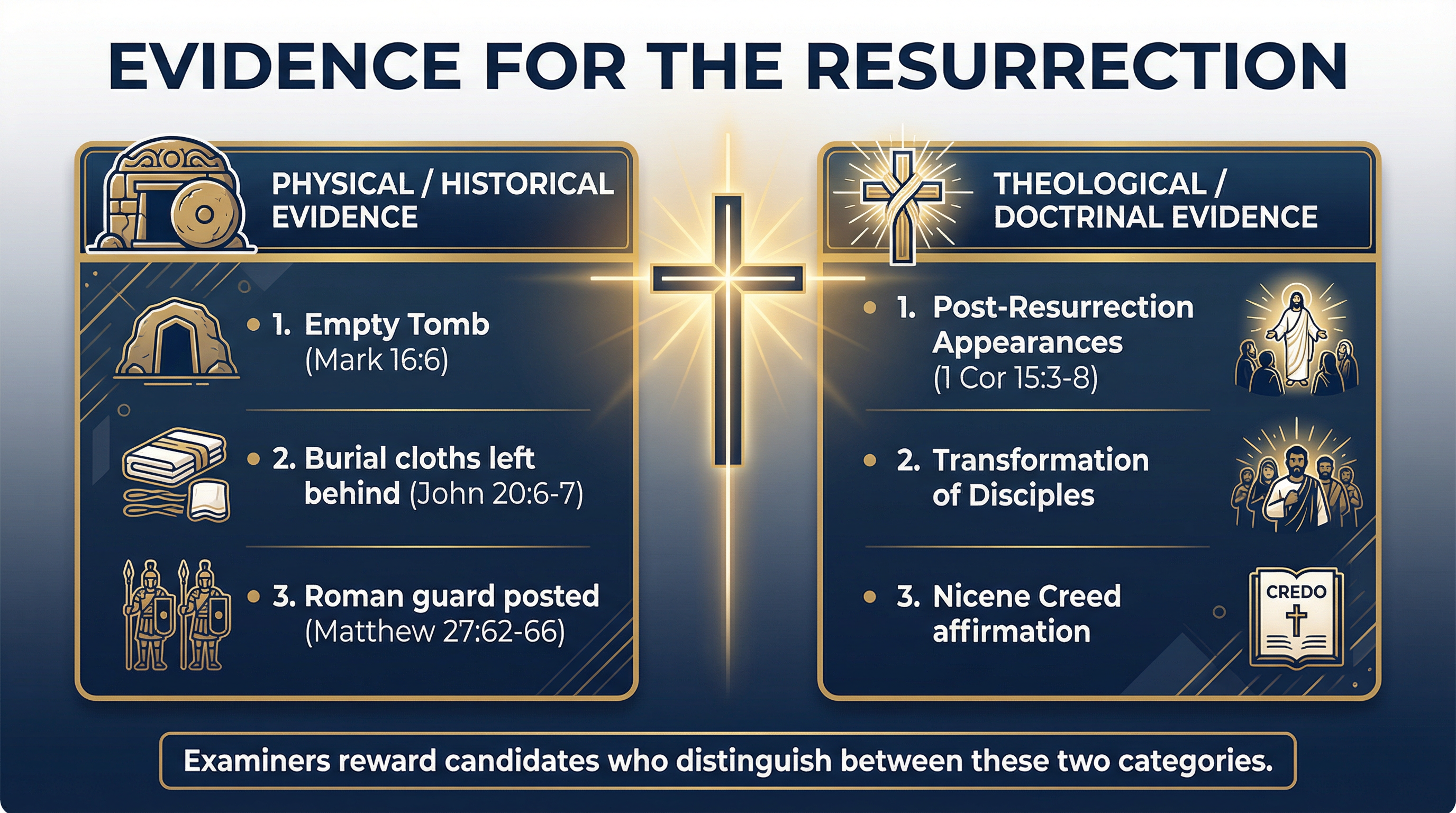
What happened: Jesus of Nazareth was executed by crucifixion under the authority of the Roman governor, Pontius Pilate. His body was taken down from the cross by Joseph of Arimathea, a member of the Sanhedrin, and buried in a new tomb carved from rock. A large stone was rolled to seal the entrance. Matthew's Gospel adds the detail of a Roman guard being posted to prevent the body from being stolen (Matthew 27:62-66).
Why it matters: The burial confirms Jesus' physical death, a prerequisite for a genuine resurrection. The presence of a Roman guard is a key detail for apologetics, as it counters the theory that the disciples stole the body. Candidates can use this to analyse the historical reliability of the accounts.
Specific Knowledge: Joseph of Arimathea, Pontius Pilate, Golgotha (place of crucifixion).
The Empty Tomb
Date(s): Easter Sunday (the third day)
What happened: A group of female followers, including Mary Magdalene, Mary the mother of James, and Salome, went to the tomb to anoint Jesus' body. They found the stone rolled away and the tomb empty. An angel (or two men in shining clothes, depending on the Gospel) announced to them, "He is not here; he has risen!" (Mark 16:6).
Why it matters: The empty tomb is the primary piece of physical evidence for the Resurrection. The fact that women were the first witnesses is considered by many scholars to be a mark of authenticity, as their testimony was not highly valued in the first-century world. If the story were fabricated, the authors would likely have made male disciples the first witnesses.
Specific Knowledge: Mary Magdalene, Salome, Mark 16:6.
The Post-Resurrection Appearances
Date(s): Over a 40-day period following Easter Sunday.
What happened: The risen Jesus appeared to numerous individuals and groups. The earliest written account is from the Apostle Paul in 1 Corinthians 15:3-8, where he lists appearances to Peter (Cephas), the Twelve disciples, more than 500 people at once, James, all the apostles, and finally to Paul himself. The Gospels describe appearances where Jesus ate food and invited the disciples to touch him to prove he was not a ghost (Luke 24:39).
Why it matters: These appearances form the core of the theological evidence, demonstrating that the Resurrection was bodily and not just a spiritual vision. The appearance to 500 people is a powerful piece of evidence, as Paul states that most were still alive when he wrote, implying they could be questioned. This transformed the disciples from a frightened, defeated group into bold preachers.
Specific Knowledge: 1 Corinthians 15:3-8, Luke 24:39 (the 'flesh and bones' passage), the appearance to Thomas (John 20:24-29).
Key Individuals
Jesus Christ
Role: The central figure of Christianity, believed by Christians to be the Son of God.
Key Actions: Preached, healed, was crucified, and, according to Christian belief, was resurrected from the dead.
Impact: His resurrection is the event that validates his claims and teachings, forming the basis of the Christian faith and the hope of eternal life.
Mary Magdalene
Role: A devoted follower of Jesus.
Key Actions: Was present at the crucifixion, was the first person to visit the empty tomb, and was the first person to whom the risen Jesus appeared (according to John's Gospel).
Impact: As the primary witness to the Resurrection, she is sometimes called the 'Apostle to the Apostles'. Her role challenges the cultural norms of the time and is a key part of the Resurrection narrative.
The Apostle Paul
Role: A Pharisee who initially persecuted Christians but converted after an experience of the risen Jesus on the road to Damascus.
Key Actions: Wrote much of the New Testament, including the earliest account of the post-resurrection appearances in 1 Corinthians 15.
Impact: Paul's writings provide the most systematic theological explanation of the Resurrection's significance. He links it directly to salvation, the forgiveness of sins, and the future resurrection of believers. His personal transformation is often cited as evidence for the truth of the Resurrection.
Second-Order Concepts
Significance
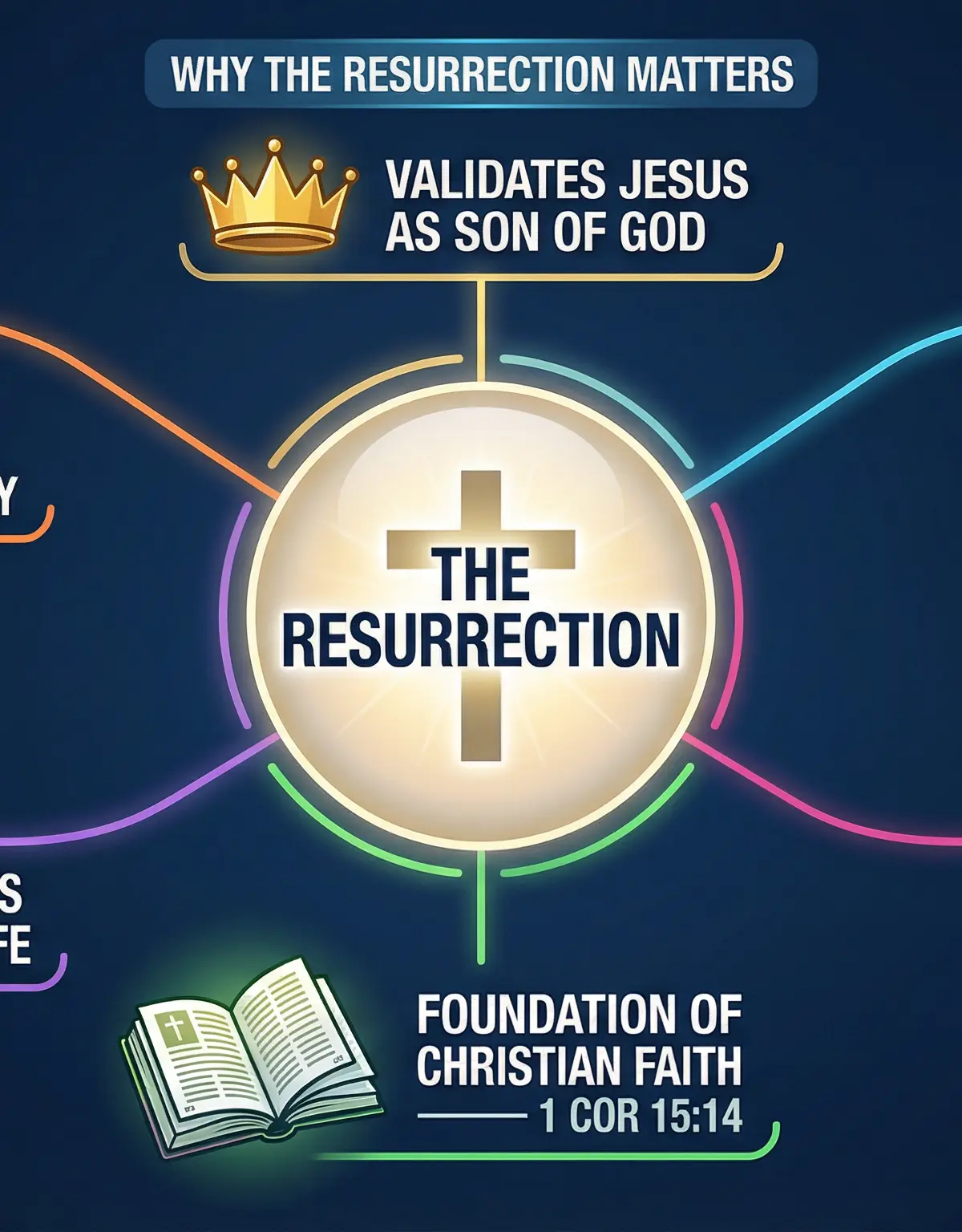
The significance of the Resurrection is the absolute core of this topic. Candidates must be able to explain why it matters.
- Theological Significance: It is the ultimate proof of Jesus' divinity. It confirms that his death was a sufficient sacrifice to atone for human sin. It is the guarantee of future resurrection and eternal life for believers.
- Historical Significance: It is the event that launched the Christian movement. Without the belief that Jesus had been raised from the dead, his followers would have disbanded, and he would be a minor historical footnote. The rapid spread of Christianity is inexplicable without the disciples' sincere conviction that they had seen the risen Christ.
- Significance for Christians Today: It is the basis of hope in the face of death, shaping funeral practices. It is celebrated annually at Easter, the most important festival in the Christian calendar. It provides a model for the 'new life' Christians are called to live.
Source Skills
For this topic, the key sources are biblical texts and creeds. When using them, candidates should consider:
- Provenance: Who wrote it, and when? Paul's account in 1 Corinthians is the earliest, written around 55 CE, only about 20-25 years after the events themselves. This is extremely early for an ancient historical source. The Gospels were written later (c. 70-95 CE). The Nicene Creed is a later, formalised statement of belief (325 CE).
- Purpose: Why was it written? Paul is writing to correct theological errors in the Corinthian church and to assert the bodily resurrection as a non-negotiable fact. The Gospel writers are creating theological biographies to persuade their readers of Jesus' identity. The Creed is a statement of orthodox belief intended to unify the Church.
- Content: What does it say? Be precise. Quote the source accurately (e.g., 1 Corinthians 15:14) and explain what it means in the context of your argument. For example, when quoting the Nicene Creed, explain that its use in worship today shows the Resurrection is a living belief, not just a historical claim.
Worked Examples
3 worked examples — open one to explore the question and available guidance.
Practice Questions
Test your understanding — click to reveal model answers
Explain two ways the Resurrection is described in the Bible. (4 marks)
Hint: Think about the nature of the resurrected body and the evidence left behind.
Explain two reasons why the post-resurrection appearances of Jesus are important for Christians. (5 marks)
Hint: You must refer to a Source of Wisdom and Authority. Think about what the appearances proved and what they led to.
"The most important part of the Resurrection story is the empty tomb." Evaluate this statement. (12 marks)
Hint: Is the empty tomb enough on its own? What do the appearances add? Build an argument and weigh the evidence.