OCR · GCSE · Geography
Climate Change
This study guide for OCR GCSE Geography delves into the critical topic of Climate Change, equipping candidates with the precise knowledge and skills to excel in their exams. It unpacks the distinction between natural and anthropogenic climate drivers, evaluates evidence, and assesses management strategies, making a complex global issue clear and accessible.
- 6 min read
- 3 worked examples
- 5 practice questions
- 6 key terms
Study Notes
Overview
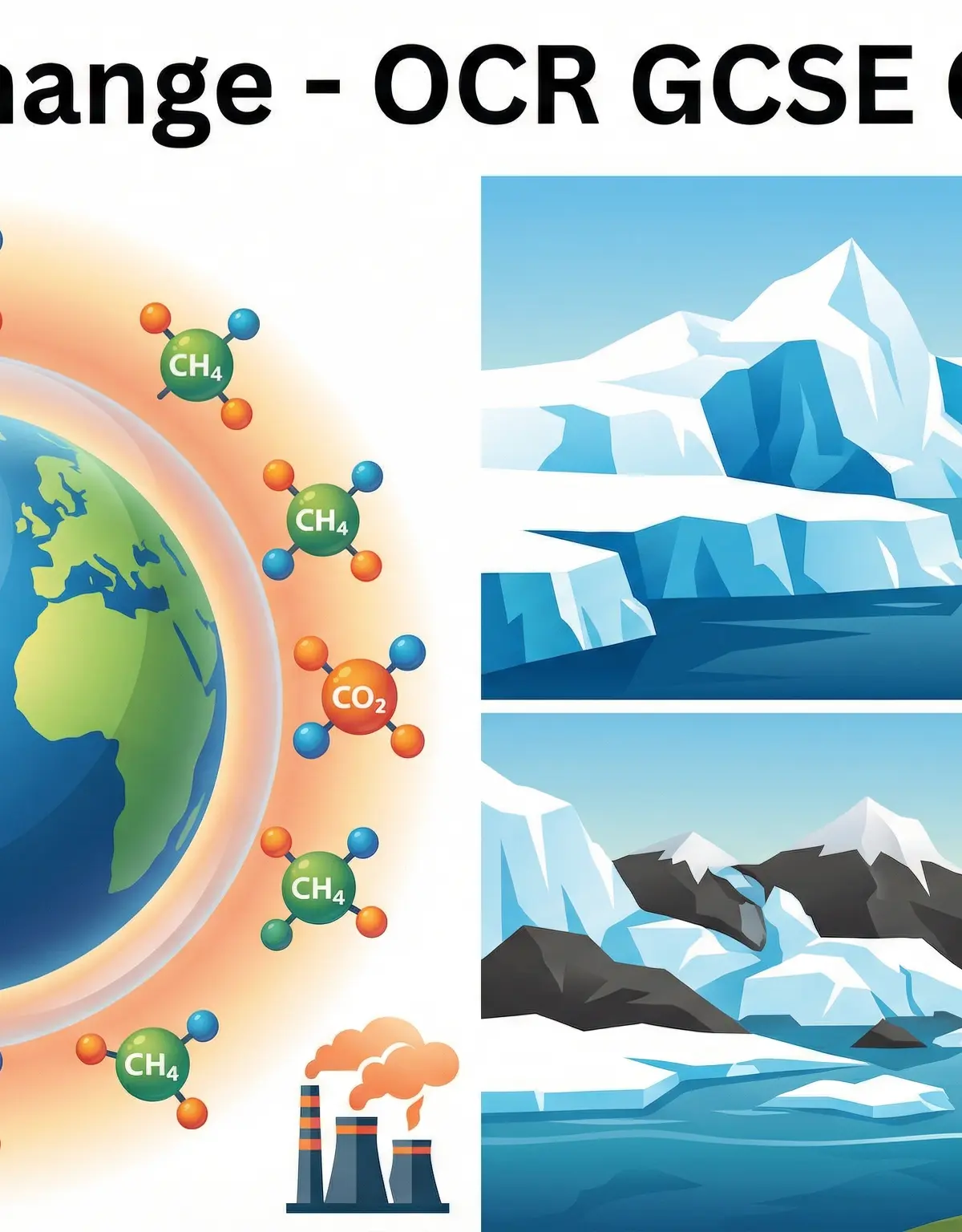
Climate Change is a defining issue of our time and a core component of the OCR GCSE Geography specification. Examiners expect candidates to demonstrate a sophisticated understanding of the Earth's climate system, distinguishing clearly between the natural greenhouse effect that makes life possible and the enhanced greenhouse effect driven by human activities. This guide covers the key causes of climate change, both natural (Milankovitch cycles, solar variation, volcanism) and anthropogenic (burning fossil fuels, deforestation). We will evaluate the diverse evidence for climate change, from ice cores to sea-level data, and analyze its wide-ranging impacts on a global scale, using specific case studies for the UK and Bangladesh. Crucially, this study explores the management strategies of mitigation (tackling the causes) and adaptation (coping with the effects), preparing you to write analytical and evaluative answers that can achieve the highest marks.

Key Concepts & Causes
The Greenhouse Effect: Natural vs. Enhanced
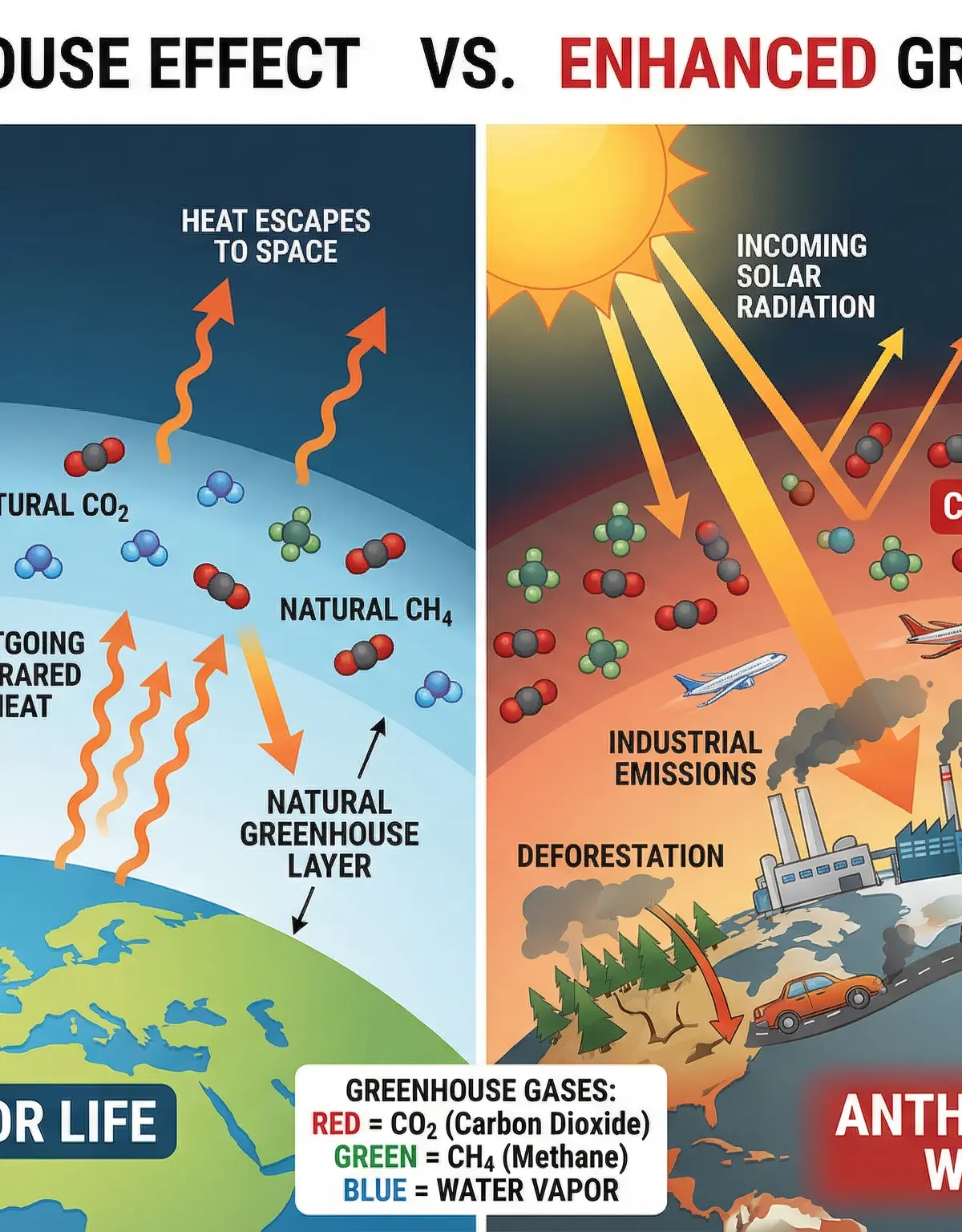
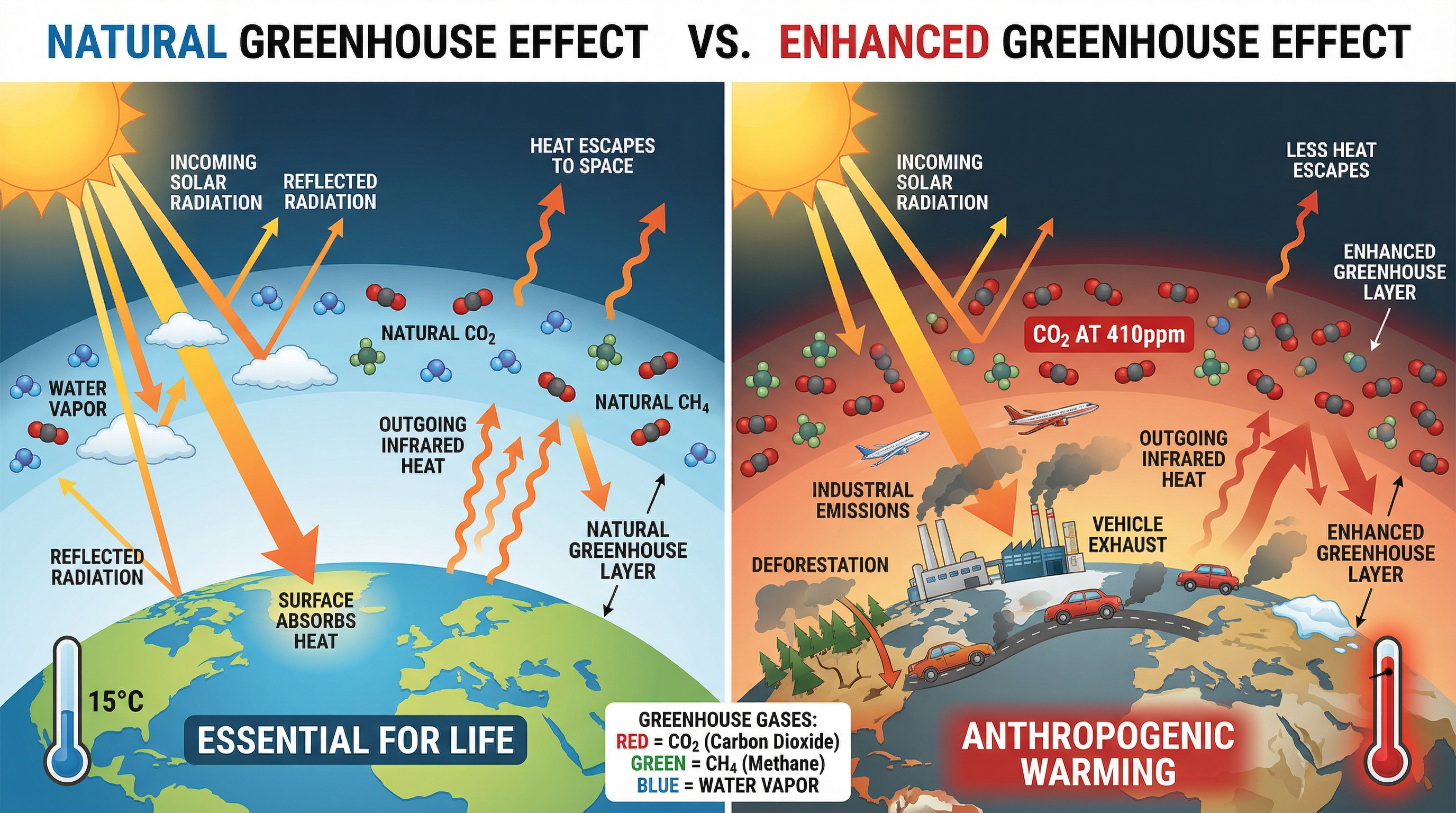
What is it?: The greenhouse effect is a natural process where certain gases in the atmosphere trap heat, keeping the Earth warm enough for life. The enhanced greenhouse effect is the amplification of this process due to human activities releasing additional greenhouse gases.
Why it matters: This is a fundamental distinction. Marks are awarded for clearly separating the life-sustaining natural effect from the problematic anthropogenic enhancement. Confusing the two is a common mistake that limits marks.
Specific Knowledge: The natural effect keeps Earth at an average of 15°C. Key anthropogenic gases are Carbon Dioxide (CO2), Methane (CH4), and Nitrous Oxides (N2O). CO2 levels have risen from pre-industrial levels of ~280ppm to over 410ppm today.
Natural Causes of Climate Change (Forcing Mechanisms)
Date(s): Occur over long geological timescales (thousands of years).
What happened: The Earth's climate has always changed naturally. OCR requires you to know three main natural causes operating over the Quaternary period (the last 2.6 million years).
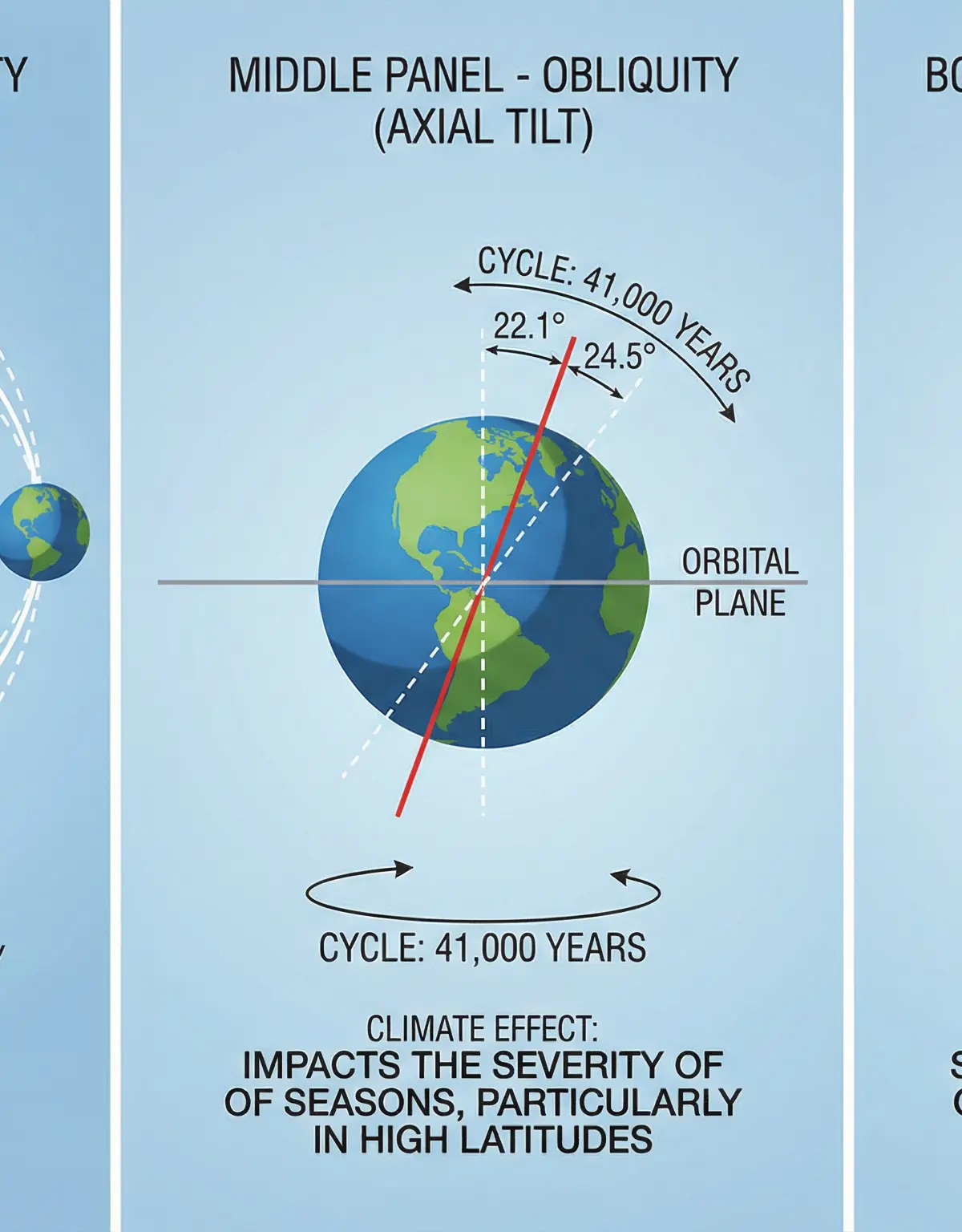
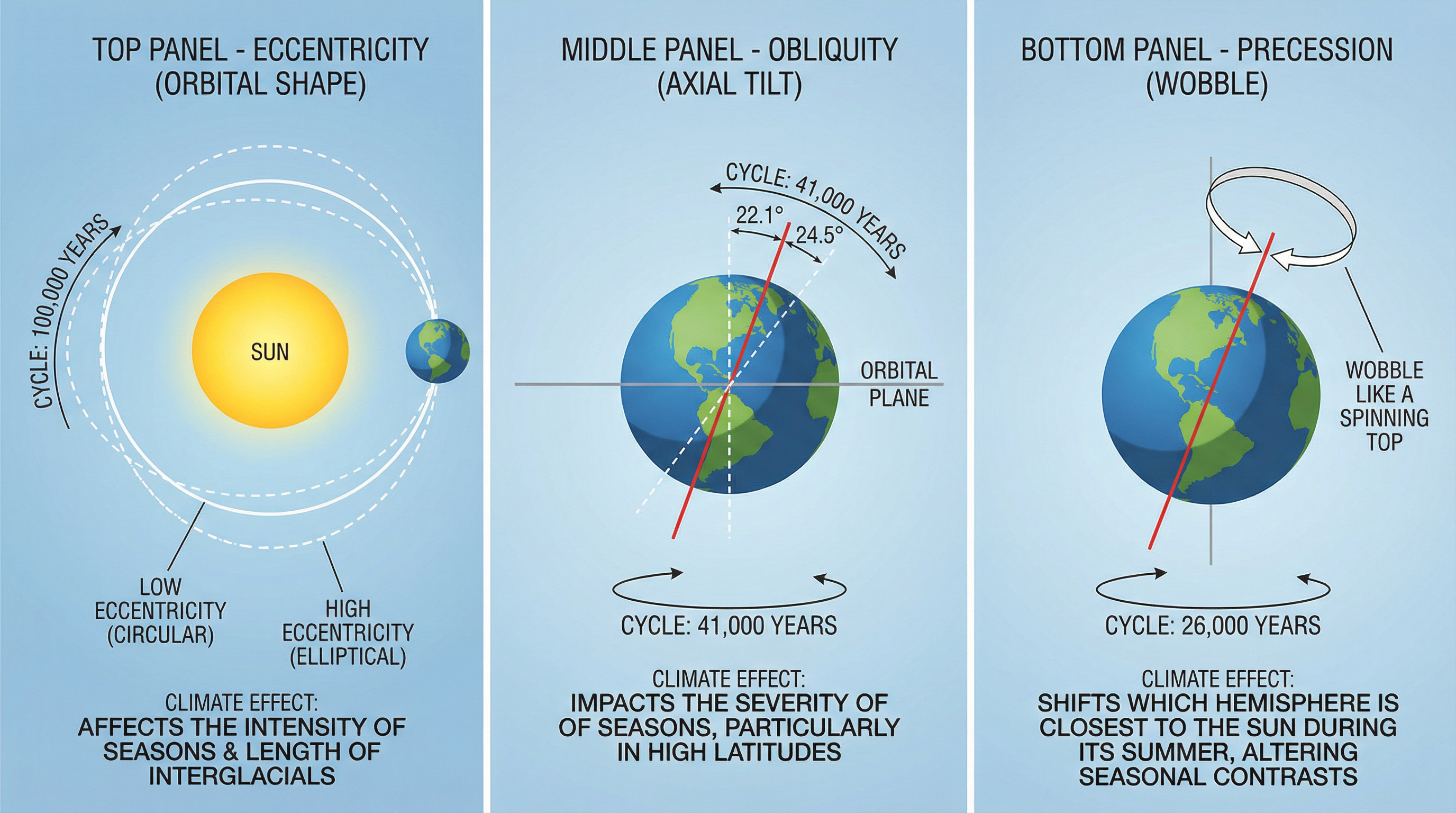
- Milankovitch Cycles: These are long-term changes in the Earth's orbit and orientation relative to the Sun.
- Eccentricity: The shape of the Earth's orbit changes from circular to elliptical over a 100,000-year cycle.
- Obliquity (Axial Tilt): The Earth's axis tilts back and forth between 22.1° and 24.5° over a 41,000-year cycle.
- Precession: The Earth 'wobbles' on its axis like a spinning top over a 26,000-year cycle.
- Solar Variation: The Sun's output of energy is not constant. It varies in cycles, such as the 11-year sunspot cycle, which can cause minor fluctuations in global temperature.
- Volcanism: Major volcanic eruptions can blast huge amounts of ash and sulphur dioxide into the stratosphere. This can create a haze that reflects solar radiation, leading to short-term global cooling (e.g., Mount Pinatubo in 1991 caused a ~0.5°C drop for two years).
Why it matters: Candidates must understand that these natural cycles exist but cannot account for the rapid rate of warming seen since the Industrial Revolution. This demonstrates a nuanced understanding.
Evidence for Climate Change
What is it?: Scientists use a range of direct and proxy data to understand past and present climate change.
Why it matters: High-level responses must quote specific data and evidence to support their claims. Vague statements like 'ice is melting' will not receive high credit.
Specific Knowledge:
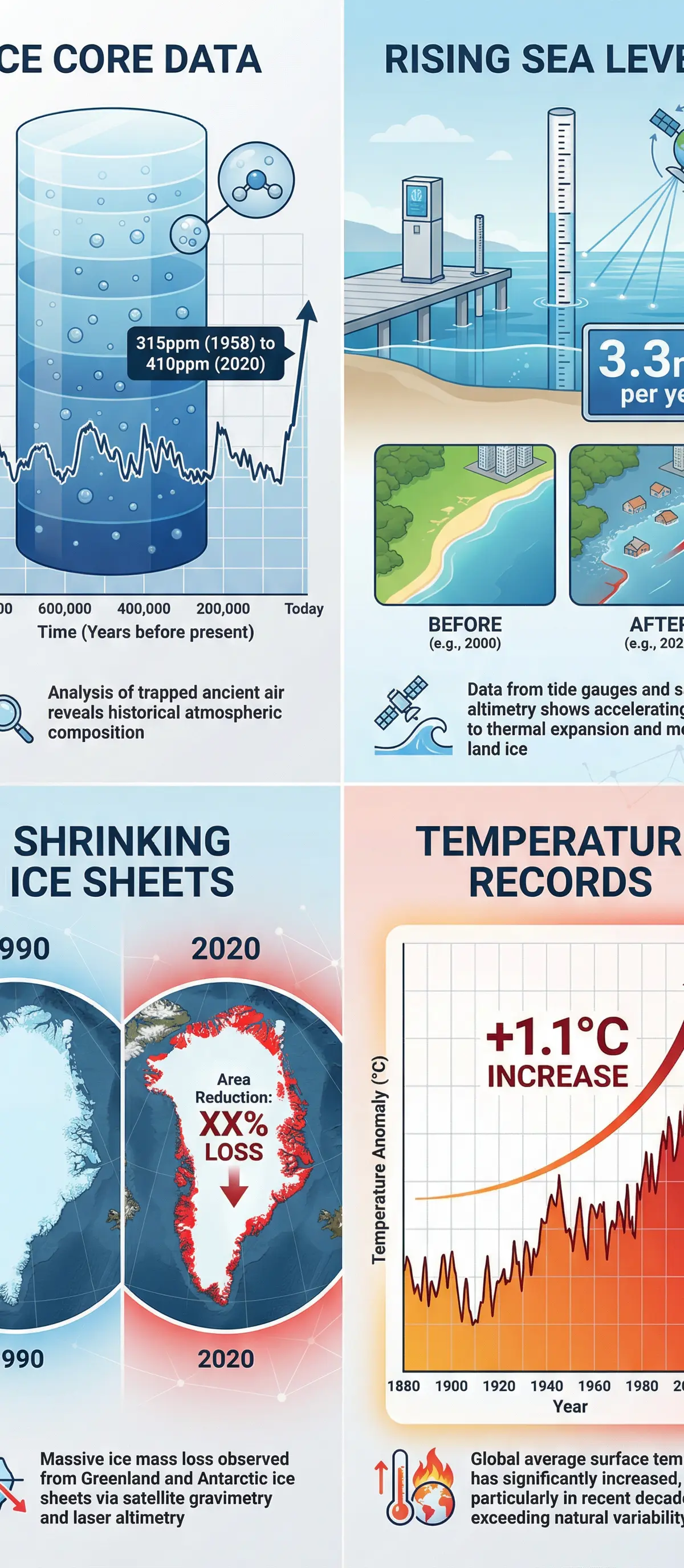
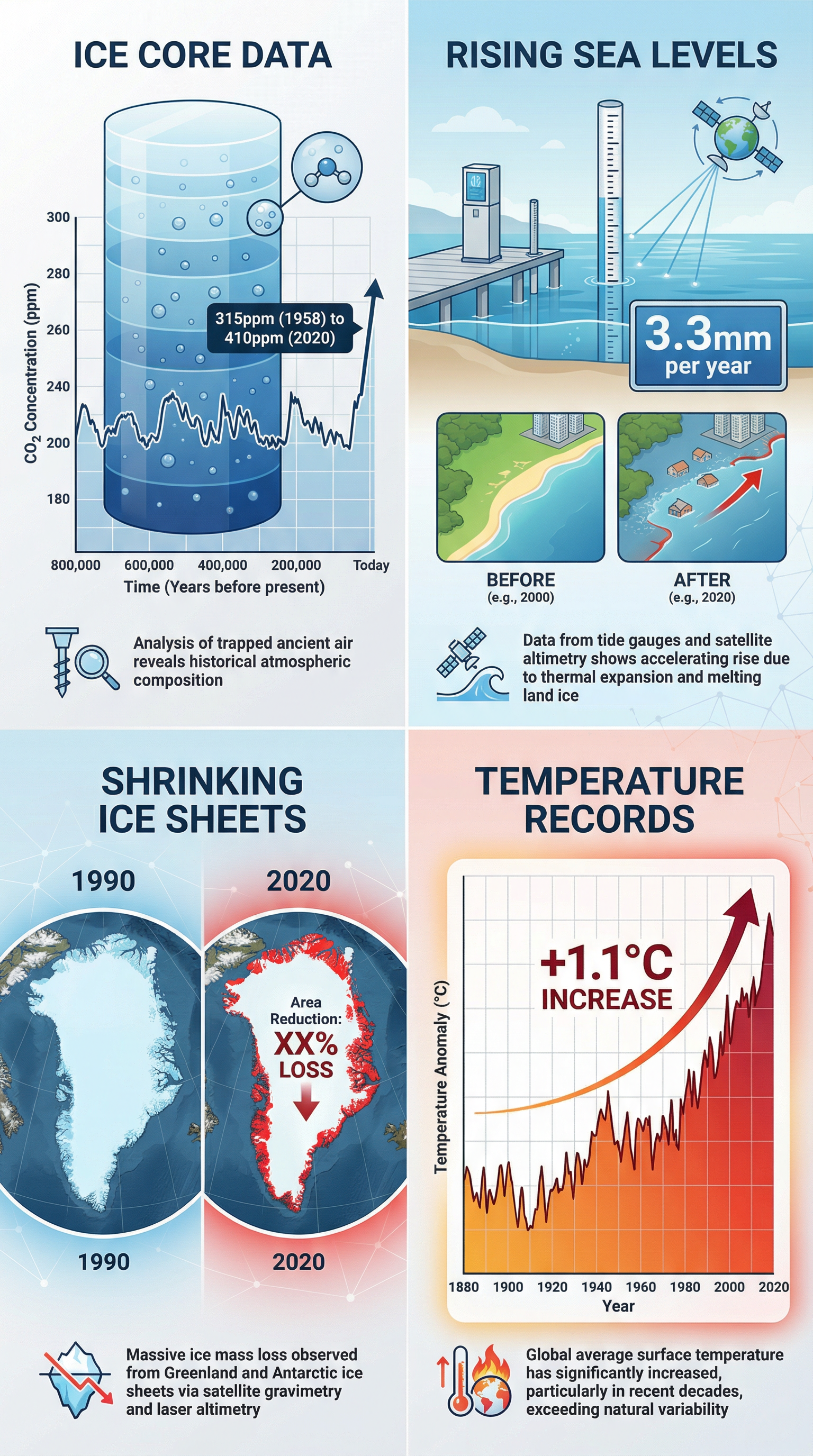
- Ice Cores: Cores drilled in Antarctica and Greenland contain trapped air bubbles from up to 800,000 years ago. Analysis shows that CO2 concentrations today are the highest they have been in that entire period.
- Temperature Records: Since 1880, global average temperatures have been recorded using thermometers. The data shows a clear warming trend, with a total increase of about 1.1°C above pre-industrial levels.
- Sea Level Rise: Global sea levels are rising at an accelerating rate, currently 3.3mm/year. This is due to a combination of thermal expansion (warmer water expands) and the melting of land-based ice sheets and glaciers.
- Historical Records: Personal diaries, paintings (e.g., of frost fairs on the River Thames), and farm records can provide proxy evidence for past climate conditions, though they are often less reliable than scientific data.
Impacts and Management
Case Study: Bangladesh (Developing Country)
Impacts: One of the world's most climate-vulnerable nations. Impacts include increased frequency and intensity of cyclones, severe coastal and river flooding (80% of the country is a low-lying floodplain), saltwater intrusion contaminating farmland and drinking water, and the risk of permanent inundation of land, creating millions of climate refugees.
Management: Focus is on adaptation. Strategies include building more cyclone shelters, developing saline-resistant rice varieties, raising homes on stilts, and community-based flood warning systems. International aid is crucial for funding these projects.
Case Study: United Kingdom (Developed Country)
Impacts: Increased risk of river and coastal flooding (e.g., Somerset Levels 2014), more frequent and intense heatwaves (e.g., 40°C recorded in 2022), and stress on water supplies, particularly in the South East. Some positive impacts include longer growing seasons for agriculture.
Management: A mix of mitigation and adaptation. Mitigation includes the Climate Change Act (2008) with its legally binding target to cut emissions, investment in renewable energy (wind, solar), and phasing out coal power. Adaptation includes investing in flood defences like the Thames Barrier and developing new water management plans.
Visual Resources
3 diagrams and illustrations
Interactive Diagrams
1 interactive diagram to visualise key concepts
Diagram could not be rendered
Gantt chart showing the timeline and status of different climate change management strategies.
Worked Examples
3 worked examples — open one to explore the question and available guidance.
Practice Questions
Test your understanding — click to reveal model answers
Explain how human activities have caused the enhanced greenhouse effect. (6 marks)
Hint: Think about at least two different human activities and name the specific greenhouse gases they release.
Evaluate the reliability of different sources of evidence for climate change. (8 marks)
Hint: Compare a scientific source (like ice cores) with a more subjective source (like historical diaries). Consider origin, purpose, and accuracy.
Describe two impacts of climate change on the UK. (4 marks)
Hint: Think of one environmental and one social or economic impact.
To what extent are adaptation strategies more important than mitigation strategies in managing climate change for developing countries? (12 marks)
Hint: This is an evaluation question. Argue for the importance of adaptation, then argue for the importance of mitigation, and then come to a conclusion.
Explain how the albedo effect can create a positive feedback loop in the Arctic. (4 marks)
Hint: Positive feedback loops amplify change. Think step-by-step: warming -> melting -> albedo change -> more warming.