The 12 Best Revision Apps to Ace Your Exams in 2026
Whether you're cramming to rescue your grades or aiming for the top marks, the pressure of GCSEs and A‑Levels is real. Just re-reading textbooks and scribbled notes doesn't cut it anymore. The right digital tool can be a game-changer, turning dull reading into active, effective revision that actually sticks. But with so many options out there, how do you find the best revision apps that genuinely work for the UK curriculum?
This guide cuts through the noise. We’ve put in the hours testing and analysing the most popular platforms to give you an honest, in-depth breakdown. Forget marketing fluff; we’re diving deep into what makes each app tick. You'll get a detailed look at twelve key players, from all-in-one platforms like Seneca and Cognito to specialist tools like DrFrostMaths and Anki.
For each app, we provide a clear, practical review covering:
- Key Features: What does it actually do?
- Pros & Cons: The good, the bad, and the honest truth.
- Pricing: Free, freemium, or subscription-based – we’ll explain what you get.
- Best For: Which students, subjects, and exam boards it’s best suited for.
We'll also look at how to blend these digital tools with traditional study methods. For example, many students find using apps for recording lectures is a great way to create a personal audio library for review. This article will help you build a complete, modern study toolkit. Let’s find the perfect app to help you walk into that exam hall with confidence.
1. MasteryMind
MasteryMind earns its top spot by going beyond basic multiple-choice quizzes to offer a revision experience that feels like a real UK exam. Its biggest strength is its laser focus on specific exam board requirements, including AQA, Edexcel, and OCR. This means every question, from quick-fire recall to long-form essays, uses the exact command words, mark allocations, and Assessment Objectives (AOs) you'll face in the exam hall. This level of detail makes it one of the best revision apps for targeted, effective prep.
The platform is built on proven learning science. It cleverly guides you from simple knowledge recall to more complex application and analysis, embedding concepts for the long term. For teachers sceptical of AI, the platform's rigour is a key selling point. Its unique tools, like the voice-powered Blurt Challenge, push for active recall—you speak your answers and get AI-driven analysis against the official specification. For STEM, the step-by-step maths verification and Computer Science trace table support are standout features that deliver genuine learning.
Key Features and Use Cases
- Exam-Board Fidelity: Practice questions that are a carbon copy of what AQA, Edexcel, and OCR examiners expect, helping you perfect your exam technique for subjects like Online Revision for GCSE.
- Examiner-Style Feedback: The AI provides AO-level feedback on everything, including 24-mark essays, guiding you on how to structure answers to hit every marking point.
- NEA Coach: A particularly useful tool for coursework (NEAs). It offers Socratic guidance and mark estimations while strictly following JCQ rules. It won’t give you the answers but will ask the right questions to help you improve your work independently.
- Active Recall Tools: The Blurt Challenge and scheduled spaced reviews are designed to fight the forgetting curve, making sure what you revise actually sticks.
Pros and Cons
Pros:
- Precise alignment with UK exam boards.
- Detailed, AO-level feedback across all question types.
- Active recall features based on cognitive science.
- JCQ-compliant coursework support (NEA Coach).
- A generous free-forever plan is available.
Cons:
- Advanced tools, including the full NEA Coach, are behind the Premium subscription.
- The AI feedback is excellent for independent learning but shouldn't entirely replace a teacher's final judgement.
Who Is It Best For?
MasteryMind is an outstanding choice for GCSE and A-Level students who want to move beyond just memorising facts and learn how to answer questions to a high standard. Teachers will appreciate the curriculum alignment, while parents can track progress through the dashboard.
Price: Free forever plan available; Premium subscription required for advanced features.
Website: masterymind.co.uk
2. Seneca Learning
Seneca Learning is a giant in the UK revision scene, and for good reason. It offers a massive library of interactive courses covering about 95% of UK exam subjects from KS2 all the way to A-Level. Its core strength lies in its "snackable" learning format. It uses quick-fire questions, fill-in-the-blanks, and short summaries to help you rapidly hammer home key facts. If you've ever felt overwhelmed by a textbook, Seneca's fast-paced, game-like approach is a breath of fresh air.
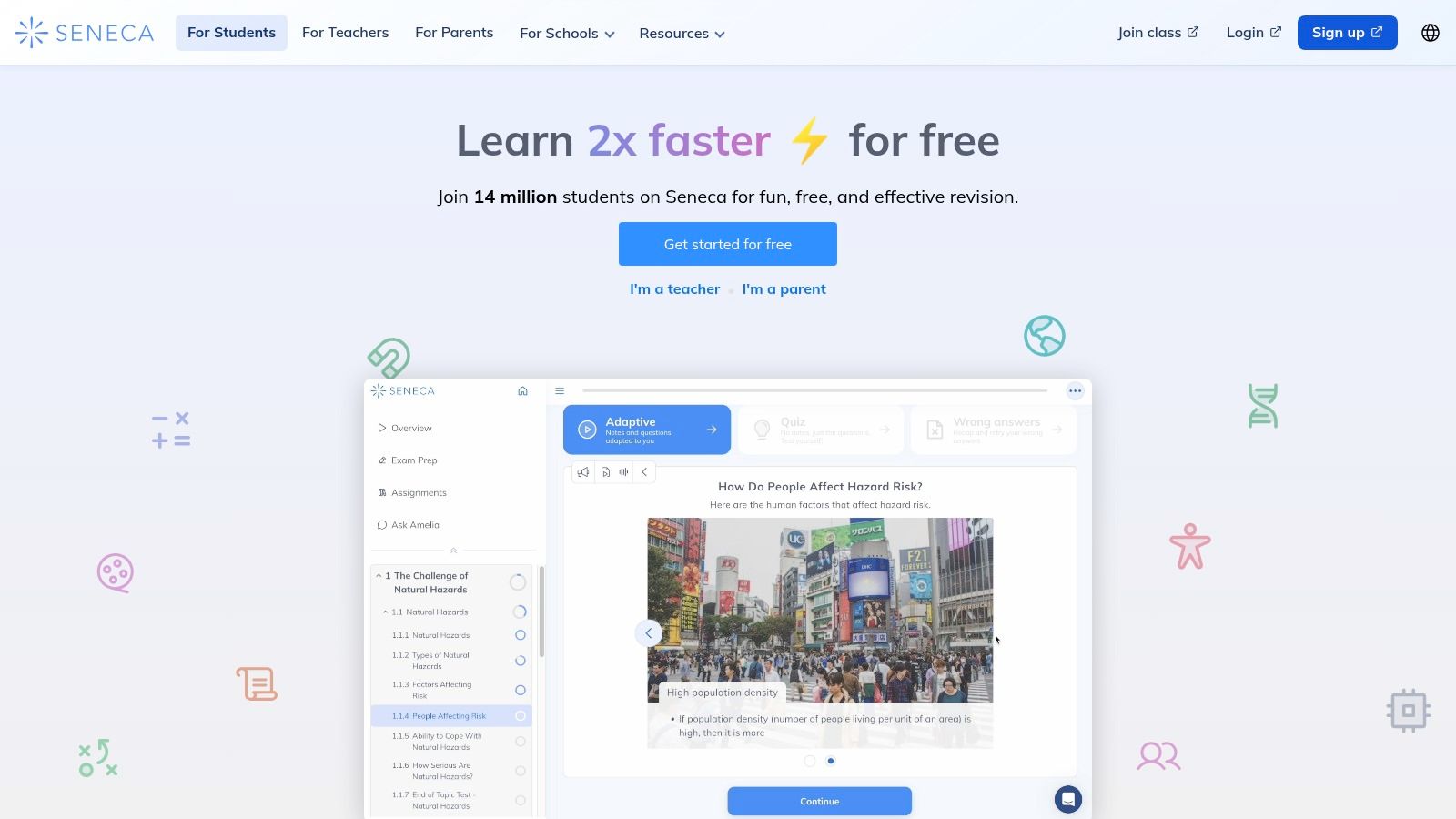
The platform is particularly effective for active recall and retrieval practice. Instead of just passively reading notes, you’re constantly tested, which helps embed information in your long-term memory. It’s popular with teachers for setting homework because of its excellent analytics, but it’s just as useful for independent learners wanting to plug knowledge gaps. While Seneca covers most topics, for subjects that require deep, essay-based analysis, you might need to combine it with other resources.
Key takeaway: Seneca is excellent for fast, frequent retrieval practice to make sure core knowledge sticks. Its broad exam board coverage makes it a reliable starting point for almost any GCSE or A‑Level student.
Key Features & User Experience
- Courses Mapped to UK Specs: Content is specifically aligned with AQA, Edexcel, OCR, and WJEC, so you know you’re learning the right stuff.
- Adaptive Learning: The platform adjusts the difficulty of questions based on your answers, helping you focus on your weaker areas.
- Quick-fire Quizzes: Short, engaging formats make it easy to fit in a 10-minute revision session on the bus or during a break.
Pros & Cons
- Pro: Huge range of subjects and exam boards covered.
- Pro: Widely used and trusted by UK schools.
- Con: Better for memorising facts than mastering complex exam techniques or essay skills.
- Con: Some A-Level courses feel less detailed than their GCSE counterparts.
Pricing
Seneca offers a robust free tier that covers a huge amount of content. The Premium subscription (from £11.99/month) unlocks "Predicted Papers," more in-depth HyperLearning courses, and advanced analytics.
Website: senecalearning.com
3. BBC Bitesize – Exam Revision
An absolute legend of UK student life, BBC Bitesize is the go-to resource for millions. It’s a completely free service offering revision guides, videos, and quizzes across almost every subject imaginable, mainly focusing on GCSEs but also covering other UK school levels. Think of it as the reliable, no-nonsense friend you turn to for clear, concise summaries when a textbook chapter feels like too much to handle. It’s trusted by students, parents, and teachers alike.
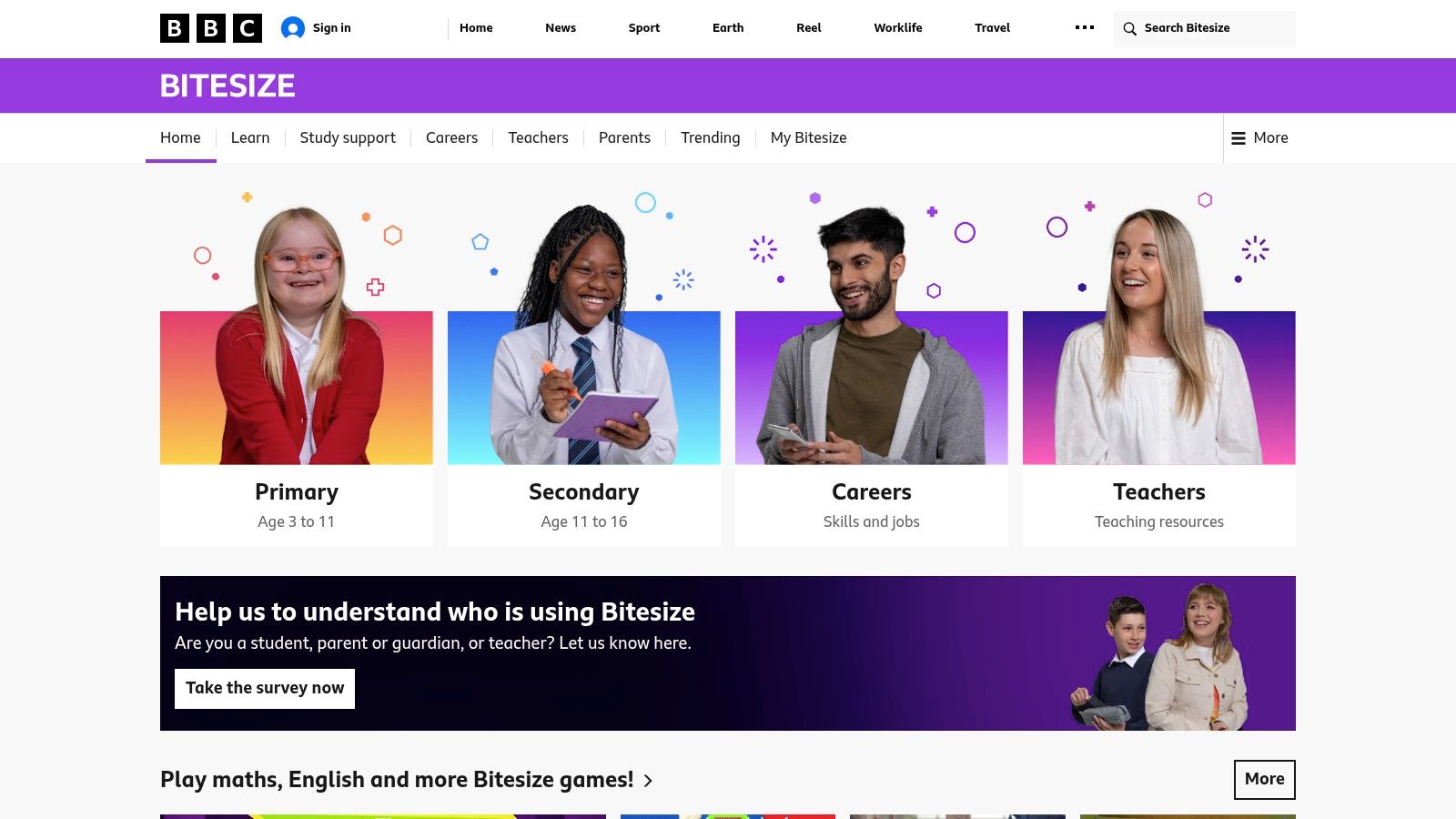
The platform excels at breaking down complex topics into digestible chunks. Whether you use the website or the app, you can quickly find your subject and exam board to access topic pages filled with key information. While it might not offer the same level of interactive quizzing or adaptive learning as some paid apps, its strength is its accessibility and reliability. For a quick refresher on a specific concept or a last-minute check before an exam, Bitesize is one of the best revision apps you can have in your toolkit.
Key takeaway: BBC Bitesize is the perfect free resource for quick, reliable topic summaries and foundational knowledge checks. Its credibility and breadth make it an essential first stop for any GCSE student.
Key Features & User Experience
- Curriculum-Aligned Guides: Content is organised by subject, level, and exam board, so you can easily find relevant revision notes.
- Multimedia Content: A mix of text, diagrams, videos, and animations caters to different learning styles and keeps revision engaging.
- Free and Accessible: There are no subscriptions, paywalls, or hidden costs, making high-quality revision materials available to everyone.
Pros & Cons
- Pro: Entirely free and backed by the trusted BBC brand.
- Pro: Excellent for dipping in and out to clarify specific topics.
- Con: The depth of content can vary significantly between subjects and topics.
- Con: Lacks advanced features for exam technique practice or personalised feedback.
Pricing
Completely Free. There are no premium tiers, in-app purchases, or subscription plans.
Website: www.bbc.co.uk/bitesize
4. Save My Exams
If Seneca is for rapid-fire knowledge drills, Save My Exams is where you go to master exam technique. This platform is less of a game and more of a dedicated training ground for acing exams. Its core value is its enormous, meticulously organised bank of past papers, topic-specific questions, and high-quality revision notes, all broken down by exam board and subject. It’s the digital equivalent of having every past paper ever printed, but neatly sorted and ready to go.
The real strength of Save My Exams is its focus on showing you how to answer questions. It provides model answers and clear, step-by-step worked solutions that demystify mark schemes. This approach is perfect for students who understand the content but struggle to apply it under exam pressure. Instead of just testing what you know, it teaches you how to score the marks, making it one of the best revision apps for targeted exam practice.
Key takeaway: Save My Exams is unparalleled for exam-specific practice. Use it to deconstruct question styles, understand mark schemes, and build confidence with real exam materials.
Key Features & User Experience
- Organised by Exam Board: All resources, from notes to questions, are sorted by AQA, Edexcel, OCR, and other major boards.
- Massive Question Bank: Features topic-by-topic questions, allowing you to focus your practice on specific areas you find difficult.
- Model Answers & Markschemes: Provides worked solutions for thousands of questions, showing you exactly how to structure your answers for top marks.
Pros & Cons
- Pro: Excellent for learning exam technique and application.
- Pro: Huge library of topic questions and past papers, including some excellent GCSE Past Papers.
- Con: The most valuable resources, like model answers, are behind a subscription paywall.
- Con: It doesn't cover every single niche subject or specification.
Pricing
A limited selection of resources is available for free. Full access requires a subscription, with plans starting from £8.99/month, which unlocks all revision notes, topic questions, and model answers.
Website: www.savemyexams.com
5. Cognito
Cognito has quickly become a go-to for GCSE students needing a straightforward, no-nonsense approach to science and maths revision. It strips away the clutter, focusing purely on high-quality video lessons, topic-specific questions, and past papers. The platform is built around a simple, clean interface that lets you immediately find the exact topic you're struggling with, watch a clear explanation, and then test your understanding. It’s a perfect resource for independent self-study when you just need the core concepts explained well.
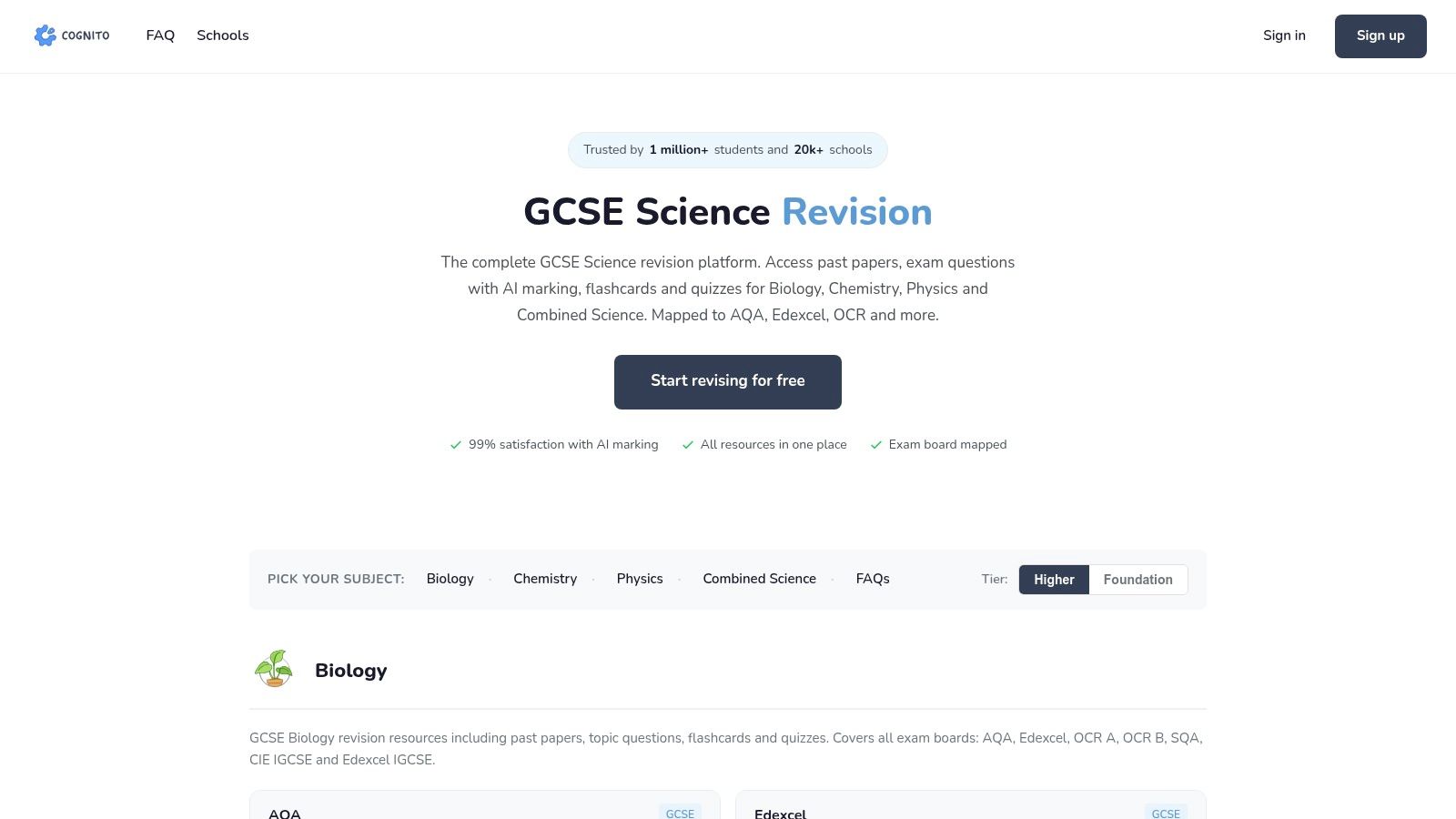
What makes Cognito stand out among the best revision apps is its commitment to providing genuinely free, high-quality core content. While many platforms hide their best stuff behind a paywall, Cognito’s videos and quizzes for GCSE science and maths are completely free. This makes it an incredibly valuable tool for plugging knowledge gaps without needing a subscription, especially if you’re focusing on STEM subjects and want a reliable, exam-focused study aid.
Key takeaway: Cognito is an excellent, free resource for GCSE science and maths students who want a clear, organised way to learn topics and practise exam-style questions.
Key Features & User Experience
- Integrated Video Lessons: Each topic is paired with a concise YouTube video explanation, making it easy to learn and revise concepts visually.
- Past Papers by Topic: Find and practise exam questions related to specific topics you’ve just revised, helping to build confidence and exam technique.
- Flashcards & Quizzes: Quick-fire questions and flashcards for biology, chemistry, and physics help to solidify key definitions and facts.
Pros & Cons
- Pro: Core content for GCSE science and maths is completely free.
- Pro: The interface is clean, tidy, and very easy to navigate.
- Con: Limited subject range, focusing almost exclusively on STEM.
- Con: Primarily designed for GCSE, with much less content available for A-Level students.
Pricing
The core platform, including videos and questions for all GCSE science and maths topics, is Free. A Premium subscription (from £7.99/month) unlocks unlimited past paper questions, smarter quizzes, and more detailed progress tracking.
Website: go.cognitoedu.org
6. Tassomai (Families)
Tassomai is built on the principle of “little and often,” making it one of the best revision apps for building consistent study habits without the burnout. It uses AI-driven, multiple-choice quizzes to drill down on core knowledge for students from Year 3 right up to GCSE. The platform focuses heavily on retrieval practice, presenting you with personalised daily quizzes designed to target and strengthen your weaker areas over time. It’s an excellent tool for parents who want to support their child's learning with a structured, low-effort approach.
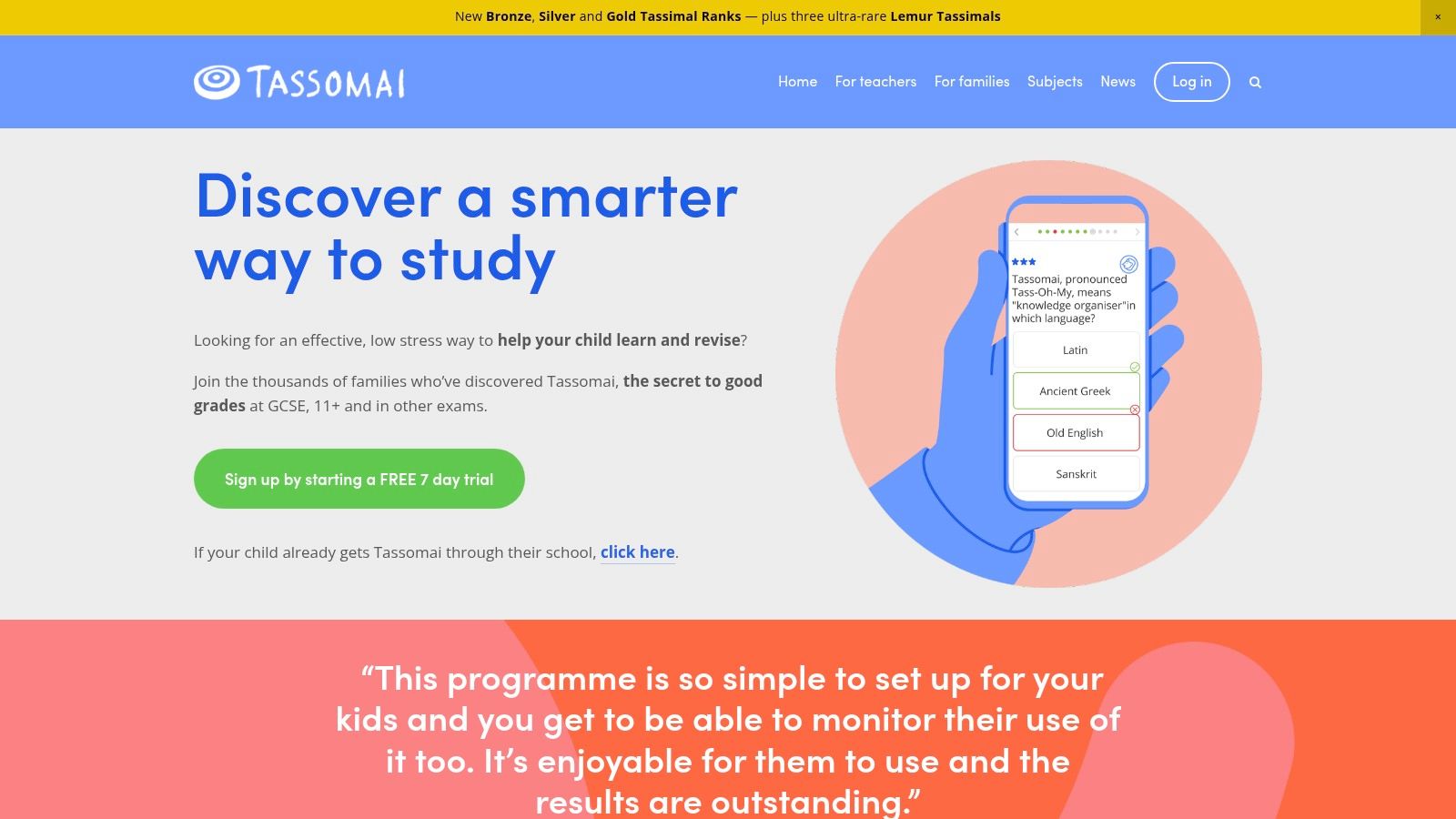
The platform’s standout feature for families is its visual progress tracker, known as the 'Tree'. As your child completes their daily goals and masters topics, their tree grows, providing a simple yet powerful visual motivator. For parents, the dashboard offers clear, at-a-glance insights into progress, effort, and areas needing more attention, taking the guesswork out of revision support. While its multiple-choice format is great for cementing facts, students will need to supplement it with other methods for developing long-form answer techniques.
Key takeaway: Tassomai is ideal for establishing a daily revision routine based on proven retrieval practice. Its parent-friendly dashboard and visual progress tracking make it a fantastic choice for families of KS3 and GCSE students.
Key Features & User Experience
- Personalised Daily Quizzes: The algorithm adapts to your performance, ensuring you spend time on the topics you find most difficult.
- Parent Dashboard & ‘Tree’ Visual: Easily monitor your child's effort and progress, with a simple visual reward system to keep them motivated.
- In-app AI Tutor (Mai): Offers on-demand explanations and support when students get stuck on a question, acting as a helpful digital assistant.
Pros & Cons
- Pro: Proven retrieval-practice model that effectively builds long-term knowledge retention.
- Pro: Clear progress tracking and reporting for parents and students.
- Con: Focuses almost entirely on multiple-choice questions, which doesn't prepare students for exam technique.
- Con: Can become relatively expensive, especially for multiple subjects or older year groups.
Pricing
Tassomai's pricing is subscription-based, starting from around £25/month for a single GCSE subject. Bundles for multiple subjects are available and offer better value.
Website: www.tassomai.com/families
7. GCSEPod (Access GCSEPod)
GCSEPod is built on the idea of microlearning, delivering its entire curriculum through short, animated videos called ‘pods’, which are typically 3-5 minutes long. This makes it a great tool for students who prefer to revise in short, focused bursts. Instead of sitting down for a long study session, you can watch a few pods on the bus or while waiting for a friend, making revision feel less like a chore. The platform is most often licensed by schools, meaning many students get free access through their institution.
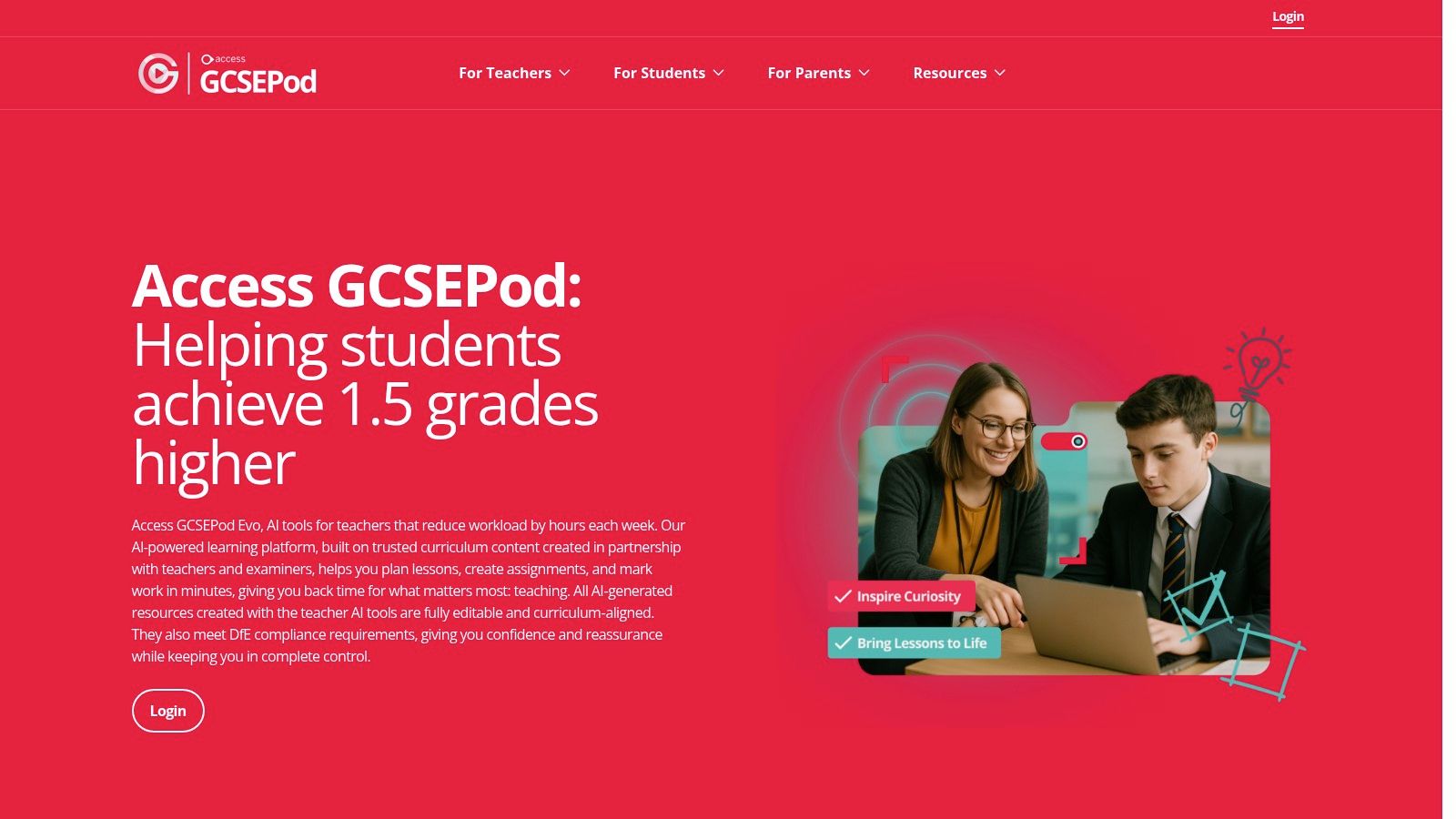
The real strength of GCSEPod shines when a school integrates it into their teaching. Teachers can create assignments, build custom playlists, and monitor student progress with detailed analytics, helping to identify knowledge gaps for individuals or an entire class. The pods are followed by self-marking activities, allowing you to check your understanding immediately. For teachers concerned about quality, the content is professionally produced and curriculum-aligned, making it a reliable resource when used as part of a school subscription.
Key takeaway: GCSEPod is perfect for bite-sized, on-the-go revision. Its pod-based format is brilliant for breaking down complex topics into digestible chunks, especially if your school provides access.
Key Features & User Experience
- Bite-sized Video 'Pods': Over 6,000 short, animated videos designed to explain and reinforce key concepts for 27+ GCSE subjects.
- Check & Challenge Activities: Interactive, self-marking questions that test your knowledge after watching a pod, providing instant feedback.
- Assignments & Analytics: When used via a school, teachers can set tasks and track student engagement and performance, making it great for homework.
Pros & Cons
- Pro: Consistent, high-quality content produced by subject specialists.
- Pro: The microlearning format is effective for on-the-go revision and shorter attention spans.
- Con: The best experience is heavily dependent on a school subscription; individual access is limited.
- Con: Primarily focused on GCSEs, so A-Level students will need to look elsewhere.
Pricing
Access is typically provided for free through a school-wide subscription. Direct purchase routes for individuals or families are less common, so it's best to check if your school is already subscribed.
Website: www.gcsepod.com
8. Quizlet
Quizlet is the undisputed champion of digital flashcards. Its huge, user-generated library means you can find a pre-made study set for almost any topic imaginable, from GCSE Biology definitions to A-Level Spanish vocabulary. While it started with simple flashcards, Quizlet has evolved into a multi-tool platform designed for active recall and memorisation. It's the go-to app for quickly turning a list of facts, dates, or terms into an interactive study session.
The platform shines with its various study modes. You can flip through classic flashcards, test yourself with multiple-choice questions in 'Learn' mode, or race against the clock in the 'Match' game. The AI-powered 'Magic Notes' feature is a game-changer: you can upload your class notes and have Quizlet automatically generate study sets. This saves a huge amount of time, but a word of warning to teachers and keen students: always double-check user-made sets for accuracy, as quality can vary.
Key takeaway: Quizlet is unbeatable for rapid-fire memorisation, especially for subjects heavy on terminology like languages and sciences. Its mobile-first design makes it one of the best revision apps for studying on the go.
Key Features & User Experience
- Multiple Study Modes: Includes Flashcards, Learn, Write, Spell, and Test modes to suit different learning styles.
- Magic Notes (AI): Instantly converts your notes, PDFs, or documents into flashcards, practice tests, and summaries.
- Huge User-Generated Library: Access millions of study sets created by other students and teachers worldwide.
- Excellent Mobile Apps: The mobile experience is smooth and fully featured, with offline access for studying anywhere.
Pros & Cons
- Pro: Extremely easy to create your own sets or find existing ones.
- Pro: Great for vocabulary, key terms, and fact-based subjects.
- Con: Quality of community-made content can be inconsistent and may contain errors.
- Con: The most powerful features, like Magic Notes and Learn mode customisation, are behind the paywall.
Pricing
The free version of Quizlet is functional for basic flashcards. Quizlet Plus (around £6.99/month or £35.99/year) unlocks advanced creation tools, AI features like Magic Notes, offline access, and an ad-free experience.
Website: quizlet.com
9. Anki
For anyone serious about long-term memory, Anki is the gold standard. It's a powerful flashcard system built on spaced repetition (SRS). Instead of just showing you cards randomly, Anki’s algorithm calculates the perfect time to test you on a fact, just before you’re about to forget it. This method is incredibly efficient for locking information into your brain. It’s a favourite among medical students and language learners, but it’s just as potent for GCSE and A-Level subjects heavy on terminology, like Biology or History.
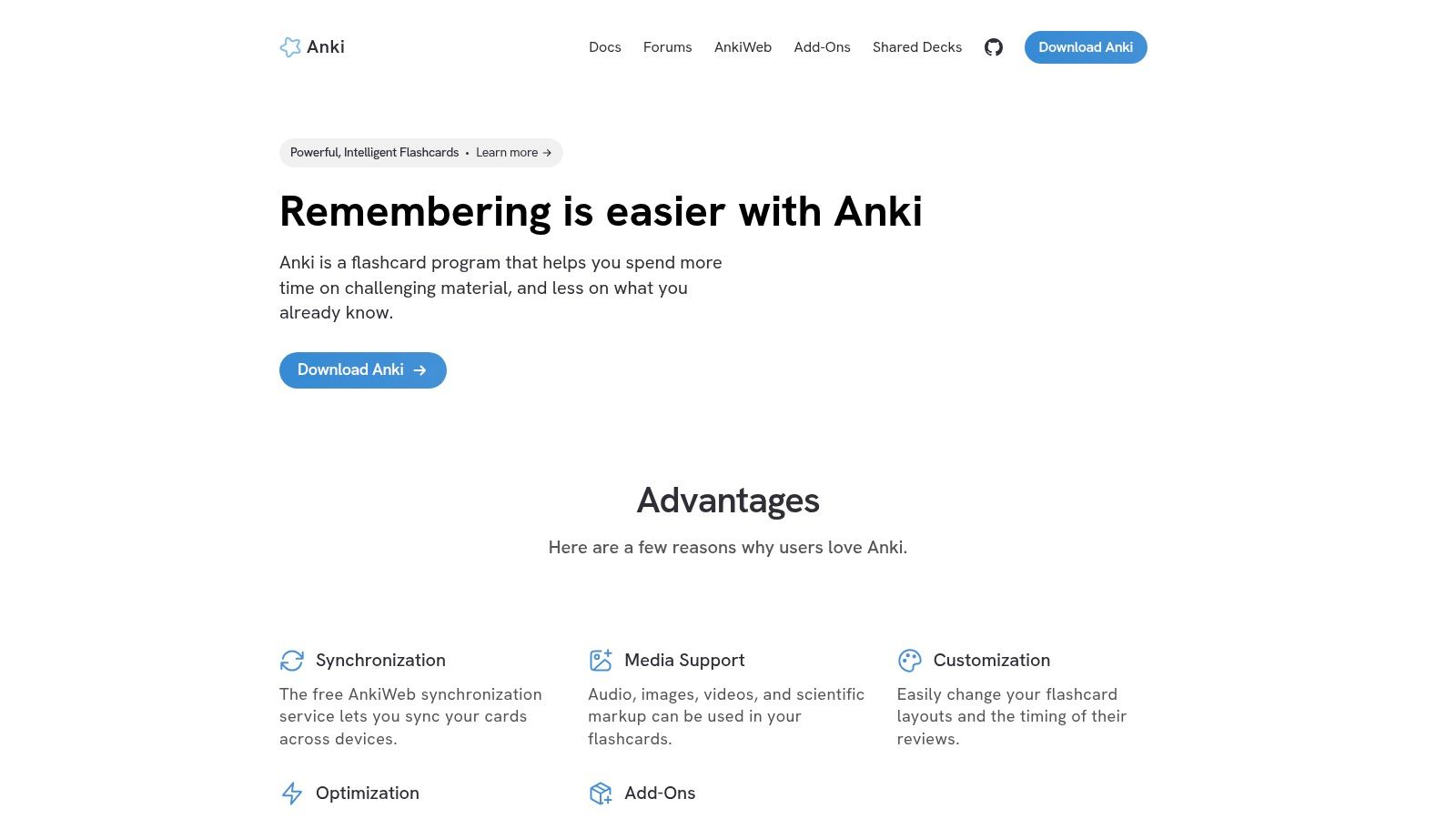
Unlike simpler apps, Anki gives you total control. You create your own decks or download shared ones made by other users, customising cards with images, audio, and even complex scientific formulas. The trade-off for this power is a steeper learning curve; the interface isn't as slick or intuitive as others on this list. However, investing a little time to learn its functions pays off massively, turning passive study into a highly effective, active recall workout. It’s one of the best revision apps for students who want to build deep, lasting knowledge.
Key takeaway: Anki is the ultimate tool for spaced repetition. If you are committed to building a solid foundation of knowledge that lasts well beyond exam day, nothing beats it.
Key Features & User Experience
- Powerful Spaced Repetition: The core algorithm intelligently schedules reviews to maximise long-term retention.
- Deep Customisation: Create your own card types with support for images, audio, video, and scientific markup (LaTeX).
- Cross-Device Syncing: Sync your decks and progress between the free desktop app, the web version, and mobile clients.
Pros & Cons
- Pro: Extremely effective for long-term memorisation of facts, definitions, and formulas.
- Pro: Fully customisable and free to use on desktop, web, and Android.
- Con: Can have a steep learning curve for new users.
- Con: The official iOS app (AnkiMobile) requires a one-time payment.
Pricing
Anki is free for Windows, Mac, Linux, Android (AnkiDroid), and the web (AnkiWeb). The official iOS app, AnkiMobile, is a one-time purchase of £24.99, with the revenue supporting the project's development.
Website: apps.ankiweb.net
10. DrFrostMaths
For any student tackling GCSE or A-Level Maths, DrFrostMaths is an essential, no-nonsense resource. It’s a completely free platform built by a maths teacher for maths students, and its depth of content is astonishing. The site provides a huge collection of teaching videos, auto-marked questions organised by topic, and, most importantly, an extensive bank of past exam papers from all major UK exam boards. It has become a staple in UK classrooms for good reason.
Unlike some other apps that focus on gamified, quick-fire questions, DrFrostMaths is built around rigorous exam preparation. Its interface is functional rather than flashy, putting the focus squarely on practising real exam-style questions. Teachers love it for setting homework and tracking class progress, but it’s just as powerful for independent learners who need to drill down into specific topics or complete full past papers under timed conditions.
Key takeaway: DrFrostMaths is the go-to free platform for serious, exam-board-specific maths practice. Its huge library of past papers and topic questions makes it an indispensable tool for GCSE and A‑Level students.
Key Features & User Experience
- Massive Past Paper Bank: Access to a vast, organised library of past papers for GCSE, A-Level, and other UK qualifications, often broken down by topic.
- Auto-marked Questions: Get instant feedback on practice questions, helping you quickly identify areas for improvement without waiting for a teacher.
- Teaching Videos: Clear, concise video explanations for thousands of topics, perfect for when you’re stuck on a concept from class.
Pros & Cons
- Pro: Completely free for all students, parents, and schools.
- Pro: Content is perfectly aligned with UK maths specifications and widely trusted.
- Con: Only covers maths, so you’ll need other apps for your other subjects.
- Con: The user interface is very practical but lacks the polished, modern design of paid alternatives.
Pricing
DrFrostMaths is completely free for everyone. There are no subscriptions or hidden costs for its core features, making it one of the most accessible and valuable revision apps available.
Website: www.drfrostmaths.com
11. Physics & Maths Tutor (PMT)
Physics & Maths Tutor, or PMT, is a legendary name among GCSE and A-Level students, especially those tackling STEM subjects. It’s less of a flashy app and more of a no-nonsense, incredibly deep library of revision materials. Its main draw is the vast collection of past paper questions meticulously organised by topic. Instead of wading through entire exam papers to find questions on, say, trigonometry, you can access them all in one place, complete with mark schemes.
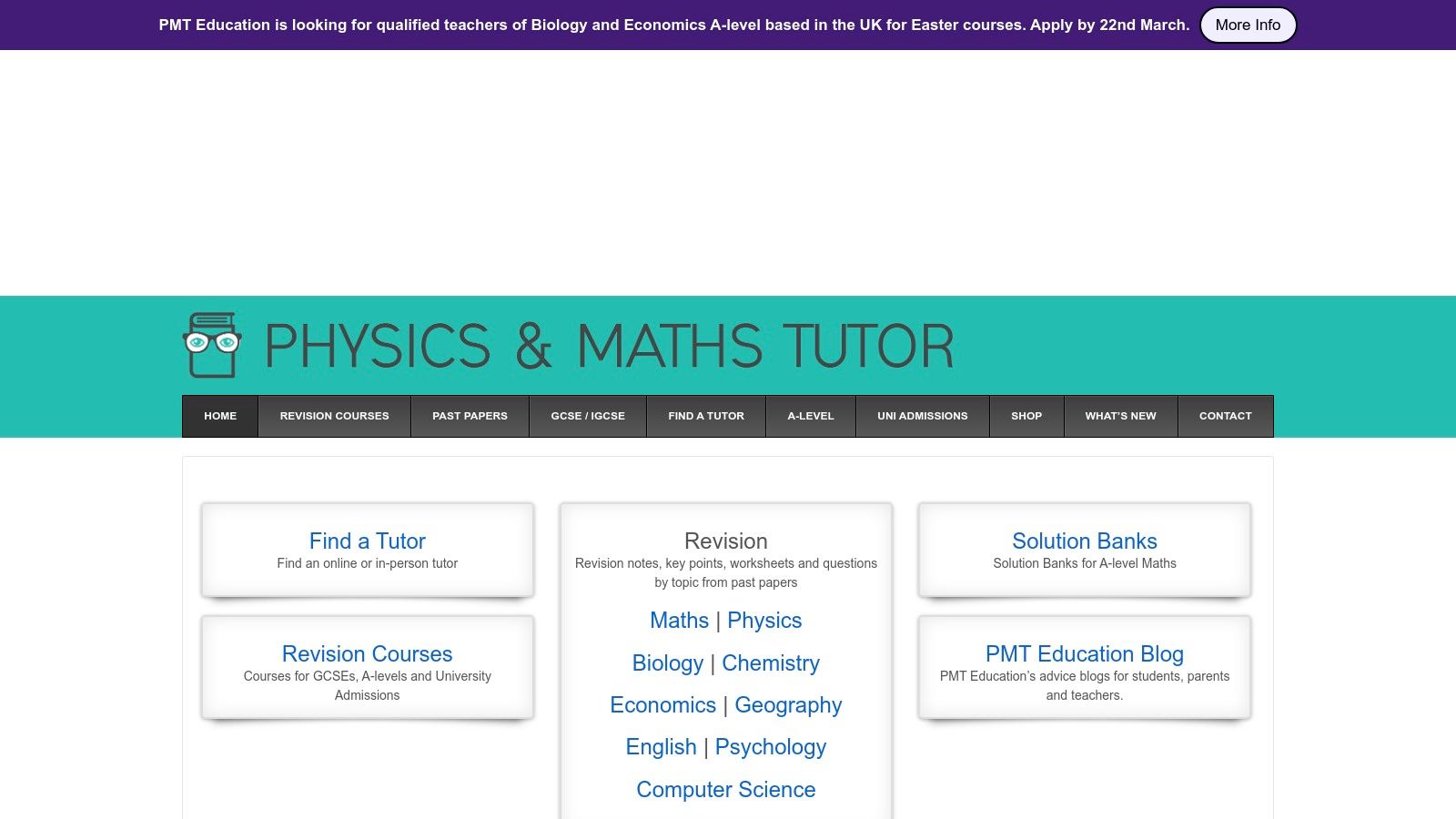
This website has become a go-to for exam prep because it focuses on the single most effective revision technique: doing past papers. It strips away all the bells and whistles to give you direct access to the questions that matter. Alongside the question banks, you’ll find detailed revision notes and summaries for a huge range of subjects, making it a powerful, free resource for both learning content and practising exam technique. The basic interface won’t win any design awards, but its usefulness is undeniable.
Key takeaway: PMT is the gold standard for free, topic-specific past paper practice. It's an essential tool for any student wanting to drill down on weak areas and master exam questions.
Key Features & User Experience
- Topic-by-Topic Question Banks: Access past paper questions filtered by topic and exam board, allowing for focused practice.
- Extensive Free Notes: Detailed, specification-aligned revision notes for a wide range of science, maths, and even some humanities subjects.
- Past Paper & Mark Scheme Library: A huge, well-organised collection of past papers, specimen papers, and their corresponding mark schemes.
Pros & Cons
- Pro: The core library of notes and past paper questions is completely free.
- Pro: Excellent for building exam technique through targeted question practice.
- Con: The website interface is dated and can sometimes be tricky to navigate.
- Con: Coverage can be more in-depth for sciences and maths than for other subjects.
Pricing
The vast majority of resources (notes, question banks, past papers) are free. PMT also offers paid live courses, tutoring, and extra resources through its sister site, PMT Education.
Website: physicsandmathstutor.com
12. Educake
Educake is a homework and revision platform built around one core idea: practice makes perfect. Heavily used in UK schools, its strength lies in its enormous, curriculum-aligned question banks that allow for endless quizzing. Teachers love it for setting auto-marked homework, but individual students can also sign up to get that same structured practice. It’s a no-frills, high-volume practice tool designed to drill core knowledge through repetition.
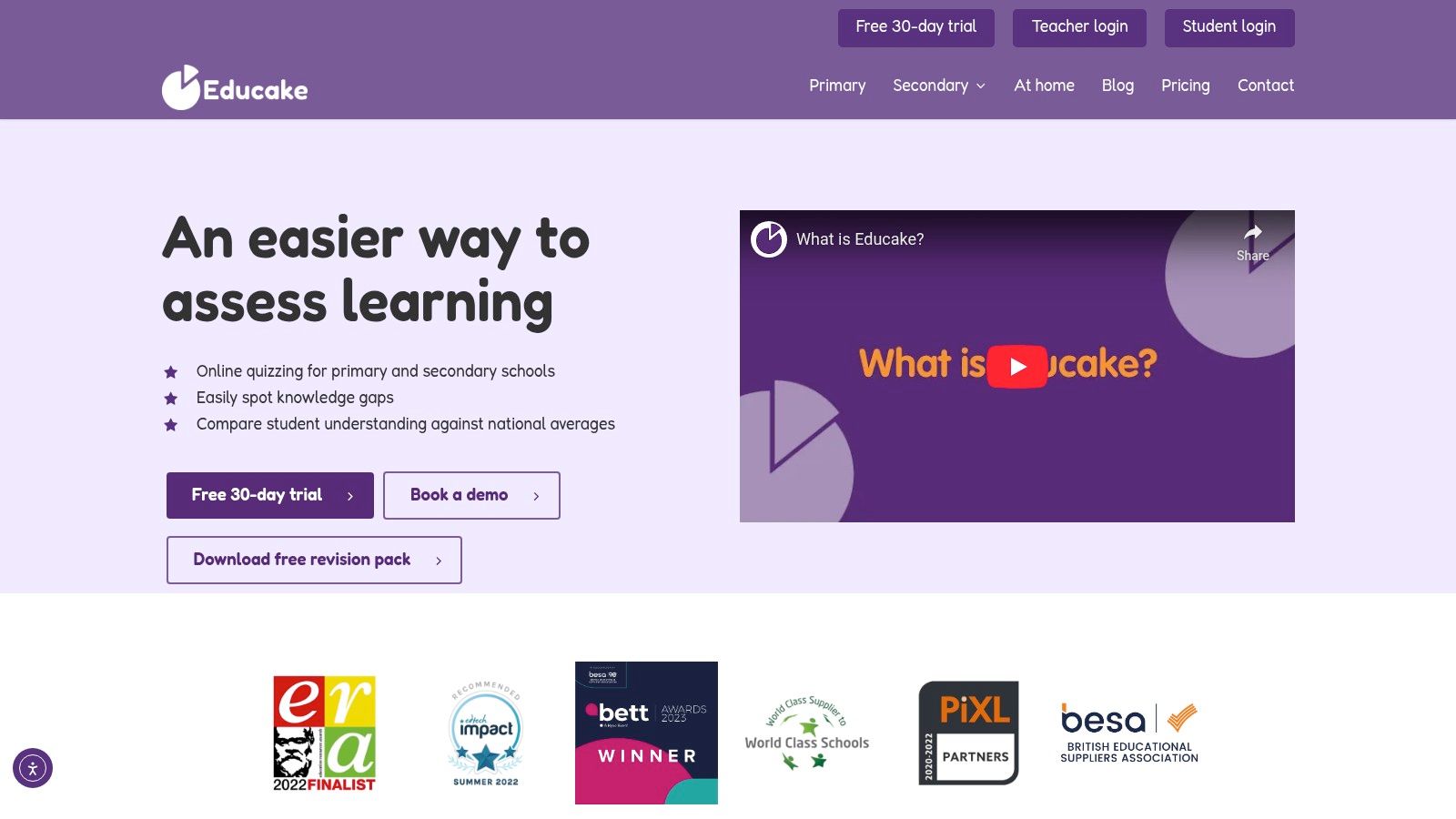
The platform shines when you need to quickly test yourself on a specific topic. Instead of creating flashcards from scratch, you can dive straight into thousands of ready-made questions. The immediate feedback and progress tracking help you see exactly which topics are letting you down, so you can focus your efforts more effectively. While it’s less about learning content from scratch and more about testing what you already know, it’s one of the best revision apps for targeted, high-repetition practice.
Key takeaway: Educake is the go-to platform for bulk question practice. It’s ideal for identifying and fixing knowledge gaps through repeated, auto-marked quizzes.
Key Features & User Experience
- Extensive Question Banks: Thousands of auto-marked questions for core GCSE subjects like Science, Maths, English, and History.
- Targeted Gap Analysis: The platform tracks your scores and shows you precisely which topics you need to work on.
- Set by Teachers or Self-Study: Can be used for assigned homework or for independent revision, giving it great flexibility.
Pros & Cons
- Pro: Very efficient for routine practice and identifying weak spots.
- Pro: Widely adopted and trusted by UK secondary schools.
- Con: Less effective for learning new content; it’s a testing tool, not a teaching one.
- Con: The explanations for incorrect answers can sometimes be brief.
Pricing
Many students will get free access through their school. For independent learners, a student subscription starts at £30 per subject for a year or £75 for all subjects.
Website: www.educake.co.uk
Top 12 Revision Apps: Feature Comparison
| Product | Key features | UX / Quality | Value / Price | 👥 Target audience | ✨ Unique selling point |
|---|---|---|---|---|---|
| MasteryMind 🏆 | Exam-board aligned questions, adaptive difficulty, Blurt voice, NEA Coach, step-by-step maths, spaced review | ★★★★☆ Examiner-style AO feedback | 💰 Free forever → Premium (advanced NEA & examiner tools) | 👥 Years 3–13; students, parents, teachers, tutors | ✨ Exact AQA/Edexcel/OCR/WJEC fidelity; voice Blurt; compliant NEA guidance |
| Seneca Learning | Board-mapped courses, adaptive practice, quick quizzes, teacher tools | ★★★★☆ Snackable, school‑friendly | 💰 Free + Premium upgrades | 👥 KS2–A‑Level; schools & individual learners | ✨ Very broad subject coverage; rapid retrieval practice |
| BBC Bitesize – Exam Revision | Topic guides, videos, flashcards, quizzes, app | ★★★☆☆ Trusted, easy to use | 💰 Free (no paywall) | 👥 GCSE learners & quick‑revision users | ✨ Reputable national resource with concise videos |
| Save My Exams | Topic notes, past papers, model answers, markschemes | ★★★★☆ Exam‑focused clarity | 💰 Freemium (membership for full access) | 👥 GCSE/AS/A‑Level students aiming exam technique | ✨ Large bank of graded practice & worked solutions |
| Cognito | Topic past papers, videos, flashcards for STEM | ★★★☆☆ Clean, exam‑focused UX | 💰 Free | 👥 GCSE maths & science students | ✨ Straightforward topic organisation for STEM revision |
| Tassomai (Families) | Daily personalised quizzes, AI tutor (Mai), parent dashboard | ★★★★☆ Habit‑building retrieval | 💰 Free tier + paid plans (higher tiers pricier) | 👥 Years 3–11; families & parents | ✨ AI tutor + strong parent progress visuals (Tree) |
| GCSEPod (Access GCSEPod) | Micro‑lessons ('pods'), self‑marking checks, school analytics | ★★★★☆ Effective microlearning | 💰 School licences (limited individual access) | 👥 GCSE students & school deployments | ✨ Bite‑sized video pods with teacher assignment tools |
| Quizlet | Flashcards, Learn/Test modes, Magic Notes, offline apps | ★★★★☆ Fast setup, mobile first | 💰 Free + Quizlet Plus subscription | 👥 Learners needing memorisation & languages | ✨ Huge community sets & AI note‑to‑set conversion |
| Anki | Customisable SRS, precise spaced intervals, shared decks | ★★★★☆ Powerful for long‑term retention | 💰 Free desktop/web; iOS one‑time fee | 👥 Self‑directed learners requiring durable memory | ✨ Highly customisable spaced‑repetition system |
| DrFrostMaths | Maths past papers, auto‑marked practice, teaching videos | ★★★★☆ Deep maths focus | 💰 Free | 👥 GCSE/A‑Level maths students & teachers | ✨ Extensive board‑linked maths past‑paper integration |
| Physics & Maths Tutor (PMT) | Revision notes, topic past papers, markschemes | ★★★☆☆ Practical, no‑frills | 💰 Free (some paid courses) | 👥 GCSE & A‑Level maths and sciences | ✨ Well‑organised past‑paper and solution library |
| Educake | Auto‑marked quizzes, progress analytics, multi‑subject banks | ★★★☆☆ Efficient classroom practice | 💰 School & individual subscriptions | 👥 Teachers setting homework; students for routine practice | ✨ Scalable auto‑marking with gap‑identification analytics |
Your Next Move: Stop Stressing, Start Strategising
We’ve just walked through a dozen of the best revision apps available to UK students, and the choice can feel overwhelming. From the structured, AI-powered precision of MasteryMind to the community-driven flashcards on Quizlet, the right tool is out there. The challenge isn't a lack of options; it's finding the one that clicks with your brain, your subject, and your learning style.
What this guide has hopefully made clear is that there is no single ‘magic bullet’ app. A flashcard tool like Anki is perfect for memorising French vocabulary but won’t help you structure a 16-mark essay in History. Similarly, a video-heavy platform like GCSEPod is fantastic for auditory and visual learners, but a student who learns by doing might get more from the active quizzing in Seneca or Tassomai. The goal is to build a personal revision toolkit, not to find one app that does it all.
Key Takeaways for Smart Revision
Before you download the first app you see, let’s boil this down to a clear strategy. Your next move should be deliberate, not desperate.
- Diagnose, Don’t Guess: Don't just revise what you like. Use an app with strong diagnostic features, like Educake or MasteryMind, to pinpoint your actual weak spots. Revising topics you already know is comfortable, but it's a waste of valuable time.
- Curriculum is King: For core subjects, especially at GCSE and A-Level, alignment with your exam board (AQA, Edexcel, OCR, etc.) is non-negotiable. Tools like Save My Exams and MasteryMind build their entire structure around this, ensuring you’re not learning irrelevant information.
- Mix Your Methods: The most effective revision combines different techniques. Use a content-focused app like BBC Bitesize to understand a concept, then switch to a retrieval practice app like Anki or Quizlet to lock it into your long-term memory. This active recall is scientifically proven to be more effective than passive reading.
- Mindset Matters More Than the App: The most sophisticated app is useless if you’re not in the right headspace. Procrastination and burnout are the real enemies of exam success. Building a consistent routine, even just 20 minutes a day, is far more powerful than a frantic 8-hour cramming session. Ultimately, leveraging revision apps effectively also involves adopting the right mindset and understanding how successful people think and strategize for peak performance.
Making Your Choice: A Quick Decision Guide
Feeling stuck? Let’s simplify it. Ask yourself these questions to narrow down your options:
What is my biggest revision problem?
- "I don't know where to start." -> Look for an app with a clear, structured path and diagnostic tests. Top Picks: MasteryMind, Tassomai, Seneca Learning.
- "I get bored easily." -> You need variety and engaging formats. Top Picks: BBC Bitesize (videos/guides), Quizlet (games), Cognito (interactive lessons).
- "I need to practise exam questions." -> Focus on exam-board-specific resources. Top Picks: Save My Exams, Physics & Maths Tutor, DrFrostMaths.
- "I struggle to remember facts and definitions." -> You need a spaced repetition or flashcard system. Top Picks: Anki, Quizlet, Seneca Learning.
What's my budget?
- If it’s zero, start with the excellent free resources from BBC Bitesize, Physics & Maths Tutor, and the free tiers of Quizlet and Seneca. These offer a huge amount of value without costing a penny.
The perfect app complements your schoolwork, it doesn't replace it. Use these tools to fill the gaps, test your knowledge, and build confidence. Stop scrolling endlessly and start making a strategic choice. Pick one or two apps that address your biggest weakness, commit to using them consistently, and turn that pre-exam panic into a clear, actionable plan.
Ready to stop guessing and start targeting your exact knowledge gaps? MasteryMind uses AI to create a personalised revision plan based on your exam board and specific weaknesses. Move beyond generic quizzes and start practising with questions that are truly tailored to what you need to know. Try MasteryMind today and build a smarter path to exam success.
Compare MasteryMind with other revision tools
Side-by-side comparisons of MasteryMind and other revision tools, feature by feature.
Ready to master this topic?
Practise with quizzes, blurt exercises and exam questions on MasteryMind.
7 days Premium · Then free forever · No card, no charge