8 Essay Introduction Examples: Master Your Opening
That Killer First Paragraph? It's Easier Than You Think
The blank page is staring back at you. The clock is ticking. Getting that first paragraph right feels like half the battle, and it often is. A strong introduction tells the examiner you're in control, you understand the question, and you have a clear plan. If you're trying to rescue a shaky revision season or push from already-good to top-band, your opening matters more than most students think.
That matters even more in a year when results pressure is real. In 2024, the GCSE pass rate across England, Wales, and Northern Ireland for grades 4/C or above fell to 67.6%, down from 68.2% in 2023, according to BBC reporting on GCSE results. You don't control national trends. You do control whether your essay starts with purpose or waffle.
The good news is that strong introductions are learnable. They aren't magic. They're patterns. Once you know which pattern fits which question, and how AQA, Edexcel, OCR, and WJEC tend to reward clarity, your first paragraph gets much easier to write well.
If your wider essay structure also needs tightening, these tips for academic success will help you build beyond the opener. For now, let's get straight into essay introduction examples that are effective in exam conditions.
1. The Shocking Statistic Hook
A statistic hook works when the number is directly tied to the argument you're about to make. In school essays, that usually means History, Geography, Politics, Sociology, or sometimes English Language. It gives your opening weight fast, which is useful when the examiner wants to see relevance straight away.
For example, a GCSE History answer on post-war Europe could open like this:
In 1945, Europe faced devastation on a vast scale. Yet recovery began surprisingly quickly in the years that followed. This essay argues that economic aid, political restructuring, and the determination to avoid another continental war were the main reasons rebuilding succeeded.
That works because the number isn't there to sound clever. It gives context, then the thesis takes over. The introduction still stays focused on the question.
When it works best
AQA and Edexcel often reward introductions that frame significance without drifting into storytelling. A statistic can do that neatly, especially in source-based or thematic essays. The trap is obvious though. If the figure isn't secure, relevant, and linked to your argument, it looks bolted on.
For English Literature, be careful. A made-up “research” style opener is a bad idea. If you can't verify the figure, don't use one. In literature, a textual quote or conceptual definition is usually safer.
A smart way to practise this is by testing openings against real questions from GCSE Past Papers. If the statistic helps you answer the exact wording of the question, keep it. If it only sounds dramatic, cut it.
- Use it for factual subjects: History and Geography suit this hook far better than most closed-book Literature essays.
- Connect it immediately: Your second sentence should explain why the number matters.
- Move to thesis fast: Don't spend half the introduction unpacking one figure.
Example you could adapt
A-Level History question on rebuilding after war:
By 1945, Europe had suffered destruction on an immense scale. Recovery, however, was not merely a matter of time. This essay argues that American aid, state planning, and changing political priorities were the key factors behind reconstruction.
That's clean, controlled, and exam-safe.
2. The Question Hook
You open the paper, read the question, and your mind splits in two directions at once. One part wants to start writing. The other part knows a weak first line can make the whole essay feel vague. A question hook helps because it turns that pressure into a clear argument straight away.
For GCSE English Literature, it can sound like this:
“Is Macbeth born violent, or does ambition turn him into a tyrant? Shakespeare presents him as capable of both moral awareness and brutality, but unchecked ambition, strengthened by outside influence, drives his downfall.”
That works like a courtroom opening statement. You raise the central dispute, then you state your case. Examiners can see your direction from the first two sentences, which matters for AO1 across AQA, Edexcel, OCR, and WJEC.

Why this works across exam boards
AQA and WJEC reward a clear, relevant argument early. In practice, that means your introduction should answer the set task, not announce that you are about to answer it. Phrases like “this essay will discuss” waste space you could use for a judgement.
Edexcel and OCR often reward essays that show conceptual control. A question hook can help with that because it frames the topic as a debate, then narrows it to a precise line of reasoning. That puts you in a stronger position for analysis and evaluation, especially when the question asks how far, to what extent, or in what ways.
The catch is simple. If the question just hangs there, the opening sounds uncertain.
Ask the question only if you can answer it fast and answer it with a clear judgement.
A weaker and stronger version
Weaker:
“Was Lady Macbeth evil? This essay will discuss whether she was evil or not.”
Stronger:
“Is Lady Macbeth purely evil, or is she shaped by ambition and the pressures of power? Shakespeare presents her as ruthless, but also psychologically fragile, which makes her central to the play's warning about unchecked desire.”
The stronger version does three jobs at once. It sets up debate, offers an interpretation, and hints at evaluation. That is far more useful for high-mark responses than a flat yes-or-no opener.
This hook is also useful outside English. In History, for example, a question hook can frame causation or significance without sounding formulaic: “Was the Treaty of Versailles designed to secure peace, or did it make another war more likely?” That kind of opening suits OCR and Edexcel essays well because it sets up balanced judgement from the start.
A good way to practise is under timed conditions using Exam Practice for GCSE. If your opening question leads naturally to a one-sentence thesis, keep it. If you struggle to answer your own question, change the hook.
- Ask a real debate question: “How” and “to what extent” usually work better than a simple yes-or-no prompt.
- Answer it by sentence two: Your examiner should know your position almost immediately.
- Match the board and task: For AQA and WJEC, keep it tightly linked to the wording. For Edexcel and OCR, make the conceptual angle slightly sharper.
- Keep it formal: Write like a candidate making a judgement, not a friend thinking aloud.
3. The Concrete Description or Scene-Setting Hook
You open the paper and get a question on the Industrial Revolution. Instead of starting with a broad claim about change, you place the examiner inside the setting at once. Noise, heat, dust, crowding. A scene-setting hook works well because it gives your argument a real place to stand.

A GCSE History introduction on the Industrial Revolution could begin like this:
“The factory floor was loud, crowded, and dangerous. Workers stood for long hours beside fast-moving machinery while cotton dust filled the air. These conditions show why industrial growth transformed Britain not only economically, but socially and politically.”
That opening works because every detail is pulling in one direction. The description is doing the same job as evidence in a body paragraph. It is helping you frame a judgement.
This hook suits questions about experience, impact, and significance. In AQA and WJEC, it can show secure contextual understanding early, which supports AO1 before you move into explanation. In Edexcel and OCR, it can also sharpen evaluation if the final sentence turns the image into a clear line of argument. The trick is to treat the scene like a springboard. It gets you into analysis fast.
A Literature version helps show the difference. If the question is about fear in An Inspector Calls, a student might open with the dining room, the formal table, and the sudden interruption of the Inspector's arrival. That can work for AO2 because the setting is tied to method and effect, not because it sounds dramatic. Examiners reward control.
Keep it brief. An introduction works like the doorway to a room. It should guide the examiner in, not keep them standing outside looking at the frame. If your opening starts piling up detail, you are spending valuable time on atmosphere instead of analysis.
A practical pattern:
- Sentence 1: Place the reader in a specific setting.
- Sentence 2: Add one concrete detail that reveals pressure, conflict, or change.
- Sentence 3: Turn that detail into an argument that answers the question.
If you want to practise keeping this tight, AI Powered Revision can help you test different openings quickly and see which ones move cleanly into a thesis. For timed practice, Exam Practice for GCSE is useful because it trains you to write an opening that earns its place.
A quick visual explainer can help if you struggle to picture historical setting before writing.
4. The Definition or Clarification Hook
You open the paper, read the question, and one word does all the heavy lifting. Maybe it is power, responsibility, tragedy, or patriotism. If you leave that word vague, the whole essay wobbles. If you pin it down early, your argument has something solid to stand on.
That is why the definition or clarification hook works so well. It gives the examiner your meaning before you start proving it.
This approach is especially useful on boards that reward a clear line of argument from the start. OCR often benefits from conceptual precision. AQA and Edexcel reward it too, because a sharper definition usually leads to stronger AO1 argument and better AO2 or AO3 choices later. WJEC questions can also hinge on how well you frame a key idea before exploring it. Different boards phrase tasks differently, but the advantage is the same. A clear definition helps you control the essay instead of letting the title control you.
A simple way to do it is discuss, define, refine.
First, identify the key term. Next, define it in plain English. Then refine that meaning so it fits the exact question, text, or period you are writing about.
A History example shows the pattern clearly:
“Appeasement” means more than avoiding war. In this context, it refers to a policy of granting concessions to aggressive states in the hope of preserving peace. This essay argues that appeasement grew from both British weakness and the political and military pressures of the 1930s.
That works because the definition is already doing exam work. It sets boundaries, shows understanding, and leads straight into judgement.
In English Literature, the same tactic can lift an introduction from general to precise. If the question asks whether a character is presented as powerful, you need to show what powerful means in that essay. Social status. Emotional influence. Moral authority. Control over language. Once you choose, your analysis gets cleaner and your quotations are easier to justify.
Why this hook scores well
Examiners usually reward clarity. A definition hook helps because it reduces drift. Instead of circling around a broad theme, you tell the reader exactly how you are using the term and what your argument will test.
It also helps with high-level AOs. For AQA and Edexcel English, a clarified concept can sharpen AO1 and make AO2 analysis more selective. For OCR and WJEC, it can strengthen evaluation because your judgement rests on a clear idea rather than a fuzzy label. In other words, definition is not a warm-up. It is part of the argument.
Practical rule: If the title contains an abstract, debatable noun, define it in a way that helps you answer the question.
How to make it sound natural
- Use your own words: Examiners want your thinking, not a dictionary entry.
- Tie it to the question: Define the term as it matters here, not in general.
- Turn quickly to argument: A definition earns marks when it leads to a judgement.
A useful comparison is a map key. Without it, the symbols are there but their meaning stays loose. With it, the route becomes clear.
If you want to practise that kind of precision across subjects, AI Powered Revision is useful because it makes you explain key terms and test whether your opening sets up an argument.
5. The Historical or Contextual Background Hook
This is the classic exam opener when used properly. Short context, direct link, clear thesis. It works especially well in History and English Literature, where context supports AO3 or strengthens interpretation, but only if it stays relevant.
Here's a GCSE English Literature example on Jane Eyre:
“Written in a society that placed strict limits on women's independence, Jane Eyre presents female self-respect as both morally serious and socially disruptive. Brontë uses Jane's voice, choices, and resistance to authority to challenge the expectations of her time.”
That introduction earns its space. The context isn't there for decoration. It changes how we read the argument.
Where students go wrong
They often dump a history lesson into the opening. Examiners don't need a mini textbook before you answer the question. Keep context to one or two sentences, then connect it sharply to your interpretation.
This matters in English right now. GCSE English outcomes were weaker in 2024, with only 20.9% of students aged 16 achieving a grade 4 or above, compared with 25.9% in 2023, according to FFT Education Datalab's GCSE results analysis. When performance dips, clear structure matters even more. Context should support your answer, not bury it.
A-Level example
“Post-1945 Britain faced economic strain, political change, and the shrinking reality of empire. In that context, the creation of the NHS represented not only social reform but a new vision of the state's responsibilities.”
That's stronger than a loose opening like “The NHS was very important in British history.” It shows period awareness and analytical direction at once.
- Name the period clearly: Victorian era, interwar years, post-war Britain.
- Link context to the question: Don't leave it hanging.
- Stop early: Context should open the essay, not replace it.
6. The Counterargument or Opposing View Hook
This is a top-band move when you can handle it cleanly. You begin with a view someone might reasonably hold, then pivot to your own judgement. It's strong for A-Level, strong for evaluative GCSE questions, and especially useful for OCR or Edexcel essays where balance and judgement matter.
An example for English:
“Some readers see Scrooge as a simple villain whose greed defines him from start to finish. Yet Dickens presents him more carefully than that, using his transformation to argue that selfishness is learned, damaging, and ultimately reversible.”
That opening signals debate. What's more, it signals control of debate.
Why it suits higher-level responses
OCR's marking guidance places value on a clear position statement and signposted order of argument. In the evidence already noted, essays that omitted a clear position and roadmap achieved lower overall marks, while explicit signposting improved performance in context and structure. A counterargument hook naturally pushes you toward that kind of structure because you're forced to say what others think, then what you think.
In this situation, many able students can gain ground. You don't just answer. You evaluate from the first line.
Keep it fair, then turn
The bad version sounds like this:
“Some people stupidly think Romeo is fully responsible for the tragedy.”
The good version sounds like this:
“Some interpretations place most blame for the tragedy on Romeo's impulsiveness. However, Shakespeare presents a wider chain of responsibility involving family conflict, social pressure, and chance.”
That's measured. Examiners trust measured.
If you want to build this kind of judgement across essays, Explore revision subjects gives you a good spread of question styles to practise against.
A fair counterargument makes your own view stronger. A fake one makes the essay weaker.
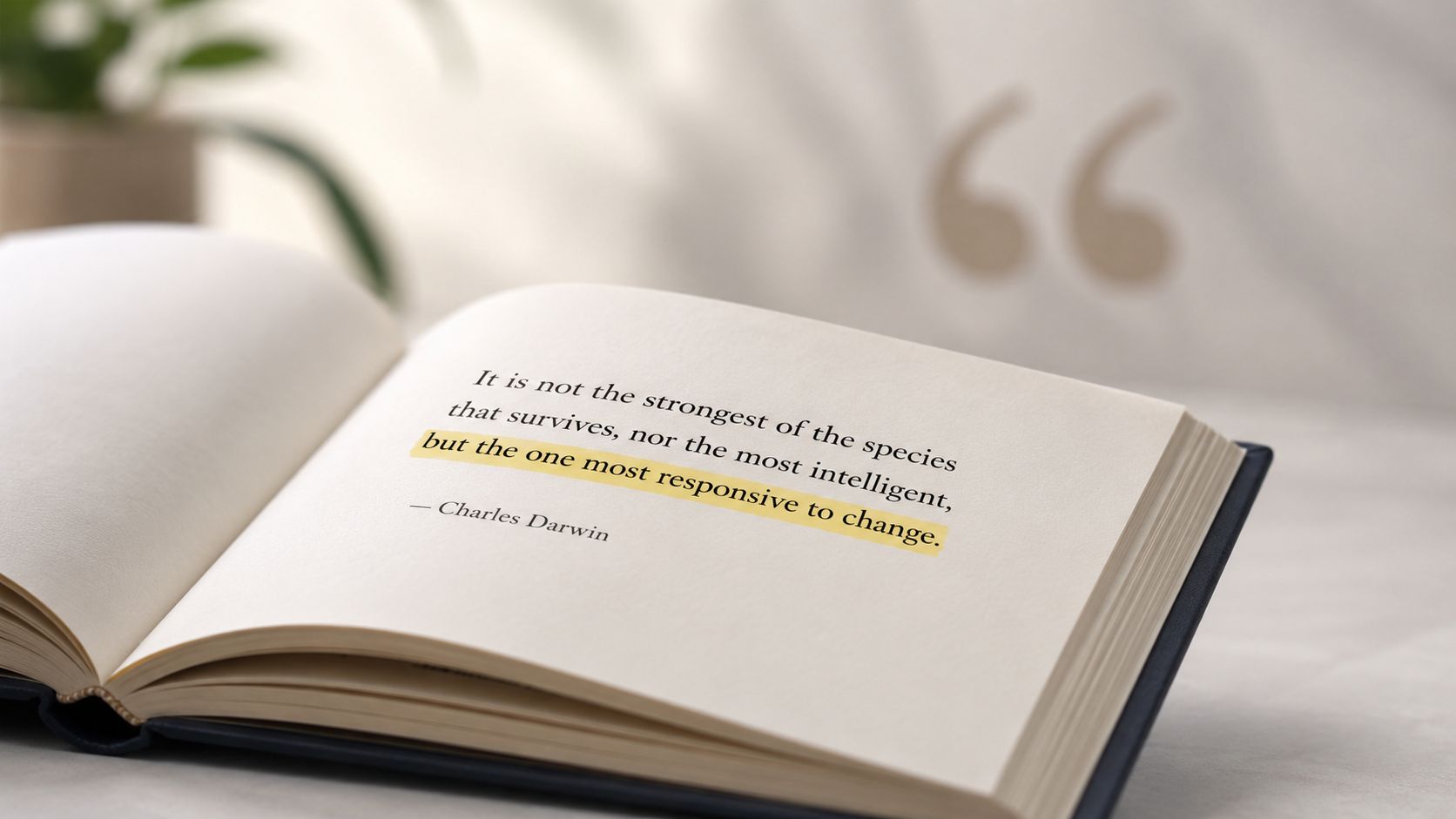
7. The Relevant Quote or Paraphrase Hook
You open the paper, see a question on Macbeth, and the first line that comes to mind is already in the play. That can work well. It can also go wrong fast if the quotation sits there like a decoration.
A relevant quote hook works best when it acts like a key, not a poster. It should open the argument straight away. This is especially useful in English Literature, Religious Studies, History, and sometimes Politics, where the examiner expects you to work closely with words, ideas, and interpretations from the source material itself.
For Macbeth, you could write:
“‘A little water clears us of this deed,’ Lady Macbeth claims, but Shakespeare quickly proves her wrong. The play presents guilt as something that cannot be washed away, and this makes Lady Macbeth's confidence both ironic and tragic.”
That introduction works because the quote is brief, the analysis starts immediately, and the line leads straight into a clear argument. There is no hanging around, no copied chunk of text, and no vague praise of Shakespeare's language.
Why this hook scores well across exam boards
The value of this hook changes slightly depending on the board. AQA Literature rewards a clear argument and precise references, so a short quotation can help you establish AO1 and move quickly toward AO2 analysis. Edexcel often rewards conceptualised responses, so the quote needs to do more than identify a theme. It should frame an idea you will develop. OCR and WJEC also reward control, relevance, and analysis rooted in the text, which means the quotation has to earn its first-line position by setting up interpretation, not by sounding memorable.
The same principle applies in History. A line from a speech or a contemporary source can sharpen the issue at once, but only if you use it to frame judgement. In Religious Studies, a scripture quote or scholar paraphrase can work well if it introduces debate rather than ending it before the essay has begun.
What makes it exam-safe
Students often assume that using a quotation in the first line automatically sounds impressive. Examiners do not reward the quotation by itself. They reward what you do with it.
A strong quote hook does three jobs in quick order. It gives a precise starting point, it shows what idea matters in that wording, and it turns that idea into a thesis. That structure keeps the introduction short, which matters because high-mark essays usually save detailed evidence for the main body rather than spending too long on the opening.
A weak version sounds like this:
“‘Fair is foul, and foul is fair.’ This is an important quote which shows that Macbeth is a very dramatic play.”
That says little. It names the line, then stalls.
A stronger version sounds like this:
“‘Fair is foul, and foul is fair' establishes moral confusion from the outset, and Shakespeare sustains that confusion to show how ambition distorts judgement.”
Now the quote is doing a job. It opens AO2 analysis and points toward AO1 argument.
Quote or paraphrase?
Paraphrase is often the safer choice outside Literature. In History or Politics, for example, you may not need the exact wording if the key point matters more than the phrase itself. A paraphrase can sound more controlled because it keeps your voice in charge.
A History version might be:
“Churchill's promise that Britain would ‘never surrender' framed resistance as a moral duty. This essay argues that wartime rhetoric strengthened public resolve while also simplifying the strategic difficulties Britain still faced.”
That works because the quotation is short and the judgement is clear. The same approach could be adapted for OCR History, where source use needs to stay tied to argument, or for Edexcel, where evaluation and line of reasoning need to remain visible from the start.
A reliable formula
- Keep the quote short. One phrase or one line is enough.
- Explain it straight away. Do not leave the examiner to guess why it is there.
- Turn it into a thesis. The quote should start your argument.
- Match the board's priorities. For AQA, be precise. For Edexcel, be conceptual. For OCR and WJEC, keep interpretation and evaluation clear and controlled.
Used well, this hook shows confidence. Used badly, it looks borrowed. The difference is simple. Start with words that matter, then show exactly why they matter.
8. The Personal Connection or Angle Hook
You open the paper, read the question, and your mind goes straight to something you have seen. A road closed after flooding. A younger sibling glued to social media. A hospital appointment that took months to arrive. That instinct can help, if you use it like a doorway rather than the whole room.
The personal connection hook works best when the exam rewards engagement with real-world significance as well as argument. That is why it can suit English Language, Geography, Sociology, ethics, and some discursive tasks. It is usually a weaker choice for tightly formal Literature essays, where examiners want your focus on the text from the first line unless the question clearly allows a broader angle.
A Geography-style opener could be:
“Flood warnings feel different when they affect streets you know. Local disruption to homes, travel, and work shows that climate change is not a distant debate but an immediate social and economic problem. This essay argues that local impacts make the case for urgent climate policy clearer and harder to ignore.”
Why does that work? Because the personal detail is doing a job. It turns a broad topic into a precise line of argument, then quickly shifts into analysis. The examiner gets relevance, direction, and a clear thesis.
For AQA and WJEC, that quick shift matters because clear focus and purposeful argument are rewarded. For Edexcel, it helps if the opening moves from personal observation to a broader concept such as responsibility, inequality, or risk. For OCR, the strongest version often shows awareness of different viewpoints, not just personal feeling. In other words, your experience is the spark. Your argument still has to carry the essay.
A weak version sounds like a diary. A strong version sounds like a student who knows why this topic matters and can explain it under exam conditions.
Keep the method tight. One or two sentences is enough. Then turn outward to the question, the key idea, and the judgement you will prove.
The same rule applies across boards. Introductions should set up the line of reasoning, not spend precious time doing the full analysis. Personal openings need even more control because they can drift off task fast.
This hook can also help reluctant writers get traction. Some students freeze because the question feels remote. A brief personal angle gives them something concrete to start from, then they can build toward AO1 argument, AO2 analysis, or evaluation depending on the subject. Used well, it works like a quick ramp onto the main road.
- Keep it brief: one or two lines.
- Shift to the essay fast: move from experience to claim.
- Name the bigger issue: turn the personal example into a concept or debate.
- Match the board: AQA wants clarity, Edexcel wants a visible line of reasoning, OCR and WJEC reward controlled evaluation.
- Cut anything confessional: if it does not sharpen the thesis, remove it.
8 Essay Introduction Hooks Compared
| Hook | Implementation complexity 🔄 | Resource requirements ⚡ | Expected outcomes ⭐📊 | Ideal use cases 📚📊 | Key advantages & tips ⭐💡 |
|---|---|---|---|---|---|
| The Shocking Statistic Hook | Medium, needs accurate sourcing and context | Moderate–High, reliable statistics and citations required | High engagement; signals research and analytical thinking | Science, History, Social Sciences; essays aiming top grades | Grabs attention and evidences research; use reputable sources and link stat directly to thesis |
| The Question Hook | Low–Medium, craft a genuinely probing question | Low, little external resource need | Medium–High engagement; invites reader into argument | Analytical and persuasive essays across subjects | Promotes critical thinking; ensure question is open and answered within the essay |
| The Concrete Description / Scene-Setting Hook | Medium–High, vivid but concise writing skill required | Low–Moderate, factual or textual accuracy helpful | High emotional engagement and memorability if tied to analysis | History, Literature, Geography | Brings topics to life; keep description short (2–3 sentences) and connect swiftly to thesis |
| The Definition / Clarification Hook | Low, clear, precise wording needed | Low–Moderate, accurate subject knowledge required | High clarity; demonstrates command of terminology | Science, Maths, Technical subjects | Define in your own words and explain why the term matters to your argument |
| The Historical / Contextual Background Hook | Medium, concise framing without losing focus | Moderate, accurate dates/period names and context | High contextual understanding; frames the argument effectively | History, Literature, Politics, Social Sciences | Keep background to 1–2 sentences and link explicitly to your thesis |
| The Counterargument / Opposing View Hook | High, must present and refute fairly and succinctly | Moderate–High, knowledge of opposing views and evidence | High persuasiveness and analytical depth when executed well | Persuasive, debate-style, analytical essays | State opposition accurately, refute clearly, then present your thesis to strengthen credibility |
| The Relevant Quote / Paraphrase Hook | Medium, choose and attribute quote precisely | Moderate, primary texts or credible sources needed | High authority and relevance if properly integrated | Literature, History, Humanities | Use directly relevant quotes, quote accurately, then analyze rather than rely on the quote alone |
| The Personal Connection / Angle Hook | Low–Medium, balance personal tone with academic style | Low, based on personal experience or observation | Medium engagement; shows real-world relevance and perspective | Biology, Geography, Psychology, Social Sciences when appropriate | Keep personal detail brief (1–2 sentences) and move quickly to analytical discussion |
Your Intro Blueprint From Blank Page to Full Marks
A strong introduction does three jobs. It gets the examiner's attention, it answers the question directly, and it gives the essay a route to follow. If one of those pieces is missing, the opening usually feels weak even when the wording sounds polished.
That's why the best essay introduction examples aren't just “nice starts”. They're strategic. A statistic hook suits factual topics where significance matters straight away. A question hook creates debate, but only if you answer it immediately. Scene-setting can be brilliant in History or English, but only when it stays brief. Definition hooks are often the safest route for abstract questions because they force precision. Contextual openings work well when AO3 matters, but they have to earn their keep. Counterargument openings show judgement. Quote hooks establish authority if the quote is central. Personal-angle hooks can make a topic feel alive, but they need tight control.
For students, the practical lesson is simple. Stop trying to invent one perfect universal introduction. Pick the pattern that fits the question in front of you. If you're aiming for a pass, that alone will cut out a lot of vague first paragraphs. If you're pushing for Grade 8, Grade 9, or top A-Level bands, choosing the right opening structure helps you hit the Assessment Objectives before the main body even starts.
For teachers and tutors, the pattern is just as useful because it gives students something more reliable than “make it engaging”. The strongest introductions usually share the same traits across AQA, Edexcel, OCR, and WJEC. They're short. They're specific. They define terms when needed. They state a position. They often map the line of argument. They don't burn marks by front-loading analysis that belongs later.
One last rule matters more than any individual hook. Keep the introduction proportionate. A good first paragraph opens the essay. It doesn't try to be the essay. If the opening is clear enough that the examiner knows your position and can predict your argument order, you've done the job.
If you want to practise these techniques with questions matched to your exam board, and get feedback that focuses on AO1, AO2, and structure rather than vague praise, enhance writing with Obsidian AI is one route for drafting support, but MasteryMind is built around the specific demands of UK exam essays. That difference matters when the mark scheme is the thing you're trying to beat.
MasteryMind helps you turn these essay introduction examples into actual exam performance. You can practise against AQA, Edexcel, OCR, and WJEC-style questions, build from short responses to full essays, and get examiner-style feedback that shows where your opening is helping or hurting your marks. If you want revision that feels like the paper itself, start with MasteryMind.
Ready to master this topic?
Practise with quizzes, blurt exercises and exam questions on MasteryMind.
7 days Premium · Then free forever · No card, no charge