GCSE Spanish Reading Practice: Your Guide to Acing the Exam
You open a GCSE Spanish reading paper, see a block of text about holidays, school, health, or future plans, and your brain does that annoying thing where it forgets even the words you definitely knew yesterday. Some students are trying to rescue a grade after leaving revision late. Others are aiming high and want every mark they can squeeze out. Both groups usually make the same mistake. They think reading practice means doing more passages and hoping it clicks.
It doesn't work like that.
Good GCSE Spanish reading practice is less about volume and more about method. The exam follows rules. Examiners use familiar traps. Certain question types punish rushed reading. Others reward calm inference, even when you don't know every word. Once you understand that, the paper stops feeling like a random language test and starts feeling like a solvable pattern.
Teachers tend to be sceptical of generic revision advice, and rightly so. Students are fed too much fluff: read more, learn vocab, stay confident. None of that is wrong, but none of it is enough on its own. What proves effective is a clear process for reading a text, spotting the danger words, checking whether the question is asking for meaning or detail, and reviewing mistakes in a way that changes what you do next time.
Conquer Your GCSE Spanish Reading Practice Starting Now
A student I could describe a hundred times over sits down to revise. They open a reading task. The first line is manageable. The second has a tense they half recognise. By the third sentence, they're hunting for cognates, guessing wildly, and deciding they're “bad at reading”.
They usually aren't bad at reading. They're just starting in the wrong place.
The current AQA approach matters here. GCSE Spanish reading practice for AQA is anchored to the 8692 specification, first taught in September 2024, and the reading component uses six distinct texts built around real themes such as relationships, holidays, hobbies, town life, healthy living, and future plans, as set out in the AQA assessment resources. That sounds like a lot, but it gives you something useful. The paper isn't random. It keeps returning to everyday situations and familiar topic areas.
A second thing often calms students down fast. You are not expected to understand every word, which AQA makes clear in those assessment materials. Marks go to students who can make sensible judgements from context, not just to students with perfect vocabulary lists.
Practical rule: If you wait until you “know all the Spanish” before practising reading, you'll wait forever. Start now and learn the exam while you learn the language.
If you're behind, begin with short bursts and a tight method. If you're already strong, sharpen your exam judgement and stop dropping easy marks. Either way, the goal is the same: practise like the actual paper works, not like a textbook chapter.
A good place to keep revision organised is Online Revision for GCSE, especially if you want one place to gather practice across subjects while keeping Spanish in the mix.
Decoding the GCSE Spanish Reading Exam
Before you can improve, you need a clear picture of the paper in front of you. Most panic comes from vagueness. Once the format is concrete, it becomes far easier to manage.
What the paper is worth
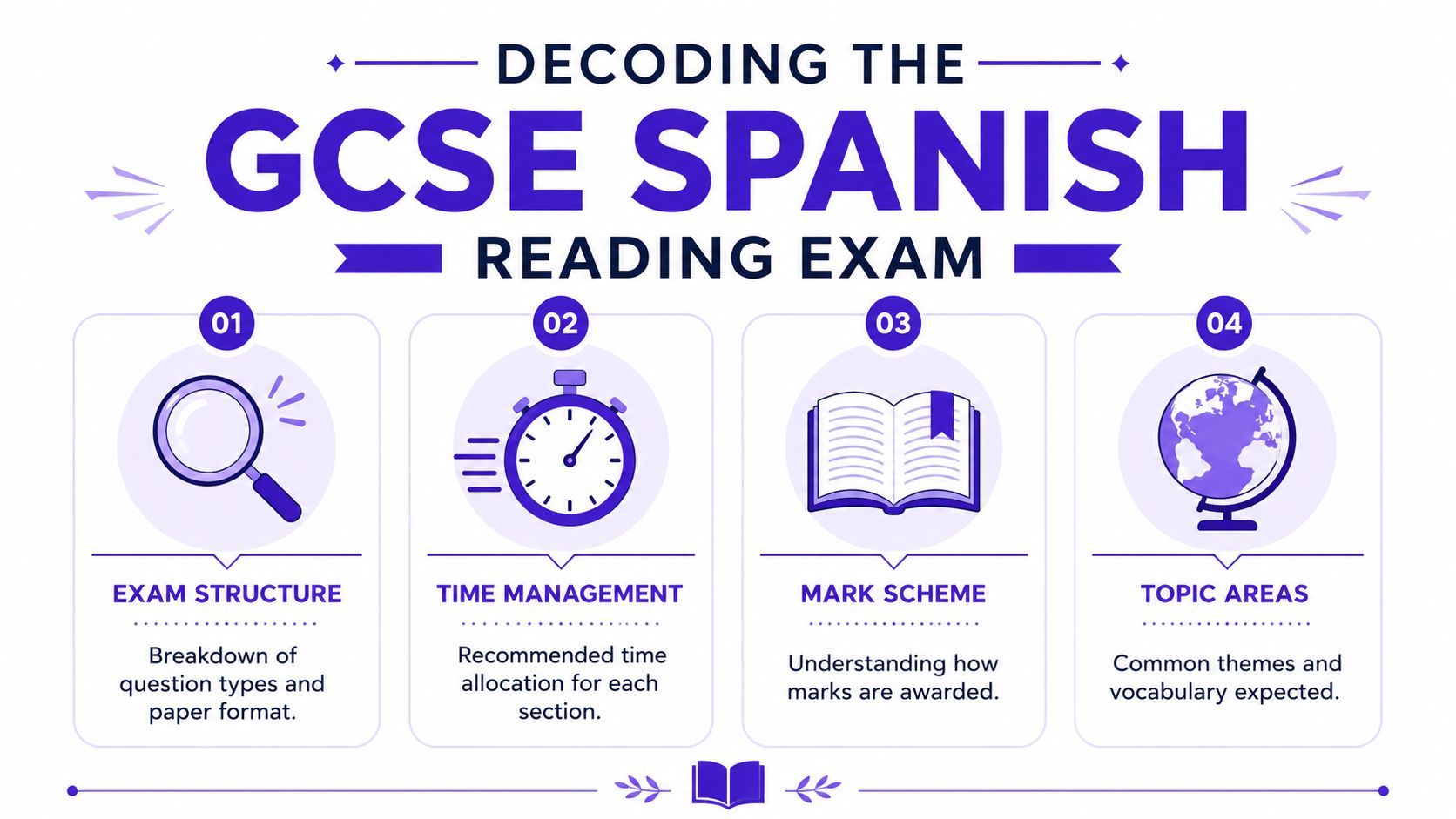
The reading paper matters. It counts for exactly 25% of the overall grade, carries 50 marks, and the timings are 45 minutes for Foundation and 1 hour for Higher, as summarised by Kwiziq's GCSE Spanish exam overview.
That means two things straight away. First, this paper can move your final grade more than many students realise. Second, timing is part of the skill. A student who understands the text but runs out of time still loses marks.
What you actually face
The reading paper isn't one giant passage. It's a sequence of tasks based on written Spanish. Some questions test straightforward comprehension. Others make you identify precise details. Some reward your ability to infer meaning from context rather than translate word by word.
AQA's current specification also means your practice should reflect the themes likely to appear. The six-text structure brings in everyday content such as:
- Relationships and people: family, friends, opinions, social situations
- Holidays and free time: travel, plans, experiences, activities
- Hobbies and routines: what someone does, likes, avoids, or prefers
- Town and local area: places, transport, advantages and problems
- Healthy living: food, exercise, habits, wellbeing
- Future plans: study, work, ambitions, intentions
Students often relax when they see this written down. These are not strange literary extracts. They are normal teenage and real-world topics.
You're not revising for mystery texts. You're revising for familiar situations written in exam Spanish.
A simple exam map
| Part of the challenge | What you need to do |
|---|---|
| Comprehension questions | Pull meaning from short and longer texts |
| Detail spotting | Notice who did what, when, why, or how |
| Inference | Work out likely meaning from context |
| Translation into English | Show accurate understanding of the Spanish |
When you want practice that more closely reflects the exam, use GCSE Past Papers. They help you get used to the look and rhythm of actual exam questions, which matters more than students think.
Smart Reading Strategies That Actually Earn Marks
A lot of students attack a reading question by scanning for one word from the question and then matching it to one word in the text. That feels efficient. It also causes a pile of avoidable mistakes.
Sherpa Tutors sets out a better method for Higher Tier reading: read the entire passage first to establish context before answering questions, because that improves comprehension by reducing dependence on isolated word recognition, as explained in their guide on how to ace your GCSE Spanish reading exam.
Read for the big picture first
Your first read is not for perfection. It's for orientation.
Ask yourself:
- Who is this about? One person, a group, a family, a student?
- What is the topic? School, holiday, health, future plans?
- What is the overall tone? Positive, negative, mixed, uncertain?
- When is it happening? Past, present, future, or a mixture?
That quick framework stops you from treating every sentence like a separate mini-test. Once you know the passage is, say, about a teenager describing a disappointing holiday and changed future plans, later details make far more sense.
Then go line by line
After the first read, move back through the text more carefully. At this stage, act like a detective.
- Circle obvious anchors: names, times, places, days, months, numbers if they appear
- Underline opinion language: me gusta, prefiero, odio, fue estupendo, era difícil
- Mark verb time clues: fui, voy a, quería, suelo, he hecho
- Watch connectors: pero, aunque, porque, sin embargo
These small clues often matter more than the one difficult noun you don't know.
What to do with unknown words
Unknown vocabulary doesn't automatically block a mark. Most of the time, it just feels like it does.
Use this order:
| If you don't know a word | Try this |
|---|---|
| Check the sentence around it | What role does the word play? Person, action, description? |
| Check the topic | In a health text, an unknown word may relate to food, habits, or exercise |
| Check grammar clues | Is it a verb, adjective, or noun? Singular or plural? |
| Make a limited guess | Only guess what the context supports |
Suppose a sentence says someone doesn't enjoy something, avoids it on weekdays, and feels better afterwards. Even if one key noun is unfamiliar, the logic of the sentence may still tell you it's an unhealthy habit they're cutting back on.
Exam habit: Don't ask, “Do I know this word?” Ask, “What must this sentence mean overall?”
Build a repeatable routine
A strong reading routine is boring in the best possible way. You do the same sensible steps every time until they become automatic.
Try this for GCSE Spanish reading practice:
- First pass for context: no stopping unless a word repeats and looks important
- Second pass with a pen: mark clues, tense shifts, opinions, negatives
- Questions after reading: not before, unless you're checking the task type
- Final check: prove each answer from the text
If you want to make that routine stick, it helps to explore smart learning techniques that focus on retention and recall rather than passive rereading. Reading skill improves faster when your practice sessions are active and specific.
Avoiding the Traps Examiners Love to Set
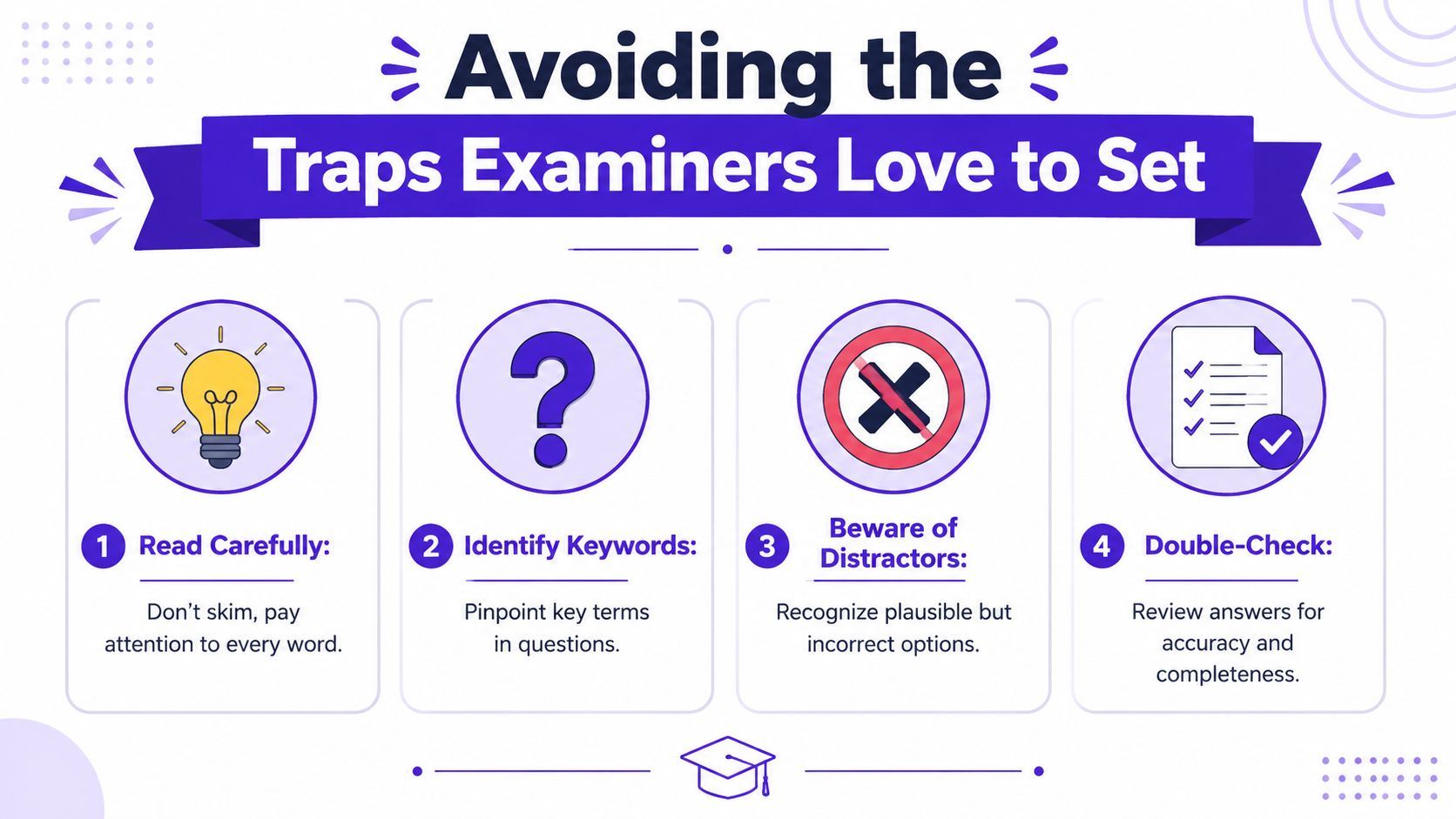
Students often think they lose reading marks because their vocabulary isn't big enough. Sometimes that's true. Quite often, though, they lose marks because they read too fast and miss the twist.
The biggest trap is negative or ambiguous wording.
Why negatives cause so much damage
This is one area many revision guides barely teach properly. Yet Teachit data discussed in this video resource shows that 62% of Foundation Tier errors in reading exams come from misinterpreting negative or ambiguous phrases, while only 28% of revision guides offer targeted practice on this.
That gap matters. Students are told to “learn negative words”, but they're rarely shown how to untangle the sentence when the negation sits in the middle, changes the emphasis, or reverses the meaning.
The danger words to flag instantly
Create a mental alarm for words like:
- No
- Nunca
- Nada
- Nadie
- Poco
- Tampoco
- Ni
Then look for contrast words nearby, especially if the sentence turns halfway through. A student may begin by saying they didn't like a class, but later explain that they ended up enjoying the teacher or the result. If you only catch the first half, you answer the wrong question confidently.
How to decode a tricky sentence
Use this method when a sentence feels slippery:
- Find the main verb first. What is happening?
- Locate the negative marker. What exactly is being denied?
- Strip out the extras. Ignore descriptive chunks for a moment.
- Rebuild the sentence in plain English. Keep it simple.
- Check for a late reversal. But, although, except, however type shifts can flip meaning.
Here's the kind of thinking you want:
If the sentence says someone “doesn't usually go out much because they have little free time”, the answer isn't “they love going out”. The core idea is limited free time and low frequency.
Other examiner traps that catch decent students
Negative language is the headline problem, but not the only one.
- Distractors that sound plausible: one answer may fit the topic but not the exact text
- Keyword traps: the same word appears in text and option, but the meaning around it is different
- False friends: words that look familiar but don't mean what you first think
- Half-true answers: one part is right, the second part isn't
A useful revision habit is to review these traps over time rather than once. If you want a simple way to build that review cycle, Gaeilgeoir AI's guide to spaced repetition is worth a look because the principle fits language revision well. Repeated exposure to the same error types helps you spot them faster under pressure.
Building Your Practice Routine From Zero to Hero
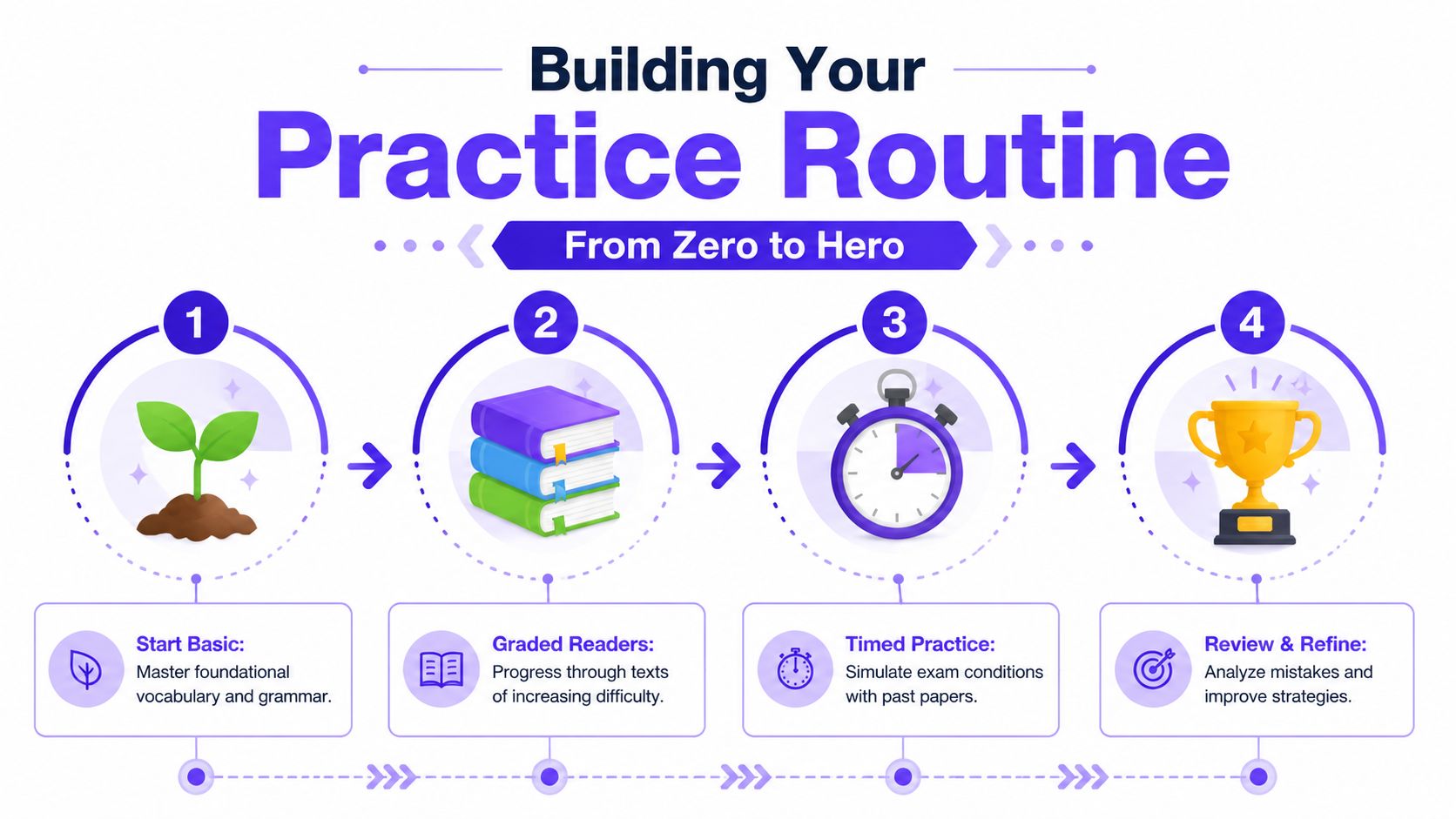
Students who improve fastest usually don't follow a dramatic revision plan. They follow a realistic one. The routine is regular, a bit dull at times, and tightly linked to the exam.
That matters because structured reading practice isn't just about doing work. Seneca explains that effective practice links directly to the exam habit of never leaving an exam early, and that students should use the full time to reread texts and check answers. Their advice also stresses that practice should happen under strict time restrictions so it mirrors the exam paper in their GCSE Spanish revision guide.
Start smaller than you think
If you're at the panic stage, don't begin with a full paper. That often ends with frustration and zero review.
Begin with short, winnable tasks:
- Mini vocab checks: not giant lists, just a focused topic set
- Sentence decoding: one sentence, then two, then a paragraph
- Spot-the-clue work: identify negatives, tense markers, and opinion phrases
- Short comprehension bursts: answer two or three questions accurately
That approach builds control before speed.
Move from paragraph practice to timed texts
Once short tasks feel manageable, increase the load.
A sensible progression looks like this:
| Stage | What to practise | What you're training |
|---|---|---|
| Stage 1 | Single sentences and short extracts | decoding, grammar awareness |
| Stage 2 | One paragraph with questions | context building |
| Stage 3 | Multi-paragraph texts | sustained focus |
| Stage 4 | Full timed papers | stamina and pacing |
At Stage 2 and 3, keep a notebook of recurring mistakes. Not “I'm bad at reading”. Be specific. “Missed the negative.” “Answered with own knowledge.” “Confused future and present.” That kind of record helps.
Use wider Spanish to support exam reading
The exam shouldn't be the only Spanish you ever read. Short articles, simple social posts, and teen-friendly content can make standard exam topics feel less stiff.
If you want extra support with vocabulary that often appears in informational texts, it can help to understand Spanish verbs for news. That kind of reading stretches your recognition of useful verbs without turning revision into another worksheet.
The weekly routine that actually gets done
Try this if you need a manageable pattern:
- One short skills session: decode and annotate a paragraph
- One trap session: negatives, contrasts, false friends
- One timed task: strict conditions, no pausing
- One review session: mark errors and rewrite your thinking process
That final part is where grades move. Students often practise, score it, sigh, and move on. Better students pause and ask what kind of mistake they made.
Leave the room in practice only when you've checked every answer. That's training, not perfectionism.
When you're ready to simulate the pressure properly, Exam Practice for GCSE is the kind of setup that helps you stick to timing and build that exam-day discipline.
How to Mark Your Own Work Like an Examiner
Finishing a reading task feels productive. Sometimes it is. Sometimes it's just another tick on a revision list.
The value comes from the review.

Don't just check right and wrong
A lot of students mark work in the laziest possible way. They compare answers, count the score, and close the book. That misses the whole point.
The reading paper includes a translation element. According to the AQA 8692 specification at a glance, candidates must translate Spanish text into English in the second section, and that tests their ability to infer plausible meanings of single words in written sentences and understand grammar typical of their tier. So when you review, “wrong” isn't enough as an explanation. You need to know whether you misunderstood grammar, lost the sentence logic, or guessed a word badly.
Use a proper error log
Make your review practical. Split mistakes into categories.
- Meaning error: you misunderstood the idea of the sentence
- Grammar error: you missed tense, agreement, or sentence structure
- Trap error: a negative, contrast, or distractor caught you
- Translation error: your English answer missed the precise sense
That turns marking into diagnosis.
Marking your own work properly is how you become less dependent on last-minute panic and more dependent on evidence.
A quick self-marking table
| Question type | Ask yourself after marking |
|---|---|
| Multiple choice | Why was my chosen option wrong, not just why was theirs right? |
| Short answer | Did I lift enough meaning from the text? |
| Inference | What clues in the passage supported the answer? |
| Translation | Which word or grammar point threw me off? |
Students who do this regularly get better at spotting patterns in their own mistakes. Teachers like it too, because it shows revision with thought behind it, not random repetition.
Compare your answer with the mark scheme language
Use official wording when possible and get familiar with how UK exams are marked. Not because you need to sound like an examiner, but because mark schemes reveal what the exam rewards. Sometimes your answer is basically right but too vague. Sometimes it includes extra detail that changes the meaning. Sometimes it's a clean miss.
Later in your review session, it helps to watch a worked example and listen to someone talk through the logic out loud.
That's where modern feedback tools can help as well. The useful ones don't just flash a score. They break down what went wrong in a way you can act on in the next task. That feels much closer to having an examiner looking over your shoulder and saying, “No, that answer ignored the contrast in the second half of the sentence.”
If you want revision that's built around exam-style practice, feedback, and a clearer picture of where you're dropping marks, MasteryMind is a strong place to start. It's designed for UK learners, aligns with exam boards, and helps turn revision from vague effort into focused improvement.
Ready to master this topic?
Practise with quizzes, blurt exercises and exam questions on MasteryMind.
7 days Premium · Then free forever · No card, no charge