AQA · A-Level · Biology
Course version: 7402 · Version from Sept 2016
Each type of cell has specific molecules on its surface that identify it.…
Full specification wording
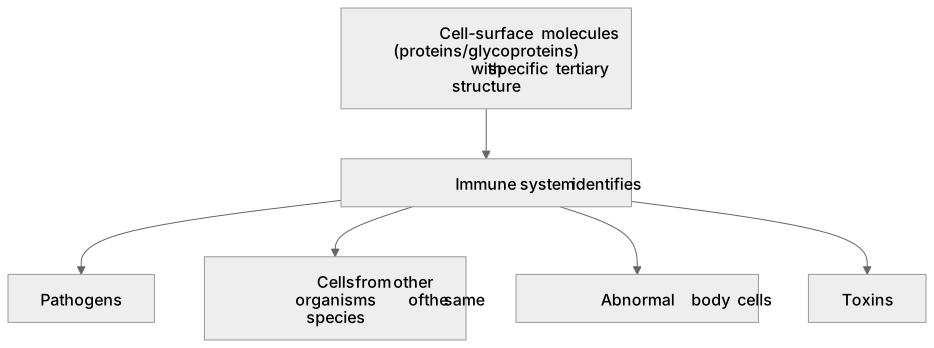
Cell recognition and the immune system: Each type of cell has specific molecules on its surface that identify it. These molecules include proteins and enable the immune system to identify: pathogens cells from other organisms of the same species abnormal body cells toxins.
Cells carry specific molecules on their cell-surface membrane, mostly proteins or glycoproteins.
Checked against the AQA 7402 specification (opens in a new tab) on .
- Point 1 of 18
- 4 key terms
Study notes
From the checked teaching notes for this specification point.
The idea
Cells carry specific molecules on their cell-surface membrane, mostly proteins or glycoproteins. A protein's highly specific tertiary structure gives it a unique 3D shape, acting as an identity label. The immune system uses these to identify four main targets. First, pathogens (like bacteria) carry foreign antigens. Second, cells from other organisms of the same species carry different antigens, which explains why transplanted tissue or mismatched blood transfusions are attacked. Third, abnormal body cells, such as cancer or virus-infected cells, display altered antigens. Finally, toxins are non-self molecules (not cells) that also stimulate an immune response.
What earns the marks
- Identifying the molecules as proteins or glycoproteins in the cell-surface membrane, each with a specific tertiary structure.
- Identifying pathogens as a source of foreign antigens.
- Identifying cells from other organisms of the same species, such as transplanted tissue or mismatched blood.
- Identifying abnormal body cells, with cancer cells or virus-infected cells accepted as named examples.
- Identifying toxins as non-self molecules that stimulate an immune response.
Common mistakes and how to put them right
Answering 'toxins' when the question asks for types of cell.
Put it right: A toxin is a molecule, not a cell; read the question carefully.
Offering 'B cells' or 'T cells'.
Put it right: These are the cells that respond to the antigen, not the foreign cells being recognised.
Writing 'the immune system recognises the cell' without naming the antigen.
Put it right: Specify that the immune system recognises the specific antigen or surface protein.
Exam tips
- Check whether the question asks for molecules or for cells; 'give two types of cell' has a different acceptable list from 'give two examples of antigens'.
- Use the four specification categories by name rather than vague phrases such as 'foreign things'.
Try the lesson
The start of the Cell recognition and the immune system: Each type of cell has specific molecules on its surface that identify it. These molecules include proteins and enable the immune system to identify: pathogens cells from other organisms of the same species abnormal body cells toxins. lesson, made from checked teaching notes for this specification point.
Have a go first
Which type of molecule on the cell-surface membrane is primarily responsible for enabling the immune system to identify cells, pathogens and toxins?
Listen
Cells carry specific molecules on their cell-surface membrane, mostly proteins or glycoproteins. A protein's highly specific tertiary structure gives it a unique 3D shape, acting as an identity label. The immune system uses these to identify four main targets. First, pathogens (like bacteria) carry foreign antigens. Second, cells from other organisms of the same species carry different antigens, which explains why transplanted tissue or mismatched blood transfusions are attacked. Third, abnormal body cells, such as cancer or virus-infected cells, display altered antigens. Finally, toxins are non-self molecules (not cells) that also stimulate an immune response. A strong answer earns marks for these points. identifying the molecules as proteins or glycoproteins in the cell-surface membrane, each with a specific tertiary structure. identifying pathogens as a source of foreign antigens. identifying cells from other organisms of the same species, such as transplanted tissue or mismatched blood. identifying abnormal body cells, with cancer cells or virus-infected cells accepted as named examples. A common slip: Answering 'toxins' when the question asks for types of cell. Instead, A toxin is a molecule, not a cell; read the question carefully. Exam tip: Check whether the question asks for molecules or for cells; 'give two types of cell' has a different acceptable list from 'give two examples of antigens'.
See it
Key words
Say what each word means before you turn the card.
cell-surface antigens
Try answering aloud or in your head before turning the card.
abnormal body cells
Try answering aloud or in your head before turning the card.
toxins
Try answering aloud or in your head before turning the card.
pathogens
Try answering aloud or in your head before turning the card.
See every definition
- cell-surface antigens
- Specific molecules, including proteins, on the surface of each type of cell that identify it.
- abnormal body cells
- Cells such as cancer or virus-infected cells that display altered antigens.
- toxins
- Non-self molecules, not cells, that also stimulate an immune response.
- pathogens
- Organisms such as bacteria that carry foreign antigens.
Label the diagram
Some boxes have lost their names. Pick the right name for each number.
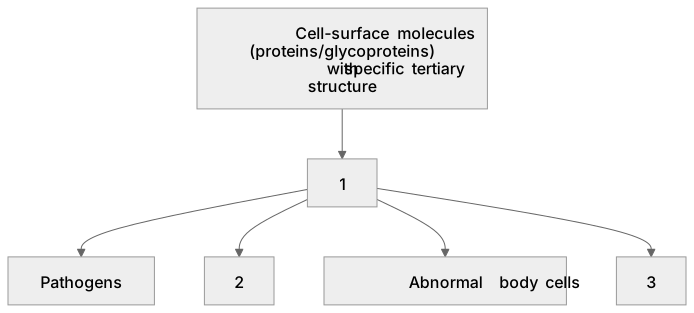
1Box 1
2Box 2
3Box 3
There is more to this lesson
The full lesson goes on to check your understanding and help you earn the marks. Create a free account to carry on, with your progress saved.
A week of Premium from your first lesson · Then the free plan continues · No card, no charge
Test your understanding of Cell recognition and the immune system: Each type of cell has specific molecules on its surface that identify it. These molecules include proteins and enable the immune system to identify: pathogens cells from other organisms of the same species abnormal body cells toxins.
Active recall beats re-reading. Take an instant quiz now to test what you’ve learned and lock it into long-term memory.
A week of Premium from your first lesson · Then the free plan continues · No card, no charge