AQA · A-Level · Biology
Course version: 7402 · Version from Sept 2016
Students should be able to evaluate information relating to screening…
Full specification wording
Differences in DNA between individuals of the same species can be exploited: Students should be able to evaluate information relating to screening individuals for genetically determined conditions and drug responses.
Evaluating genetic screening involves weighing benefits against limitations.
Checked against the AQA 7402 specification (opens in a new tab) on .
- Point 4 of 4
Study notes
From the checked teaching notes for this specification point.
The idea
Evaluating genetic screening involves weighing benefits against limitations. For genetically determined conditions, screening allows early intervention, like increased monitoring for BRCA1 carriers. For drug responses, screening inherited alleles guides effective dosages and reduces adverse reactions. For example, screening TPMT alleles prevents severe toxicity when using thiopurine drugs. However, limitations exist: tests only detect known mutations, so a negative result cannot entirely rule out a condition. For multifactorial conditions, a risk allele only raises the probability of disease, as environmental factors also contribute. Additionally, false positives cause needless anxiety, while false negatives provide false reassurance.
What earns the marks
- A benefit of screening, such as early detection allowing preventative treatment or increased monitoring before symptoms develop.
- Explaining that screening for inherited alleles affecting drug responses can guide effective dosages and reduce adverse reactions.
- Stating that screening detects only known mutations, so a negative result does not completely rule out the condition.
- Explaining that in multifactorial conditions a risk allele raises probability rather than guaranteeing disease, because environmental factors contribute.
- Recognising that false positives cause unnecessary anxiety or treatment, and false negatives give false reassurance.
Common mistakes and how to put them right
Listing only advantages when the command word is evaluate.
Put it right: Marks for limitations must also be included to access full credit.
Writing that a screening test 'tells you whether you will get the disease' for multifactorial conditions, instead of stating it increases risk or probability.
Using somatic tumour markers (like HER2) as examples of screening individuals for inherited genetic conditions, rather than inherited alleles like TPMT or BRCA1.
Exam tips
- Structure evaluation answers with points for, points against, and a justified conclusion tied to the provided data.
- Use the words probability and risk rather than cause when writing about multifactorial conditions.
Try the lesson
The start of the Differences in DNA between individuals of the same species can be exploited: Students should be able to evaluate information relating to screening individuals for genetically determined conditions and drug responses. lesson, made from checked teaching notes for this specification point.
Have a go first
Which statement best describes what is meant by genetic screening?
Listen
Evaluating genetic screening involves weighing benefits against limitations. For genetically determined conditions, screening allows early intervention, like increased monitoring for BRCA1 carriers. For drug responses, screening inherited alleles guides effective dosages and reduces adverse reactions. For example, screening TPMT alleles prevents severe toxicity when using thiopurine drugs. However, limitations exist: tests only detect known mutations, so a negative result cannot entirely rule out a condition. For multifactorial conditions, a risk allele only raises the probability of disease, as environmental factors also contribute. Additionally, false positives cause needless anxiety, while false negatives provide false reassurance. A strong answer earns marks for these points. a benefit of screening, such as early detection allowing preventative treatment or increased monitoring before symptoms develop. explaining that screening for inherited alleles affecting drug responses can guide effective dosages and reduce adverse reactions. stating that screening detects only known mutations, so a negative result does not completely rule out the condition. explaining that in multifactorial conditions a risk allele raises probability rather than guaranteeing disease, because environmental factors contribute. Exam tip: Structure evaluation answers with points for, points against, and a justified conclusion tied to the provided data.
See it

Label the diagram
Some boxes have lost their names. Pick the right name for each number.
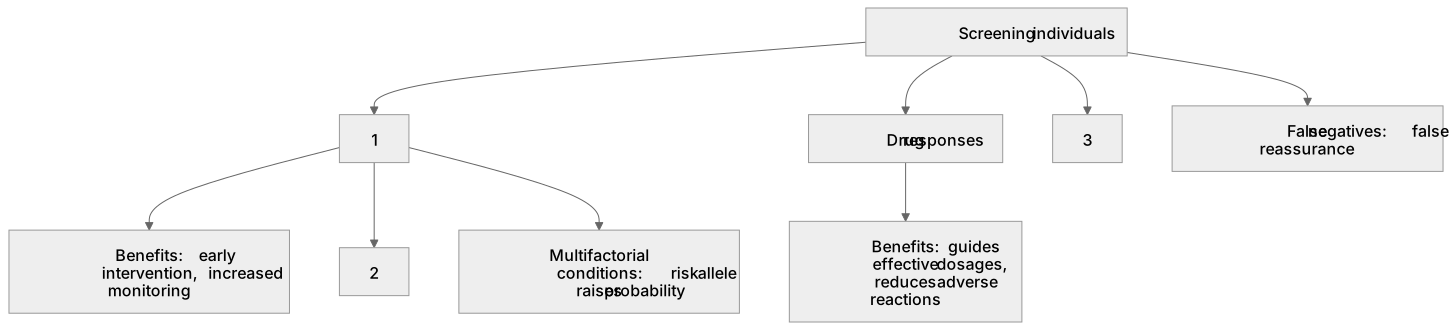
1Box 1
2Box 2
3Box 3
There is more to this lesson
The full lesson goes on to check your understanding and help you earn the marks. Create a free account to carry on, with your progress saved.
A week of Premium from your first lesson · Then the free plan continues · No card, no charge
Test your understanding of Differences in DNA between individuals of the same species can be exploited: Students should be able to evaluate information relating to screening individuals for genetically determined conditions and drug responses.
Active recall beats re-reading. Take an instant quiz now to test what you’ve learned and lock it into long-term memory.
A week of Premium from your first lesson · Then the free plan continues · No card, no charge