AQA · A-Level · Biology
DNA and Protein Synthesis
Master the flow of energy through ecosystems, from photosynthesis to apex predators. This guide covers essential calculations for productivity (GPP, NPP) and farming practices that maximize yield, ensuring you can tackle both data analysis and long-answer questions with confidence.
- 4 min read
- 3 worked examples
- 5 practice questions
- 6 key terms
Study Notes
Overview
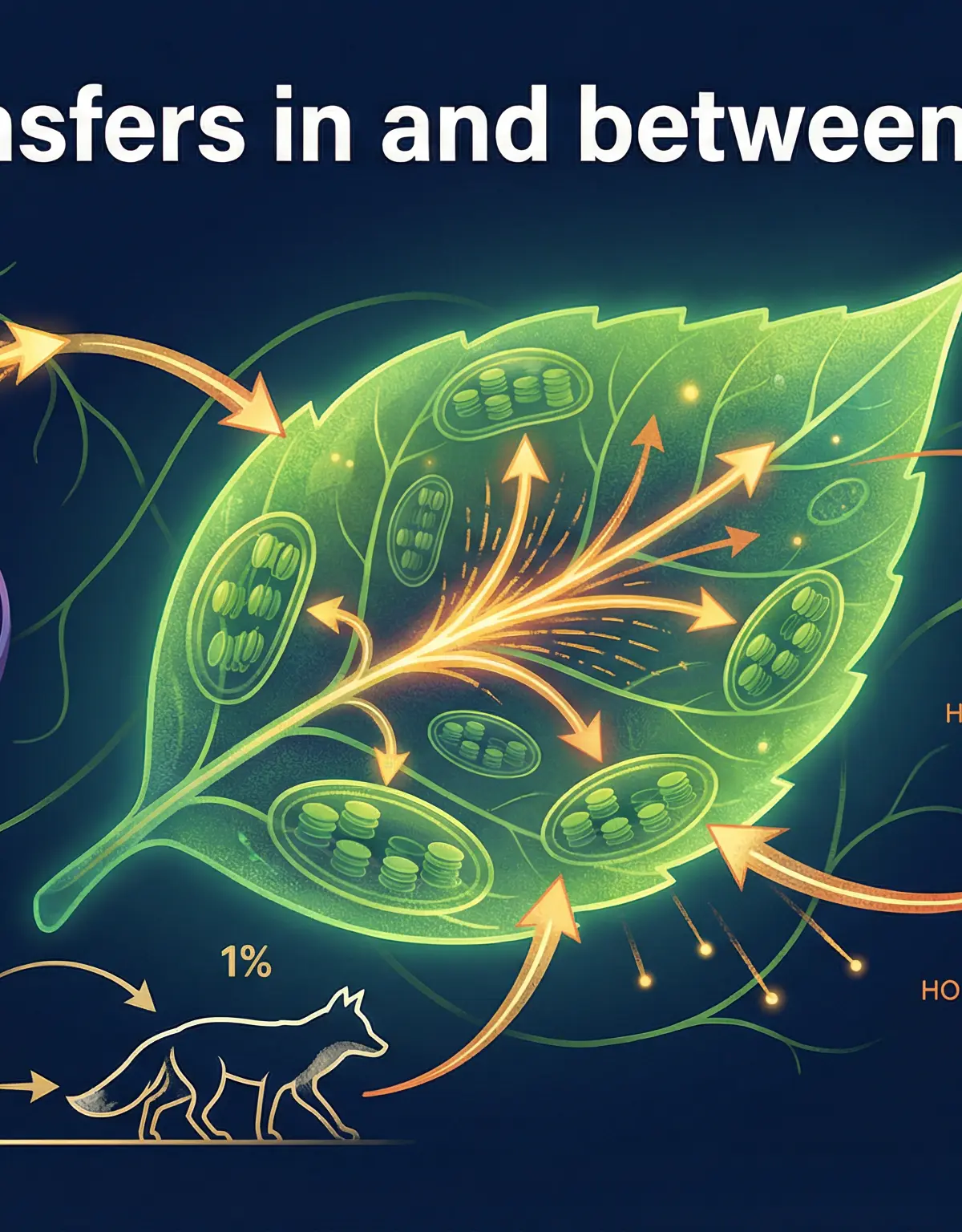
Energy transfers are fundamental to understanding how life is sustained on Earth. This topic explores how light energy is captured by plants in photosynthesis and transferred between organisms in food webs. It is a high-yield area for exams, frequently appearing in calculation questions, data analysis, and synoptic essays linking to respiration, nutrient cycles, and agricultural productivity.
Examiners often test your ability to calculate efficiency, explain energy losses between trophic levels, and evaluate farming practices. You will need to be precise with terminology—distinguishing clearly between gross and net production—and comfortable manipulating data to show energy flow rates.
Key Concepts
Concept 1: Photosynthesis and Energy Capture
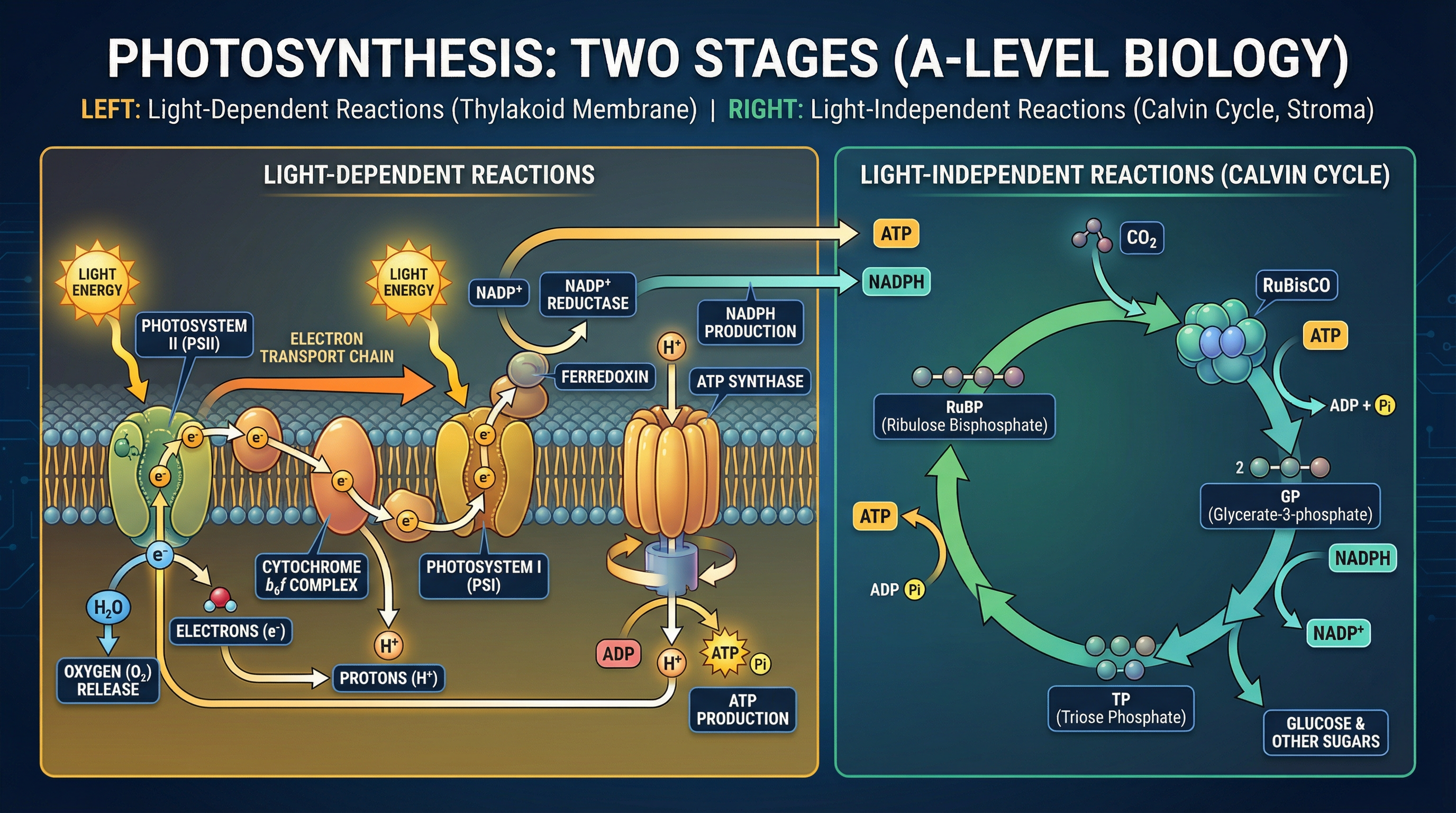
Photosynthesis is the primary entry point for energy into an ecosystem. Plants (producers) use light energy to synthesize organic molecules like glucose. However, not all light energy striking a leaf is captured. Much is reflected, transmitted through the leaf, or is of the wrong wavelength (green light is largely reflected).
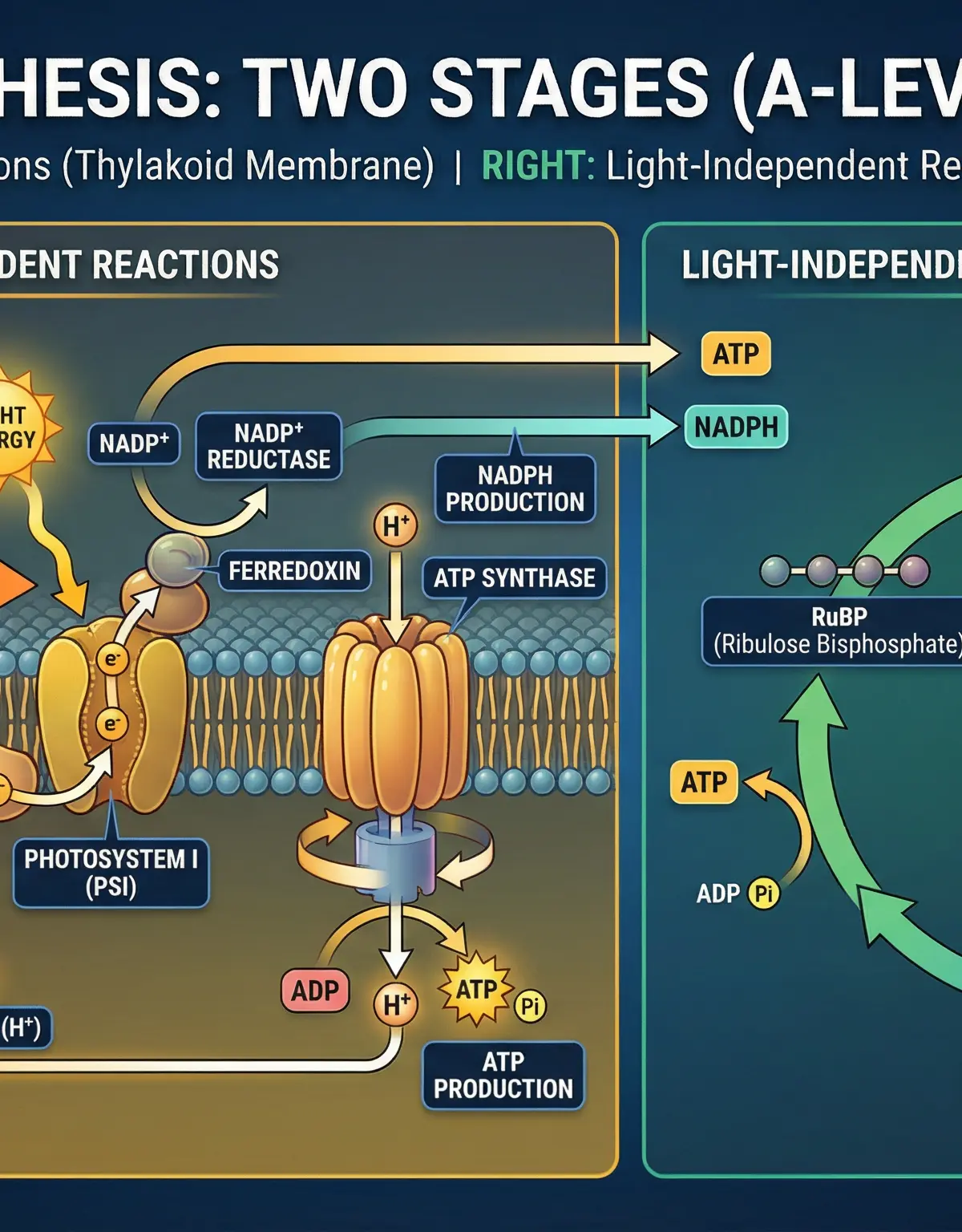
The efficiency of photosynthesis is limited by temperature, carbon dioxide concentration, and light intensity. Understanding these limiting factors is crucial for explaining agricultural methods to increase yield.
Concept 2: Gross and Net Primary Production
Gross Primary Production (GPP) is the total chemical energy store in plant biomass in a given area or volume. However, plants must respire to survive.
Net Primary Production (NPP) is the chemical energy store remaining after respiratory losses (R) have been taken into account. This is the energy available to the plant for growth and reproduction, and crucially, available to the next trophic level (herbivores and decomposers).
Formula: NPP = GPP - R
Concept 3: Energy Transfer Between Consumers
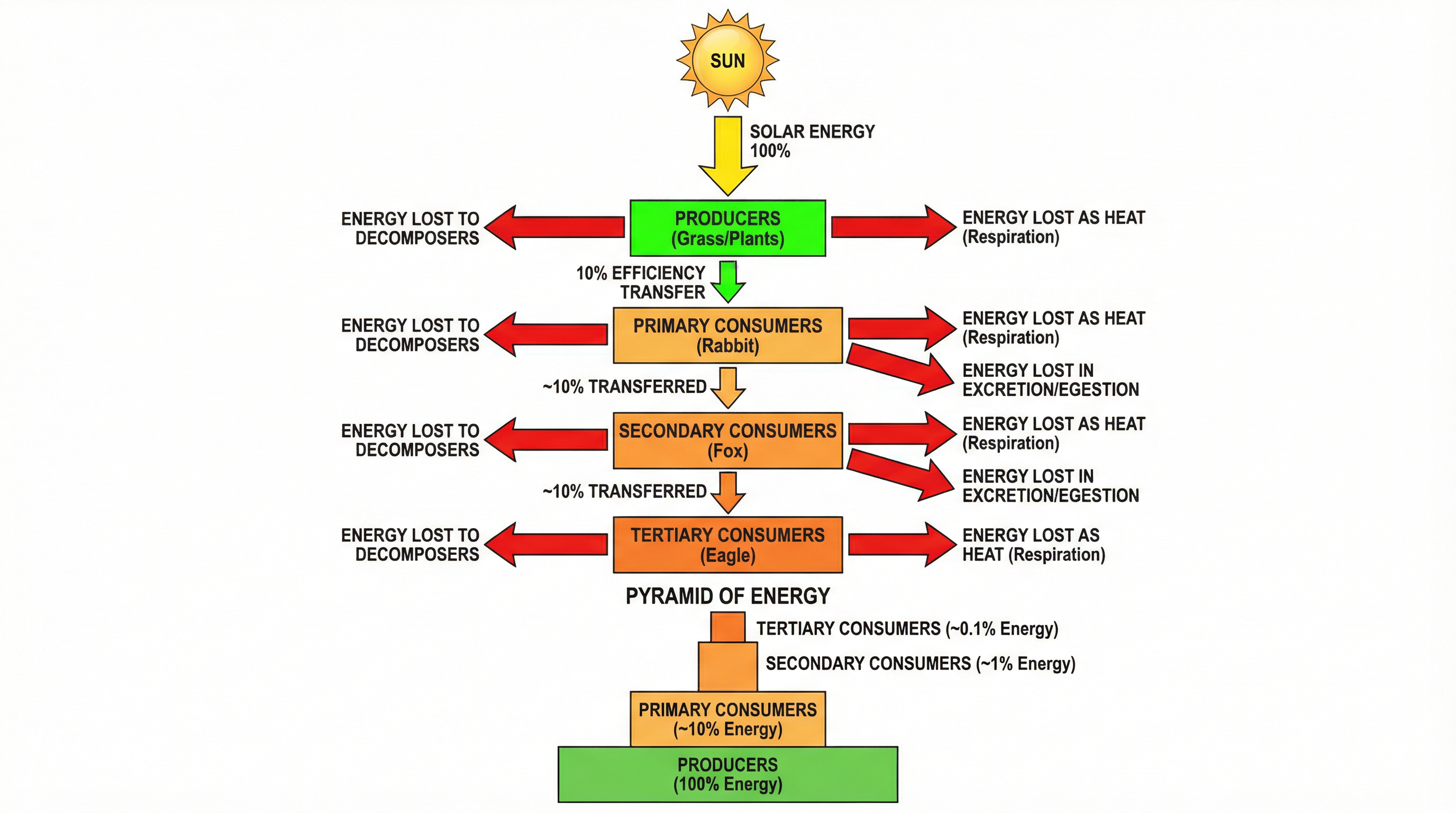
Consumers (herbivores and carnivores) obtain energy by ingesting plant material or other animals. However, energy transfer between trophic levels is inefficient—typically only 10% is passed on.
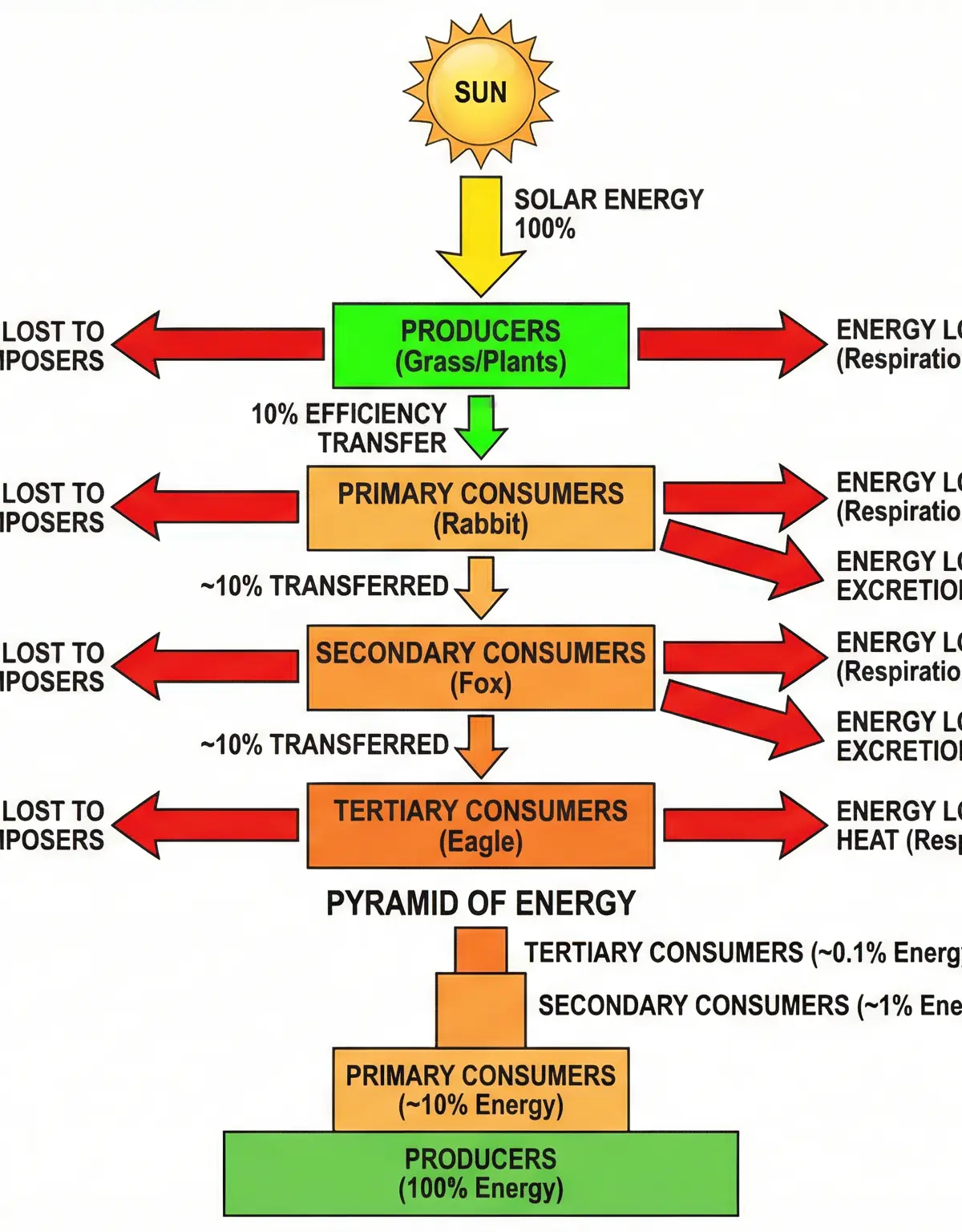
Energy is lost at each stage because:
- Not all organism is eaten (e.g., roots, bones).
- Indigestible parts are lost in faeces (egestion).
- Respiration generates heat, which is lost to the environment (especially high in mammals and birds to maintain body temperature).
- Excretion of metabolic waste (urine).
Net Production of Consumers (N) is calculated as:
N = I - (F + R)
Where:
- I = Chemical energy in ingested food
- F = Chemical energy lost in faeces and urine
- R = Energy lost in respiration
Concept 4: Farming Practices and Productivity
To maximize yield, farmers aim to increase the efficiency of energy transfer by reducing energy losses.
- Restricting movement: Keeping livestock in pens reduces muscle contraction, saving energy.
- Controlling temperature: Keeping animals warm reduces the energy needed to generate body heat.
- Simplifying food webs: Using herbicides and pesticides removes competitors (weeds) and pests that would otherwise eat the crop, ensuring more energy flows to humans.
Mathematical/Scientific Relationships
- Net Primary Production: NPP = GPP - R
- Net Production of Consumers: N = I - (F + R)
- Efficiency of Energy Transfer: (\text{Energy available after transfer} / \text{Energy available before transfer}) \times 100
Practical Applications
Understanding these concepts allows us to evaluate intensive farming versus organic farming. While intensive methods (factory farming) increase energy conversion efficiency and yield, they raise ethical concerns regarding animal welfare and environmental issues like antibiotic resistance and pollution.
Visual Resources
2 diagrams and illustrations
Interactive Diagrams
2 interactive diagrams to visualise key concepts
Conceptual Flow Outline
Flow of energy from Sun to Consumers showing losses at each stage.
Conceptual Flow Outline
How intensive farming increases energy conversion efficiency.
Worked Examples
3 worked examples — open one to explore the question and available guidance.
Practice Questions
Test your understanding — click to reveal model answers
Calculate the percentage efficiency of energy transfer between a producer with 15000 kJ and a primary consumer with 1200 kJ.
Hint: Efficiency = (Energy available after / Energy available before) * 100
Suggest why keeping cattle in heated barns might increase the cost of production.
Hint: Think about the inputs required for the barn.
Evaluate the use of artificial fertilisers in increasing NPP of crops.
Hint: Consider both the benefits (growth) and the drawbacks (environment).
Describe how you would estimate the biomass of a field of wheat.
Hint: You need to remove water.
Why is the energy transfer from primary consumers to secondary consumers more efficient than from producers to primary consumers?
Hint: Think about the composition of animal flesh vs plant material.