AQA · A-Level · Biology
Course version: 7402 · Version from Sept 2016
The phenotype is the expression of this genetic constitution and its…
Full specification wording
Inheritance (A-level only): The phenotype is the expression of this genetic constitution and its interaction with the environment.
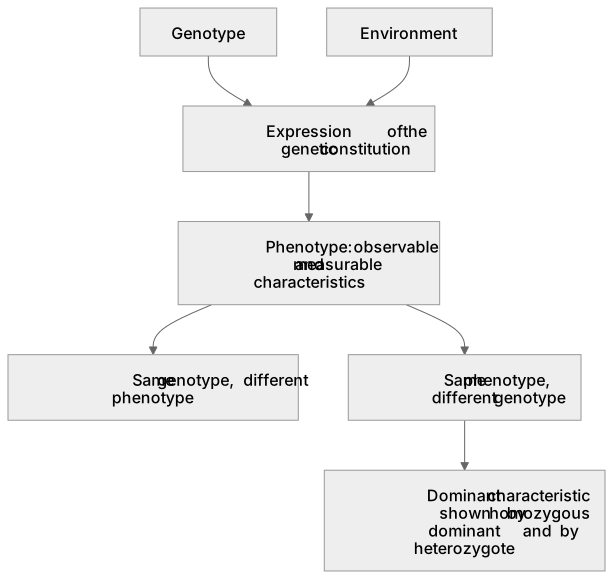
The phenotype is what an organism is actually like: its observable and measurable characteristics, produced when the genotype is expressed and then modified by the environment.
Checked against the AQA 7402 specification (opens in a new tab) on .
- Point 2 of 7
- 2 key terms
Study notes
From the checked teaching notes for this specification point.
The idea
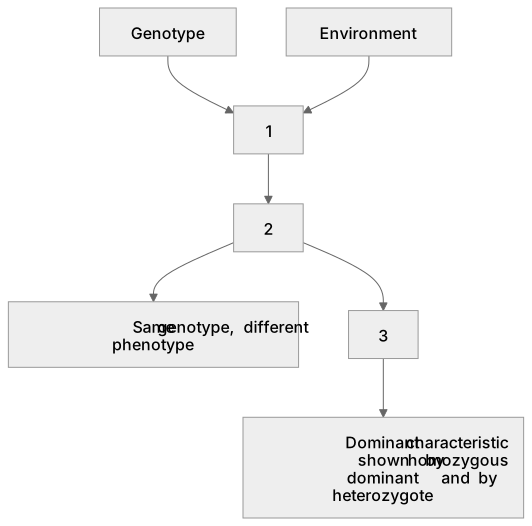
The phenotype is what an organism is actually like: its observable and measurable characteristics, produced when the genotype is expressed and then modified by the environment. Two organisms with the same genotype can have different phenotypes, since identical twins differ in mass and plants of one clone grow taller in better light, because environmental conditions affect how genes are expressed and how the body develops. Equally, two organisms with the same phenotype can have different genotypes, because a dominant characteristic is shown both by the homozygous dominant individual and by the heterozygote. That is why you cannot read a genotype straight off a family tree; you have to reason backwards from the offspring.
What earns the marks
- Define phenotype as the expressed characteristics resulting from the genotype and its interaction with the environment.
- Explain that two organisms with the same phenotype can have different genotypes, because a dominant characteristic is shown by both the homozygous dominant individual and the heterozygote.
- Distinguish continuous from discontinuous variation: continuous variation is influenced by both genes and environment, while discontinuous variation is largely determined by genes alone.
Common mistakes and how to put them right
Treating the environment as irrelevant, so variation in a characteristic such as body mass is explained by genotype alone.
Put it right: The environment also affects how the genotype is expressed.
Assuming that every individual showing a dominant characteristic is homozygous dominant.
Put it right: A heterozygote also shows the dominant phenotype.
Saying the environment changes the genotype, when it changes how the genotype is expressed.
Put it right: The genotype stays the same; the phenotype changes.
Describing a phenotype using allele symbols instead of words.
Put it right: Describe the observable characteristic in words.
Exam tips
- If asked whether a characteristic is genetic, environmental or both, look for variation between genetically identical organisms.
- Write the evidence and the explanation as two separate sentences so each mark is easy to award.
Try the lesson
The start of the Inheritance (A-level only): The phenotype is the expression of this genetic constitution and its interaction with the environment. lesson, made from checked teaching notes for this specification point.
Have a go first
Which term describes the expression of an organism's genetic constitution together with its interaction with the environment?
Listen
The phenotype is what an organism is actually like: its observable and measurable characteristics, produced when the genotype is expressed and then modified by the environment. Two organisms with the same genotype can have different phenotypes, since identical twins differ in mass and plants of one clone grow taller in better light, because environmental conditions affect how genes are expressed and how the body develops. Equally, two organisms with the same phenotype can have different genotypes, because a dominant characteristic is shown both by the homozygous dominant individual and by the heterozygote. That is why you cannot read a genotype straight off a family tree; you have to reason backwards from the offspring. A strong answer earns marks for these points. Define phenotype as the expressed characteristics resulting from the genotype and its interaction with the environment. Explain that two organisms with the same genotype can show different phenotypes because environmental factors affect how genes are expressed, giving an example such as identical twins differing in mass or cloned plants growing taller in better light. Explain that two organisms with the same phenotype can have different genotypes, because a dominant characteristic is shown by both the homozygous dominant individual and the heterozygote. Distinguish continuous from discontinuous variation: continuous variation is influenced by both genes and environment, while discontinuous variation is largely determined by genes alone. A common slip: Treating the environment as irrelevant, so variation in a characteristic such as body mass is explained by genotype alone. Instead, the environment also affects how the genotype is expressed. Exam tip: If asked whether a characteristic is genetic, environmental or both, look for variation between genetically identical organisms.
See it
Key words
Say what each word means before you turn the card.
phenotype
Try answering aloud or in your head before turning the card.
gene and environment interaction
Try answering aloud or in your head before turning the card.
See every definition
- phenotype
- The expression of the genetic constitution and its interaction with the environment.
- gene and environment interaction
- The way environmental conditions affect how genes are expressed and how the body develops.
Label the diagram
Some boxes have lost their names. Pick the right name for each number.
1Box 1
2Box 2
3Box 3
There is more to this lesson
The full lesson goes on to check your understanding and help you earn the marks. Create a free account to carry on, with your progress saved.
A week of Premium from your first lesson · Then the free plan continues · No card, no charge
Test your understanding of Inheritance (A-level only): The phenotype is the expression of this genetic constitution and its interaction with the environment.
Active recall beats re-reading. Take an instant quiz now to test what you’ve learned and lock it into long-term memory.
A week of Premium from your first lesson · Then the free plan continues · No card, no charge