Subject: Business | Level: GCSE | Exam Board: AQA
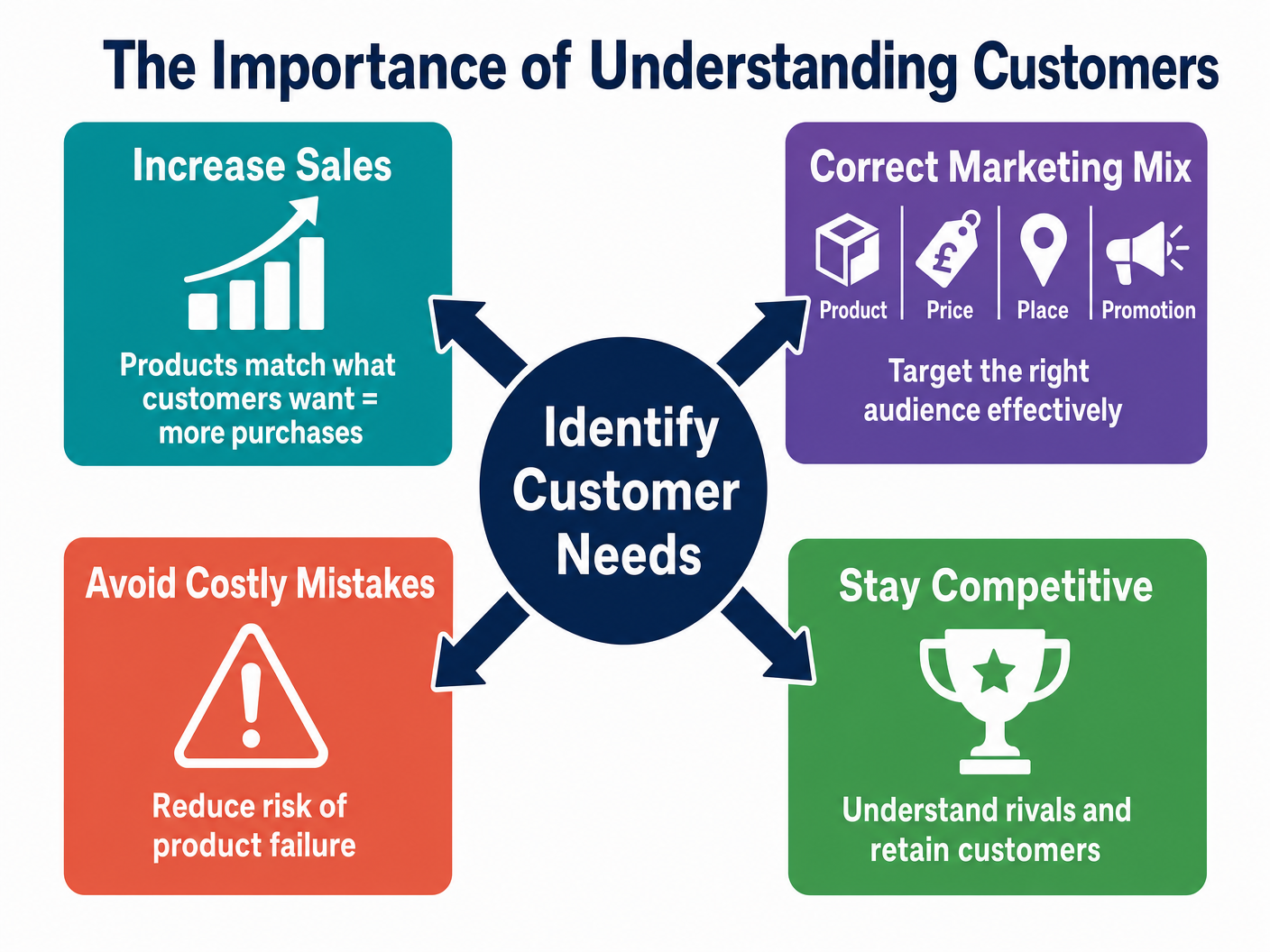
Understanding your customers is the bedrock of business success. This topic covers the vital mechanisms of why identifying customer needs leads to increased sales, optimal marketing, fewer mistakes, and sustained competitiveness.
Revision Notes & Key Concepts
Revision Podcast Transcript
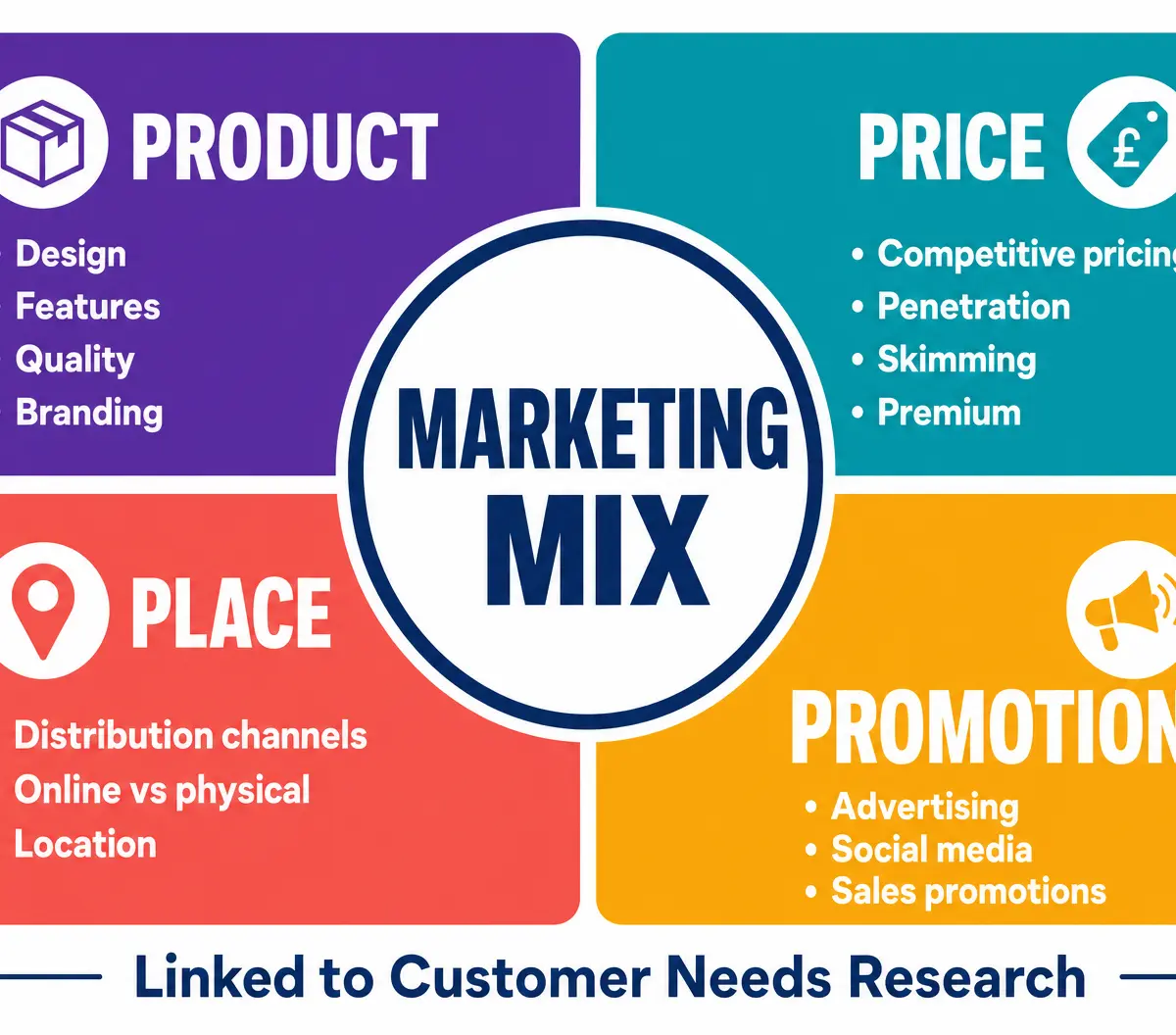
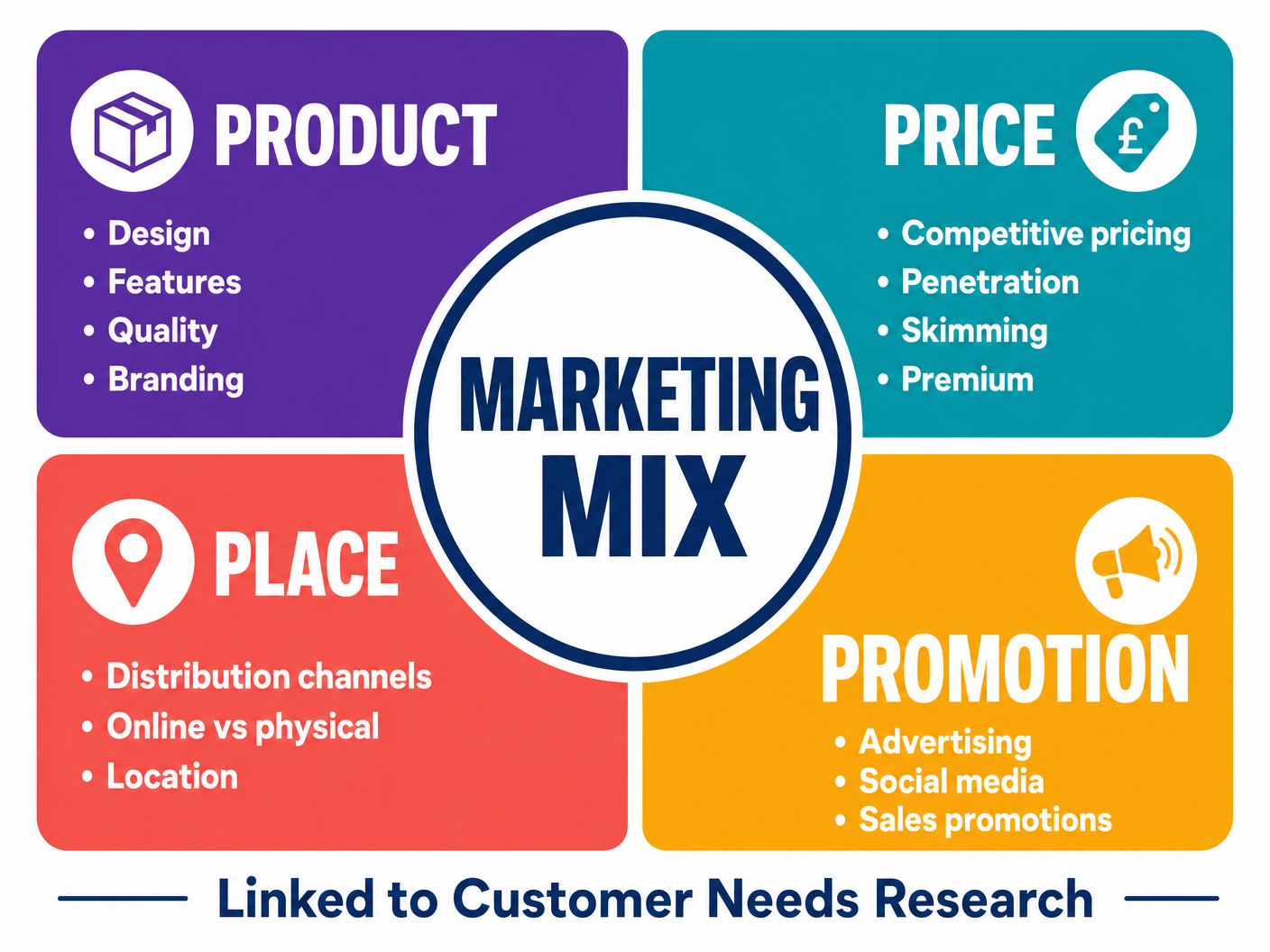
Hello and welcome to your GCSE Business revision podcast. I am your tutor today, and we are diving into one of the most fundamental topics in the entire specification: Identifying and Understanding Customers. Whether you are revising for AQA, Edexcel, OCR, or any other board, this topic comes up time and time again, and the good news is, once you truly get it, the marks really do start to flow. So grab a pen, get comfortable, and let us get started... So, why do businesses need to understand their customers? It sounds almost obvious, does it not? But you would be surprised how many students write vague answers in the exam that miss the real depth of this topic. Examiners are looking for you to make clear, developed links between customer understanding and specific business outcomes. And that is exactly what we are going to build today. Think about it this way: imagine you are opening a new coffee shop. You could just guess what your customers want, maybe you assume everyone loves a strong espresso. But what if your local area is full of families with young children who actually want hot chocolates and milkshakes? If you have not done your research, you have already made a costly mistake before you have even opened the doors. That is the essence of this topic: businesses that understand their customers succeed, and those that do not, often fail. Let us break this down into the four key reasons why identifying customer needs is so important. I want you to remember these four reasons, because they are your exam marks. I will give you a memory hook at the end of this section to help them stick. Reason one: Increasing Sales. When a business understands what its customers want, it can design products and services that genuinely meet those needs. And when products match customer desires, customers buy them. It is that simple, but you need to explain the chain of logic in your exam answer. Here is how to write it: By identifying customer needs, a business can develop products that customers actually want to buy. This means customers are more likely to make a purchase, which directly increases the business's revenue and sales volume. Notice what I did there? I made a point, explained the mechanism, the how, and linked it to a business outcome. That is the structure examiners reward. A brilliant real-world example is Apple. Apple conducts extensive market research to understand what customers want from their devices: ease of use, sleek design, seamless connectivity. Because Apple aligns its products so closely with customer desires, it consistently achieves enormous sales figures. In 2023, Apple's iPhone revenue alone exceeded 200 billion US dollars. That is the power of understanding your customer. Reason two: Selecting the Correct Marketing Mix. The marketing mix, which you will know as the four Ps: Product, Price, Place, and Promotion, must be tailored to your target customers. If you do not know who your customers are, you cannot possibly get your marketing mix right. Let me give you an example. Imagine a luxury skincare brand. Their customers are typically higher-income adults who value quality and exclusivity. Knowing this, the business sets a premium price, sells through high-end department stores and its own website, promotes through glossy magazines and Instagram influencers, and designs elegant, sophisticated packaging. Every single element of the marketing mix is driven by customer knowledge. Contrast that with a budget supermarket like Aldi. Their customers prioritise value for money. So Aldi uses competitive low pricing, simple own-brand packaging, and promotes through TV adverts emphasising savings. Completely different marketing mix, because completely different customer needs. In your exam, when you are asked about the marketing mix, always link it back to customer research. Examiners love to see that connection. Reason three: Avoiding Costly Mistakes. This is a big one. Developing a new product or service costs money, sometimes enormous amounts of money. If a business launches something that customers do not actually want, that investment is wasted. Market research and customer understanding act as a safety net. A famous example of a costly mistake is the launch of New Coke in 1985 by Coca-Cola. The company changed its classic formula without fully understanding how emotionally attached customers were to the original taste. The backlash was so severe that Coca-Cola had to reverse the decision within 79 days. The reputational and financial damage was significant. Had they conducted more thorough customer research beforehand, they might have avoided the disaster entirely. For your exam, you might write: By understanding customer needs before launching a product, a business reduces the risk of product failure. This avoids wasting resources on development, production, and marketing of products that customers do not want, protecting the business's profitability. Reason four: Remaining Competitive. Markets are dynamic, they change constantly. New competitors enter, customer tastes evolve, technology shifts behaviour. A business that continuously monitors and understands its customers is far better placed to adapt and stay ahead of rivals. Think about how the music industry changed. When streaming services like Spotify identified that customers wanted instant, affordable access to huge music libraries rather than buying individual albums, they disrupted the entire industry. Traditional music retailers who failed to understand this shift, like HMV, which went into administration in 2013, struggled enormously. Understanding customers is not a one-time exercise, it is an ongoing process. Now, here is your memory hook for all four reasons. Use the acronym S-M-A-C: Sales, Marketing mix, Avoid mistakes, Competitive. S-M-A-C. Say it a few times. S-M-A-C. Every time you are asked why identifying customer needs matters, run through S-M-A-C and you will have your four key points ready to go. Right, let us talk exam technique, because knowing the content is only half the battle. Tip one: Always develop your points. The most common mistake I see is students writing what examiners call undeveloped statements. For example: Identifying customer needs helps increase sales. That is a starting point, but it will not earn you the higher marks. You need to explain how and why. Identifying customer needs allows a business to develop products that directly satisfy what customers want, making customers more likely to purchase, which increases sales revenue. See the difference? The second answer earns marks, the first barely scratches the surface. Tip two: Use business context. Examiners reward answers that apply knowledge to a specific business context. If the question gives you a scenario, say a small bakery or a tech startup, use that context in your answer. Do not write generic answers. Tailor your response to the business in the question. Tip three: Know your command words. State or Identify questions, usually one or two marks, just need a clear, accurate point. No explanation needed. Explain questions, usually three to six marks, need a point plus a developed explanation. Use connective phrases like this means that, as a result, which leads to. Analyse questions, usually six marks, need a detailed chain of reasoning, often with a business example. Evaluate or Justify questions, usually nine to twelve marks, need a balanced argument, weighing up different factors, and a clear, supported conclusion. Do not sit on the fence, examiners want a judgement. Tip four: Do not confuse customers with consumers. This is a classic trap. A customer is the person who buys the product. A consumer is the person who uses it. They are not always the same. A parent buying a toy is the customer, the child using it is the consumer. In some questions, this distinction matters, so be precise. Tip five: Link to other topics. Examiners love to see synoptic thinking, that is when you connect this topic to other areas of the specification. Identifying customer needs links directly to market research methods, market segmentation, the marketing mix, product development, and business objectives. If you can weave in these connections, you demonstrate a deeper understanding that pushes you into the higher mark bands. Okay, time to test yourself. I will ask a question, give you a few seconds to think, then give you the answer. Cover your notes if you can, this is active recall, and it is one of the most effective revision techniques there is. Question one: Name the four reasons why identifying customer needs is important. Pause now and think. The answer is: Increase sales, select the correct marketing mix, avoid costly mistakes, and remain competitive. Remember S-M-A-C! Question two: What is the difference between a customer and a consumer? Pause. A customer buys the product. A consumer uses it. They may be the same person, but not always. Question three: Which famous brand made a costly mistake by not understanding customer needs in 1985? Pause. Coca-Cola, with the launch of New Coke. Question four: What does the marketing mix consist of? Pause. Product, Price, Place, and Promotion, the four Ps. Question five: What command word requires you to give a balanced argument and a clear judgement? Pause. Evaluate or Justify. How did you do? If you got all five, brilliant, you are in great shape. If you missed some, go back and review those sections before your exam. Let us wrap up with a quick summary of everything we have covered today. Identifying and understanding customers is fundamental to business success. Businesses that know their customers can increase sales by matching products to needs, select the right marketing mix by targeting the correct audience, avoid costly mistakes by reducing the risk of product failure, and remain competitive by adapting to changing customer preferences. Remember your acronym: S-M-A-C. Sales, Marketing mix, Avoid mistakes, Competitive. In your exam, always develop your points, do not just state them. Use the business context given in the question. Know your command words and structure your answers accordingly. And where possible, link this topic to related areas like market research, segmentation, and the marketing mix. You have got this. Keep revising, keep practising past paper questions, and remember, every mark you earn is a mark you have worked for. Good luck, and I will see you in the next episode. This has been your GCSE Business revision podcast. Thanks for listening.
Key Terms & Definitions
- Customer
- The person or organisation that purchases a product or service.
- Consumer
- The person who ultimately uses or consumes the product or service.
- Customer Needs
- The essential requirements that customers have when buying a product (e.g., price, quality, convenience).
- Marketing Mix
- The combination of Product, Price, Place, and Promotion used to market a product.
- Market Share
- The proportion of total sales in a market accounted for by a specific business.
- Competitive Advantage
- A feature of a business that allows it to perform better than others in the market.
Worked Examples
Worked Example
Question: Explain one reason why it is important for a business to identify customer needs. (3 marks)
Solution: One reason is to avoid costly mistakes **(1 mark)**. By understanding what customers want before launching a product, a business reduces the risk of the product failing **(1 mark)**. This prevents the business from wasting money on developing and marketing a product that nobody will buy, protecting its profitability **(1 mark)**.
Worked Example
Question: Analyse the impact on a business of failing to understand its customers' needs. (6 marks)
Solution: Failing to understand customer needs can severely impact a business's sales revenue. If a business does not know what its target market desires, it may produce goods that are of the wrong quality, price, or design. Consequently, customers will not buy the products and will likely switch to competitors whose products better match their needs. This leads to a fall in market share and lower revenue. Furthermore, failing to understand customers leads to an ineffective marketing mix. For example, the business might use the wrong promotional channels, such as advertising in newspapers when their target audience uses social media. This means the promotional budget is wasted, increasing costs without generating sales, which ultimately reduces the business's overall profit margins.
Worked Example
Question: Evaluate the importance of identifying customer needs for a newly opened independent coffee shop. (9 marks)
Solution: Identifying customer needs is highly important for a new independent coffee shop because it helps them select the correct marketing mix. By understanding local customers, the coffee shop can offer the right products (e.g., vegan options or speciality coffees) at a price the local demographic is willing to pay. This ensures that the products appeal to the target market, increasing the likelihood of initial sales and helping the new business establish a customer base. However, identifying customer needs alone does not guarantee success. The coffee shop must also deliver high-quality customer service and manage its costs effectively. Even if the owner knows exactly what customers want, if their suppliers are too expensive or their staff are rude, the business will struggle to remain profitable or retain customers in the long term. In conclusion, identifying customer needs is the most critical first step for the coffee shop. As a new business, it lacks the brand loyalty of established chains like Costa or Starbucks. Therefore, accurately meeting local needs is essential to attract customers initially and avoid costly mistakes that a small startup cannot afford to make.
Practice Questions
Question: State two reasons why a business needs to identify its customers. (2 marks)
Answer:
Question: Explain how identifying customer needs helps a business to remain competitive. (3 marks)
Answer:
Question: A clothing retailer is planning to launch a new range of sustainable fashion. Explain why it is important for the retailer to understand its customers' needs before launching the range. (6 marks)
Answer:
Question: Evaluate whether increasing sales is the most important reason for a smartphone manufacturer to identify customer needs. (9 marks)
Answer:
Question: What is the difference between a customer and a consumer? (2 marks)
Answer: