AQA · GCSE · Business
Course version: 8132 · Version from Sept 2017
Interpretation
Master the art of Data Interpretation, a crucial skill across all GCSE Business exam boards. Learn how to translate financial figures, market research, and graphs into strategic business decisions that secure top marks.
- 4 min read
- 3 worked examples
- 5 practice questions
- 6 key terms
Check what you remember
Read the wording for your board, then hide it and explain Gross Profit Margin in your own words. Rough notes are fine. This is a self-check, with no mark or grade.
Reference: AQA
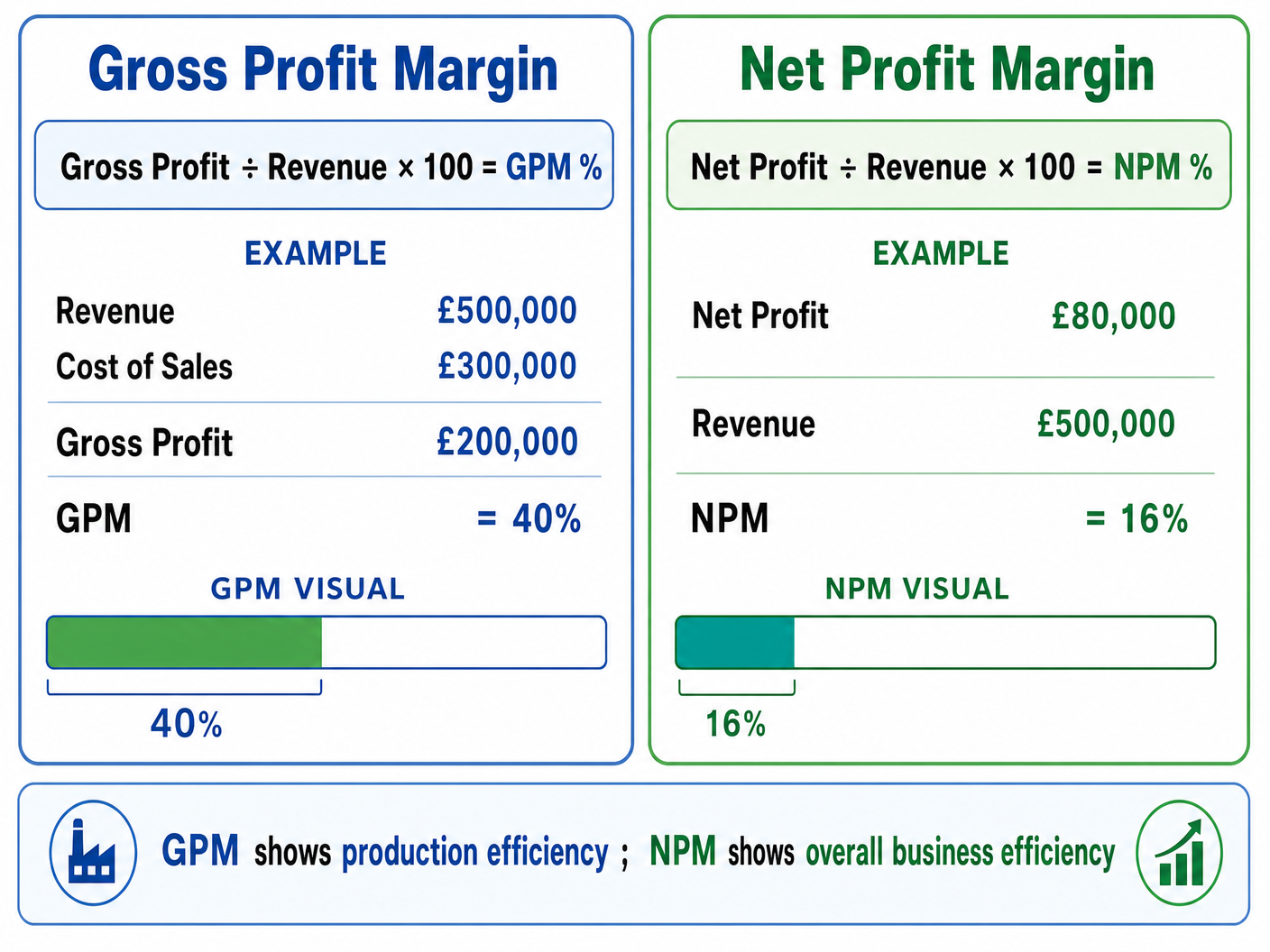
A profitability ratio that measures the percentage of revenue left after deducting the direct costs of producing goods or services (Cost of Sales).
Study Notes
Overview
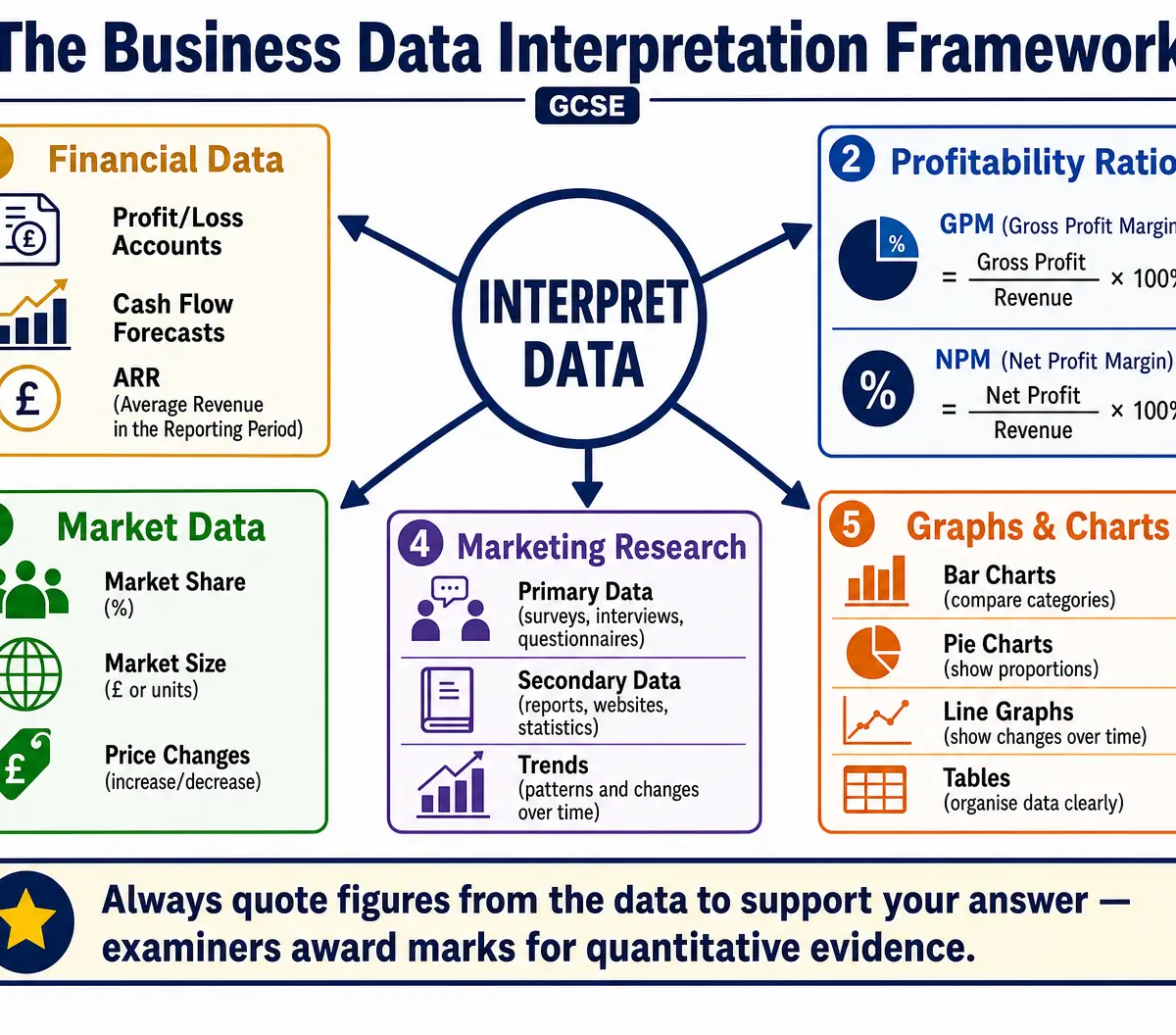
Data interpretation is the cornerstone of business analysis and a highly rewarded skill in GCSE Business examinations. Examiners expect candidates not just to read numbers from a page, but to understand what those figures mean for a business's health, strategy, and future prospects. This study guide covers the five essential pillars of data interpretation: financial data, profitability ratios, market data, marketing research, and graphical analysis. Mastering these areas will enable you to confidently tackle quantitative questions, evaluate business performance, and justify strategic decisions using hard evidence.
Core Analytical Pillars
1. Graphs and Charts
Focus Areas: Bar charts, pie charts, line graphs, and data tables.
Key Skills: Candidates must extract precise figures to identify trends, comparisons, and anomalies. For instance, recognising a consistent upward trend in a line graph representing sales revenue over five years indicates growth, but candidates must calculate the percentage increase to secure higher-level marks.
Examiner Expectation: Never describe a trend without quoting the specific data points that demonstrate it.
2. Profitability Ratios
Focus Areas: Gross Profit Margin (GPM) and Net Profit Margin (NPM).
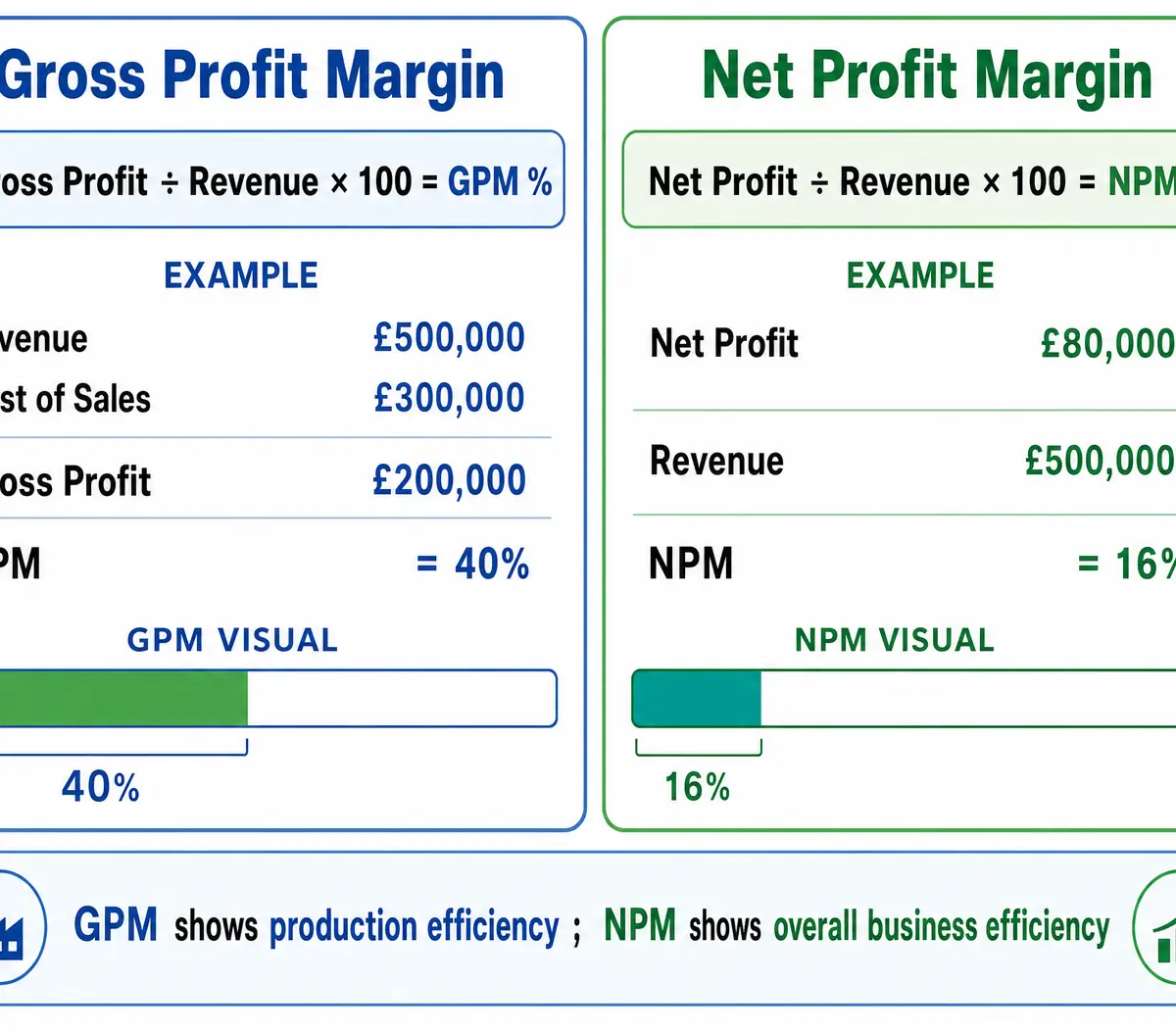
Key Skills: Understanding the distinction between production efficiency (GPM) and overall business efficiency (NPM). A high GPM with a low NPM suggests excessive overhead costs (such as marketing or administrative expenses) that need immediate management attention.
Examiner Expectation: Candidates must not only calculate these ratios accurately but also explain their implications. A falling NPM over two years requires an explanation of potential causes, such as rising fixed costs or increased competition forcing price reductions.
3. Financial Data Interpretation
Focus Areas: Cash flow forecasts, Average Rate of Return (ARR), and Profit & Loss accounts.
Key Skills: Identifying liquidity issues before they become critical. In a cash flow forecast, a negative closing balance is a red flag indicating potential insolvency. Candidates must be able to suggest viable solutions, such as negotiating longer payment terms with suppliers or arranging an overdraft facility.
Examiner Expectation: When evaluating an investment using ARR, candidates should compare the calculated percentage against alternative investments or current interest rates to justify whether the investment is worthwhile.
4. Marketing Research Findings
Focus Areas: Primary and secondary data analysis.
Key Skills: Evaluating the validity and reliability of market research. If a survey shows 80% customer satisfaction, candidates should question the sample size and demographic before accepting the data as a basis for a national product launch.
Examiner Expectation: Use market research data to justify marketing mix (4Ps) decisions. For example, using demographic data to justify a targeted promotional campaign.
5. Market Data Analysis
Focus Areas: Market share, market size, and the impact of price/cost changes.
Key Skills: Calculating market share to determine competitive position. A business may see its sales revenue increase, but if the overall market size is growing faster, its market share is actually declining.
Examiner Expectation: Link changes in costs (e.g., raw materials) to potential impacts on pricing strategy and subsequent effects on demand and revenue.
Visual Resources
2 diagrams and illustrations
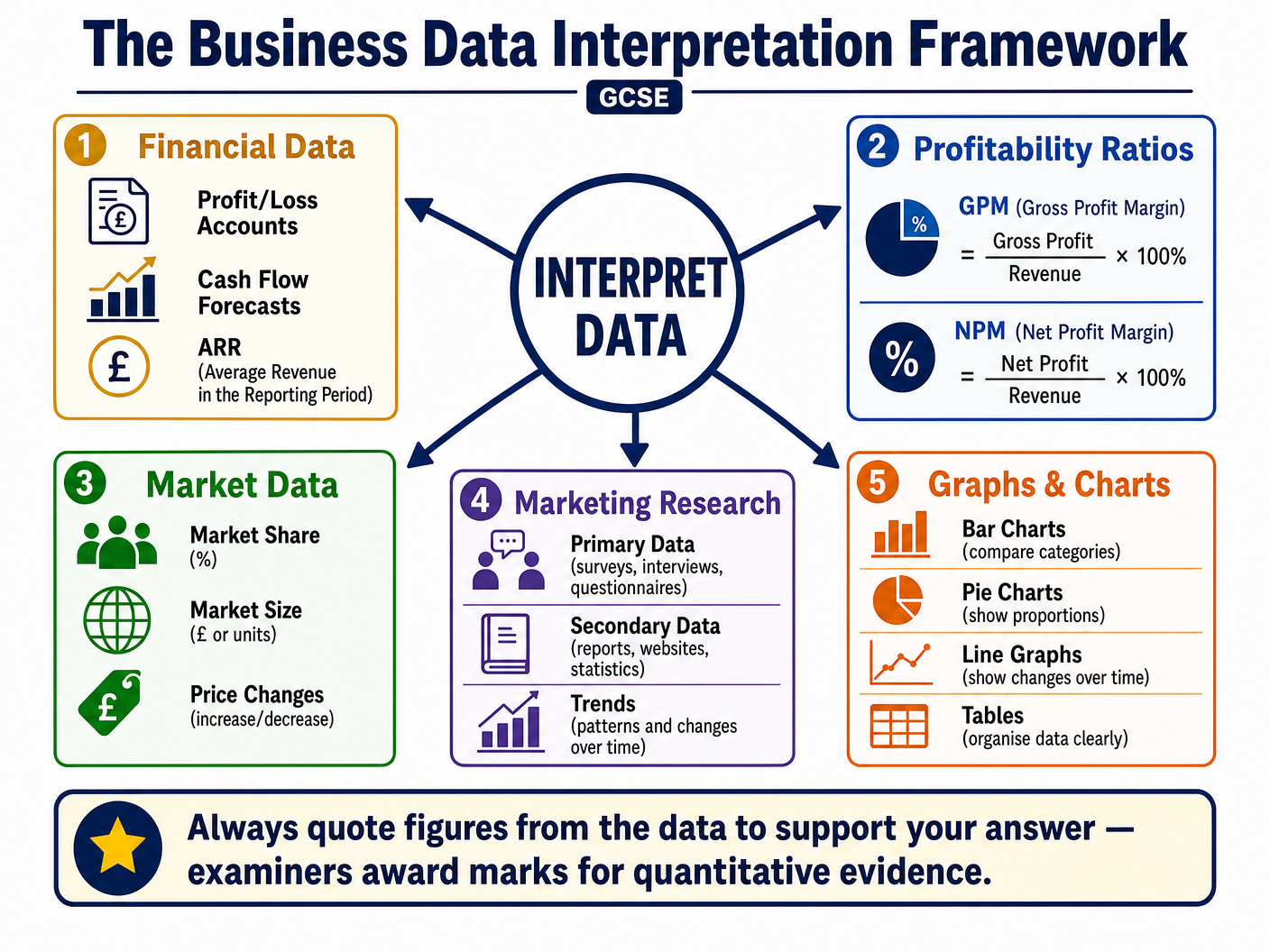
Interactive Diagrams
1 interactive diagram to visualise key concepts
Conceptual Flow Outline
The Data Interpretation Process Flow
Worked Examples
3 worked examples — open one to explore the question and available guidance.
Practice Questions
Try the question, then reveal an answer plan or example response
A business has fixed costs of £50,000, variable costs of £10 per unit, and a selling price of £25 per unit. Calculate the break-even point in units. (2 marks)
Hint: Break-even = Fixed Costs / (Selling Price - Variable Cost)
Analyse the impact on a business's Net Profit Margin if its supplier increases raw material prices by 15%, assuming the business does not change its selling price. (6 marks)
Hint: Trace the impact through the income statement: Costs ↑ → Gross Profit ↓ → Net Profit ↓.
Using the data provided (Revenue: £1.2m, Net Profit: £180,000), calculate the Net Profit Margin. (2 marks)
Hint: Net Profit / Revenue x 100
Explain one limitation of using a cash flow forecast for business planning. (3 marks)
Hint: Think about the word 'forecast' — it's a prediction, not a certainty.
A business is considering investing £100,000 in a new IT system. It expects total profit over 5 years to be £60,000. Calculate the Average Rate of Return (ARR). (4 marks)
Hint: First, find the average annual profit. Then divide by the investment cost.
Exam technique
How to turn what you know into marks
How to approach the question
Always read the data table/chart BEFORE reading the text extract. Highlight key anomalies, highest/lowest figures, and clear trends immediately.
How to structure your answer
- Essay questions
- Analyse data supporting the decision → Analyse data opposing the decision → Evaluate the reliability of the data → Conclude with a justified recommendation.
- Source questions
- Identify the trend in the data → Calculate the percentage change/difference → Explain the consequence for the business.
- Explain questions
- State the point → Quote the specific data figure → Explain the business impact.
Timing
Allocate approximately 1 minute per mark. For a 12-mark evaluation question, spend 2-3 minutes planning and interpreting the data before writing.
Common pitfalls
- Describing a graph ('sales went up') without quoting the specific figures ('sales increased by £40,000').
- Confusing Gross Profit and Net Profit in calculations.
- Failing to include units (%, £, $, units) in final answers.
- Accepting market research data as absolute truth without questioning sample size or bias.
What the command words want
- Analyse
- Break down the data into components. Look for relationships between different pieces of data (e.g., how a price increase affected sales volume).
- Explain
- Requires a linked chain of reasoning. Use connectives like 'therefore', 'which leads to', 'resulting in'.
- Evaluate
- Weigh up the evidence. Look for conflicting data (e.g., revenue is up, but profit margin is down) to build a balanced argument.
- Calculate
- Always show full workings. Even if the final answer is wrong, correct workings can earn partial marks.
Watch or listen (optional)
Test your understanding of Interpretation
Active recall beats re-reading. Take an instant quiz now to test what you’ve learned and lock it into long-term memory.
7 days Premium · Then the free plan continues · No card, no charge