Subject: Business | Level: GCSE | Exam Board: AQA
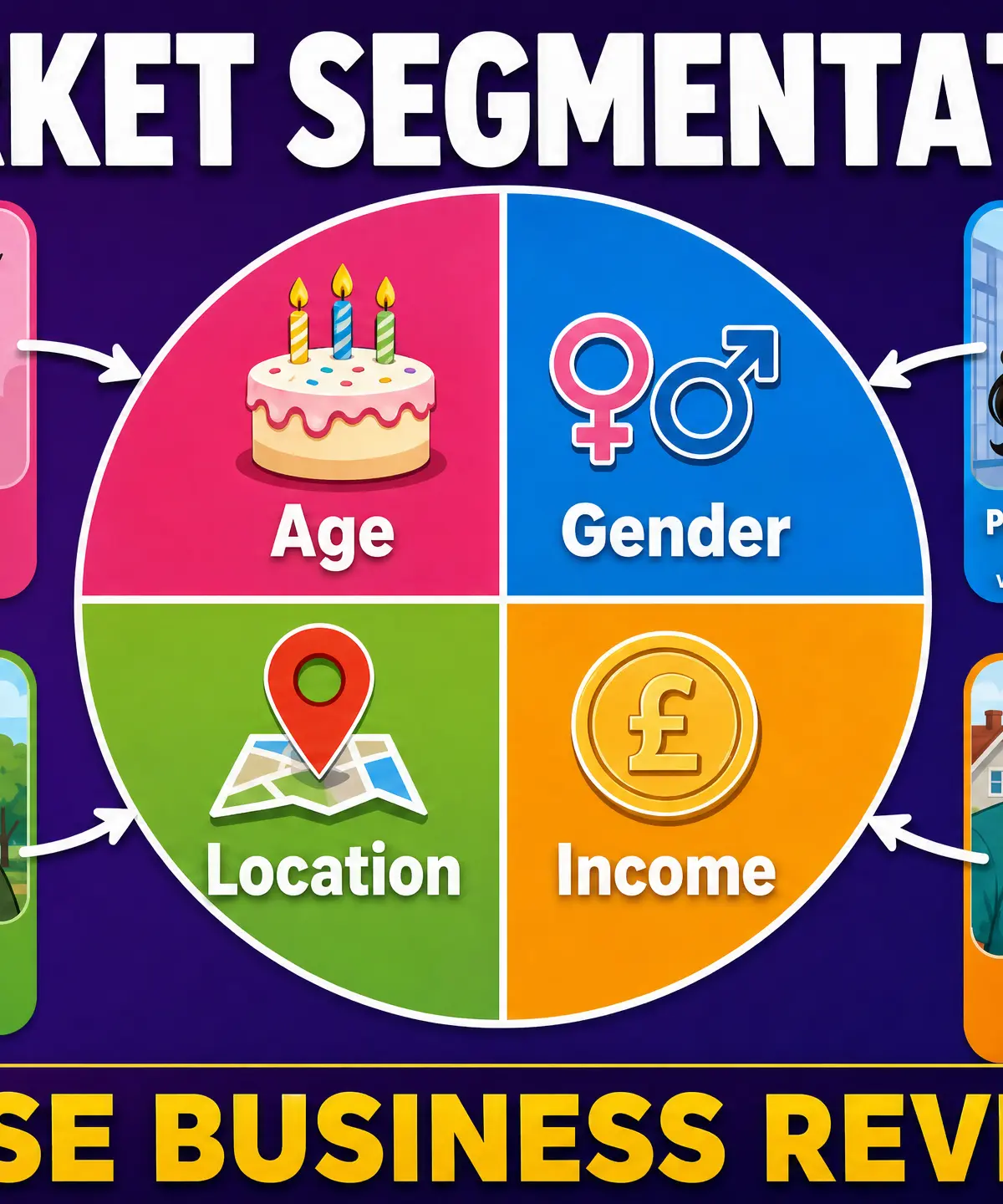
Market segmentation is the secret weapon businesses use to target the right customers, save money, and boost sales. Mastering this topic is essential for your GCSE Business exam, as it links directly to the marketing mix and business strategy.
Revision Notes & Key Concepts
Revision Podcast Transcript
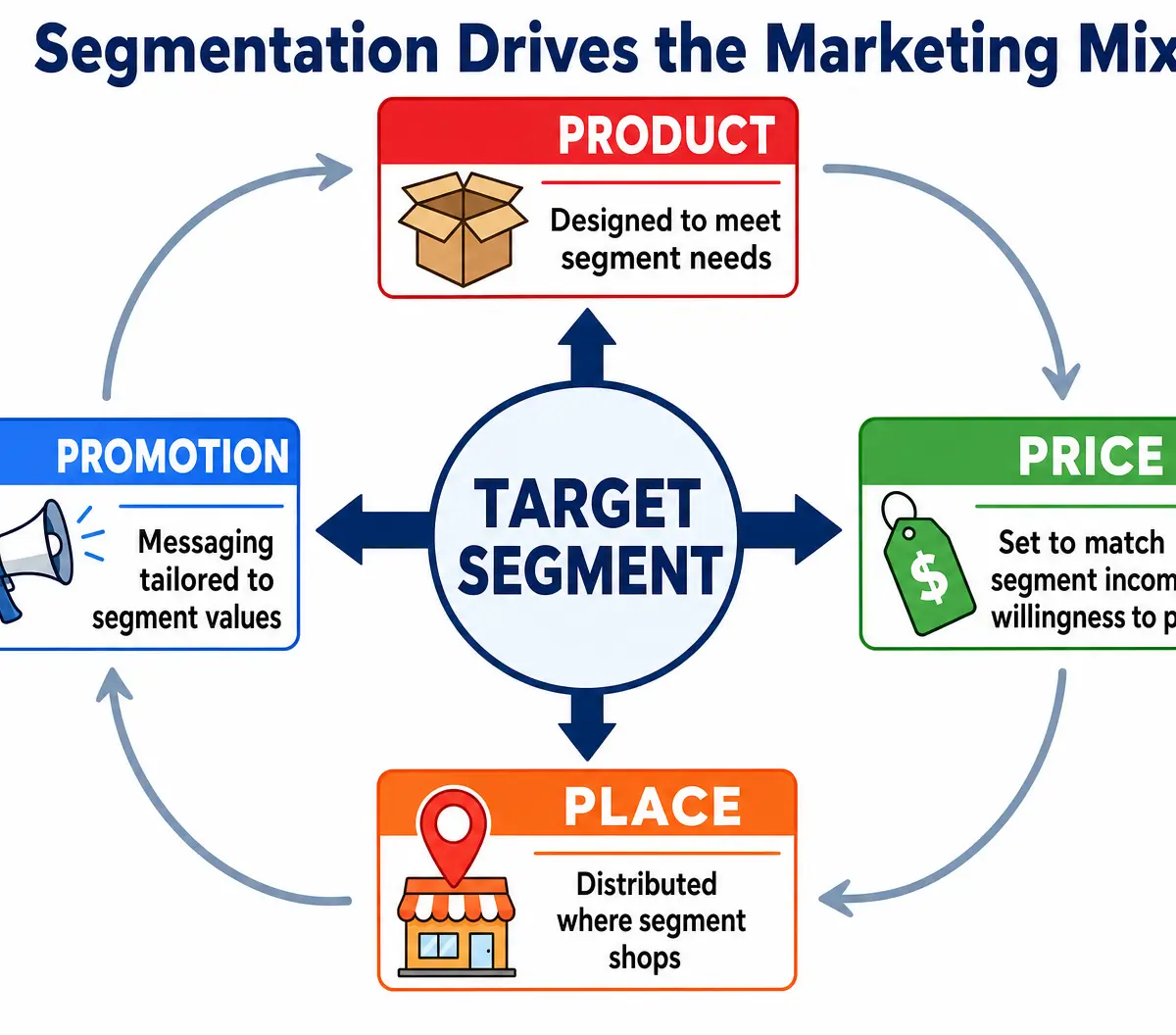
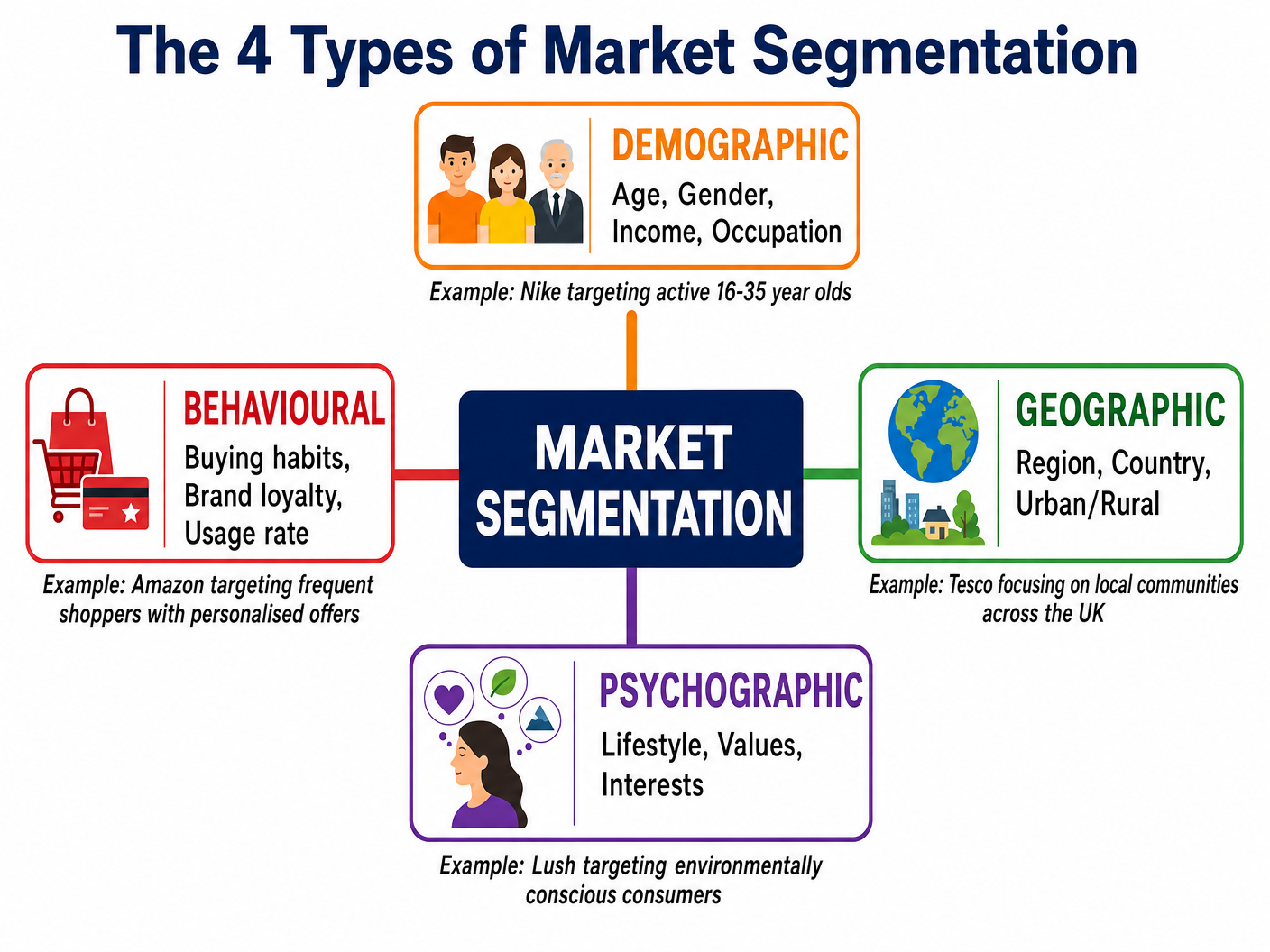
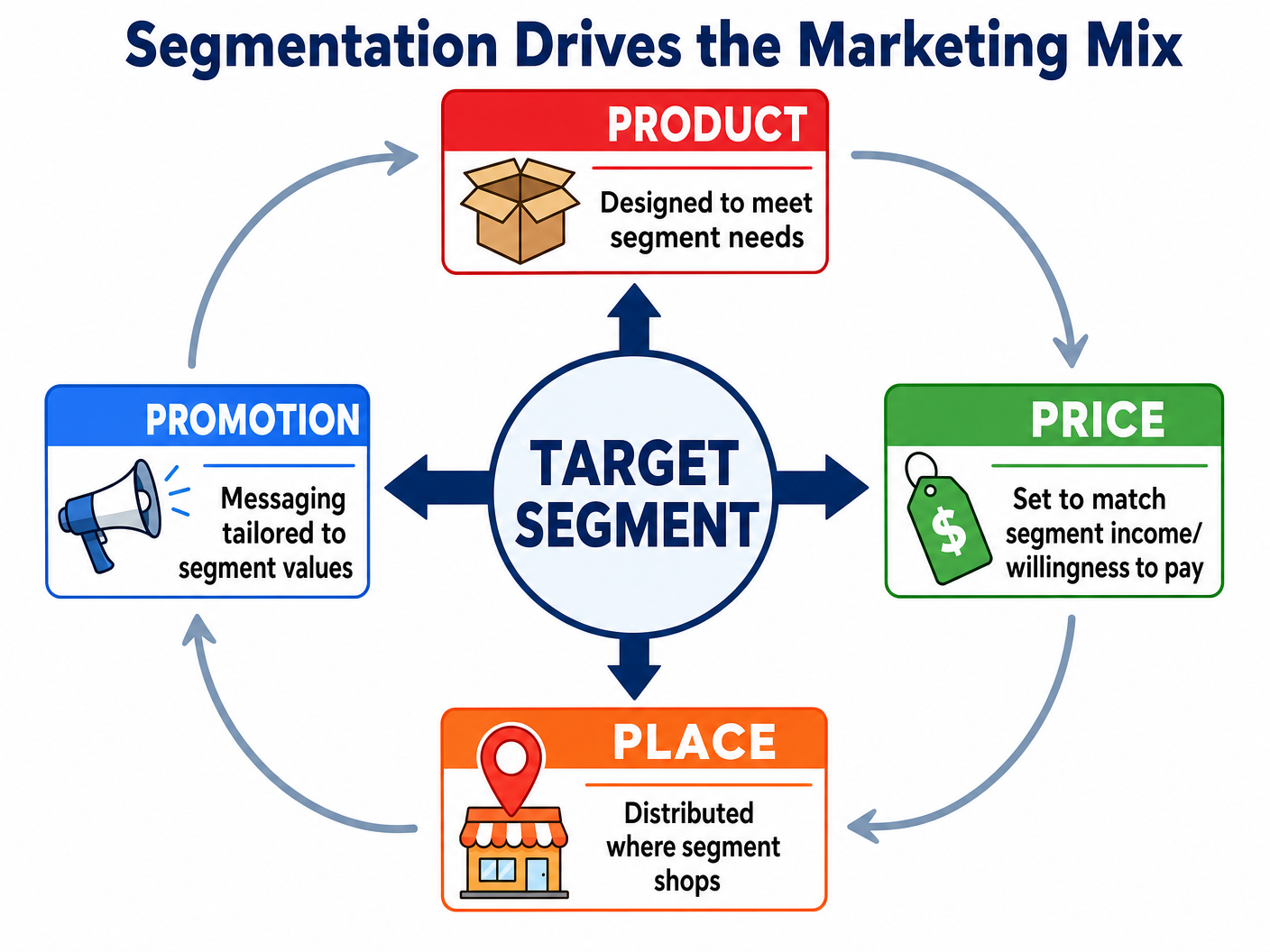
Welcome to GCSE Business Revision with me, your tutor for today. I'm really excited about this episode because we're diving into one of the most practical and exam-friendly topics on the entire specification: Market Segmentation. Whether you're sitting AQA, Edexcel, OCR, or any other board, I can promise you that segmentation comes up again and again — and once you truly understand it, you'll be picking up marks left, right, and centre. So grab a pen, get comfortable, and let's get into it. By the end of this episode, you'll be able to define market segmentation confidently, explain the four main types, link segmentation to the marketing mix, and — crucially — answer exam questions in a way that earns you top marks. Let's go. So, what actually is market segmentation? At its core, segmentation is the process of dividing a market into distinct groups of customers who share similar characteristics. Think about it this way: if you're a business selling trainers, not every customer is the same. A 16-year-old who loves streetwear has very different needs from a 55-year-old who wants comfortable walking shoes. Segmentation allows a business to identify those differences and respond to them intelligently. The key definition you need to know is this: Market segmentation is the process of dividing a market into groups of customers with similar needs, wants, or characteristics, so that a business can target them more effectively. Write that down — it's your go-to definition and it's worth a mark every single time. Now let's talk about the four main types of segmentation, because these are the ones examiners test most frequently at GCSE level. The first type is Demographic Segmentation. This is probably the most common and the one you'll see referenced most in exam questions. Demographic segmentation divides the market based on measurable characteristics of the population. These include age, gender, income, occupation, and family size. Let me give you a real example. Nike doesn't just sell one trainer to everyone. They have specific product lines aimed at different age groups and genders — the Air Force 1 is heavily marketed to teenagers and young adults aged 16 to 25, while their running shoes are targeted at fitness-conscious adults aged 25 to 45. That's demographic segmentation in action. Another brilliant example is Saga, the travel and insurance company. They exclusively target customers aged 50 and over. Why? Because that demographic has specific needs — more time to travel, potentially higher disposable income after retirement, and different insurance requirements. Saga's entire business model is built on one demographic segment. The second type is Geographic Segmentation. This divides the market based on where customers live or work. This could be by country, region, city, or even urban versus rural areas. McDonald's is a fantastic example here. In India, McDonald's doesn't serve beef burgers because of cultural and religious sensitivities. In the UK, they offer the McPlant burger to appeal to the growing vegan market. In Japan, they've offered Teriyaki burgers for decades. The same brand, completely different products, all because of geographic segmentation. Tesco also uses geographic segmentation — their Metro stores in city centres stock different products and have different opening hours compared to their large out-of-town superstores, because the customer needs are completely different. The third type is Psychographic Segmentation. This one goes deeper — it divides the market based on customers' lifestyles, values, attitudes, and interests. This is less about who someone is on paper and more about how they think and what they care about. Lush Cosmetics is a perfect example. They target customers who are environmentally conscious, value ethical production, and are willing to pay a premium for cruelty-free, handmade products. Their entire brand identity — from their packaging to their campaigns — speaks directly to that psychographic segment. Another example is Patagonia, the outdoor clothing brand, which targets customers who are passionate about environmental activism and sustainability. The fourth type is Behavioural Segmentation. This divides the market based on how customers actually behave — their buying habits, how often they purchase, their brand loyalty, and how they use a product. Amazon is the master of behavioural segmentation. Their recommendation engine tracks everything you browse and buy, then targets you with personalised offers based on your behaviour. Supermarkets like Tesco use their Clubcard data to identify behavioural segments — heavy shoppers, bargain hunters, health-conscious buyers — and then send targeted vouchers to each group. Now, here's something really important that candidates often miss in exams: you need to explain WHY businesses use segmentation, not just WHAT it is. Examiners are looking for that analytical layer. Businesses use segmentation for several key reasons. First, it allows them to target their marketing more effectively, which reduces wasted spending. If you know your product appeals to women aged 25 to 40 with a high income, you don't need to advertise on children's TV — you can focus your budget on Instagram, lifestyle magazines, and premium events. That's more efficient and more effective. Second, segmentation helps businesses develop products that genuinely meet customer needs. When a business understands its target segment deeply, it can design products, set prices, choose distribution channels, and craft promotional messages that resonate. This brings us to the crucial link with the marketing mix — the four Ps: Product, Price, Place, and Promotion. Let me walk you through that link because it's a guaranteed exam topic. Once a business has identified its target segment, every element of the marketing mix should be tailored to that segment. For Product — the features, design, and quality should match what the segment values. Innocent Smoothies targets health-conscious adults, so their products use natural ingredients with no added sugar, which is exactly what that segment wants. For Price — the pricing strategy should reflect the segment's income and willingness to pay. Rolls-Royce targets ultra-high-income customers and uses premium pricing, starting at around two hundred and fifty thousand pounds per car. They're not trying to appeal to everyone — just to that exclusive segment. For Place — the distribution channels should be where the target segment shops. Luxury brands like Chanel sell exclusively through their own boutiques and high-end department stores, not through discount supermarkets, because their segment expects an exclusive shopping experience. For Promotion — the messaging, tone, and channels should speak directly to the segment. Red Bull targets young, adventurous males aged 18 to 30 through extreme sports sponsorship, social media, and events like cliff diving and Formula One. That's completely different from how a brand targeting retirees would promote itself. So segmentation isn't just about dividing customers into groups — it's the foundation of the entire marketing strategy. That's why it matters, and that's the analytical point that earns you the higher marks. Now let's talk exam technique, because this is where a lot of candidates leave marks on the table. The most common mistake I see is candidates who can define segmentation but can't explain the WHY. If a question asks you to explain why a business uses market segmentation, you must go beyond the definition. You need to say something like: by segmenting the market, the business can focus its marketing budget on customers most likely to buy its products, which reduces wasted expenditure and increases the return on investment. That's the kind of developed explanation that earns two marks, not one. The second common mistake is giving generic examples. If the exam question gives you a case study about a specific business — say, a local gym — and asks you to explain how they might use segmentation, you must refer back to that business. Don't just say businesses can use age segmentation. Say the gym could segment by age, targeting 18 to 30 year olds with high-intensity fitness classes, while offering lower-impact yoga and swimming sessions to the over-50s segment. That's contextualised, specific, and worth full marks. The third mistake is confusing segmentation with market research. Segmentation is what you do with the information you've gathered through market research. Market research is the process of collecting data; segmentation is the process of using that data to divide the market into groups. They are related but they are not the same thing. Now, command words. For segmentation questions, you'll typically see define, explain, analyse, or evaluate. For a define question worth one or two marks, give a clear, concise definition and — if it's two marks — add a brief example. For an explain question worth three or four marks, use the PEEL structure: Point — state the type of segmentation; Evidence — give a specific named example; Explanation — explain how it helps the business; Link — connect it back to the question, usually by mentioning the benefit to the business. For an analyse or evaluate question worth six marks or more, you need to consider both sides. What are the benefits of segmentation? But also — are there any drawbacks? For example, segmentation can be expensive to research and implement, and if a business gets it wrong and targets the wrong segment, it can waste significant resources. That balanced analysis is what pushes you into the top mark band. Let's do a quick-fire recall quiz to test what you've learned. I'll ask the questions, and I want you to pause and think before I give the answer. Question one: What is the definition of market segmentation? Pause now. The answer is: dividing a market into groups of customers with similar characteristics so a business can target them more effectively. Question two: Name the four main types of segmentation. Pause now. The answer is: demographic, geographic, psychographic, and behavioural. Question three: Give one reason why a business uses segmentation. Pause now. Good answers include: to target marketing more effectively, to reduce wasted expenditure, to better meet customer needs, or to develop a more focused marketing mix. Question four: How does segmentation link to the marketing mix? Pause now. The answer is: segmentation identifies the target market, and then each element of the marketing mix — product, price, place, and promotion — is tailored to meet the needs of that specific segment. Question five: Give one real-world example of a business using demographic segmentation. Pause now. Good examples include: Saga targeting over-50s, Nike targeting young adults, or Rolls-Royce targeting high-income customers. How did you do? If you got all five, brilliant — you're in great shape. If you struggled with any, go back and re-read those sections. Let's wrap up with the key takeaways from today's episode. Market segmentation is the process of dividing a market into groups of customers with similar characteristics. The four main types are demographic, geographic, psychographic, and behavioural. Businesses use segmentation to target customers more effectively, reduce wasted marketing spend, and tailor their marketing mix. The link between segmentation and the marketing mix — product, price, place, and promotion — is a critical exam concept. Always use specific, named examples in your answers and always explain the WHY, not just the WHAT. You've done brilliantly today. Keep revising, keep practising past papers, and remember — every mark counts. I'll see you in the next episode. Good luck!
Key Terms & Definitions
- Market Segmentation
- Dividing a market into distinct groups of consumers who share similar characteristics or needs.
- Demographic Segmentation
- Segmenting a market based on population characteristics like age, gender, and income.
- Target Market
- The specific group of customers that a business aims its products and marketing at.
- Marketing Mix
- The combination of Product, Price, Place, and Promotion used to market a product.
- Psychographic Segmentation
- Segmenting based on lifestyle, values, and attitudes.
- Niche Market
- A small, specialised segment of a larger market.
Worked Examples
Worked Example
Question: Explain one reason why a business might segment its market by age. (3 marks)
Solution: **Point**: One reason is to ensure products meet specific customer needs. **Evidence/Explanation**: For example, a clothing retailer might target teenagers with trendy, fast-fashion items, while targeting older adults with classic, durable clothing. **Link**: This means the business is more likely to make sales because the products appeal directly to what each age group wants to buy.
Worked Example
Question: Analyse the benefits to a luxury car manufacturer, such as Rolls-Royce, of using income segmentation. (6 marks)
Solution: One significant benefit of income segmentation for Rolls-Royce is that it allows them to target their marketing budget effectively. By identifying consumers with very high disposable incomes, they can advertise in exclusive luxury magazines or sponsor high-end events rather than using mass-market television adverts. This reduces wasted promotional expenditure. Furthermore, income segmentation allows Rolls-Royce to implement a premium pricing strategy. Because they know their target segment is wealthy and values exclusivity, they can charge extremely high prices (e.g., £250,000+). This not only maximises their profit margins per vehicle sold but also reinforces the brand's prestigious image, which is exactly what their target segment desires.
Worked Example
Question: Evaluate whether market segmentation is always beneficial for a small start-up business. (9 marks)
Solution: Market segmentation can be highly beneficial for a small start-up. By focusing on a specific niche (e.g., a local vegan bakery targeting a psychographic segment of ethically conscious consumers), the start-up can avoid competing directly with large, established supermarkets. This allows them to build strong customer loyalty and potentially charge a premium price, which is vital for survival in the early stages. However, segmentation also carries risks for a small business. Conducting the market research required to identify and understand a specific segment can be expensive and time-consuming. Furthermore, if the start-up targets a segment that is too small, they may not generate enough sales revenue to cover their costs. If that specific segment's tastes change, the business is highly vulnerable because they lack a diverse customer base. In conclusion, while segmentation is generally beneficial because it allows a start-up to use its limited marketing budget efficiently, it is not without risk. For it to be truly beneficial, the start-up must ensure that the segment they choose is large enough to be profitable and that they have the resources to research it accurately.
Practice Questions
Question: State two types of market segmentation. (2 marks)
Answer:
Question: Explain how a gym might use behavioural segmentation. (3 marks)
Answer:
Question: Explain one disadvantage of market segmentation for a business. (3 marks)
Answer:
Question: Analyse how a manufacturer of vegan food products might use psychographic segmentation. (6 marks)
Answer:
Question: Evaluate the importance of market segmentation to a large, multinational clothing retailer. (9 marks)
Answer: