AQA · GCSE · Business
Course version: 8132 · Version from Sept 2017
The purpose and nature of businesses
This study guide introduces the fundamental purpose of business activity, the role of enterprise, and the dynamic nature of the business environment. It covers the core reasons for starting a business, the basic factors of production, the distinction between goods and services, and the crucial concept of opportunity cost. Mastering this topic is essential as it underpins everything else you will study in GCSE Business.
- 5 min read
- 3 worked examples
- 5 practice questions
- 6 key terms
Check what you remember
Read the wording for your board, then hide it and explain Business in your own words. Rough notes are fine. This is a self-check, with no mark or grade.
Reference: AQA
An organisation that exists to produce goods or supply services to satisfy customer needs and wants.
Study Notes

Overview
This topic forms the foundation of your GCSE Business studies. It explores the fundamental questions of why businesses exist, what resources they need to operate, and how they fit into the wider economy. Examiners expect candidates to not only define key terms like 'opportunity cost' and 'factors of production', but also to apply them to real-world business scenarios. A strong grasp of the dynamic nature of business—how external changes force businesses to adapt—is crucial for accessing the higher mark bands in longer, analytical questions.
The Purpose of Business
At its core, a business is an organisation that provides goods or services to satisfy customer needs and wants.
- Needs: Essential items required for survival (e.g., food, water, basic clothing, shelter).
- Wants: Desires that are not essential for survival but improve the quality of life (e.g., designer clothes, smartphones, holidays).
Businesses exist to close the gap between limited resources and unlimited human wants. People start businesses for various reasons, including to make a profit, to be their own boss, to fulfil a gap in the market, or to pursue a personal passion.
The Four Factors of Production
To produce goods and services, businesses require resources, known as the factors of production. Examiners frequently test candidates' ability to identify and classify these resources.
- Land: Natural resources provided by the earth (e.g., oil, water, minerals, physical space).
- Labour: The human effort, skills, and knowledge contributed by workers.
- Capital: Man-made resources used to produce other goods and services (e.g., machinery, tools, buildings, vehicles). Note: In this context, capital refers to physical assets, not just money.
- Enterprise: The drive and innovation required to combine the other three factors, take risks, and start a business.
The Role of the Entrepreneur
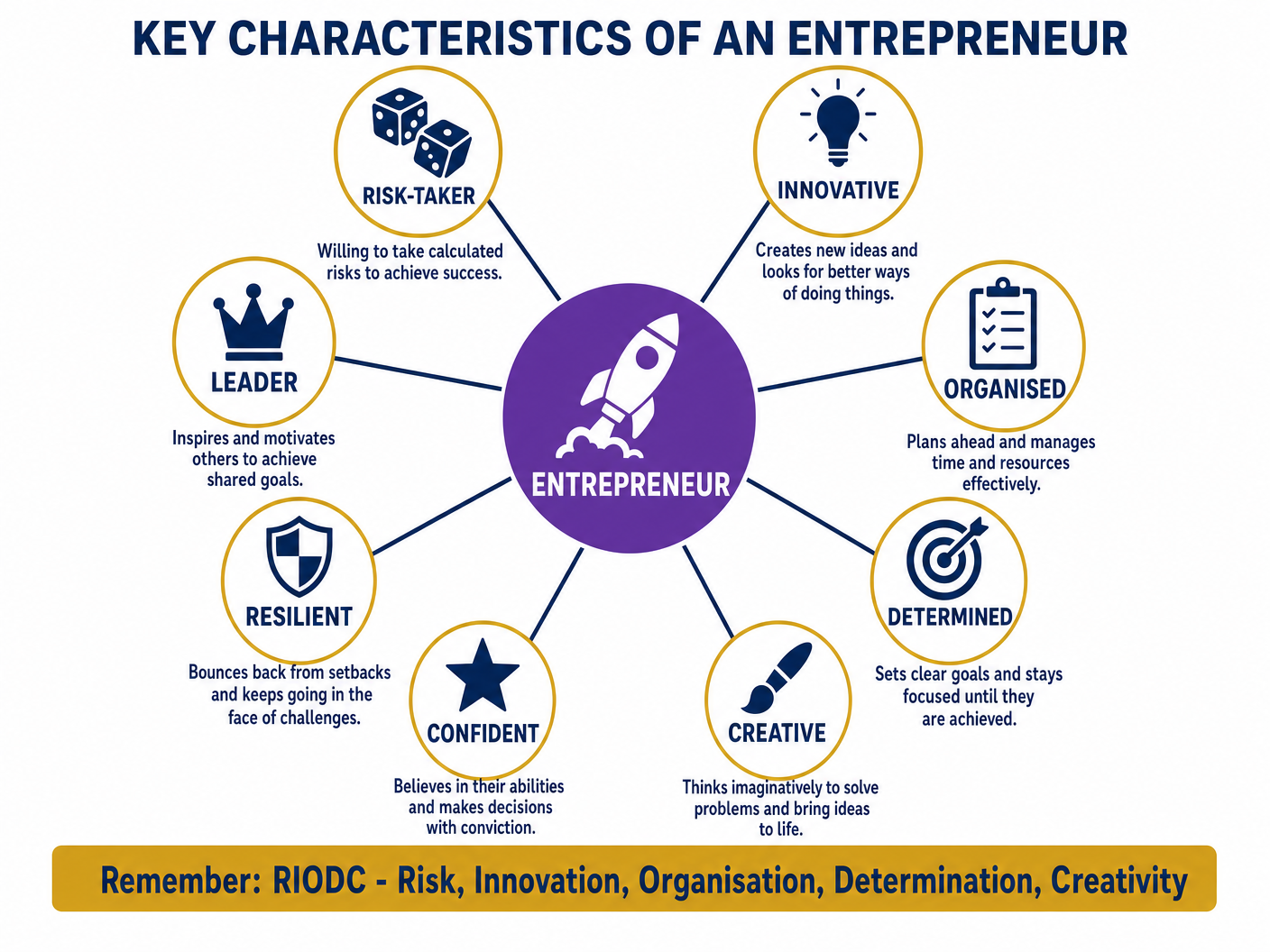
An entrepreneur is an individual who organises the factors of production, takes on financial risk, and aims to make a profit. They are the driving force behind new business ventures.
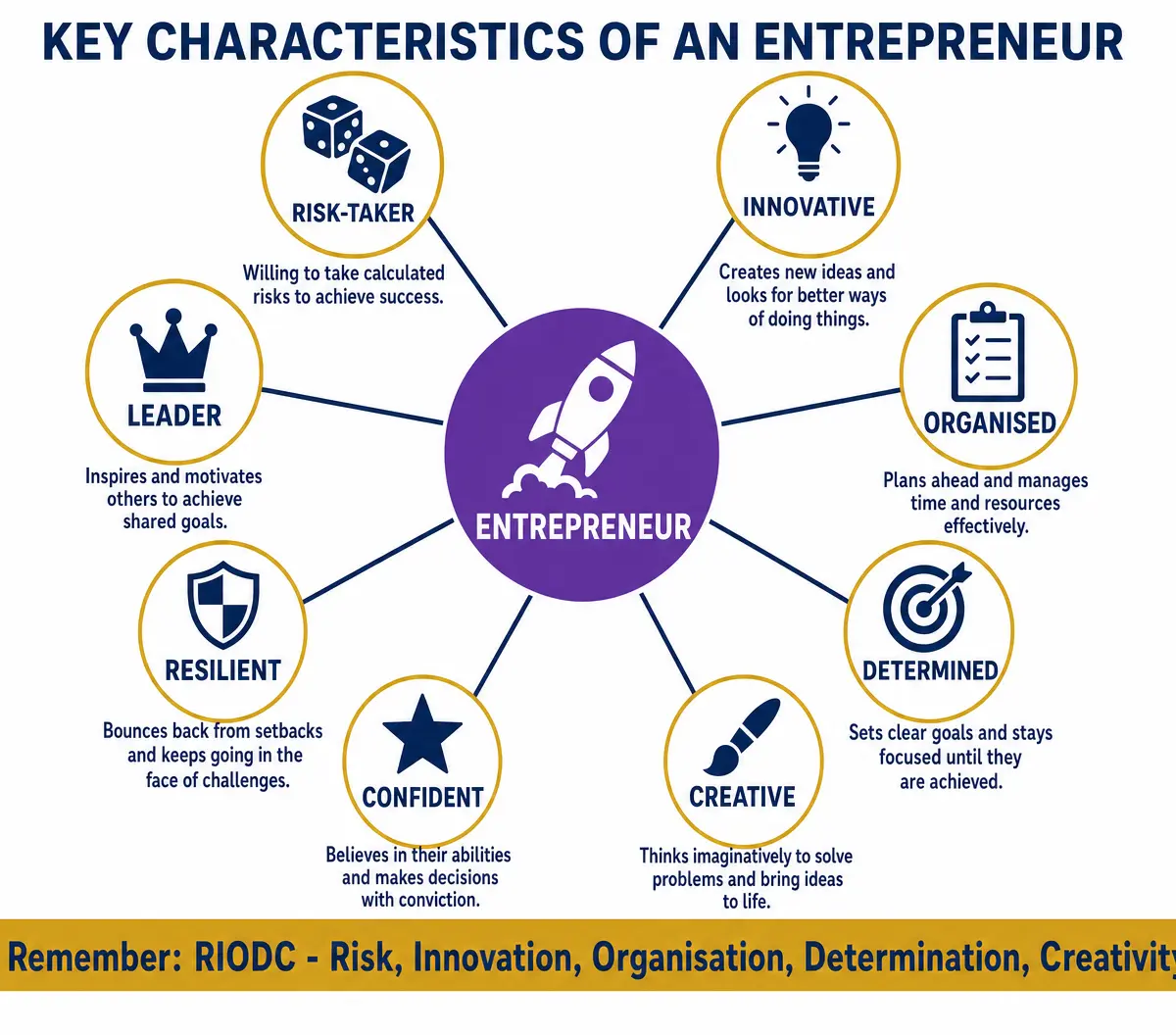
Key characteristics of successful entrepreneurs include:
- Risk-taking: Willingness to invest time and money with no guarantee of success.
- Innovation: Creating new ideas or finding better ways to do things.
- Organisation: Effectively coordinating resources.
- Determination: Persisting through challenges and setbacks.
The Three Sectors of Industry
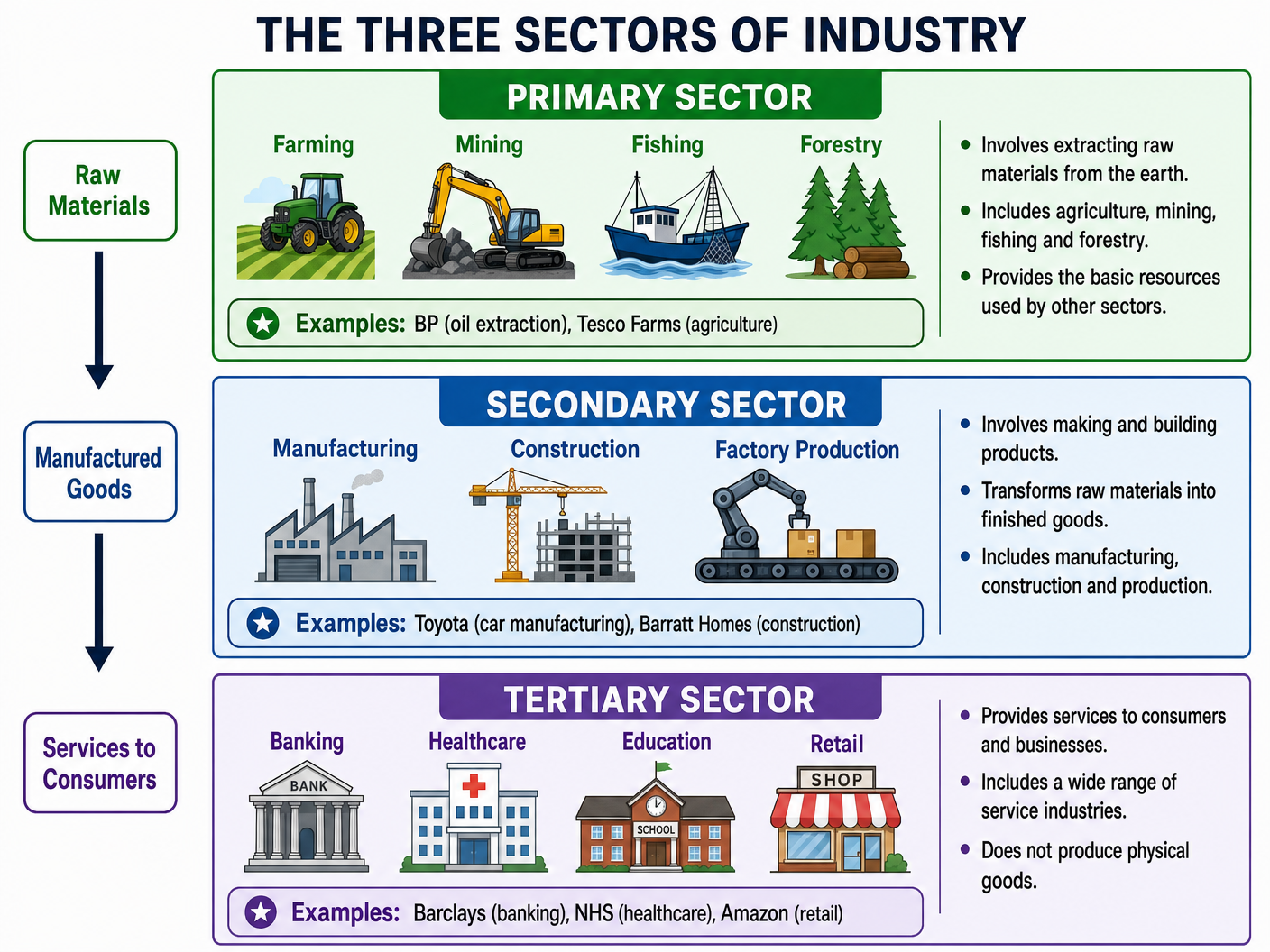
All business activity can be categorised into three main sectors. Understanding the flow from raw materials to finished services is vital.
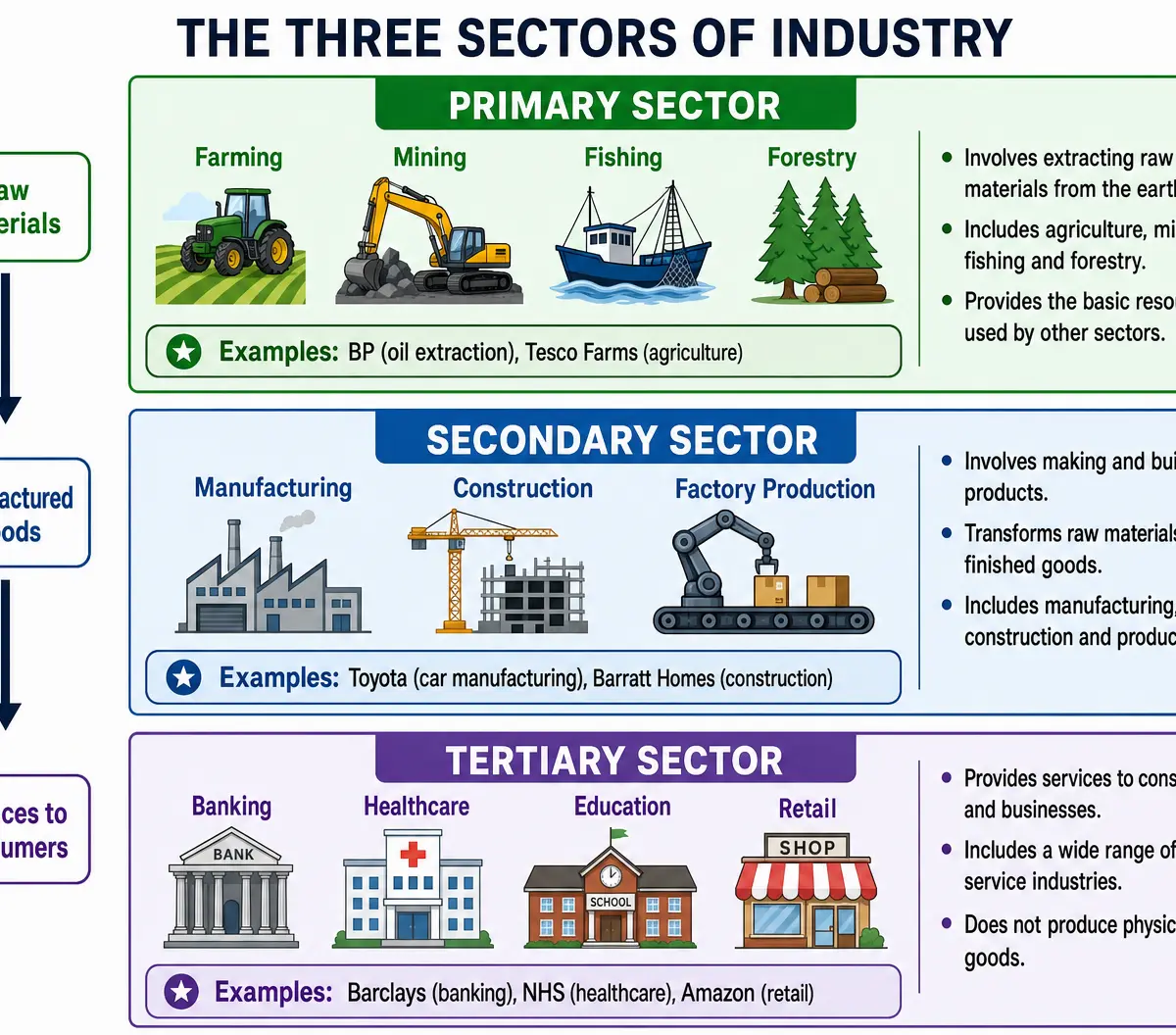
- Primary Sector: Involves extracting or harvesting raw materials from nature (e.g., farming, mining, fishing, forestry).
- Secondary Sector: Involves manufacturing, construction, and processing raw materials into finished goods (e.g., car manufacturing, house building).
- Tertiary Sector: Involves providing services to consumers and other businesses (e.g., banking, retail, healthcare, education).
Opportunity Cost
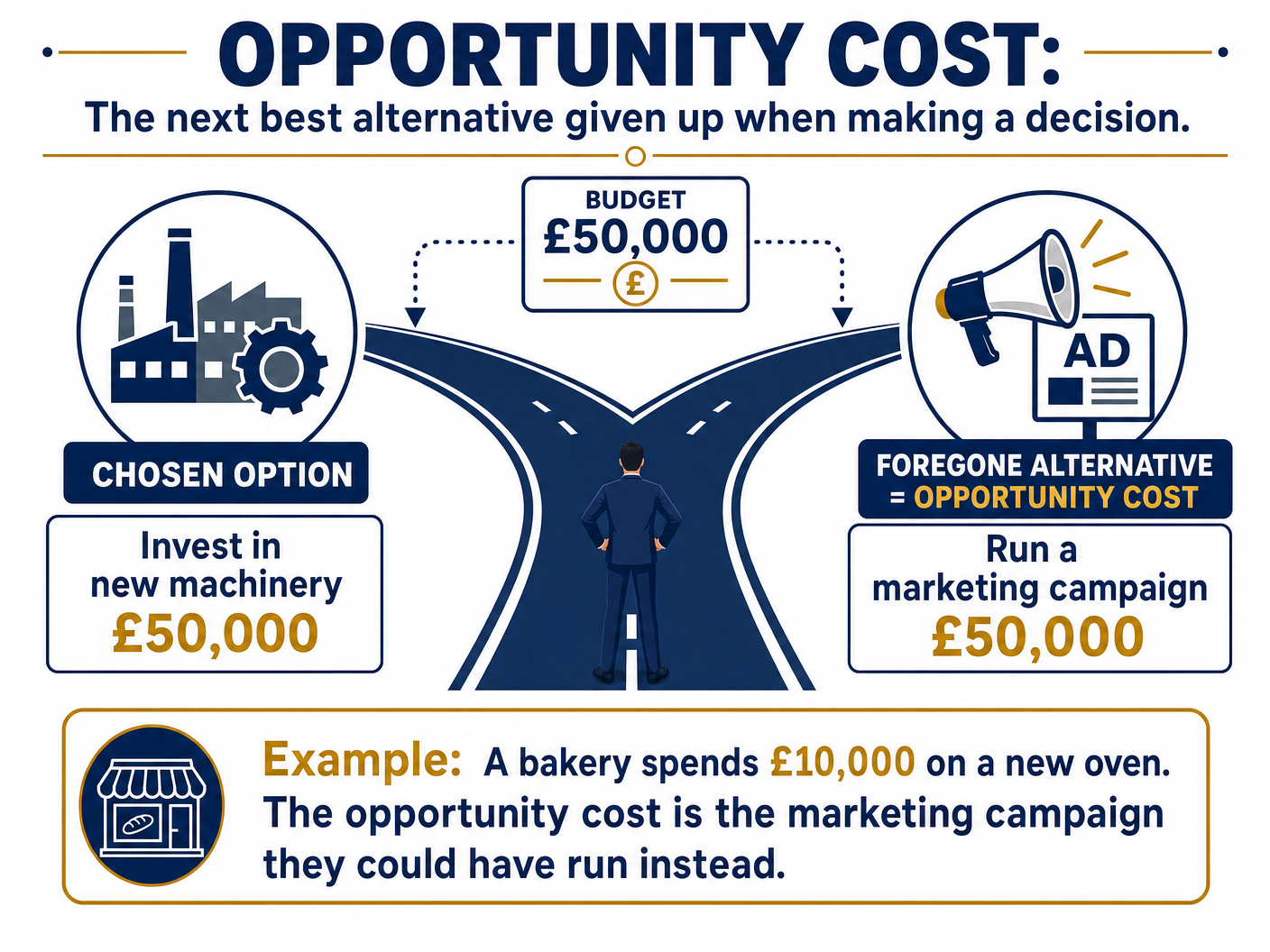
Opportunity cost is a fundamental economic and business concept. It is defined as the next best alternative given up when making a decision.
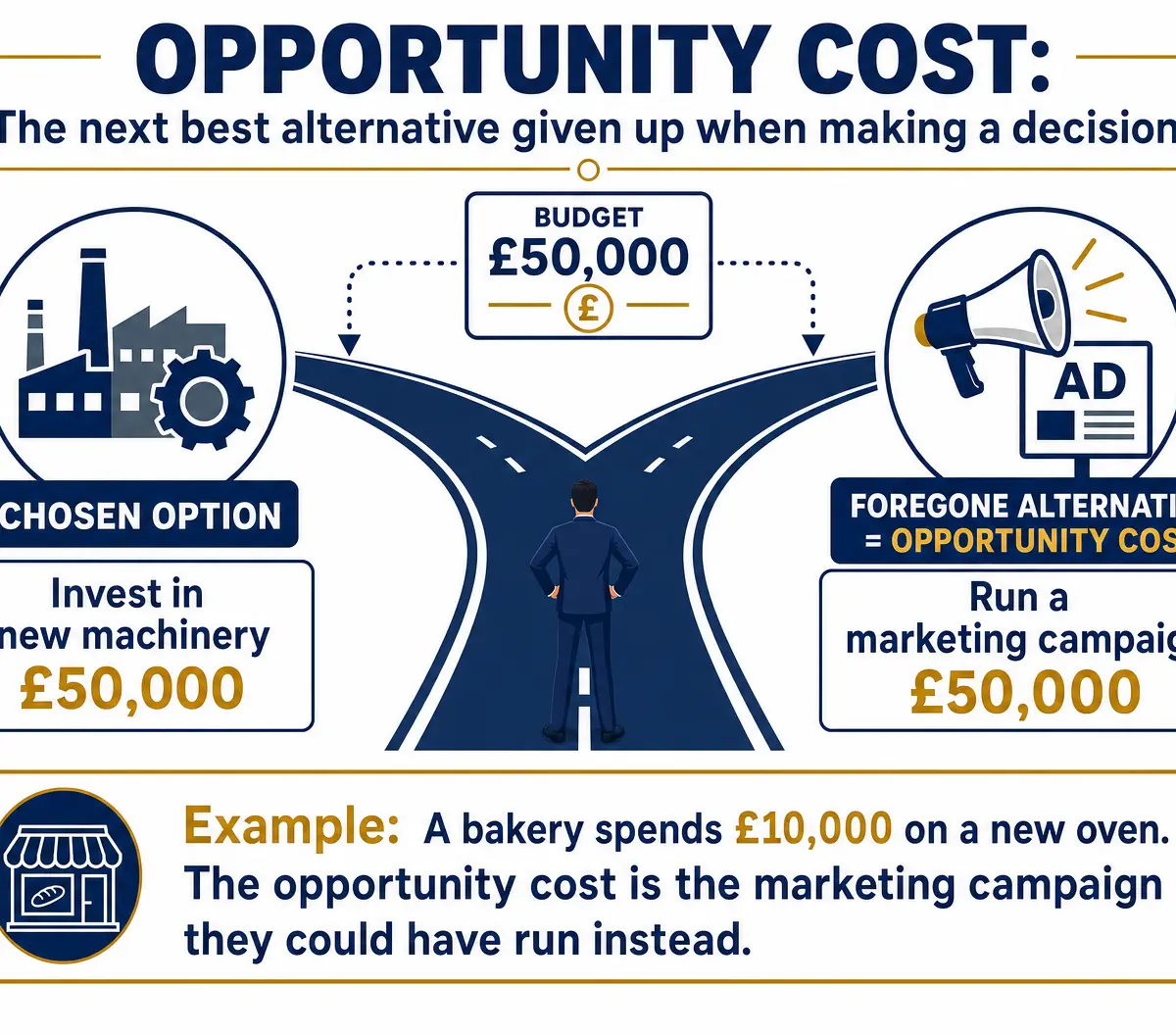
Whenever a business (or an individual) chooses to allocate resources to one option, they must sacrifice the benefits of the alternative option. For example, if a business spends £50,000 on new machinery, the opportunity cost might be the marketing campaign they could have run with that money.
The Dynamic Business Environment
Businesses do not operate in a vacuum; they exist in a dynamic (constantly changing) environment. External factors force businesses to adapt or risk failure. These changes include:
- Technological Change: Advances in technology (e.g., e-commerce, automation) change how businesses produce and sell.
- Economic Change: Fluctuations in the economy (e.g., inflation, recession) affect consumer spending power.
- Legal Change: New laws and regulations (e.g., minimum wage increases, environmental standards) impact business operations.
- Social/Environmental Change: Shifting consumer attitudes (e.g., demand for sustainable products) require businesses to adjust their offerings.
Podcast Summary
Listen to our comprehensive 10-minute podcast covering all the core concepts, common mistakes, and exam tips for this topic.
Visual Resources
3 diagrams and illustrations
Interactive Diagrams
1 interactive diagram to visualise key concepts
Conceptual Flow Outline
The flow of goods through the sectors of industry.
Worked Examples
3 worked examples — open one to explore the question and available guidance.
Practice Questions
Try the question, then reveal an answer plan or example response
State two factors of production. (2 marks)
Hint: Think of the acronym LLCE.
Explain one reason why a person might decide to start their own business. (3 marks)
Hint: State the reason, then explain the benefit it brings to the individual.
A clothing manufacturer has a budget of £20,000. They can either upgrade their sewing machines or increase the wages of their factory workers. They choose to upgrade the sewing machines. Explain the opportunity cost of this decision. (3 marks)
Hint: Define opportunity cost and explicitly name what they gave up.
Discuss the impact on a high street retailer if the business environment becomes more dynamic due to rapid technological change. (6 marks)
Hint: Look at both the positive opportunities and the negative threats of technological change.
Classify the following businesses into the correct sector of industry: A) A dairy farm, B) A car assembly plant, C) A firm of accountants. (3 marks)
Hint: Remember Nature, Make, Serve.
Exam technique
How to turn what you know into marks
How to approach the question
Always look for the command word (State, Explain, Discuss, Evaluate) and the context (the specific business scenario provided).
How to structure your answer
- Discuss questions
- Provide a balanced argument looking at both sides (e.g., advantages and disadvantages) before reaching a conclusion.
- Explain questions
- Use the PEEL structure: Point, Evidence (context), Explanation, Link.
- Evaluate questions
- Similar to discuss, but requires a stronger, justified final judgement based on the evidence presented in your answer.
Timing
Approximately 1 minute per mark.
Common pitfalls
- Confusing 'Capital' (machinery/equipment) with just 'money'.
- Giving vague definitions of opportunity cost without specifying the actual alternative given up in the scenario.
- Failing to link the characteristics of an entrepreneur to the actual success or survival of the business.
What the command words want
- Discuss
- Build a two-sided argument. Look at the impacts from different perspectives.
- Explain
- Make a point and develop it with reasoning ('because...', 'this leads to...'). Use context if provided.
- Evaluate
- Weigh up the arguments and provide a supported final judgement.
- State/Identify
- Provide a brief, clear answer without explanation. (1 mark)
Watch or listen (optional)
Test your understanding of The purpose and nature of businesses
Active recall beats re-reading. Take an instant quiz now to test what you’ve learned and lock it into long-term memory.
7 days Premium · Then the free plan continues · No card, no charge