Pearson Edexcel · GCSE · Business
Topic 1.4 Making the business effective
Topic 1.4 covers the essential decisions businesses must make to operate effectively, including choosing the right legal structure, deciding on the best location, and planning for the future. Examiners frequently test your ability to evaluate these choices in context, particularly the trade-offs between limited and unlimited liability.
- 5 min read
- 3 worked examples
- 5 practice questions
- 6 key terms
Study Notes
Overview
Making a business effective requires careful planning and strategic decision-making. Topic 1.4 focuses on the core foundations of business operations: ownership structures, location decisions, business planning, and managing stakeholders. Examiners expect candidates to not only define these concepts but to apply them to specific business scenarios. For example, you must be able to evaluate why a Sole Trader might choose to become a Private Limited Company as they grow, or why a manufacturing business might prioritize proximity to raw materials over proximity to the market.
Listen to our revision podcast to reinforce your understanding:

Business Ownership and Liability
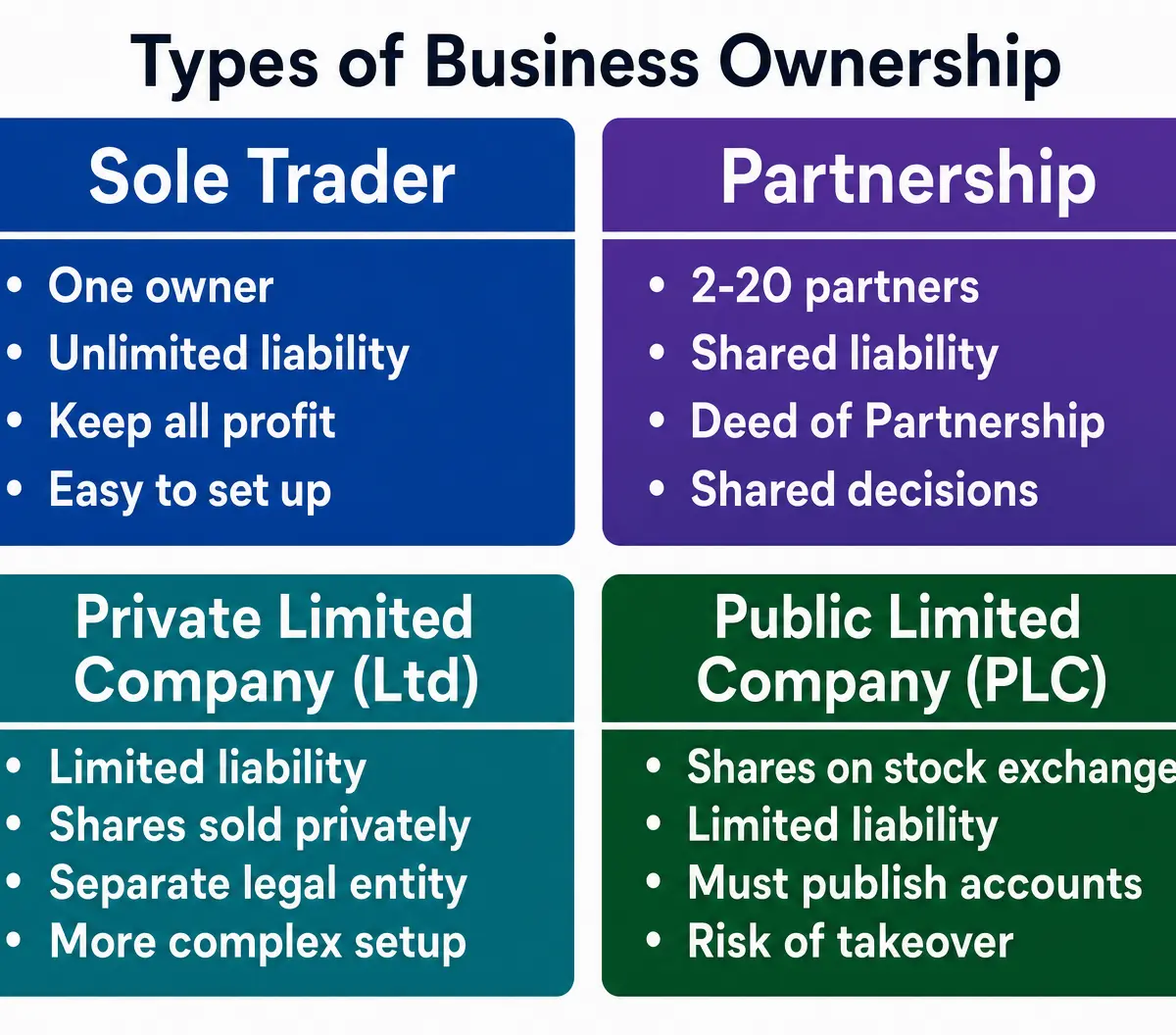
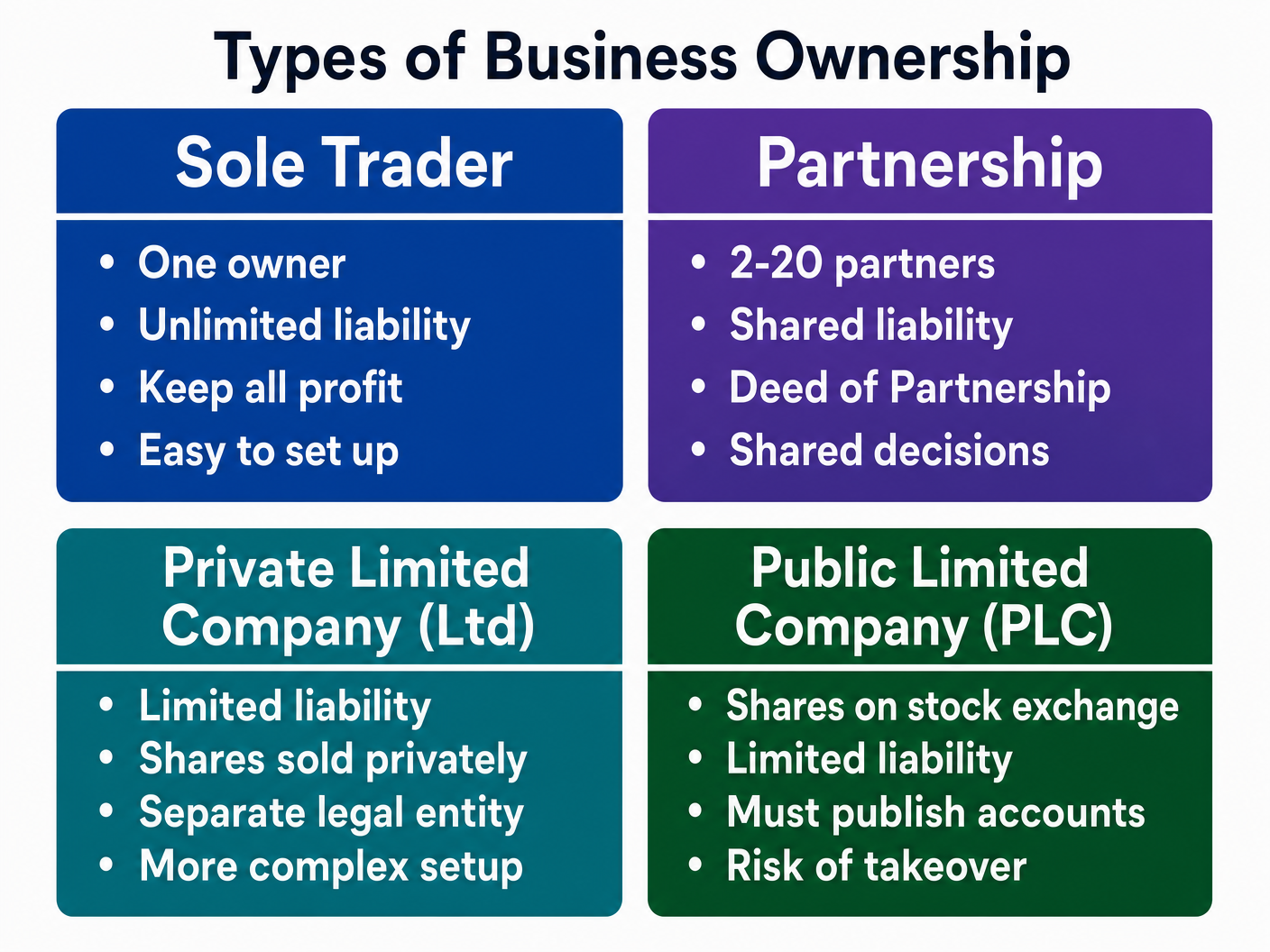
The legal structure of a business determines who owns it, who controls it, and who is responsible for its debts. The critical concept here is liability.
Sole Trader
Definition: A business owned and operated by one person.
Key Features: The owner keeps all profits and makes all decisions. However, they have unlimited liability, meaning their personal assets (like their house or car) are at risk if the business fails and cannot pay its debts.
Exam Relevance: Often tested in 3-mark "Explain one disadvantage" questions where you must link unlimited liability to the risk of losing personal possessions.
Partnership
Definition: A business owned by 2 to 20 people who share responsibility and profits.
Key Features: Partners bring different skills and share the workload. A Deed of Partnership outlines how profits are shared. Like sole traders, standard partnerships have unlimited liability. If one partner makes a poor financial decision, all partners are equally responsible for the debt.
Private Limited Company (Ltd)
Definition: An incorporated business that is a separate legal entity from its owners, whose shares can only be sold privately.
Key Features: Owners (shareholders) have limited liability, meaning they can only lose the amount they invested in the business. Personal assets are protected. This structure is more complex to set up than a sole trader.
Exam Relevance: You must be able to explain the benefit of limited liability in reducing financial risk, which encourages investment.
Public Limited Company (PLC)
Definition: A large incorporated business whose shares can be bought and sold by the general public on the stock exchange.
Key Features: PLCs can raise massive amounts of capital. However, they face strict regulations, must publish their accounts publicly, and are at risk of hostile takeovers if an outside entity buys a majority of the shares.
Business Location
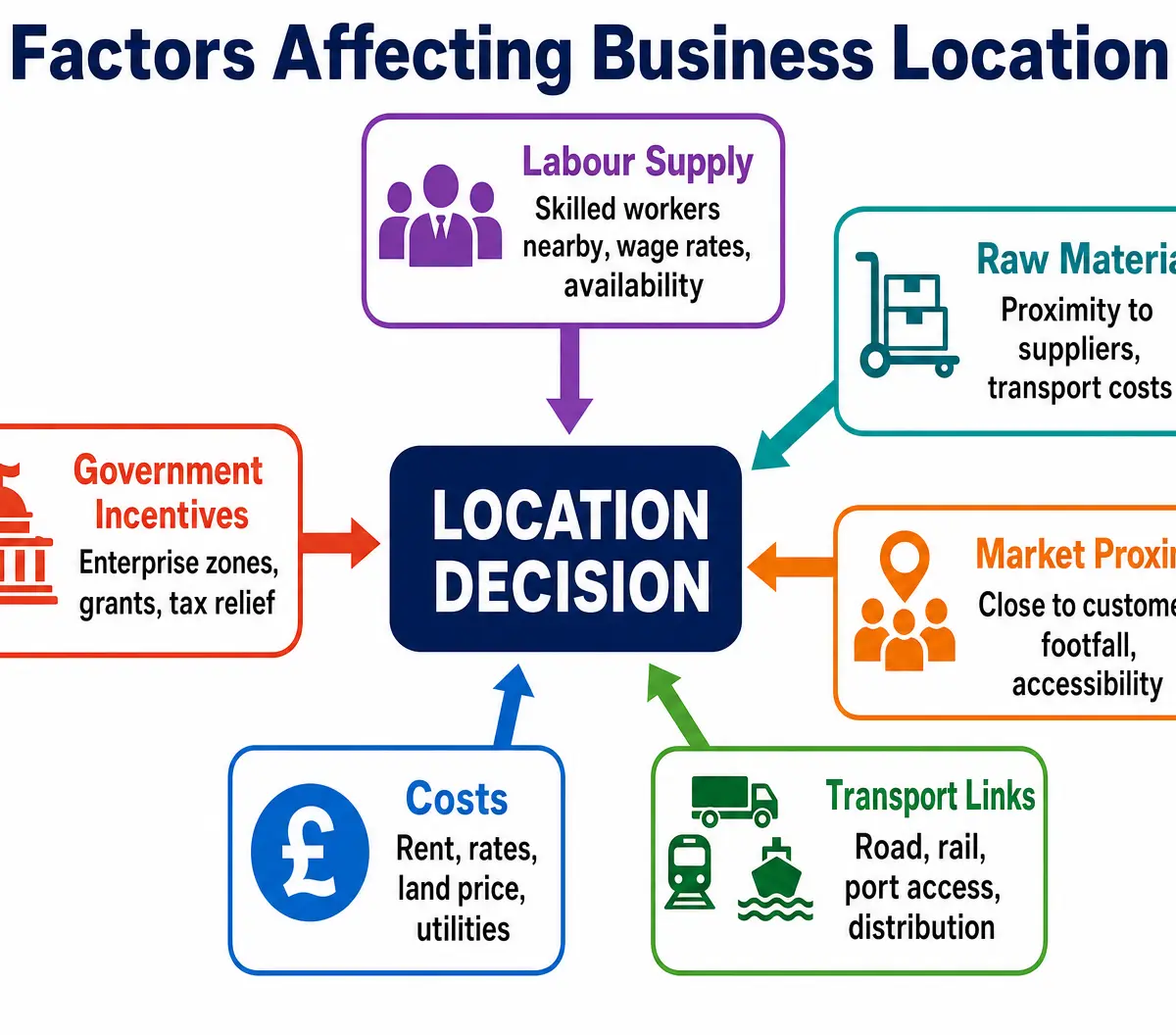
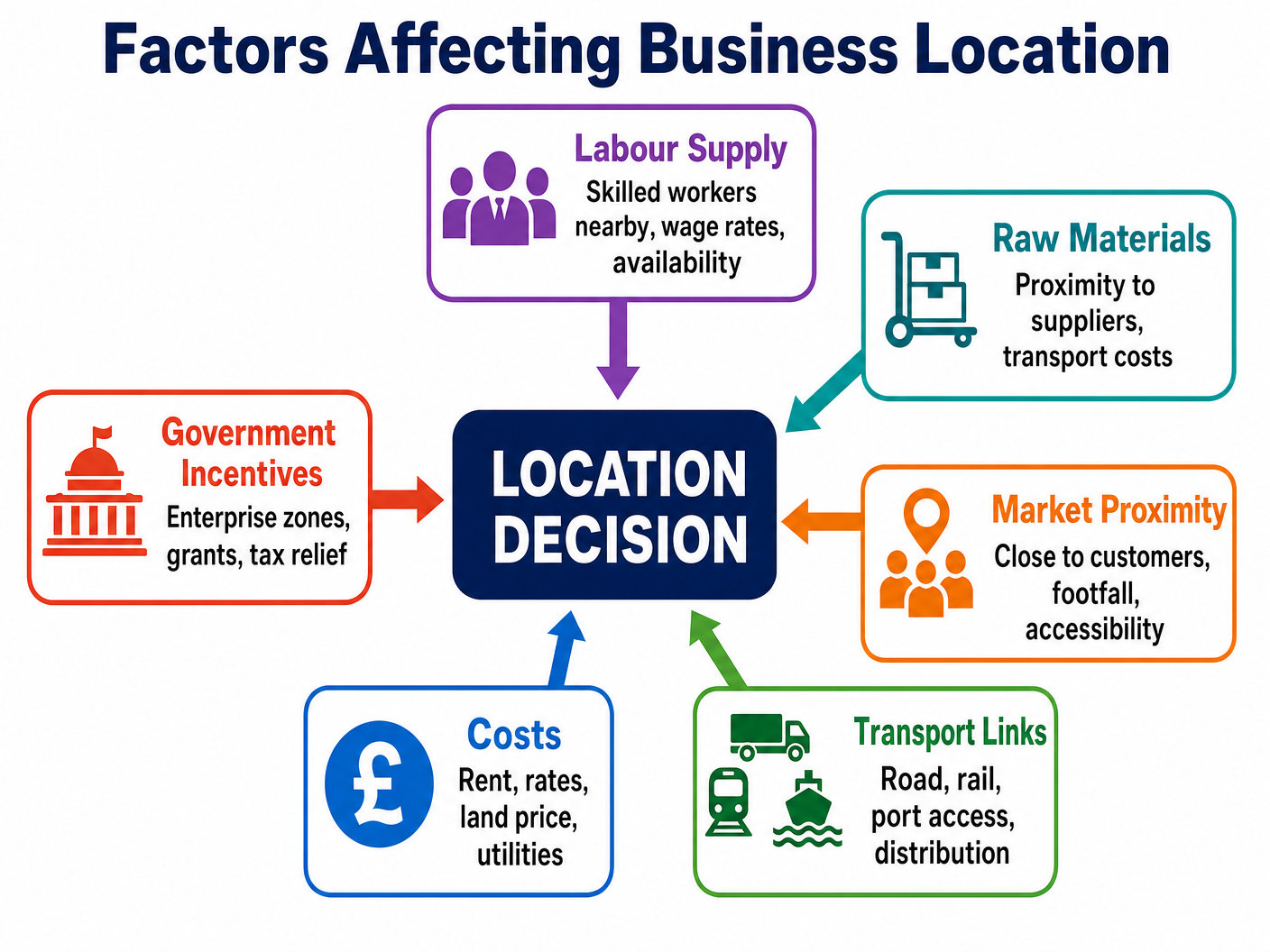
Choosing where to locate a business is a crucial strategic decision that impacts costs, sales, and overall effectiveness. The ideal location depends heavily on the type of business.
Key Factors Influencing Location:
- Proximity to Market: Retail businesses need high footfall and accessibility for customers.
- Proximity to Raw Materials: Manufacturing businesses, especially those using bulky or heavy materials, locate near suppliers to reduce transport costs.
- Labour Supply: Businesses need access to workers with the right skills at affordable wage rates.
- Transport Links: Good road, rail, or port access is vital for distribution.
- Costs: Rent, business rates, and land prices vary significantly by region.
- Government Incentives: Grants or tax relief may be available in Enterprise Zones to encourage businesses to set up in areas of high unemployment.
Business Planning
A business plan is a formal document detailing a business's goals and how it intends to achieve them. It is essential for securing finance from banks or investors, as it demonstrates that the business idea is viable and well-thought-out.
Cash Flow Forecasts
One of the most important elements of a business plan is the cash flow forecast. This predicts the money flowing into (inflows) and out of (outflows) the business over a period of time.
Key Concept: Cash flow is NOT the same as profit. Profit is revenue minus total costs. Cash flow is about the timing of cash movements. A profitable business can still fail if it suffers a cash flow problem (e.g., if customers delay paying their invoices, leaving the business unable to pay its suppliers or staff).
Stakeholders
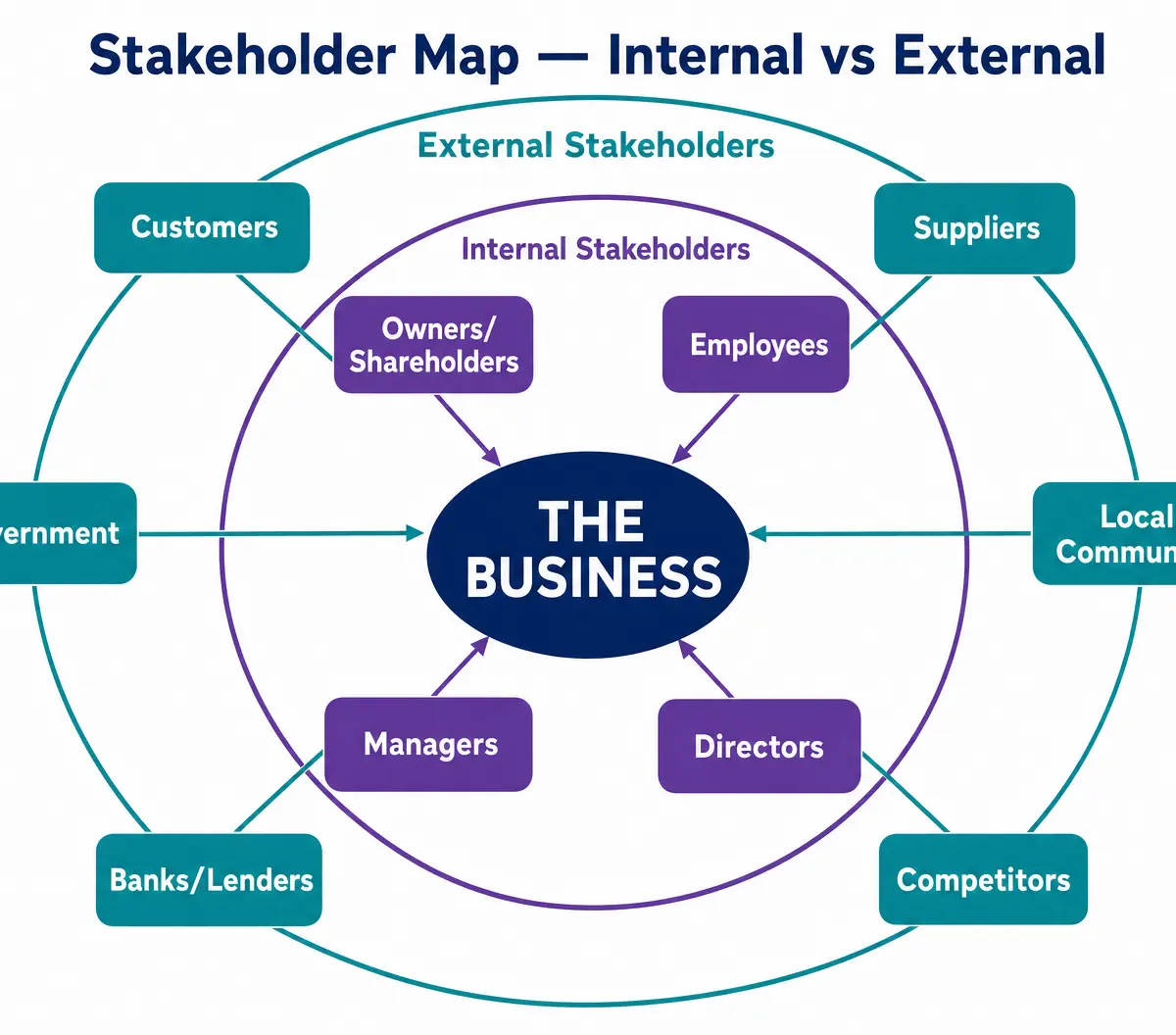
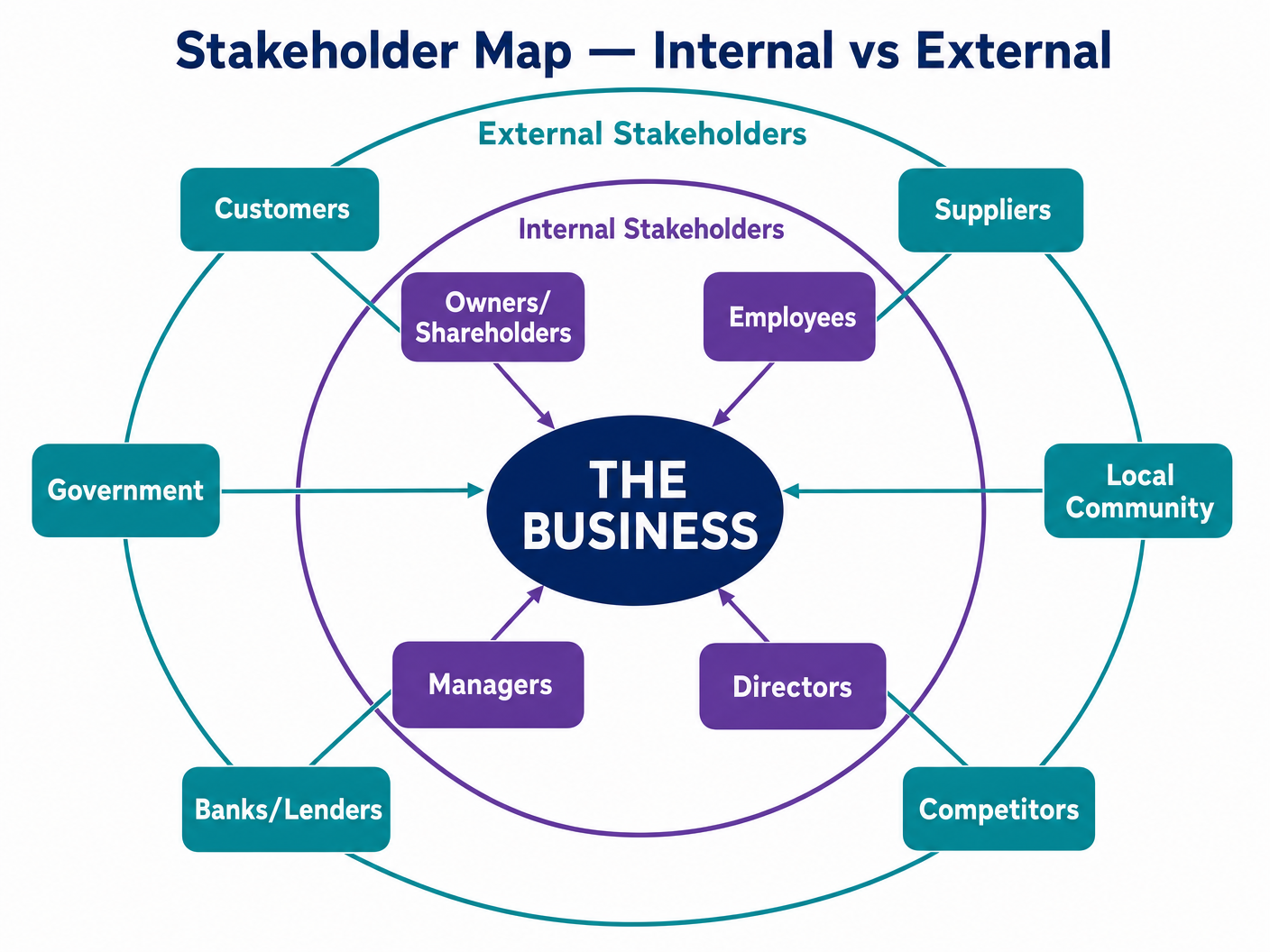
A stakeholder is any individual or group with an interest in the success or actions of a business.
Internal Stakeholders: Those within the business (Owners/Shareholders, Managers, Employees).
External Stakeholders: Those outside the business (Customers, Suppliers, Government, Local Community, Lenders).
Stakeholder Conflict: Examiners frequently test your understanding of how stakeholder objectives clash. For example, shareholders want high dividends (requiring lower costs), while employees want higher wages (which increases costs). A business must balance these competing demands.
Visual Resources
3 diagrams and illustrations
Interactive Diagrams
1 interactive diagram to visualise key concepts
Conceptual Flow Outline
Example of Stakeholder Conflict following a business decision
Worked Examples
3 worked examples — open one to explore the question and available guidance.
Practice Questions
Test your understanding — click to reveal model answers
State two internal stakeholders of a business. (2 marks)
Hint: Think about people who work inside the organization.
Explain one reason why a new business might produce a business plan. (3 marks)
Hint: Think about what the business might need from a bank.
A sole trader plumber is considering changing their business structure to a Private Limited Company (Ltd). Analyse the impact of this change on the business owner. (6 marks)
Hint: Focus on the concept of liability and what it means for the owner's personal risk.
A manufacturing firm that produces heavy steel parts is deciding whether to relocate. Evaluate whether proximity to raw materials is more important than government incentives for this business. (9 marks)
Hint: Consider the specific nature of the business (heavy steel) when weighing up the factors.
Explain one way a business could improve a negative cash flow forecast. (3 marks)
Hint: Think about how to increase money coming in quickly, or delay money going out.