OCR · GCSE · Business
Course version: J204 · Version from Sept 2019
Marketing
Marketing is the engine that connects businesses with customers, driving sales and building loyalty. This guide covers how businesses identify needs through research, segment their audience, and deploy the 'Four Ps' to achieve commercial success.
- 5 min read
- 3 worked examples
- 5 practice questions
- 6 key terms
Check what you remember
Read the wording for your board, then hide it and explain Market Research in your own words. Rough notes are fine. This is a self-check, with no mark or grade.
Reference: OCR
The process of gathering, analyzing, and interpreting information about a market, a product, or its customers.
Study Notes
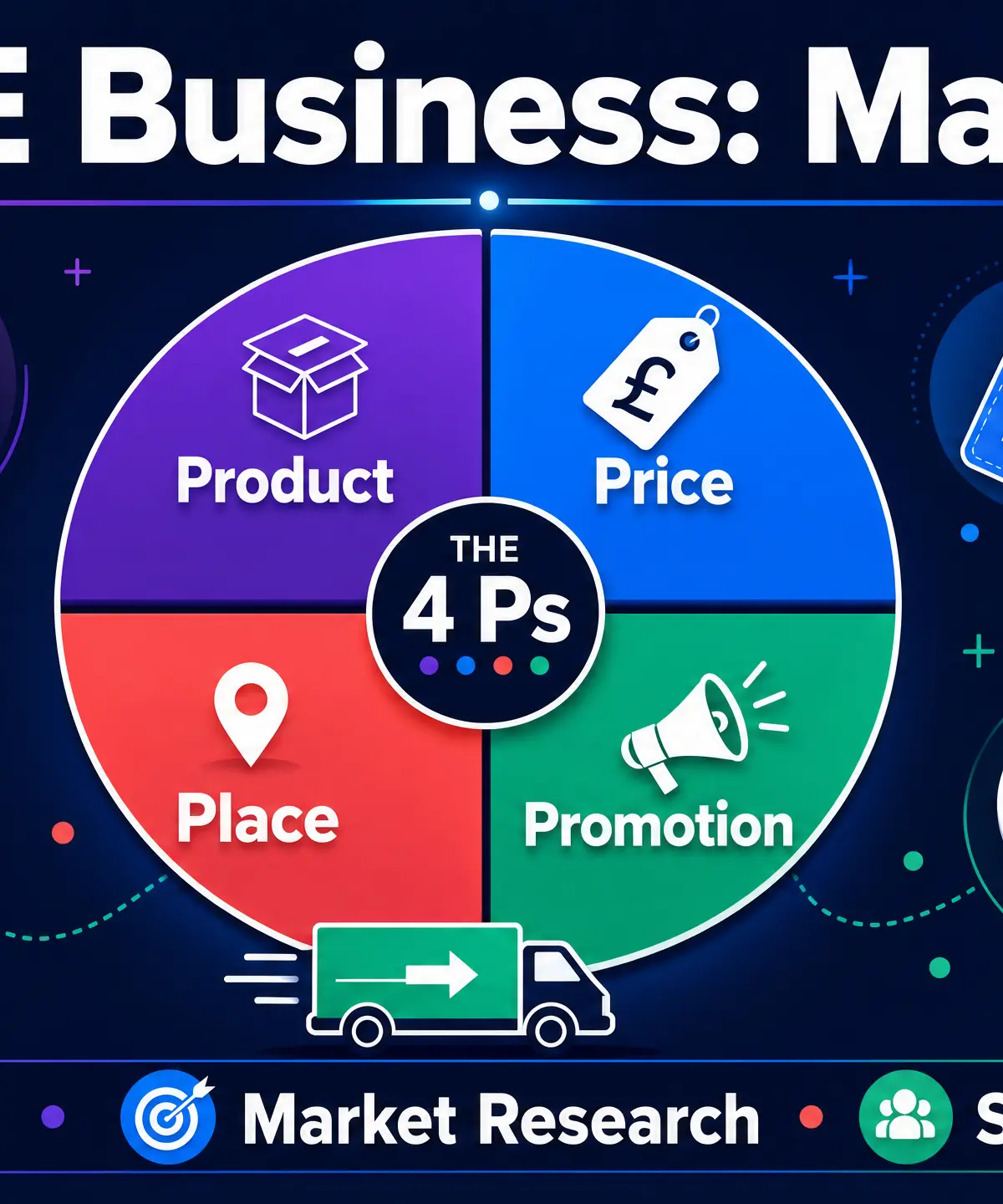
Overview
Marketing is the process of identifying, anticipating, and satisfying customer needs profitably. In your GCSE Business exam, examiners expect you to understand that marketing is not just about advertising—it's a comprehensive strategy that influences every business decision. You need to demonstrate how businesses use market research to gather data, how they segment their market to target specific groups, and how they apply the marketing mix (the Four Ps) to achieve their objectives. Crucially, top-band answers will always apply these concepts to the specific business context provided in the question, showing an understanding of how the Four Ps interact with one another.
Market Research
Market research is essential for reducing risk and understanding customer needs.
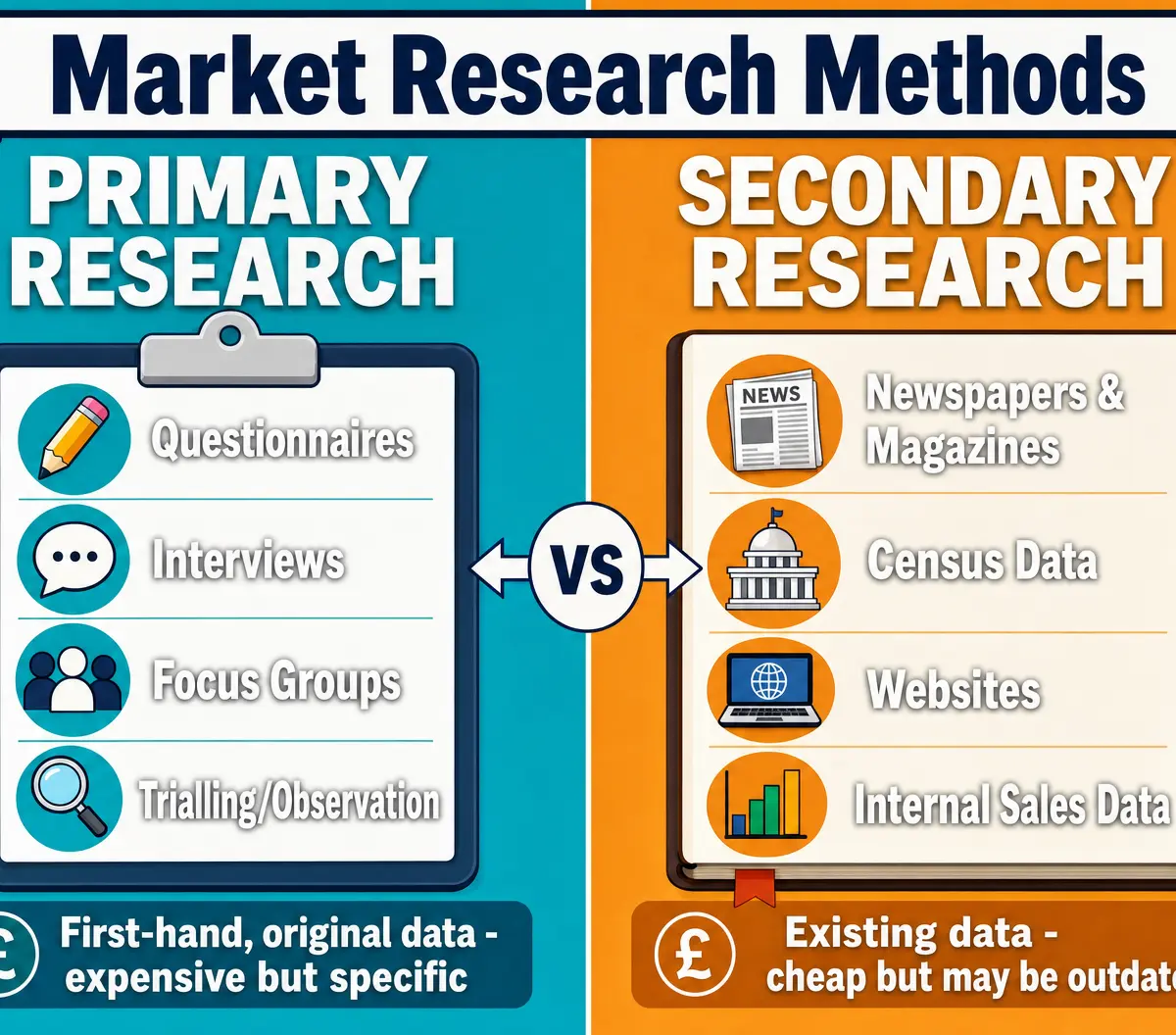
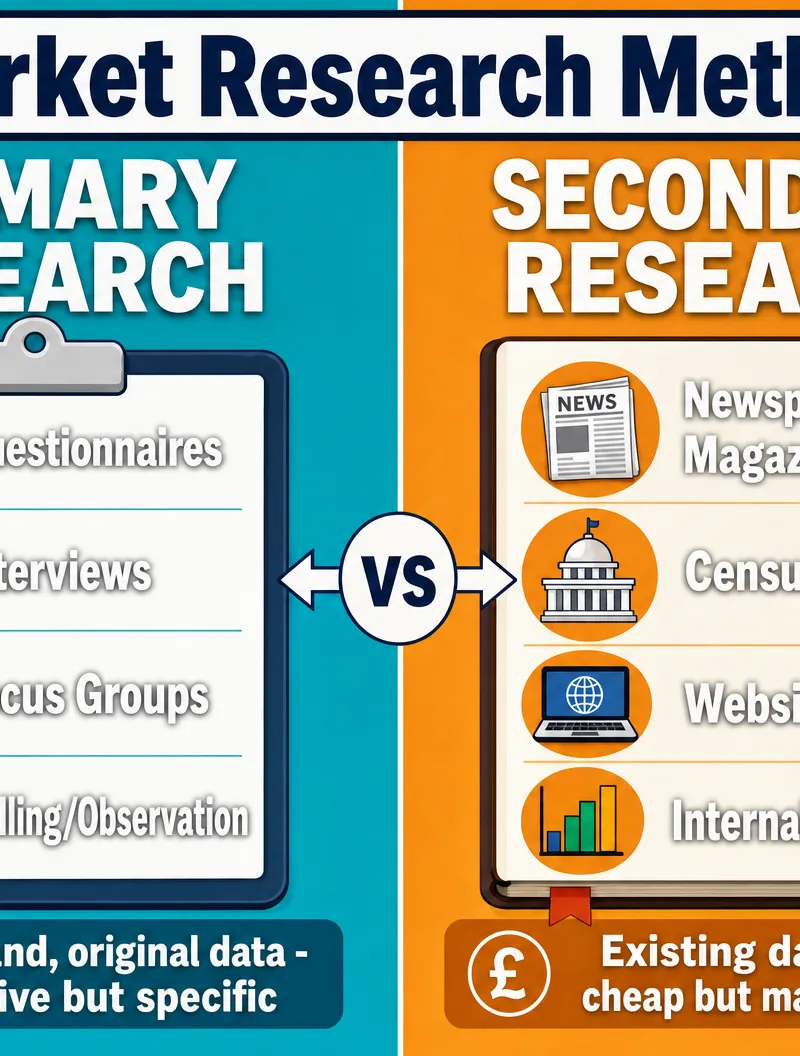
Primary Research
Definition: Original, first-hand data collected by the business itself for a specific purpose.
Methods: Questionnaires, interviews, focus groups, and trialling/observation.
Exam Focus: Examiners often ask you to evaluate primary research. You must weigh the benefit of it being highly specific and up-to-date against the drawbacks of it being expensive and time-consuming.
Secondary Research
Definition: Existing data that was collected previously by someone else for another purpose.
Methods: Newspapers, magazines, census data, websites, and internal sales data.
Exam Focus: Secondary research is cheap and quick to access, but candidates must point out that it may be outdated, biased, or not perfectly relevant to the business's specific needs.
Qualitative vs Quantitative Data
Qualitative: Data based on opinions, attitudes, and feelings (the 'why'). Useful for understanding customer motivations.
Quantitative: Numerical data (the 'what' and 'how many'). Essential for statistical analysis and showing trends, like market share.
Market Segmentation
Market segmentation involves dividing a broad target market into subsets of consumers who have common needs or characteristics.
Methods of Segmentation:
- Age: Targeting different products at teenagers versus retirees.
- Gender: Tailoring products and promotions specifically for men or women.
- Income: Offering premium products for high-earners and value products for budget-conscious shoppers.
- Location: Adapting to regional preferences or climate differences.
- Lifestyle: Focusing on hobbies, interests, and values (e.g., eco-friendly consumers).
Why it matters: Segmentation allows a business to tailor its marketing mix precisely, reducing wasted promotional spend and increasing the likelihood of sales.
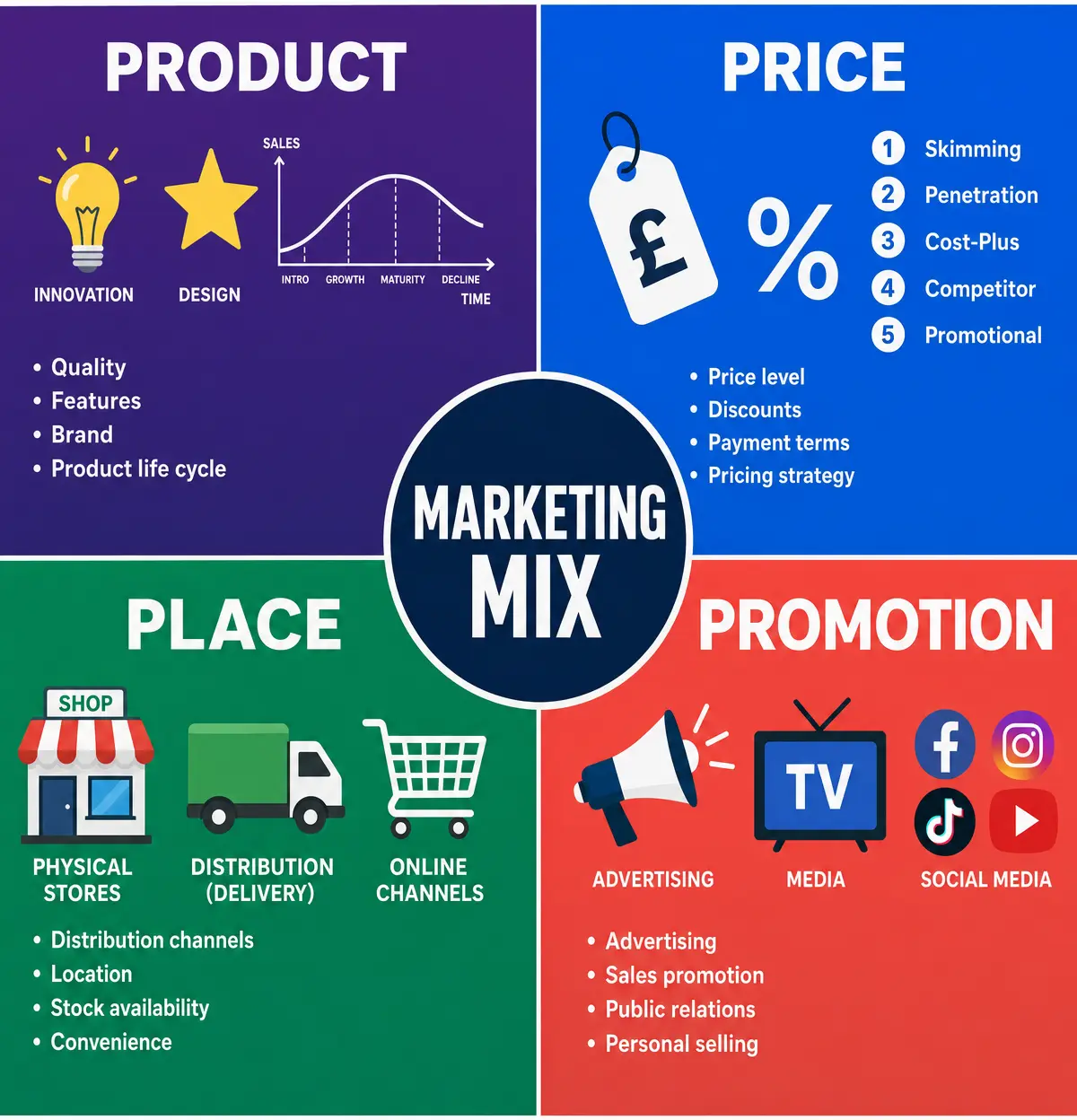
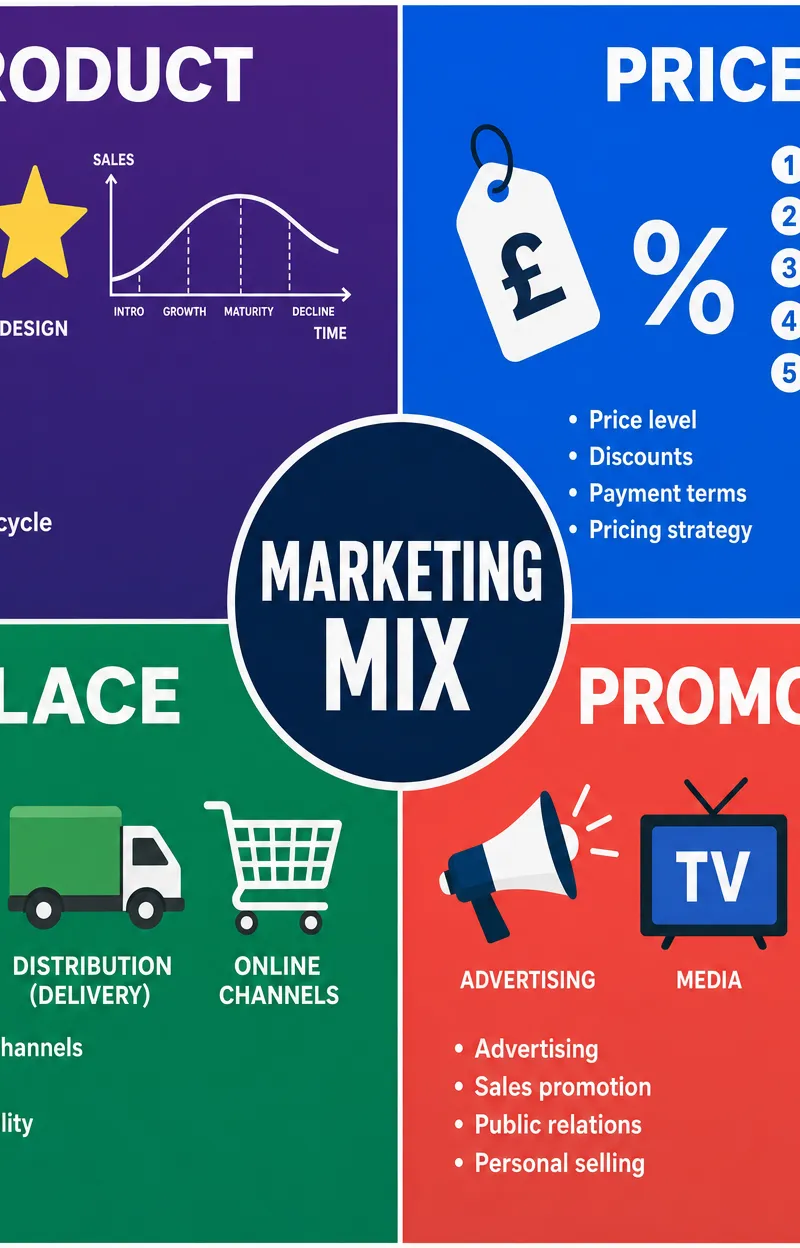
The Marketing Mix (The Four Ps)
This is the core of your marketing knowledge. The Four Ps must work together cohesively.
Product
This covers the design, quality, features, and branding of what is being sold.
Key Concepts:
- Invention vs Innovation: Invention is creating something entirely new; innovation is improving an existing product.
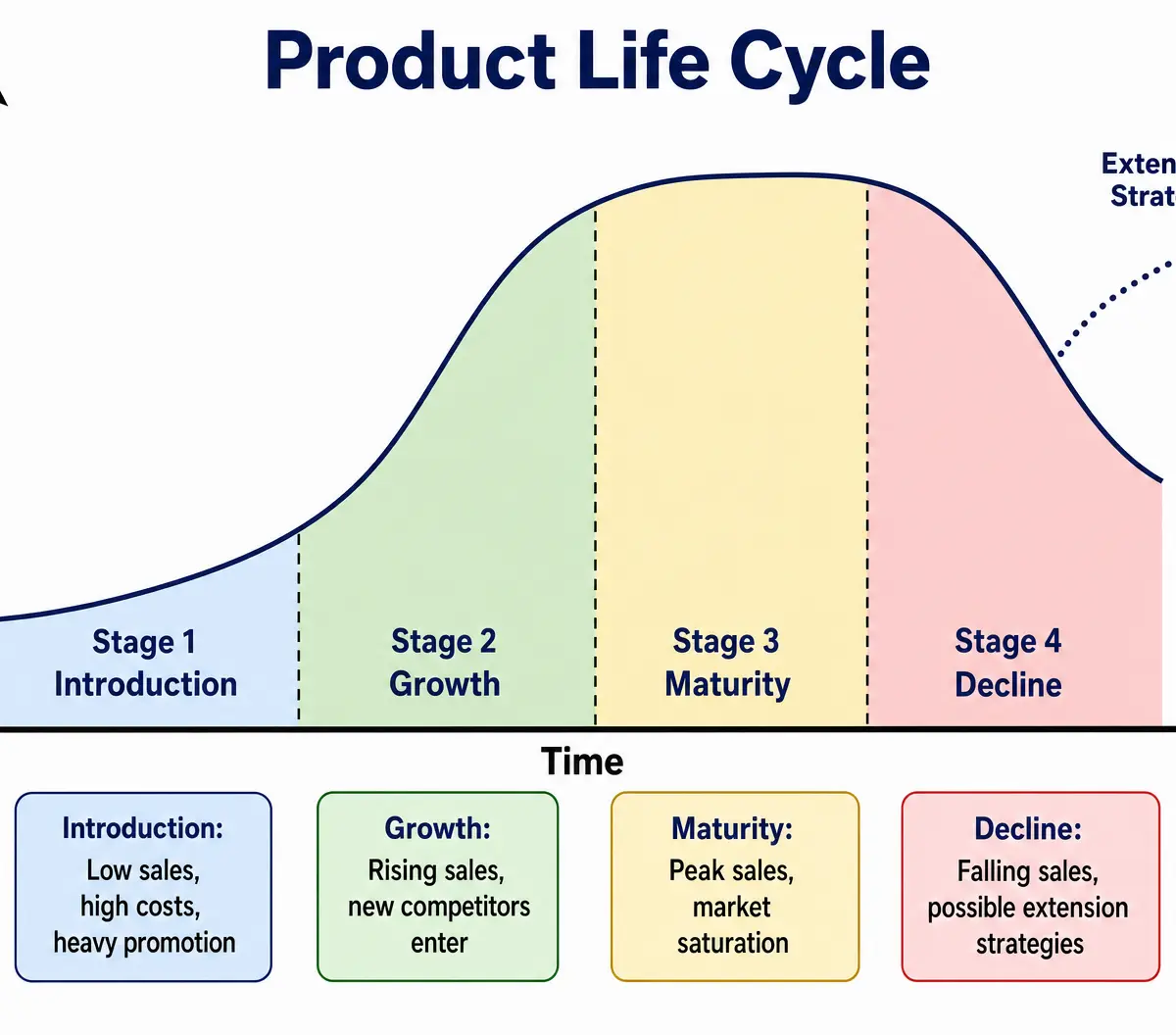
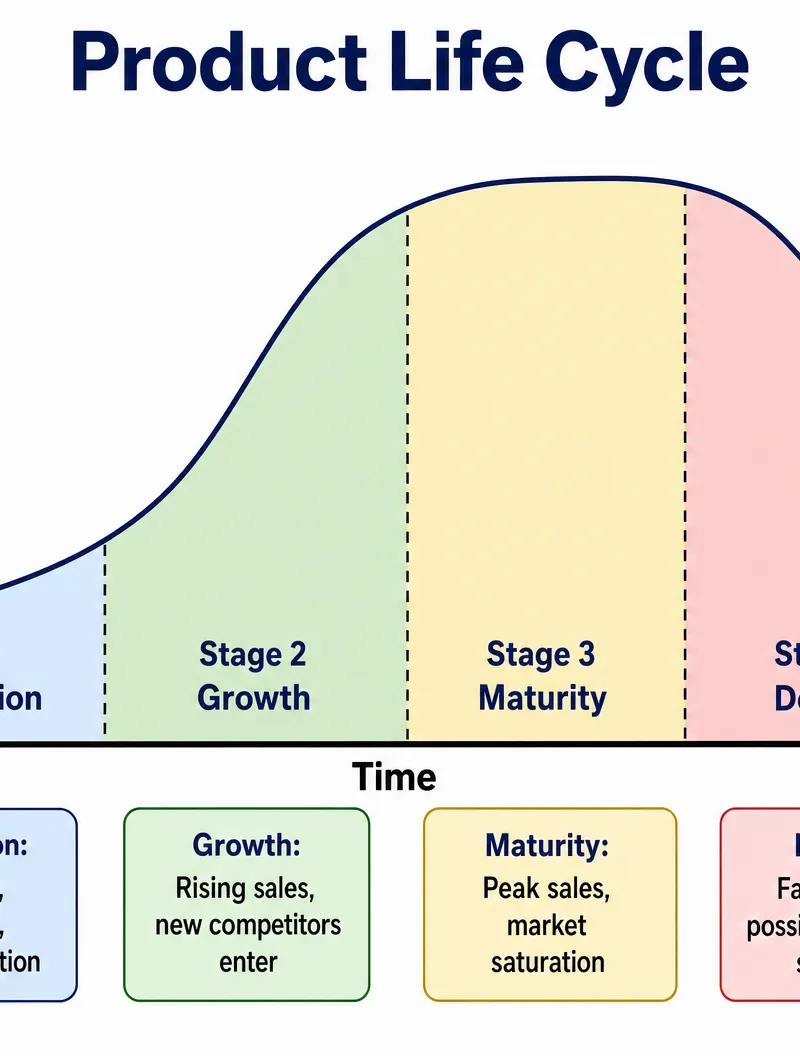
- Product Life Cycle: The stages a product goes through: Introduction, Growth, Maturity, and Decline. Businesses use extension strategies (like new packaging or new markets) to prolong the maturity phase and delay decline.
Price
Setting the right price is crucial for profitability and brand image.
Pricing Strategies:
- Price Skimming: Setting a high initial price (often for new tech) before lowering it.
- Penetration Pricing: Setting a low initial price to gain market share quickly, then raising it.
- Cost-Plus Pricing: Adding a percentage markup to the cost of producing the product.
- Competitor Pricing: Setting prices based on what rivals charge.
- Promotional Pricing: Temporary reductions to boost short-term sales.
Place
How the product reaches the customer (distribution channels).
Options: Selling directly via physical stores, selling online (e-commerce), or using intermediaries like wholesalers and retailers. The choice depends on the product type and target market.
Promotion
How the business communicates with its target audience.
Methods: Advertising (TV, social media, print), sales promotion (BOGOF, discounts), public relations, and personal selling. Promotion must align with the target market—e.g., social media for younger demographics.
Listen to our comprehensive 10-minute revision podcast covering all these topics, exam tips, and a quick-fire quiz!
Worked Examples
3 worked examples — open one to explore the question and available guidance.
Practice Questions
Try the question, then reveal an answer plan or example response
A local independent gym is planning to launch a new range of fitness classes aimed at over-60s. Evaluate whether the gym should use primary or secondary market research before launching the classes. (9 marks)
Hint: Consider the specific target audience (over-60s) and the size of the business (local independent).
Explain how a business might use market segmentation to increase its sales. (4 marks)
Hint: Define segmentation and then explain how it helps target advertising or product design.
State two pricing strategies a business could use when launching a new product. (2 marks)
Hint: Think about strategies specifically used at the 'Introduction' stage of the product life cycle.
Explain one reason why a business might use an extension strategy. (3 marks)
Hint: Link this to the product life cycle.
A clothing retailer currently sells its products only through physical high-street stores. Explain one benefit to the retailer of changing its 'Place' strategy to include e-commerce. (3 marks)
Hint: Think about market reach and operating costs.
Exam technique
How to turn what you know into marks
How to approach the question
Always read the business context first. Highlight key facts (e.g., small budget, new product, target audience) and use them in your answer.
How to structure your answer
- Data questions
- Always quote specific numbers or trends from the provided charts or tables to support your points.
- Explain questions
- Make a point, then use 'because' or 'this leads to' to develop the explanation. Link back to the specific business.
- Recommend questions
- State your choice → Give 2 reasons why it's good for THIS business → Consider why the alternative is worse → Conclude.
Timing
Approximately 1 minute per mark, plus reading time for case studies.
Common pitfalls
- Giving generic textbook answers without applying them to the specific business in the question.
- Confusing qualitative (opinions) with quantitative (numbers) data.
- Listing the 4 Ps without explaining how they need to be consistent with each other.
What the command words want
- Analyze
- Show the impact of a decision on the business. Follow the chain of consequences.
- Explain
- Give a point and develop it showing cause and effect. (Point + Development).
- State / Identify
- One short sentence or word. No explanation needed.
- Evaluate / Recommend
- Look at both sides (pros and cons), apply to the context, and provide a justified conclusion.
Watch or listen (optional)
Test your understanding of Marketing
Active recall beats re-reading. Take an instant quiz now to test what you’ve learned and lock it into long-term memory.
A week of Premium from your first lesson · Then the free plan continues · No card, no charge