OCR · GCSE · Business
Course version: J204 · Version from Sept 2019
Quality of goods and services
Quality is the cornerstone of business success, dictating whether customers return or leave for a competitor. This topic is heavily tested in exams, requiring candidates to distinguish between reactive quality control and proactive quality assurance while linking quality directly to business objectives like reputation and reduced costs.
- 5 min read
- 3 worked examples
- 5 practice questions
- 6 key terms
Check what you remember
Read the wording for your board, then hide it and explain Quality in your own words. Rough notes are fine. This is a self-check, with no mark or grade.
Reference: OCR
The extent to which a product or service meets the expectations of the customer and is fit for purpose.
Study Notes
Overview
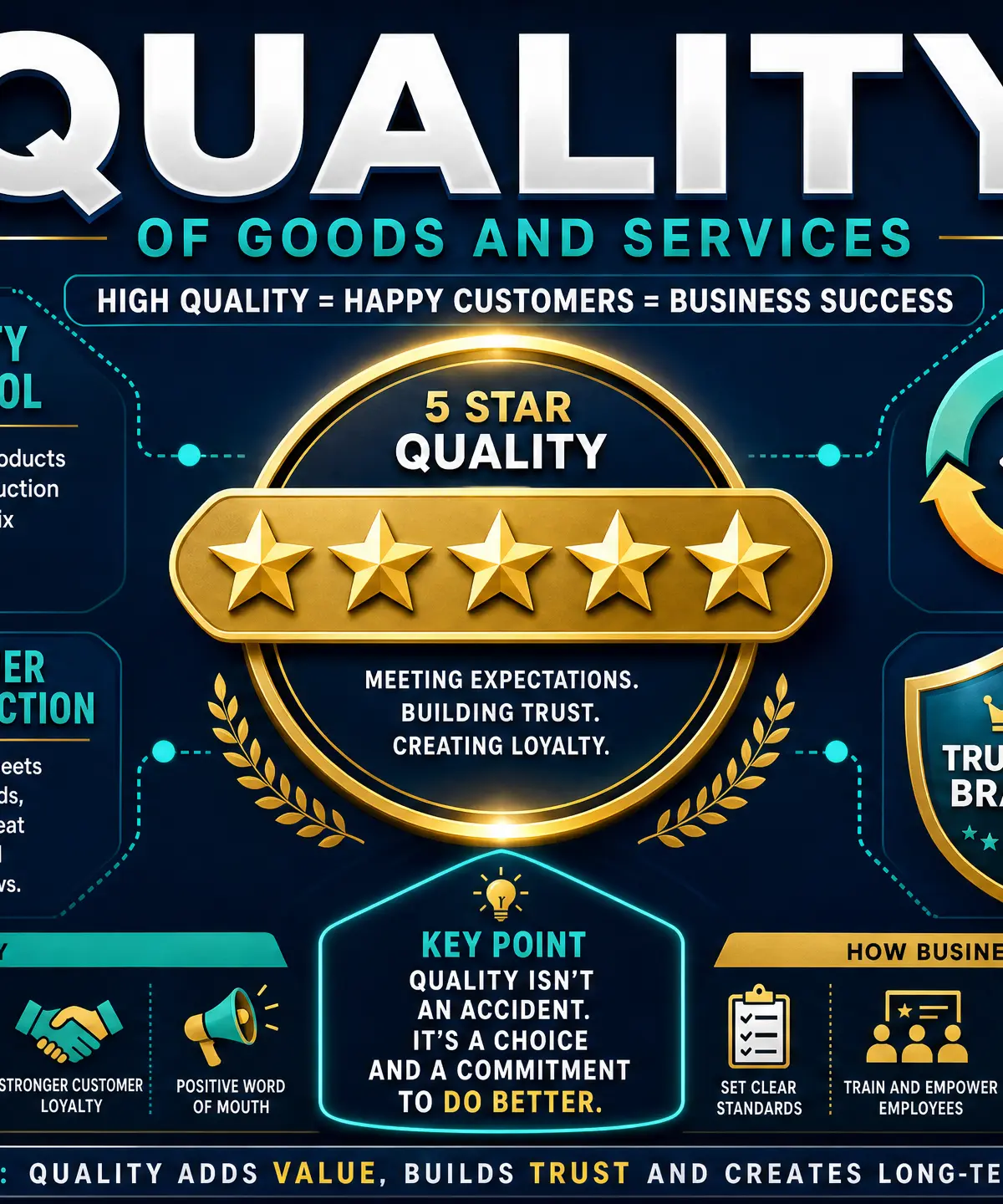
In GCSE Business Studies, understanding the 'Quality of Goods and Services' is fundamental. Quality isn't about making the most expensive or luxurious product; it is about fitness for purpose—ensuring that a product or service meets the specific expectations of the customer at a given price point. Examiners frequently test this topic because quality directly impacts a business's reputation, costs, and long-term survival.
Candidates must master the critical distinction between two main approaches to managing quality: Quality Control (QC) and Quality Assurance (QA). Furthermore, examiners reward students who can explain why quality matters, linking it to strategic objectives such as customer retention, brand loyalty, and the financial implications of product returns or recalls. Finally, it is vital to remember that quality applies just as much to the provision of services (like a haircut or a bank loan) as it does to the manufacturing of physical goods.
Listen to our expert tutor break down the key concepts, common exam mistakes, and essential definitions in this 10-minute revision podcast:
Key Concepts in Quality
1. Fitness for Purpose
Definition: A product or service does exactly what the customer expects it to do, relative to its price.
Why it matters: A £10 budget watch and a £5,000 luxury watch both need quality, but their 'fitness for purpose' is different. The budget watch just needs to tell the time reliably; the luxury watch needs premium materials and craftsmanship.
Exam Focus: Always link quality back to customer expectations, not an absolute standard of luxury.
2. Quality Control (QC)
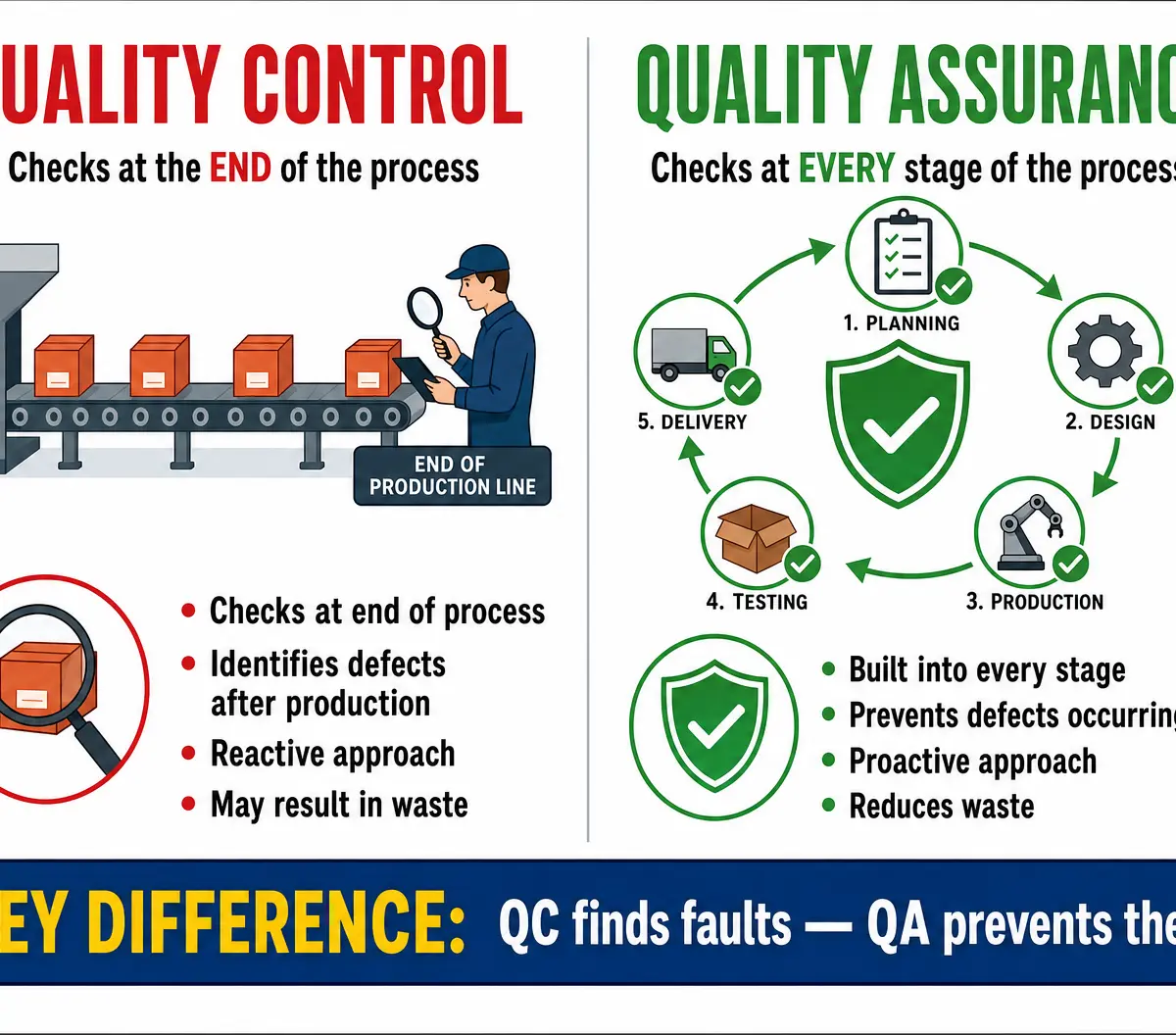
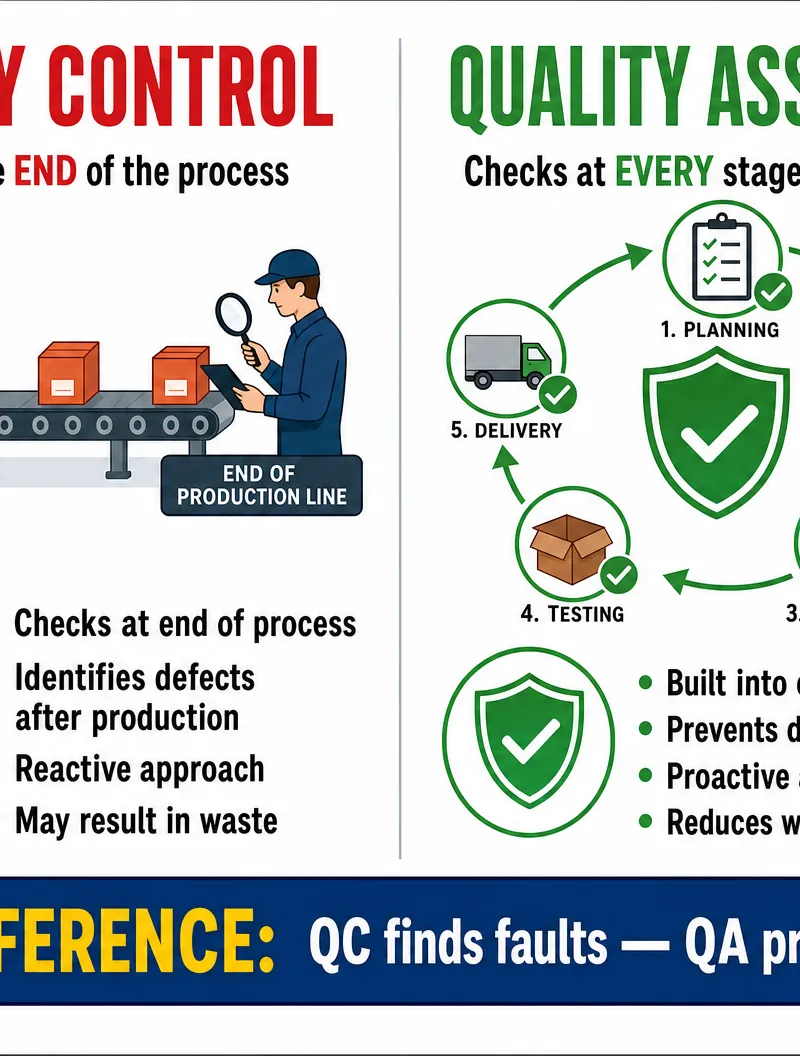
What it is: A reactive process where products are checked at the end of the production line by an inspector.
Why it matters: It prevents faulty goods from reaching the customer, protecting reputation. However, because the product is already made, any defects result in wasted materials and time.
Specific Knowledge: Focus on the words reactive, end of process, and waste.
3. Quality Assurance (QA)
What it is: A proactive process where quality is built into every stage of production. Every employee is responsible for checking their own work before passing it on.
Why it matters: It prevents defects from occurring in the first place, significantly reducing waste and lowering long-term costs. It requires more training and a culture of trust.
Specific Knowledge: Focus on the words proactive, every stage, and prevention.
The Strategic Impact of Quality
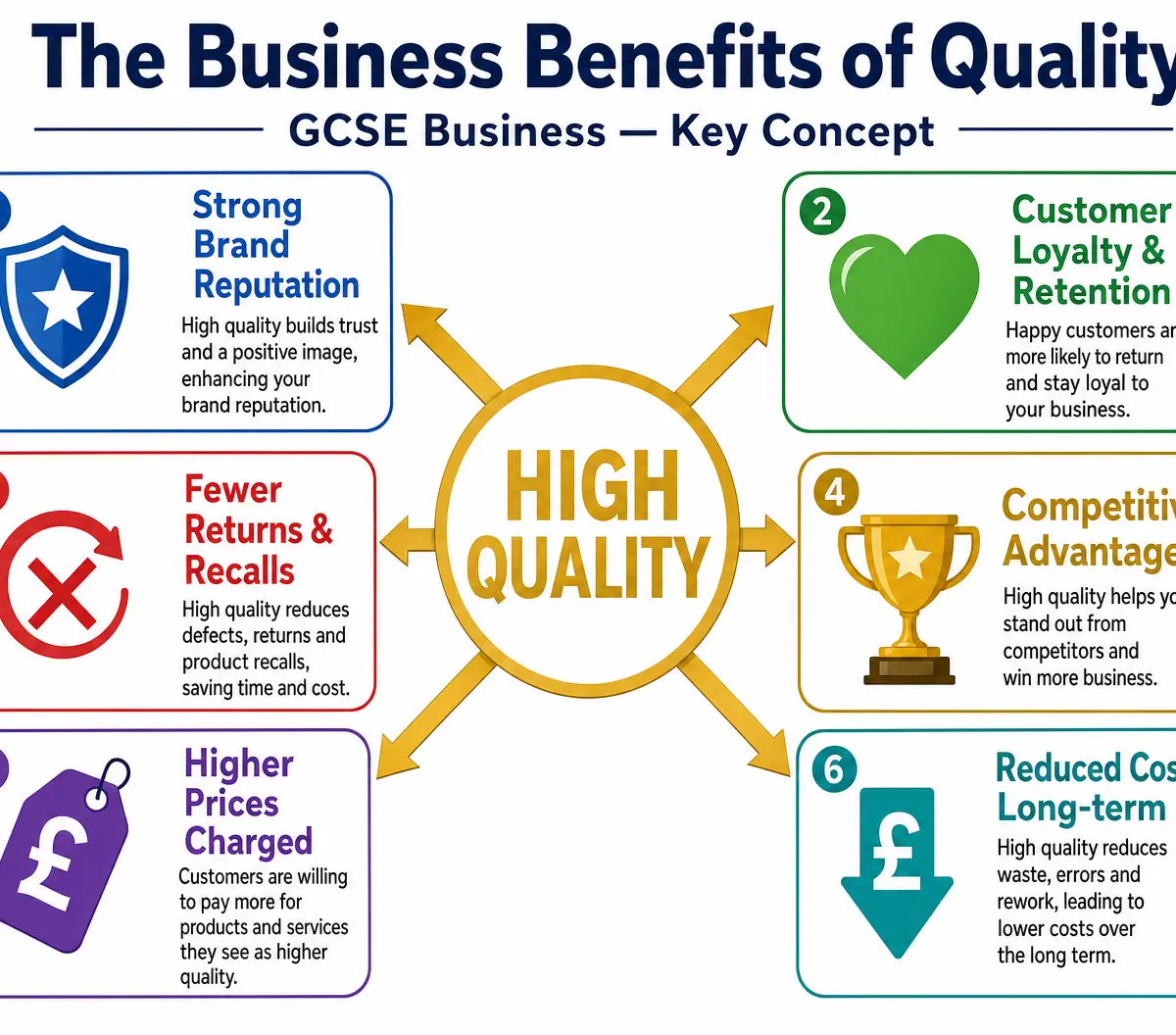
Quality is not just an operational issue; it is a strategic business objective. Examiners expect you to link quality to the following outcomes:
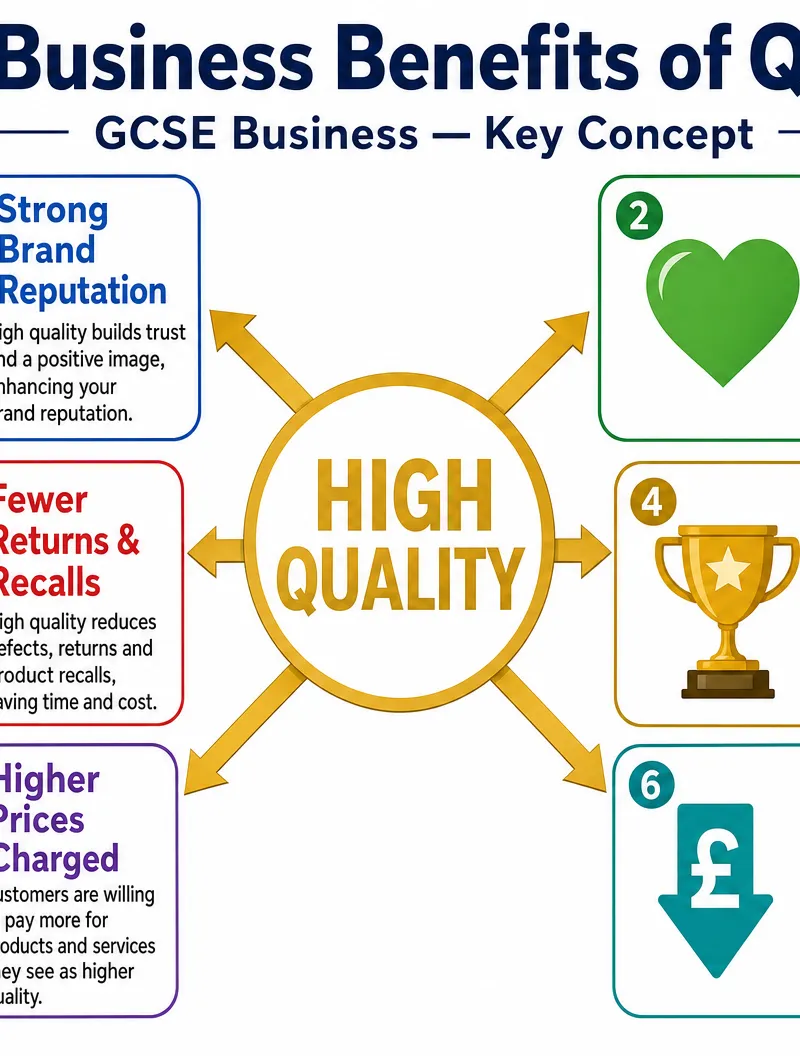
Brand Reputation and Competitive Advantage
Consistently high quality builds a strong brand image. This trust sets a business apart from its competitors, creating a competitive advantage. For example, Apple's reputation for premium quality allows them to maintain a loyal customer base despite high prices.
Customer Acquisition and Retention
It is significantly cheaper to retain an existing customer than to acquire a new one. High quality leads to high customer satisfaction, which drives repeat purchases and positive word-of-mouth recommendations.
Reducing Costs (Returns and Recalls)
Poor quality is expensive. If faulty goods reach the market, businesses face the costs of handling returns, issuing refunds, repairing items, and potentially launching full product recalls. For example, Samsung's recall of the Galaxy Note 7 cost the company billions of dollars. Investing in quality assurance reduces these long-term costs.
Quality in Services
Examiners often trick candidates by asking about quality in a service context (e.g., a hotel, a delivery firm, or a call centre). In services, quality is measured differently than in manufacturing. It includes:
- Speed and reliability of the service.
- Customer service and the friendliness/professionalism of staff.
- Accuracy of information provided.
- The environment in which the service is delivered (e.g., a clean restaurant).
Second-Order Concepts
Causation
What causes poor quality? Often, it is a lack of employee training, poor quality raw materials from suppliers, rushed production targets, or a failure to implement quality assurance processes.
Consequence
The immediate consequence of poor quality is customer dissatisfaction. The long-term consequences are damage to brand reputation, loss of market share, and increased costs due to waste and returns.
Significance
Quality is significant because it is often the deciding factor for consumers when choosing between substitute products. It justifies pricing strategies and underpins brand loyalty.
Visual Resources
2 diagrams and illustrations
Interactive Diagrams
1 interactive diagram to visualise key concepts
Conceptual Flow Outline
The Chain of Consequences for Poor Quality
Worked Examples
3 worked examples — open one to explore the question and available guidance.
Practice Questions
Try the question, then reveal an answer plan or example response
State two consequences for a business of producing poor-quality goods. (2 marks)
Hint: Think about what happens when a customer receives a broken item.
Explain how high quality can lead to a competitive advantage. (4 marks)
Hint: Link quality to customer satisfaction, then to brand loyalty, then to standing out from rivals.
A local restaurant has received complaints about cold food and slow service. Explain one way the restaurant could improve the quality of its service. (3 marks)
Hint: Apply your answer specifically to a restaurant/service context.
Analyse why a clothing manufacturer might switch from quality control to quality assurance. (6 marks)
Hint: Focus on the benefits of QA over QC, specifically regarding waste and long-term costs.
Evaluate whether quality is the most important factor for the success of a premium car manufacturer. (12 marks)
Hint: Argue why quality is vital for a premium brand, but counter-argue with other factors like marketing, design, or economic conditions.
Exam technique
How to turn what you know into marks
How to approach the question
Always identify if the question is asking about a manufacturing business (goods) or a service business, and tailor your examples accordingly.
How to structure your answer
- Essay questions
- Define key terms → Paragraph FOR → Paragraph AGAINST/DEPENDS ON → Justified Conclusion.
- Source questions
- Use the context provided! If the case study is about a bakery, talk about burnt bread, not faulty car engines.
- Explain questions
- Point → Explain how/why → Link to business impact (e.g., costs, reputation, sales).
Timing
Approximately 1 minute per mark, plus planning time for longer 9-12 mark questions.
Common pitfalls
- Confusing Quality Control and Quality Assurance.
- Writing 'quality makes people buy it' without explaining the mechanism (customer satisfaction → brand loyalty → repeat purchases).
- Ignoring the cost implications of poor quality (waste, returns).
What the command words want
- Analyse
- Examine the impacts in detail, showing a chain of reasoning.
- Explain
- Give a reason and develop it showing cause and effect (use phrases like 'this leads to' or 'as a result').
- Evaluate
- Look at both sides (benefits and drawbacks) and make a final, justified judgement based on the specific business context.
- State/Identify
- Give a simple fact or reason. No explanation needed.
Watch or listen (optional)
Test your understanding of Quality of goods and services
Active recall beats re-reading. Take an instant quiz now to test what you’ve learned and lock it into long-term memory.
A week of Premium from your first lesson · Then the free plan continues · No card, no charge