OCR · GCSE · Business
Course version: J204 · Version from Sept 2019
Revenue, costs, profit and loss
Master the essential financial concepts of Revenue, Costs, Profit and Loss. This topic is fundamental to every GCSE Business exam paper, testing your ability to calculate, interpret, and evaluate a business's financial performance.
- 3 min read
- 3 worked examples
- 5 practice questions
- 6 key terms
Check what you remember
Read the wording for your board, then hide it and explain Revenue in your own words. Rough notes are fine. This is a self-check, with no mark or grade.
Reference: OCR
The total money received from the sale of goods or services (Price × Quantity).
Study Notes
Overview
Understanding Revenue, Costs, Profit and Loss is the bedrock of business finance. Every examiner across AQA, Edexcel, and OCR will test these concepts rigorously, often allocating 15-20% of the total marks to financial calculations and their interpretation. You are expected not just to memorise formulas, but to apply them to specific business scenarios, calculate profitability ratios, and make justified recommendations based on financial data. The difference between a Level 2 and Level 3 response often lies in your ability to explain why a change in profit margin matters to the business's future success.
Core Concepts
Revenue
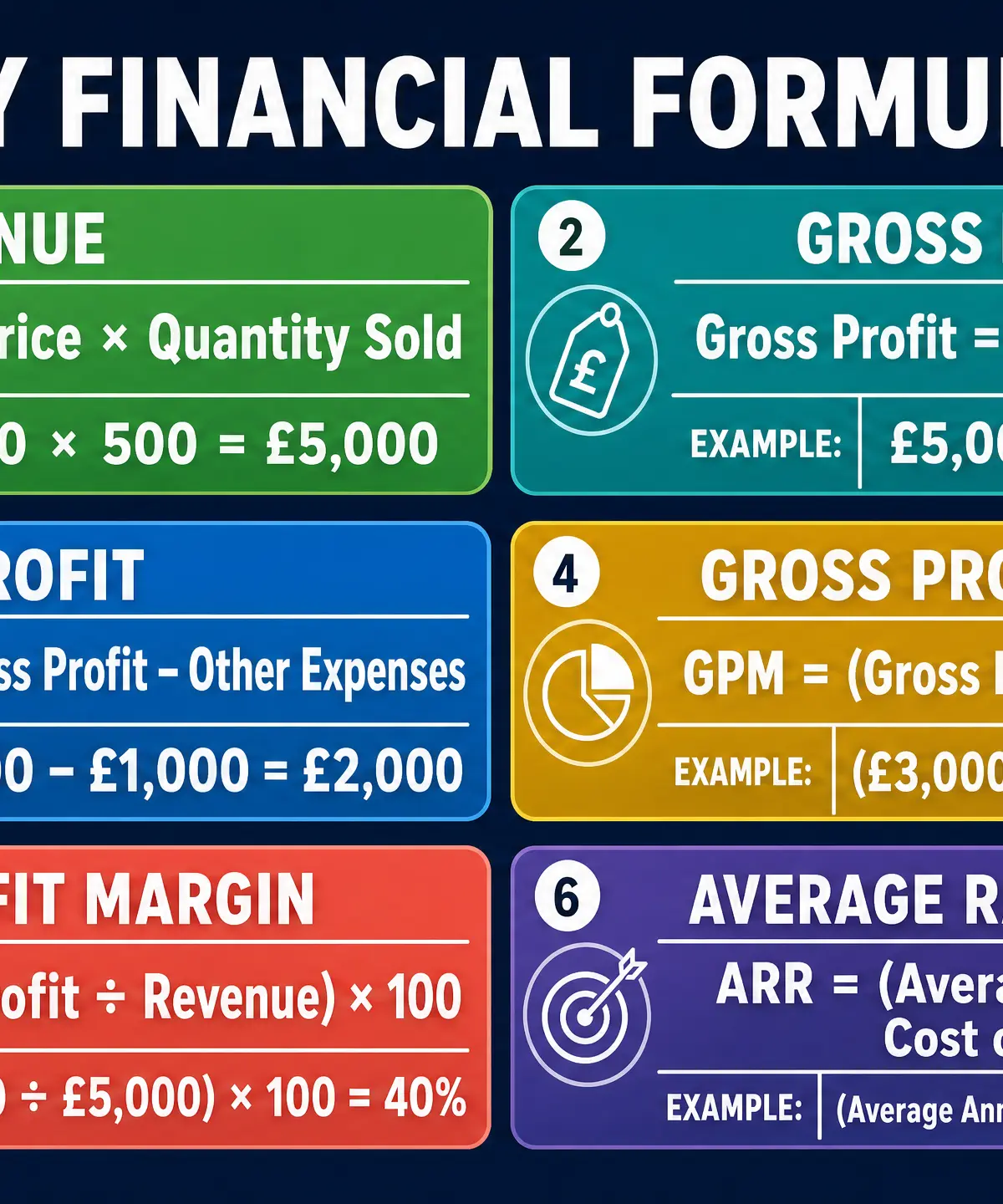
Revenue (or turnover) is the total amount of money brought in by a company's operations, measured over a set period. It is the top line of an income statement.
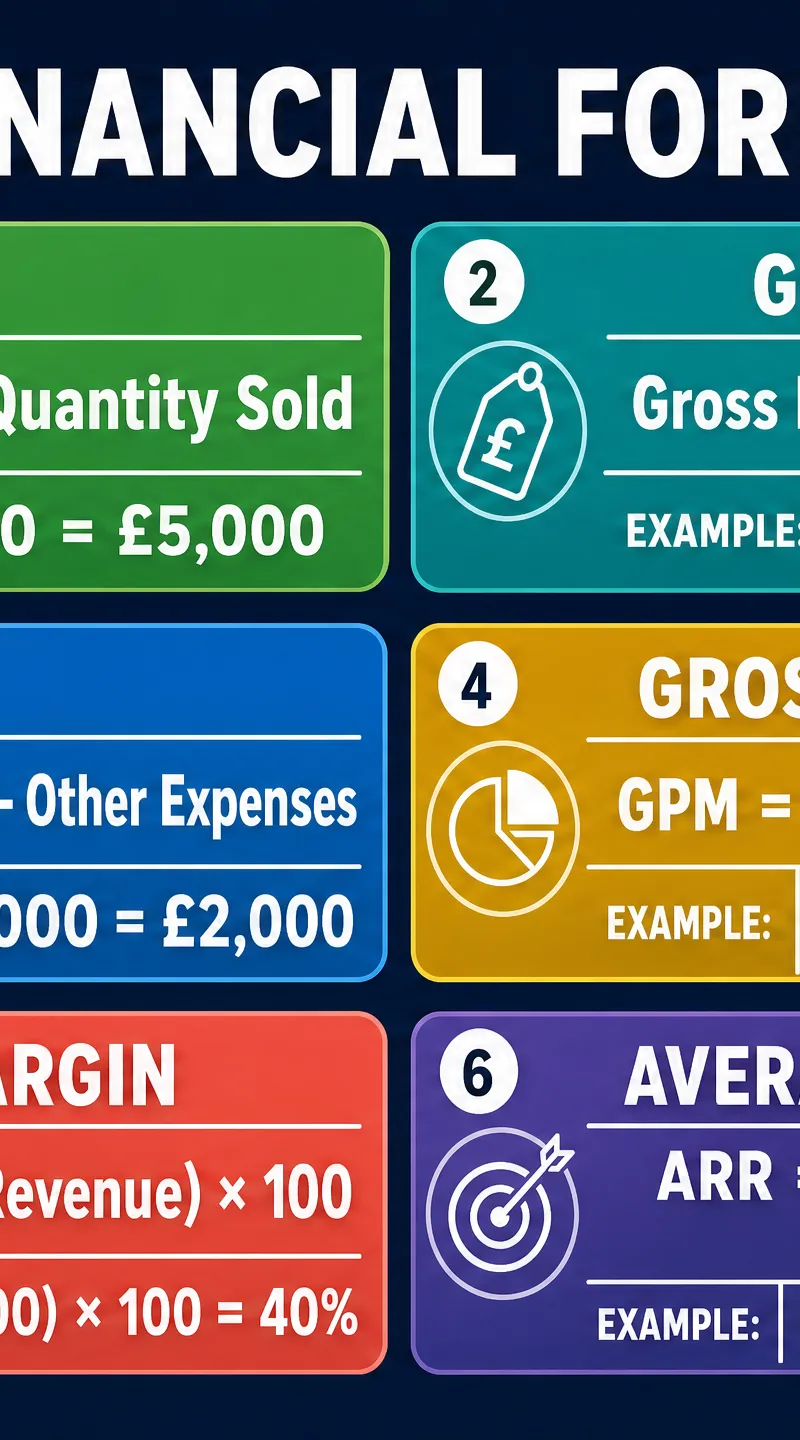
Formula: Revenue = Price × Quantity Sold
Examiner Tip: Do not confuse revenue with profit. Revenue is money coming in before any costs are deducted. Candidates who use the terms interchangeably lose marks immediately.
Costs
Costs are the expenses a business incurs in producing and selling its goods or services. They are split into two main categories:
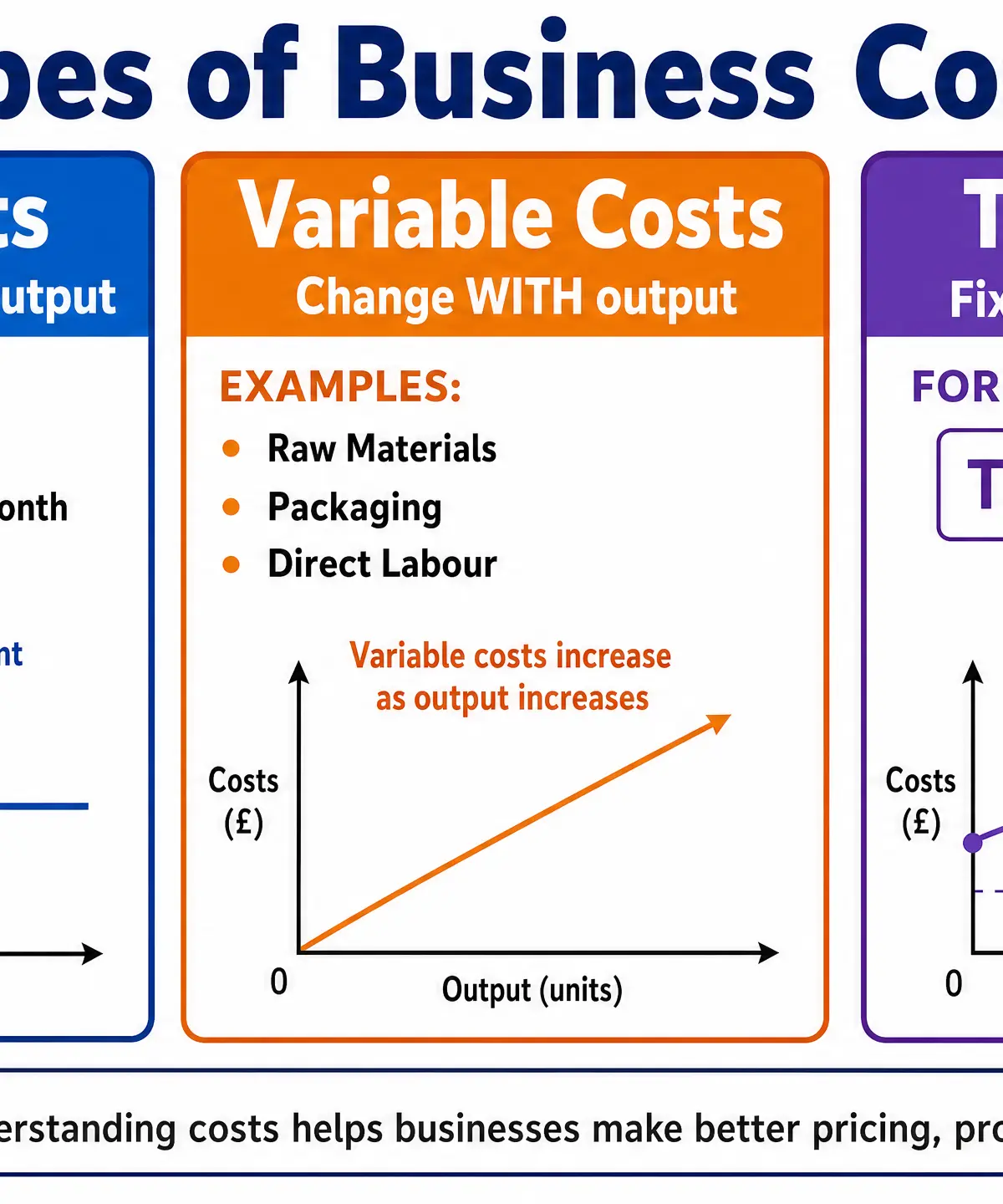
Fixed Costs (FC): Costs that do not change with the level of output in the short term.
Examples: Rent, manager salaries, insurance, loan repayments.
Variable Costs (VC): Costs that change directly with the level of output.
Examples: Raw materials, packaging, direct labour (wages paid per unit produced).
Total Costs (TC): The sum of all fixed and variable costs.
Formula: Total Costs = Fixed Costs + Variable Costs
Profit and Loss
Profit is the financial gain when revenue exceeds total costs. Loss occurs when total costs exceed revenue.
Gross Profit: The profit a business makes after subtracting the costs directly associated with making and selling its products.
Formula: Gross Profit = Revenue - Cost of Sales
Net Profit: The actual profit after working expenses (overheads) not included in the calculation of gross profit have been paid.
Formula: Net Profit = Gross Profit - Other Expenses
Profitability Ratios
Profitability ratios measure a company's ability to generate earnings relative to its revenue, operating costs, or investment over time.
Gross Profit Margin (GPM): Shows the percentage of revenue that is kept as gross profit.
Formula: GPM = (Gross Profit ÷ Revenue) × 100
Net Profit Margin (NPM): Shows the percentage of revenue that is kept as net profit after all costs.
Formula: NPM = (Net Profit ÷ Revenue) × 100
Average Rate of Return (ARR): Measures the annual profitability of an investment as a percentage of the initial investment cost.
Formula: ARR = (Average Annual Profit ÷ Cost of Investment) × 100
Audio Revision
Listen to our comprehensive 10-minute podcast covering all these concepts, exam technique, and a quick-fire recall quiz.

Interactive Diagrams
1 interactive diagram to visualise key concepts
Conceptual Flow Outline
The Profit Flow: From Revenue to Net Profit
Worked Examples
3 worked examples — open one to explore the question and available guidance.
Practice Questions
Try the question, then reveal an answer plan or example response
State the formula for calculating Total Costs. (1 mark)
Hint: Think about the two main types of costs.
A business sells 2,000 units at £15 each. Calculate its revenue. (2 marks)
Hint: Revenue = Price × Quantity
Explain the difference between gross profit and net profit. (2 marks)
Hint: What is deducted to get gross profit vs net profit?
A business has a revenue of £100,000, cost of sales of £40,000, and other expenses of £25,000. Calculate its Net Profit Margin. (4 marks)
Hint: You need to find Gross Profit, then Net Profit, then calculate the margin.
Evaluate whether a business should focus on increasing its gross profit margin or its net profit margin to improve its overall financial health. (9 marks)
Hint: Consider what each margin measures and which gives a truer picture of the business's final financial position.
Exam technique
How to turn what you know into marks
How to approach the question
Always highlight the command word and the context of the business in the question.
How to structure your answer
- Essay questions
- Introduction → Point 1 (Contextualised) → Point 2 (Counter-argument) → Conclusion (Judgement based on most significant factor).
- Explain questions
- BLT: Point (State reason), Because (Explain), Leads To (Impact on business).
- Calculation questions
- Formula → Substitute numbers → Calculate → Add units (£ or %).
Timing
1 minute per mark. Spend 2-3 minutes planning 9-12 mark evaluation questions.
Common pitfalls
- Confusing Revenue with Profit.
- Forgetting to multiply by 100 for margin and ARR calculations.
- Not linking answers back to the specific business scenario provided.
What the command words want
- Analyse
- Explore the impacts or consequences in detail, using a chain of reasoning.
- Explain
- Make a point and develop it with a reason or consequence.
- Evaluate
- Weigh up advantages and disadvantages, and make a supported judgement.
- Calculate
- Show all working out. Provide units.
Watch or listen (optional)
Test your understanding of Revenue, costs, profit and loss
Active recall beats re-reading. Take an instant quiz now to test what you’ve learned and lock it into long-term memory.
A week of Premium from your first lesson · Then the free plan continues · No card, no charge