OCR · GCSE · Business
Course version: J204 · Version from Sept 2019
The sales process and customer service
Master the essential methods of selling and the critical importance of customer service in today's competitive market. This guide covers e-commerce, face-to-face sales, and how excellent after-sales care drives customer retention and business success.
- 4 min read
- 3 worked examples
- 5 practice questions
- 6 key terms
Check what you remember
Read the wording for your board, then hide it and explain E-commerce in your own words. Rough notes are fine. This is a self-check, with no mark or grade.
Reference: OCR
The buying and selling of goods and services over the internet.
Study Notes
Overview
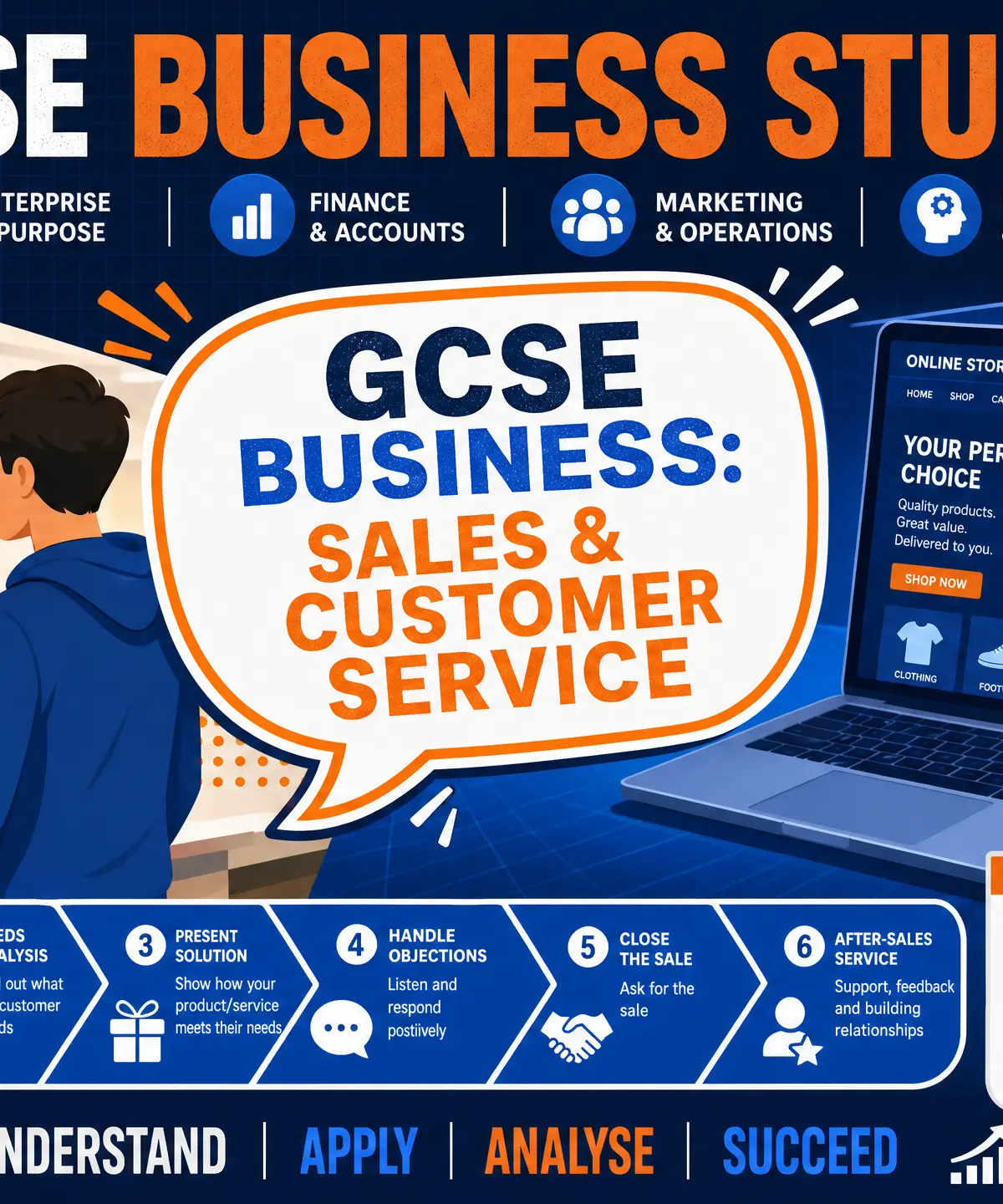
This study guide covers the core concepts of the sales process and customer service, a crucial topic in GCSE Business. Examiners expect candidates to understand the different methods businesses use to sell their products (face-to-face, e-commerce, and telesales) and to evaluate their relative advantages and disadvantages. Furthermore, the importance of customer service cannot be overstated. You must be able to link good customer service—including strong product knowledge, effective customer engagement, and reliable after-sales support—directly to business objectives such as customer retention, reputation, and long-term profitability. This guide will provide you with the specific knowledge and exam techniques required to secure top marks.
Listen to the companion podcast for this topic:
Methods of Selling
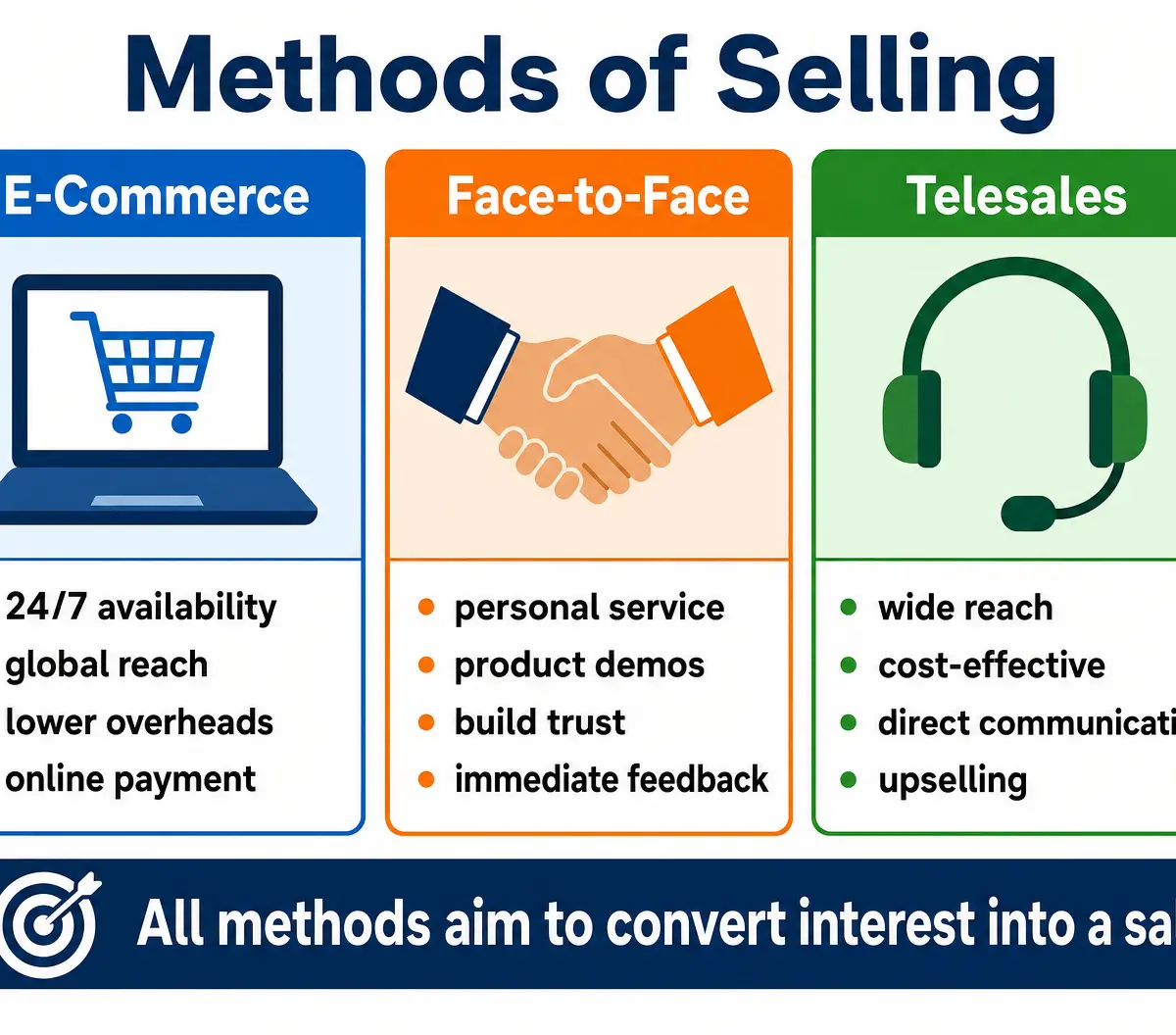
Businesses must choose the most appropriate methods to reach their target market and close sales. The three primary methods are:
E-Commerce
Selling products or services online via a website or app.
- Advantages: 24/7 availability, global reach, lower overhead costs (no physical store required), and the ability to gather customer data easily.
- Disadvantages: High competition, customers cannot physically inspect the product before buying (leading to higher return rates), and the need for robust cybersecurity.
Face-to-Face Selling
Direct interaction between a salesperson and a customer in a physical location.
- Advantages: Allows for personal interaction, building rapport, immediate product demonstrations, and the ability to answer questions instantly to overcome objections.
- Disadvantages: High staffing and premises costs, limited reach (only customers who visit the location), and restricted opening hours.
Telesales
Selling products or services over the telephone.
- Advantages: Cost-effective way to reach many potential customers quickly, allows for direct communication and immediate feedback.
- Disadvantages: Often perceived as intrusive or annoying by consumers, leading to low conversion rates.
The Importance of Customer Service
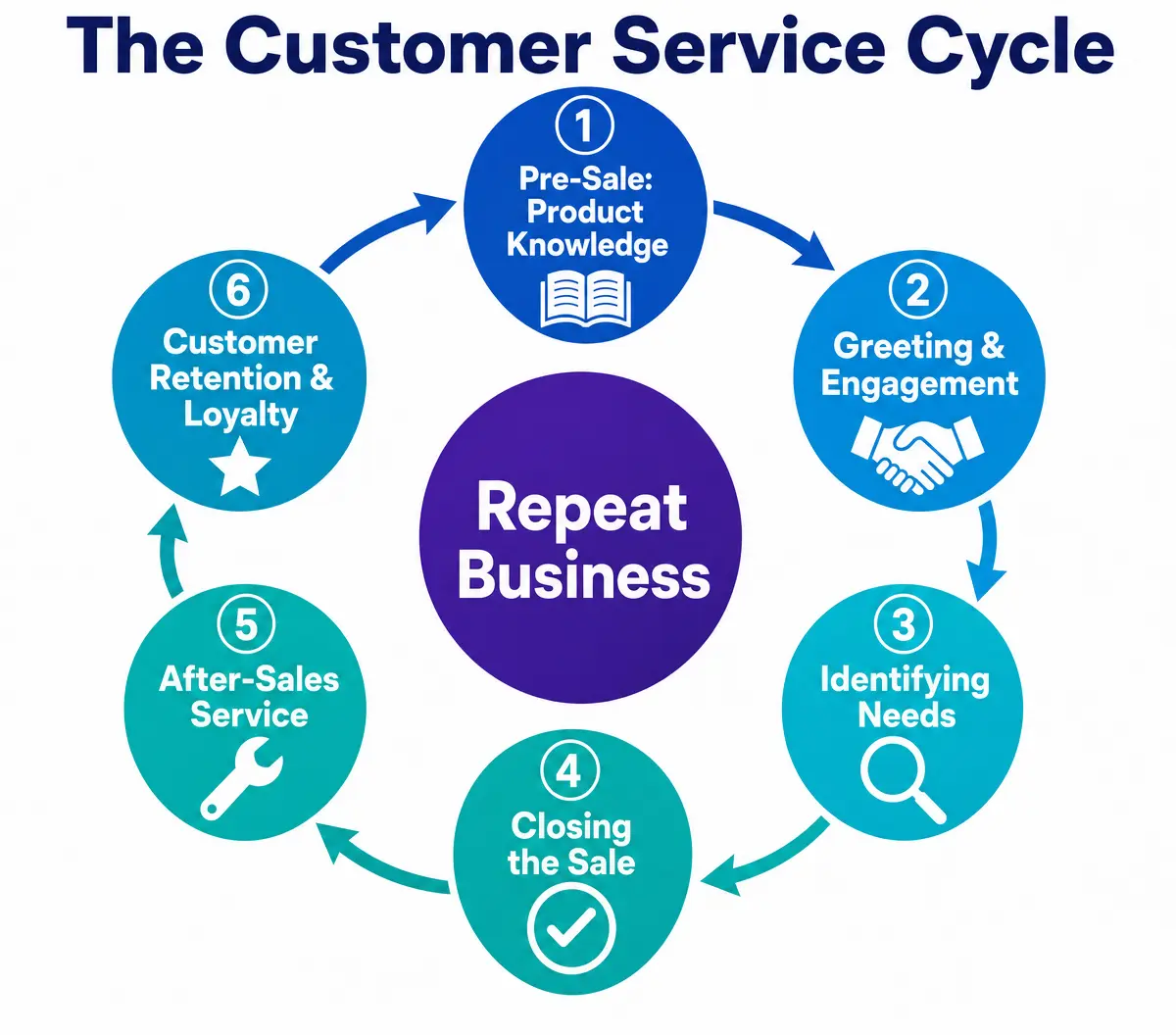
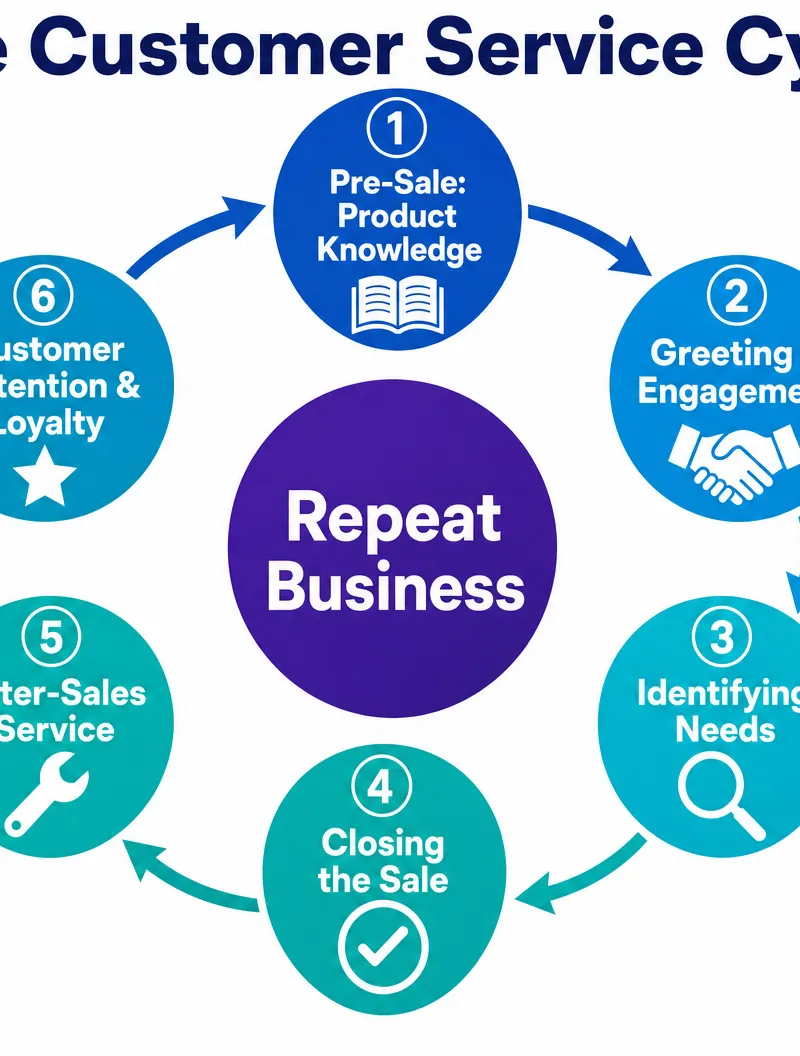
Customer service is the provision of service to customers before, during, and after a purchase. Excellent customer service is a key differentiator for businesses.
Product Knowledge
Staff must possess deep understanding of the products they are selling.
- Why it matters: It allows staff to match the right product to the customer's specific needs, answer queries confidently, and build trust. This increases the likelihood of a sale and reduces the chance of the product being returned.
Customer Engagement
This involves interacting with the customer in a positive, helpful, and professional manner.
- Why it matters: A positive interaction makes the customer feel valued, leading to a better overall shopping experience and increasing the chances of closing the sale.
After-Sales Service
The support provided to a customer after they have purchased a product (e.g., warranties, installation, helpdesks).
- Why it matters: It resolves any post-purchase issues quickly, ensuring the customer remains satisfied with their purchase. This is crucial for building long-term loyalty.
The Impact of Good Customer Service
Examiners consistently reward candidates who can link customer service actions to broader business outcomes:
- Customer Retention: Satisfied customers are more likely to return and make repeat purchases. It is significantly cheaper to retain an existing customer than to attract a new one.
- Positive Reputation and Word of Mouth: Happy customers will recommend the business to friends and family, acting as free marketing. Conversely, poor service leads to negative online reviews which can severely damage a business.
- Competitive Advantage: In markets where products are similar, superior customer service can be the deciding factor for a consumer.
- Increased Sales and Profitability: Loyal customers tend to spend more over time, directly boosting the business's bottom line.
Worked Examples
3 worked examples — open one to explore the question and available guidance.
Practice Questions
Try the question, then reveal an answer plan or example response
State two methods a business could use to sell its products. (2 marks)
Hint: Think about how you buy things—both in person and remotely.
Explain one way that poor customer service could affect a business. (3 marks)
Hint: Use the PEEL structure. What happens after a customer has a bad experience?
Explain why after-sales service is important for a business selling expensive technology products, such as laptops. (4 marks)
Hint: Apply your answer to the specific product (laptops). Why do expensive tech items need support?
A clothing retailer is considering closing its physical high-street stores and moving entirely to e-commerce. Discuss the potential impacts of this decision on the business. (6 marks)
Hint: Discuss both the positive impacts (costs, reach) and negative impacts (customer experience, competition).
Explain how a business can use product knowledge to gain a competitive advantage. (3 marks)
Hint: How does knowing the product better than a rival help win the sale?
Exam technique
How to turn what you know into marks
How to approach the question
Read the context carefully. Underline the command word and the specific business mentioned. Always apply your answer to that business.
How to structure your answer
- State questions
- Provide a brief, factual answer without lengthy explanation.
- Explain questions
- Use PEEL (Point, Evidence, Explain, Link). Build a logical chain of reasoning.
- Evaluate questions
- Introduction → Arguments FOR (in context) → Arguments AGAINST (in context) → Supported Conclusion/Judgement.
Timing
Approximately 1 minute per mark.
Common pitfalls
- Giving generic answers that do not apply to the specific business in the case study.
- Failing to develop points in 'Explain' questions (e.g., stopping at 'it makes customers happy' instead of linking to retention/revenue).
- Not providing a clear, justified conclusion in 'Evaluate' or 'Discuss' questions.
What the command words want
- Analyse
- Examine in detail, showing the impacts or consequences of an action.
- Explain
- Make a point and develop it showing cause and effect (this leads to... therefore...).
- State / Identify
- Give a single, clear fact. No explanation needed.
- Evaluate / Discuss
- Look at both sides of an argument (pros and cons) and make a final judgement based on the evidence.
Watch or listen (optional)
Test your understanding of The sales process and customer service
Active recall beats re-reading. Take an instant quiz now to test what you’ve learned and lock it into long-term memory.
A week of Premium from your first lesson · Then the free plan continues · No card, no charge