Pearson Edexcel · GCSE · Business
Course version: 1BS0 · Version from Sept 2017
Place: ● methods of distribution: retailers and e-tailers (e-commerce).
Full specification wording
Place: Place: ● methods of distribution: retailers and e-tailers (e-commerce).
Place refers to how and where a product is distributed to customers.
Checked against the Pearson Edexcel 1BS0 specification (opens in a new tab) on .
- 2 key terms
Study notes
From the checked teaching notes for this specification point.
The idea
Place refers to how and where a product is distributed to customers. The chosen method of distribution must align with customer habits and the product type. Traditional retailers operate physical stores, allowing customers to browse, try on, or immediately purchase items, which is ideal for clothing or groceries. However, physical stores incur high overhead costs. Conversely, e-tailers use e-commerce to sell goods online, shipping directly to consumers. This method offers a global reach and lower fixed costs, as expensive high-street premises are unnecessary. Many modern businesses adopt a multi-channel approach, combining both physical retailers and e-tailers to maximise convenience and capture a wider market share.
What earns the marks
- Define 'place' as the distribution channel used to get a product from the manufacturer to the consumer.
- Explain the advantages of using physical retailers, such as immediate product availability and face-to-face customer service.
- Analyse the benefits of e-tailers (e-commerce), including access to a wider market and continuous trading hours.
- Evaluate the drawbacks of e-commerce, such as delivery costs, return logistics, and the inability of customers to physically inspect products before purchase.
Common mistakes and how to put them right
Confusing 'place' with the physical location of the factory.
Put it right: 'place' refers to the method of distribution and where the customer buys the product.
Assuming e-tailers have no costs.
Put it right: While they save on physical store rent, e-tailers face significant costs for warehousing, website maintenance, and delivery logistics.
Stating that all businesses should only use e-commerce.
Put it right: Physical retailers remain essential for certain products, like perishable goods or items requiring personal fitting.
Exam tips
- When evaluating distribution methods, consider the nature of the product, such as whether it is fragile or perishable, and how it affects the choice between retailers and e-tailers.
- Discuss the impact of e-commerce on a business's fixed costs compared to operating a traditional high-street retail store.
- Look for clues in the case study about the target market's shopping preferences to justify recommending a specific distribution channel.
Try the lesson
The start of the Place: Place: ● methods of distribution: retailers and e-tailers (e-commerce). lesson, made from checked teaching notes for this specification point.
Have a go first
Which of the following best describes an e-tailer?
Listen
Place refers to how and where a product is distributed to customers. The chosen method of distribution must align with customer habits and the product type. Traditional retailers operate physical stores, allowing customers to browse, try on, or immediately purchase items, which is ideal for clothing or groceries. However, physical stores incur high overhead costs. Conversely, e-tailers use e-commerce to sell goods online, shipping directly to consumers. This method offers a global reach and lower fixed costs, as expensive high-street premises are unnecessary. Many modern businesses adopt a multi-channel approach, combining both physical retailers and e-tailers to maximise convenience and capture a wider market share. A strong answer earns marks for these points. Define 'place' as the distribution channel used to get a product from the manufacturer to the consumer. Explain the advantages of using physical retailers, such as immediate product availability and face-to-face customer service. Analyse the benefits of e-tailers (e-commerce), including access to a wider market and continuous trading hours. Evaluate the drawbacks of e-commerce, such as delivery costs, return logistics, and the inability of customers to physically inspect products before purchase. A common slip: Confusing 'place' with the physical location of the factory. Instead, 'place' refers to the method of distribution and where the customer buys the product. Exam tip: When evaluating distribution methods, consider the nature of the product, such as whether it is fragile or perishable, and how it affects the choice between retailers and e-tailers.
See it
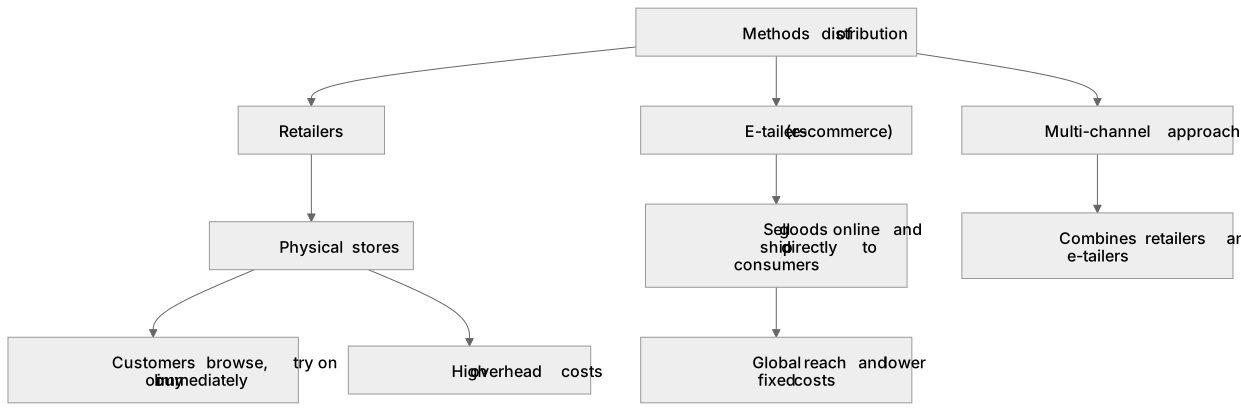
Key words
Say what each word means before you turn the card.
Distribution channels
Try answering aloud or in your head before turning the card.
E-commerce
Try answering aloud or in your head before turning the card.
See every definition
- Distribution channels
- The methods used to get a product from the manufacturer to the consumer, such as retailers and e-tailers.
- E-commerce
- Selling goods online and shipping them directly to consumers, which offers a global reach and lower fixed costs.
Label the diagram
Some boxes have lost their names. Pick the right name for each number.
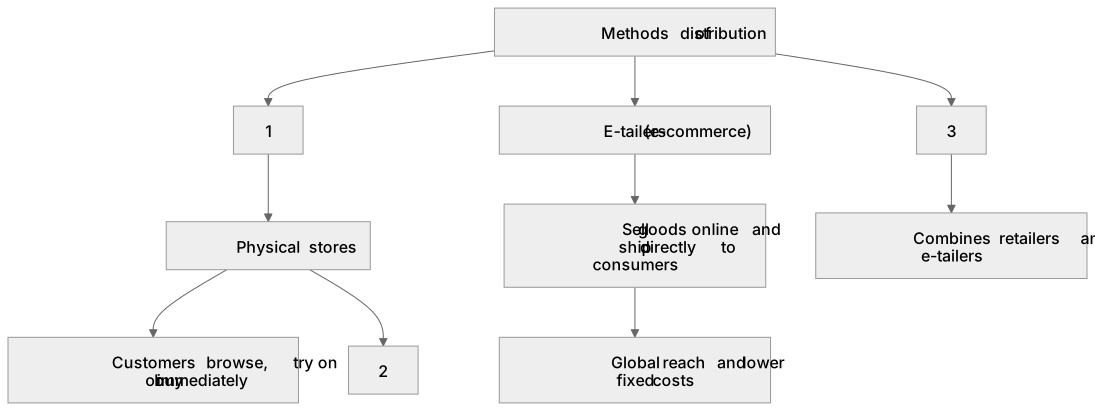
1Box 1
2Box 2
3Box 3
There is more to this lesson
The full lesson goes on to check your understanding and help you earn the marks. Create a free account to carry on, with your progress saved.
A week of Premium from your first lesson · Then the free plan continues · No card, no charge
Test your understanding of Place: Place: ● methods of distribution: retailers and e-tailers (e-commerce).
Active recall beats re-reading. Take an instant quiz now to test what you’ve learned and lock it into long-term memory.
A week of Premium from your first lesson · Then the free plan continues · No card, no charge