Pearson Edexcel · GCSE · Business
Course version: 1BS0 · Version from Sept 2017
How each element of the marketing mix can influence other elements. Using…
Full specification wording
Using the marketing mix to make business decisions: How each element of the marketing mix can influence other elements. Using the marketing mix to build competitive advantage. How an integrated marketing mix can influence competitive advantage.
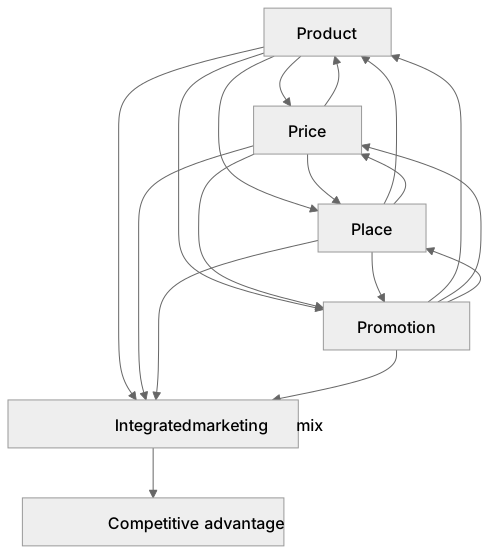
The marketing mix (product, price, place, promotion) must work together cohesively, known as an integrated marketing mix.
Checked against the Pearson Edexcel 1BS0 specification (opens in a new tab) on .
- 4 key terms
Study notes
From the checked teaching notes for this specification point.
The idea
The marketing mix (product, price, place, promotion) must work together cohesively, known as an integrated marketing mix. Each element directly influences the others; for example, a high-quality, premium product requires a high price to reflect its value, exclusive distribution channels (place), and sophisticated promotion. If a business sells a luxury watch but stocks it in a discount supermarket, the mix is not integrated, confusing customers and damaging the brand. By ensuring all four Ps align perfectly with the target market's needs, a business builds a strong competitive advantage. This integration differentiates the business from rivals, allowing it to capture market share, justify pricing strategies, and build long-term customer loyalty.
What earns the marks
- Identify how a change in one element of the marketing mix necessitates changes in the others to maintain consistency.
- Explain that an integrated marketing mix occurs when all four Ps complement each other and target the exact same customer demographic.
- Analyse how a cohesive marketing mix creates a unique selling proposition, establishing a competitive advantage over rivals.
- Evaluate the impact of a poorly integrated marketing mix on brand image, sales volume, and overall market competitiveness.
Common mistakes and how to put them right
Treating the four Ps as isolated decisions rather than interconnected elements.
Put it right: Explain how a change in one P affects at least one other P.
Confusing competitive advantage with simply making a profit.
Put it right: Define competitive advantage as a unique edge over rivals, such as superior brand loyalty or lower costs.
Assuming a low price is the only way to gain a competitive advantage.
Put it right: Recognise that premium pricing combined with high quality and exclusive placement can also build a strong competitive advantage.
Exam tips
- When evaluating a business decision, always link the impact of changing one element of the marketing mix to the other three elements.
- Use the term 'integrated marketing mix' explicitly in your longer answers to demonstrate a higher-level understanding of marketing strategy.
- Apply the concept of competitive advantage by comparing the business in the case study to its competitors, showing how the marketing mix sets it apart.
Try the lesson
The start of the Using the marketing mix to make business decisions: How each element of the marketing mix can influence other elements. Using the marketing mix to build competitive advantage. How an integrated marketing mix can influence competitive advantage. lesson, made from checked teaching notes for this specification point.
Have a go first
A business decides to use high-quality, expensive materials to manufacture its new product. How is this decision most likely to influence the 'price' element of its marketing mix?
Listen
The marketing mix (product, price, place, promotion) must work together cohesively, known as an integrated marketing mix. Each element directly influences the others; for example, a high-quality, premium product requires a high price to reflect its value, exclusive distribution channels (place), and sophisticated promotion. If a business sells a luxury watch but stocks it in a discount supermarket, the mix is not integrated, confusing customers and damaging the brand. By ensuring all four Ps align perfectly with the target market's needs, a business builds a strong competitive advantage. This integration differentiates the business from rivals, allowing it to capture market share, justify pricing strategies, and build long-term customer loyalty. A strong answer earns marks for these points. Identify how a change in one element of the marketing mix necessitates changes in the others to maintain consistency. Explain that an integrated marketing mix occurs when all four Ps complement each other and target the exact same customer demographic. Analyse how a cohesive marketing mix creates a unique selling proposition, establishing a competitive advantage over rivals. Evaluate the impact of a poorly integrated marketing mix on brand image, sales volume, and overall market competitiveness. A common slip: Treating the four Ps as isolated decisions rather than interconnected elements. Instead, explain how a change in one P affects at least one other P. Exam tip: When evaluating a business decision, always link the impact of changing one element of the marketing mix to the other three elements.
See it
Key words
Say what each word means before you turn the card.
Integrated marketing mix
Try answering aloud or in your head before turning the card.
Competitive advantage
Try answering aloud or in your head before turning the card.
Marketing mix
Try answering aloud or in your head before turning the card.
Target market
Try answering aloud or in your head before turning the card.
See every definition
- Integrated marketing mix
- When all four Ps complement each other and target the exact same customer demographic, so the elements work together cohesively.
- Competitive advantage
- A unique edge over rivals, such as superior brand loyalty or lower costs, which differentiates the business from rivals.
- Marketing mix
- The four Ps — product, price, place and promotion — each of which directly influences the others.
- Target market
- The customer demographic that all four Ps of the marketing mix must complement and target exactly.
Label the diagram
Some boxes have lost their names. Pick the right name for each number.

1Box 1
2Box 2
3Box 3
There is more to this lesson
The full lesson goes on to check your understanding and help you earn the marks. Create a free account to carry on, with your progress saved.
A week of Premium from your first lesson · Then the free plan continues · No card, no charge
Test your understanding of Using the marketing mix to make business decisions: How each element of the marketing mix can influence other elements. Using the marketing mix to build competitive advantage. How an integrated marketing mix can influence competitive advantage.
Active recall beats re-reading. Take an instant quiz now to test what you’ve learned and lock it into long-term memory.
A week of Premium from your first lesson · Then the free plan continues · No card, no charge