Study Notes
Overview
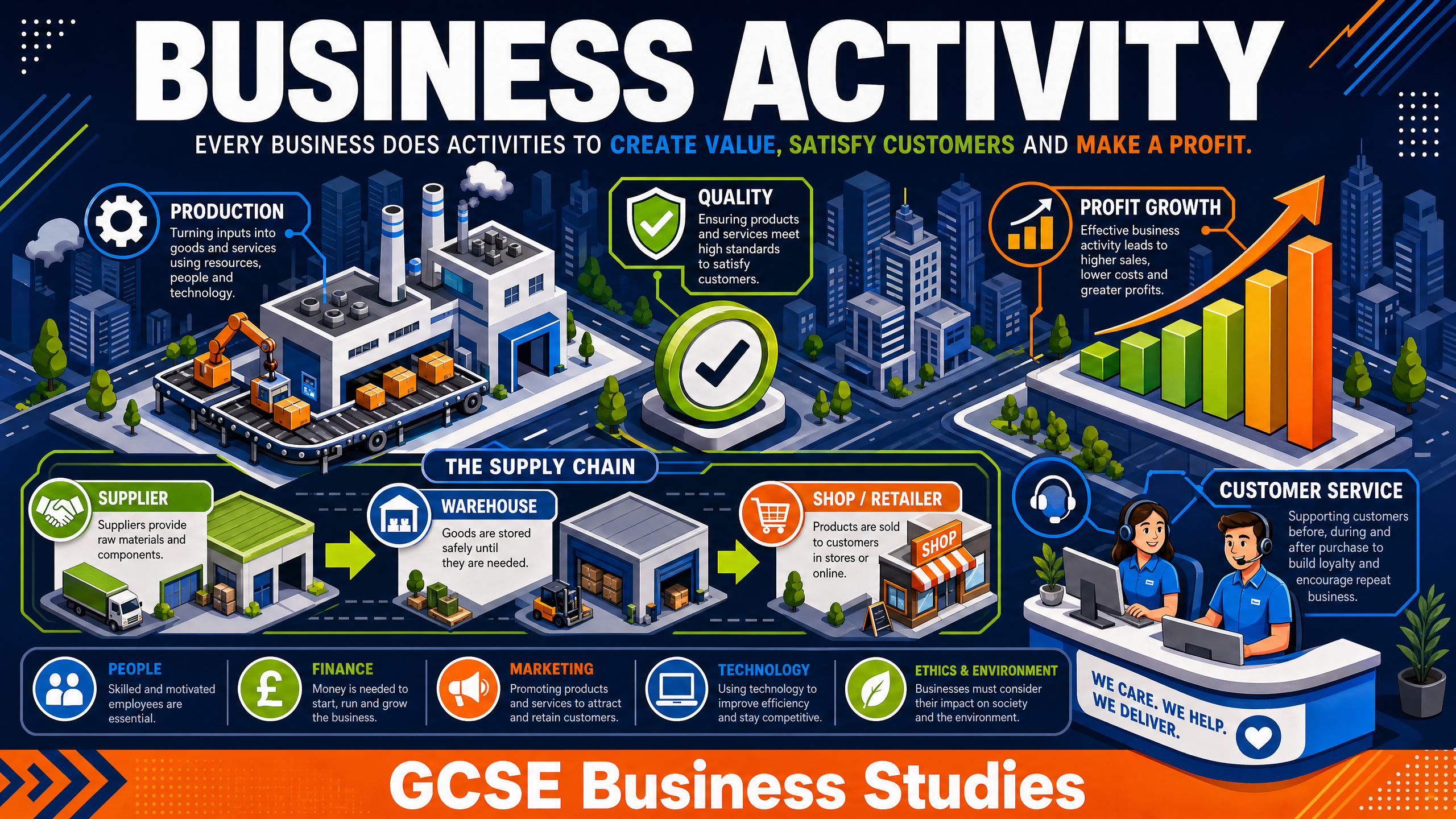
Business activity is fundamental to how organisations operate, create value, and ultimately generate profit. Examiners expect candidates to not only understand the definitions of production methods, quality management, and supply chains but to apply these concepts to specific business scenarios. A high-scoring candidate will be able to justify why a bespoke furniture maker uses job production, while a multinational car manufacturer relies on flow production. Furthermore, you must recognise the interdependent nature of business functions—how a decision in the supply chain directly impacts marketing and finance.
Listen to our comprehensive revision podcast to reinforce your learning:
Production Methods
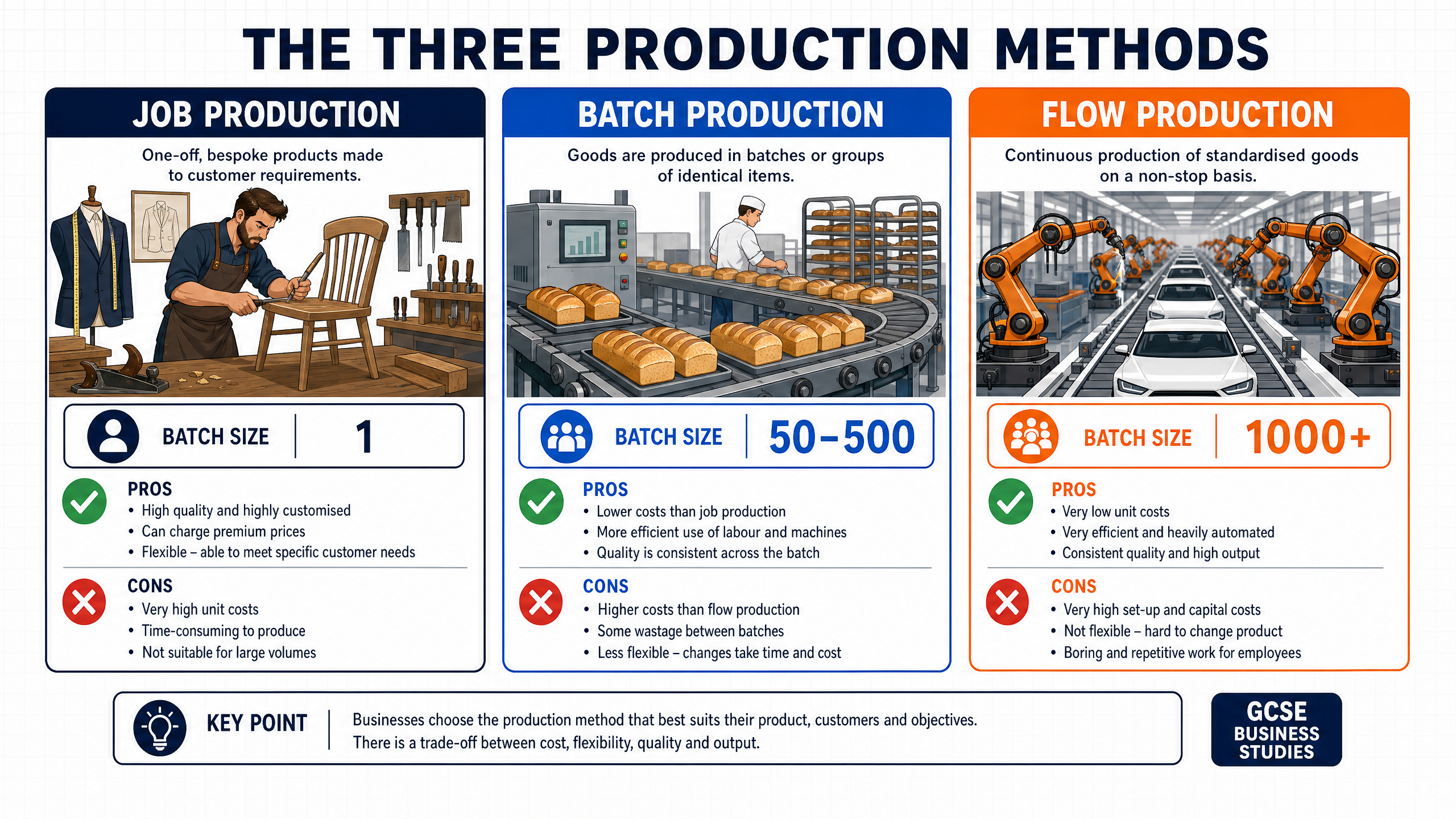
Businesses must choose the most appropriate way to make their products. The choice depends on the nature of the product, the size of the market, and the capital available.
Job Production
Definition: Producing one-off, bespoke items to meet the specific requirements of a customer.
Characteristics: Highly skilled workforce, high quality, high unit costs, slow production time.
Exam Context: Examiners often use small, artisan businesses (e.g., a custom cake maker or a tailored suit designer) for job production questions. Credit is given for explaining that while costs are high, the business can charge a premium price.
Batch Production
Definition: Producing a set number of identical items (a batch) before moving on to produce a different batch.
Characteristics: Lower unit costs than job production, flexible enough to make variations (e.g., different sizes of clothing), but can involve downtime when machinery is reset between batches.
Exam Context: Look for scenarios involving bakeries or clothing manufacturers. Marks are awarded for identifying the trade-off between efficiency and the cost of holding work-in-progress inventory.
Flow Production
Definition: Continuous, automated production of highly standardised goods on a large scale.
Characteristics: Very low unit costs due to economies of scale, massive capital investment required for machinery, highly inflexible.
Exam Context: Often applied to car manufacturing or bottling plants. To reach the top marks, explain how the high initial set-up costs are offset by the low cost per unit over time.
Quality Management
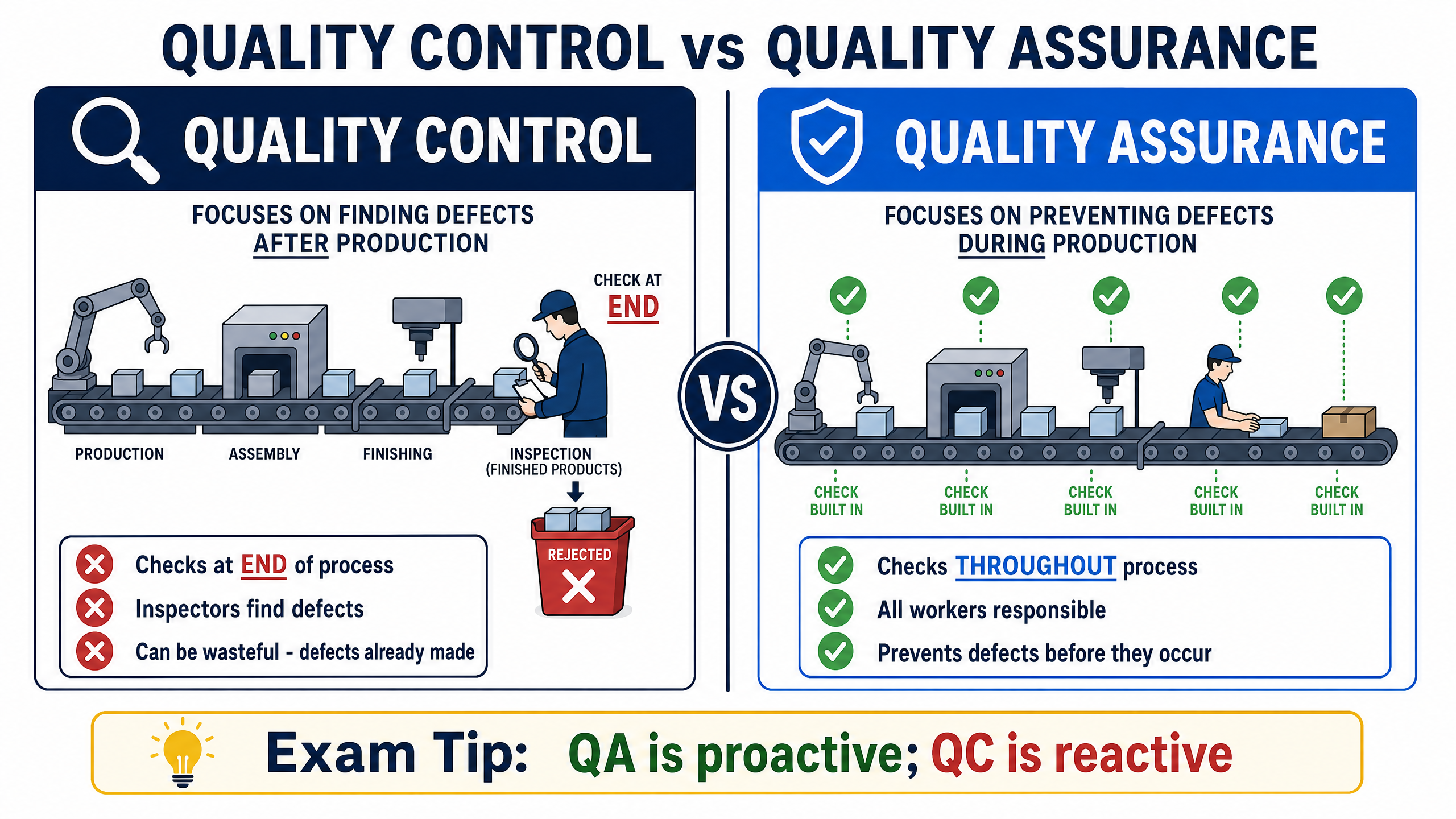
Quality is not just about a product being 'good'; it is about meeting customer expectations consistently. Examiners frequently test the distinction between Quality Control and Quality Assurance.
Quality Control (QC)
Definition: A reactive process where finished products are inspected at the end of the production line to identify and remove defects.
Impact: While it stops faulty goods reaching the customer, it is wasteful because the defective product has already incurred raw material and labour costs.
Quality Assurance (QA)
Definition: A proactive process where quality checks are built into every stage of production, making every employee responsible for quality.
Impact: Reduces waste and costs by preventing defects before they occur. Examiners reward candidates who explain that QA requires a strong corporate culture and staff training.
The Supply Chain and Logistics
Stages of the Supply Chain
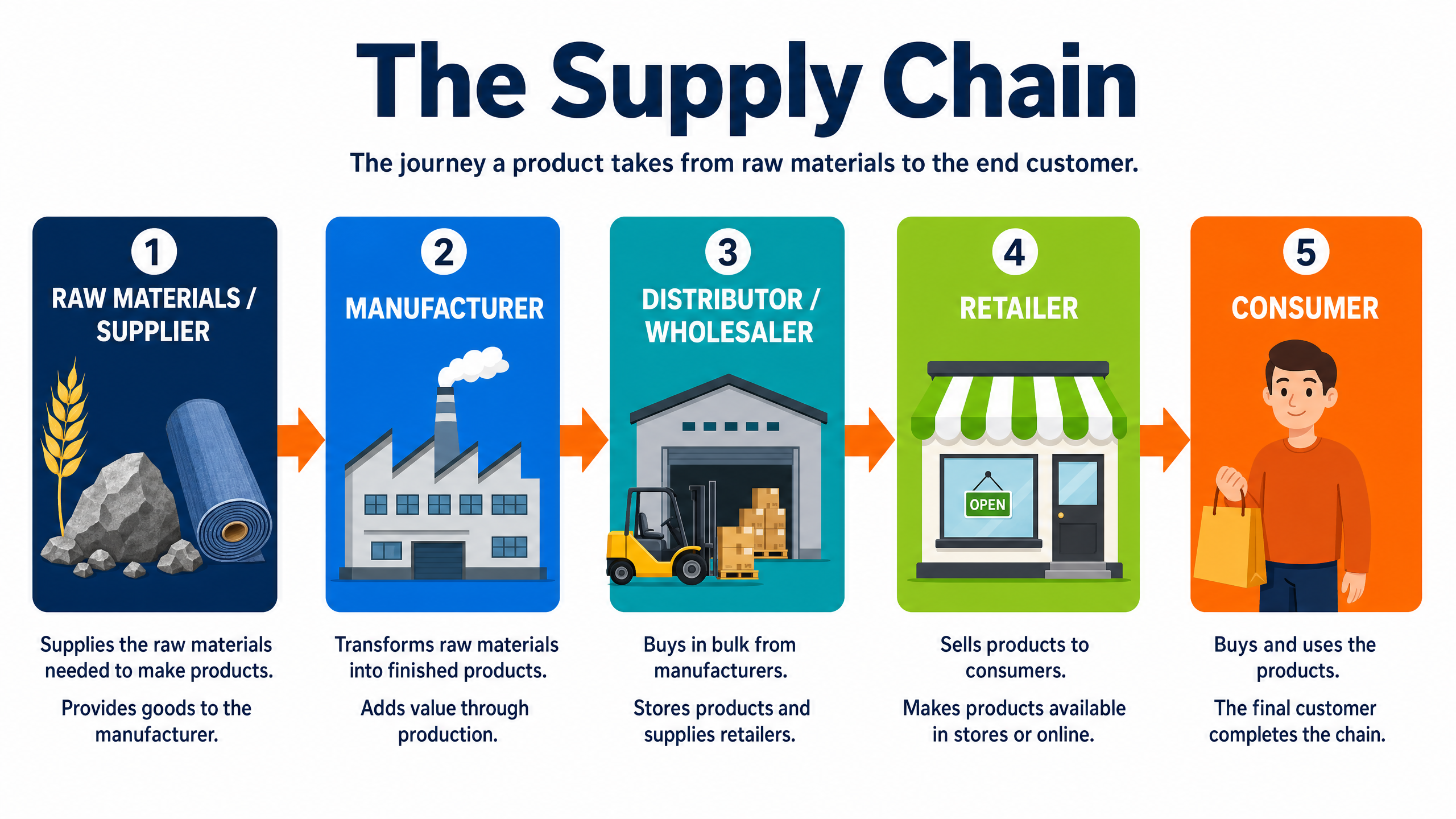
The supply chain encompasses all the stages a product goes through from raw materials to the final consumer:
- Procurement: Sourcing and purchasing raw materials.
- Manufacturing: Transforming inputs into finished goods.
- Distribution/Logistics: Managing the transport and storage of goods.
- Retail: Selling the finished product to the consumer.
Stock Control
Just-in-Time (JIT): A lean production method where stock arrives exactly when it is needed.
- Advantage: Reduces storage costs and improves cash flow.
- Disadvantage: Highly vulnerable to supply chain disruptions. If a delivery is late, production stops.
Exam Context: When discussing JIT, candidates must evaluate the risk. High marks are awarded for linking JIT failure to a loss of sales and damaged reputation.
Customer Service and The Sales Process
The Importance of Customer Service
Excellent customer service is a key differentiator. It leads to repeat purchases, brand loyalty, and positive word-of-mouth. Conversely, poor customer service can destroy a brand's reputation in the age of social media.
The Sales Process
- Product Knowledge: Staff must understand what they are selling.
- Speed and Efficiency: Minimising customer wait times.
- Customer Engagement: Building rapport and handling complaints effectively.
- After-sales Service: Providing support, warranties, and returns after the purchase is complete.
Worked Examples
3 detailed examples with solutions and examiner commentary
Practice Questions
Test your understanding — click to reveal model answers
Analyse the impact on a business of providing poor customer service. (6 marks)
Hint: Think about the immediate effect on the customer, and then the long-term effect on sales and reputation.
A clothing retailer is deciding whether to use Just-in-Time (JIT) stock control. Justify whether this is a good decision. (9 marks)
Hint: Evaluate the financial benefits against the operational risks.