Study Notes
Overview
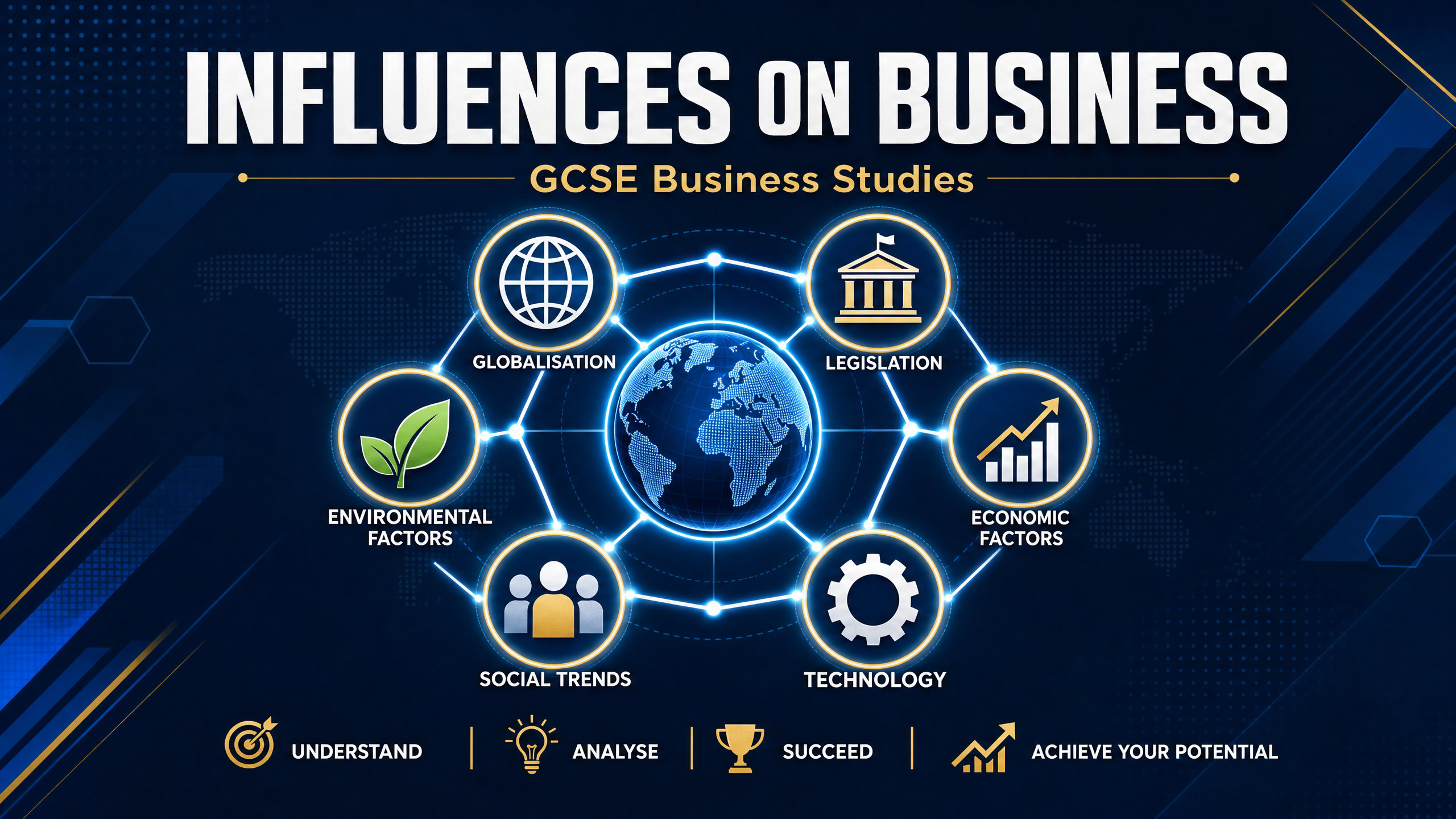
Businesses do not operate in isolation. They are constantly impacted by external factors beyond their direct control. Examiners test your ability to not only identify these factors but to analyse how they affect specific business decisions, costs, revenues, and overall strategy. Understanding these influences is crucial for achieving top marks, as it demonstrates synoptic thinking—linking external events to internal business functions like finance, marketing, and operations.
The PESTLE Framework
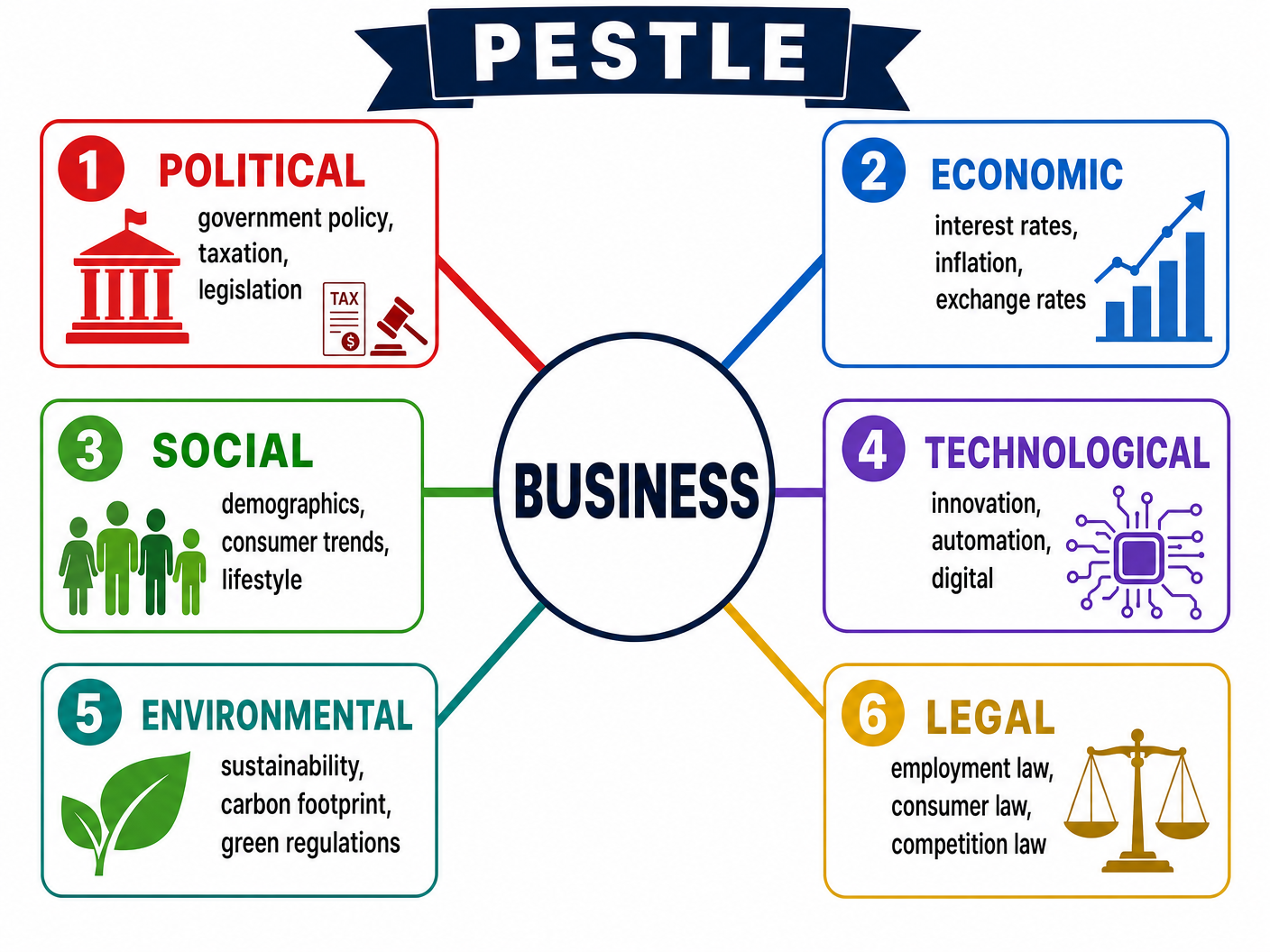
The most effective way to categorise external influences is using the PESTLE framework. Examiners reward candidates who can structure their analysis using these distinct categories.
Political Influences
Government decisions shape the business landscape. Key areas include:
- Taxation: Changes in Corporation Tax (tax on business profits) or Income Tax (affecting consumer disposable income).
- Subsidies and Grants: Government financial support for specific industries (e.g., renewable energy) or regions.
- Trade Policies: Tariffs (taxes on imports) or quotas (limits on imports) affect businesses trading internationally.
Economic Influences
Economic factors dictate consumer spending power and business costs. You must understand:
- Interest Rates: Set by the Bank of England. High rates make borrowing expensive and reduce consumer spending (as mortgage payments rise). Low rates encourage borrowing and investment.
- Inflation: The general rise in prices. High inflation increases business costs (raw materials, wages) and reduces consumer purchasing power.
- Exchange Rates: The value of one currency against another (e.g., £ to $). SPICED: Strong Pound Imports Cheap Exports Dear. A strong pound benefits importers but harms exporters.
- Economic Cycle: Whether the economy is in a boom, recession, slump, or recovery dictates overall demand.
Social Influences
Changes in society affect what products are demanded and how businesses operate:
- Demographics: Changes in population structure, such as an ageing population, create new markets (e.g., healthcare, retirement homes).
- Consumer Trends: Shifts in lifestyle, such as increased health consciousness or the rise of veganism, force businesses to adapt their product portfolios.
- Ethical Consumerism: Consumers increasingly prefer businesses that operate fairly, such as paying a living wage or using fairtrade suppliers.
Technological Influences
Rapid technological change creates both opportunities and threats:
- E-commerce: The shift to online shopping requires businesses to invest in digital infrastructure.
- Automation: Using machinery and robotics in production (like flow production) increases efficiency and lowers unit costs but requires high initial investment.
- Digital Communication: Social media and targeted digital marketing change how businesses interact with consumers.
Legal Influences
Businesses must comply with legislation to avoid fines and reputational damage:
- Employment Law: Includes the National Minimum Wage Act, the Equality Act 2010 (preventing discrimination), and the Health and Safety at Work Act 1974.
- Consumer Law: The Consumer Rights Act 2015 ensures goods are fit for purpose, as described, and of satisfactory quality.
- Competition Law: Prevents anti-competitive practices like price-fixing or monopolies.
Environmental Influences
Growing awareness of environmental issues impacts business operations:
- Sustainability: Pressure to reduce carbon footprints, minimise packaging, and use renewable energy.
- Legislation: Government regulations on emissions and waste disposal.
- Reputation: Environmentally friendly practices can be used as a unique selling point (USP) in marketing.
Linking Influences to Production Methods
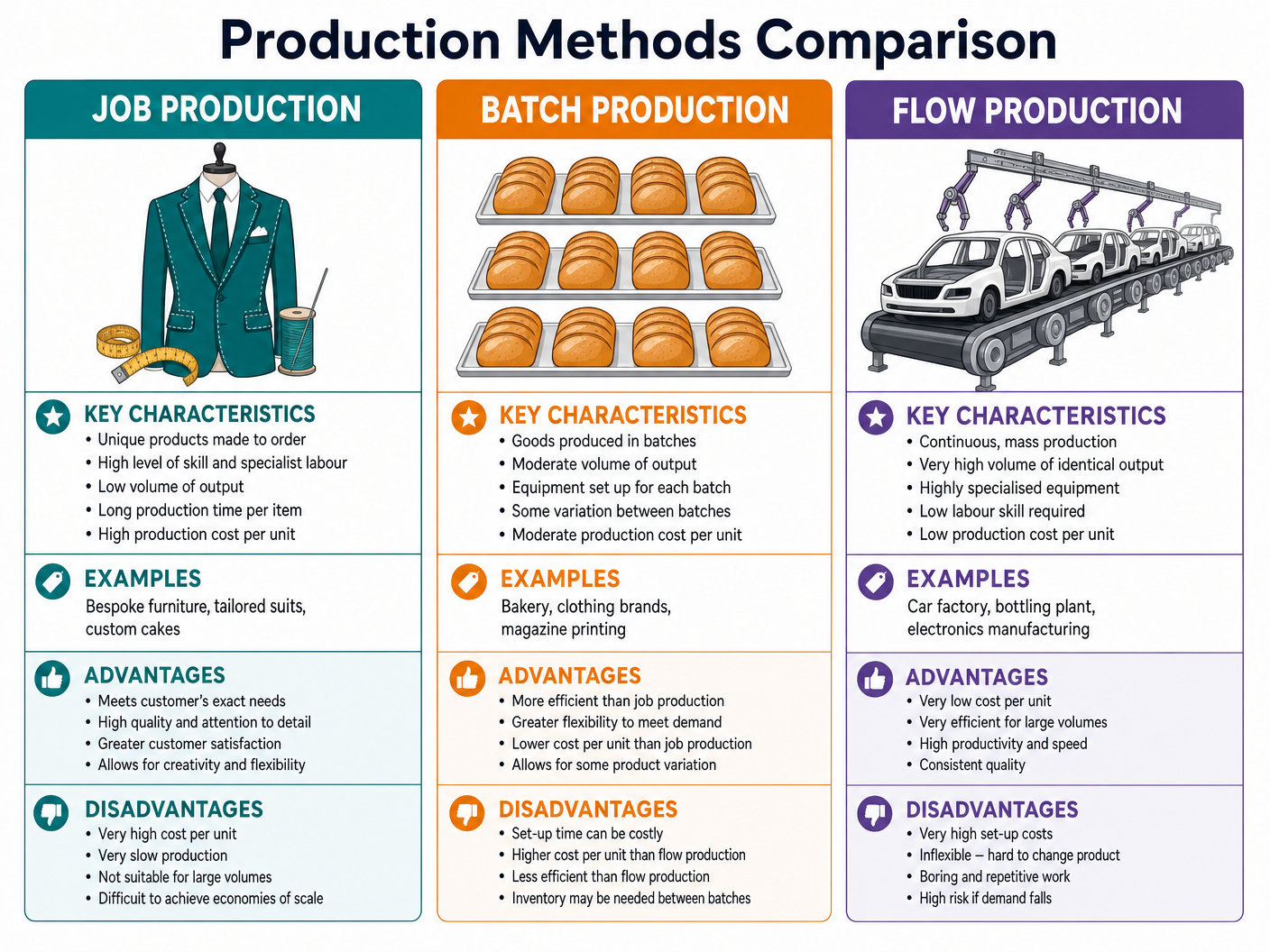
External influences often dictate how a business chooses to produce its goods. For example, technological advancements make flow production more viable through automation, while a social trend towards bespoke, personalised items might encourage a shift towards job production.
Worked Examples
3 detailed examples with solutions and examiner commentary
Practice Questions
Test your understanding — click to reveal model answers
State two environmental factors that could influence a business. (2 marks)
Hint: Think about what a business does that might harm the planet, and what they can do to fix it.
Explain how an appreciation (strengthening) of the pound might affect a UK business that exports luxury cars to the USA. (6 marks)
Hint: Remember the acronym SPICED. What does the 'E' and 'D' stand for?
A bakery currently uses batch production. It is considering investing in new technology to move to flow production. Assess the impact of this technological change on the bakery. (9 marks)
Hint: You need to weigh up the benefits of flow production against the costs of implementing the new technology.
Explain one way that employment legislation protects workers in a factory. (3 marks)
Hint: Name a specific law and explain what it forces the employer to do.
Evaluate the impact of high inflation on a business selling luxury holidays. (12 marks)
Hint: Consider both the impact on the business's costs and the impact on their customers' willingness to spend.