Study Notes
Overview
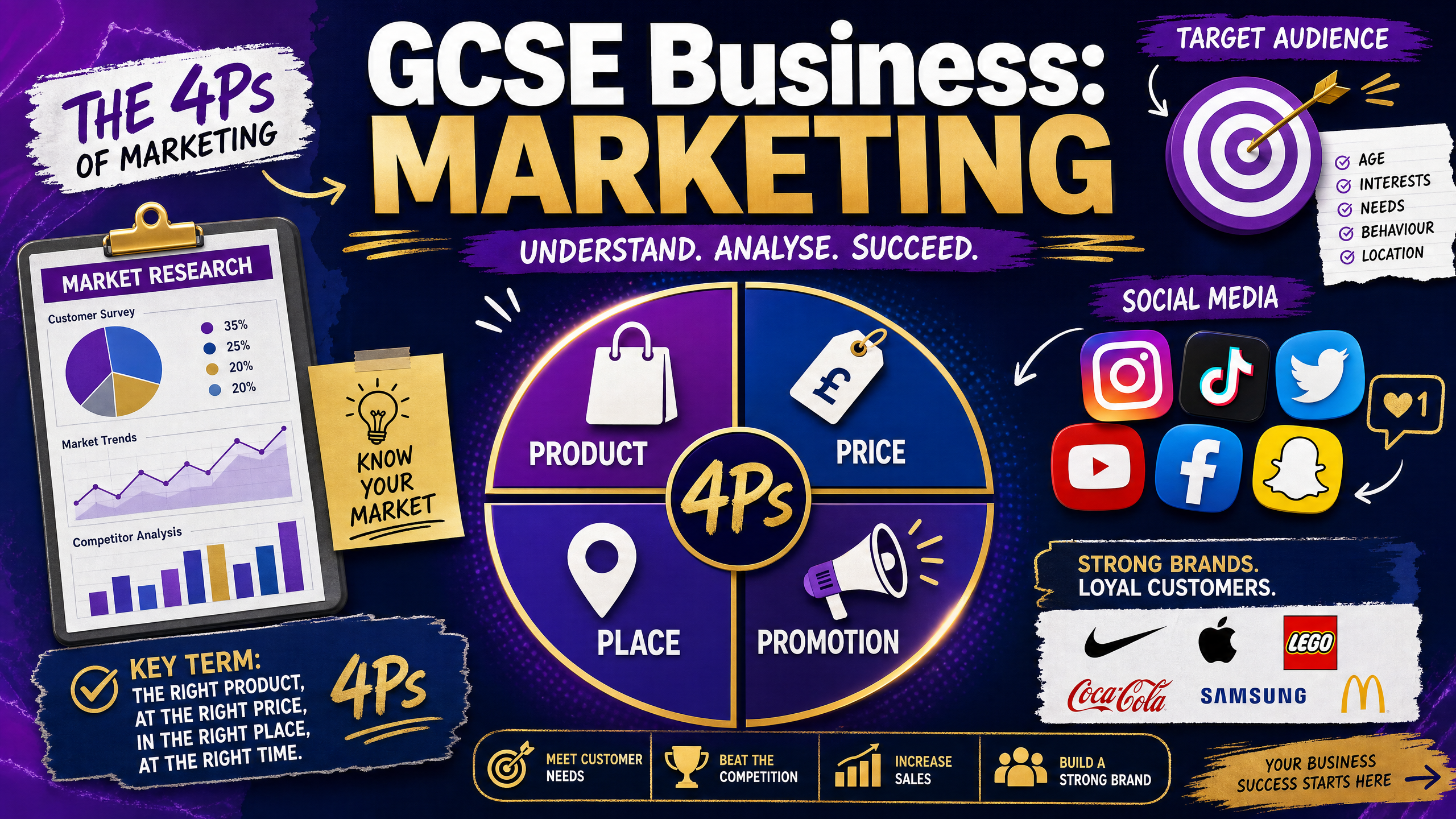
Marketing is far more than just advertising. In GCSE Business, marketing is defined as the process of identifying, anticipating, and satisfying customer needs profitably. This study guide covers the fundamental concepts examiners expect you to master: the Marketing Mix (the 4Ps), market research, and market segmentation. You'll learn how these elements interconnect and how to evaluate different marketing strategies within specific business contexts. Examiners consistently reward candidates who can apply these concepts to real-world scenarios and demonstrate how marketing decisions impact other functional areas like finance and operations.
Core Concepts
The Marketing Mix (The 4Ps)
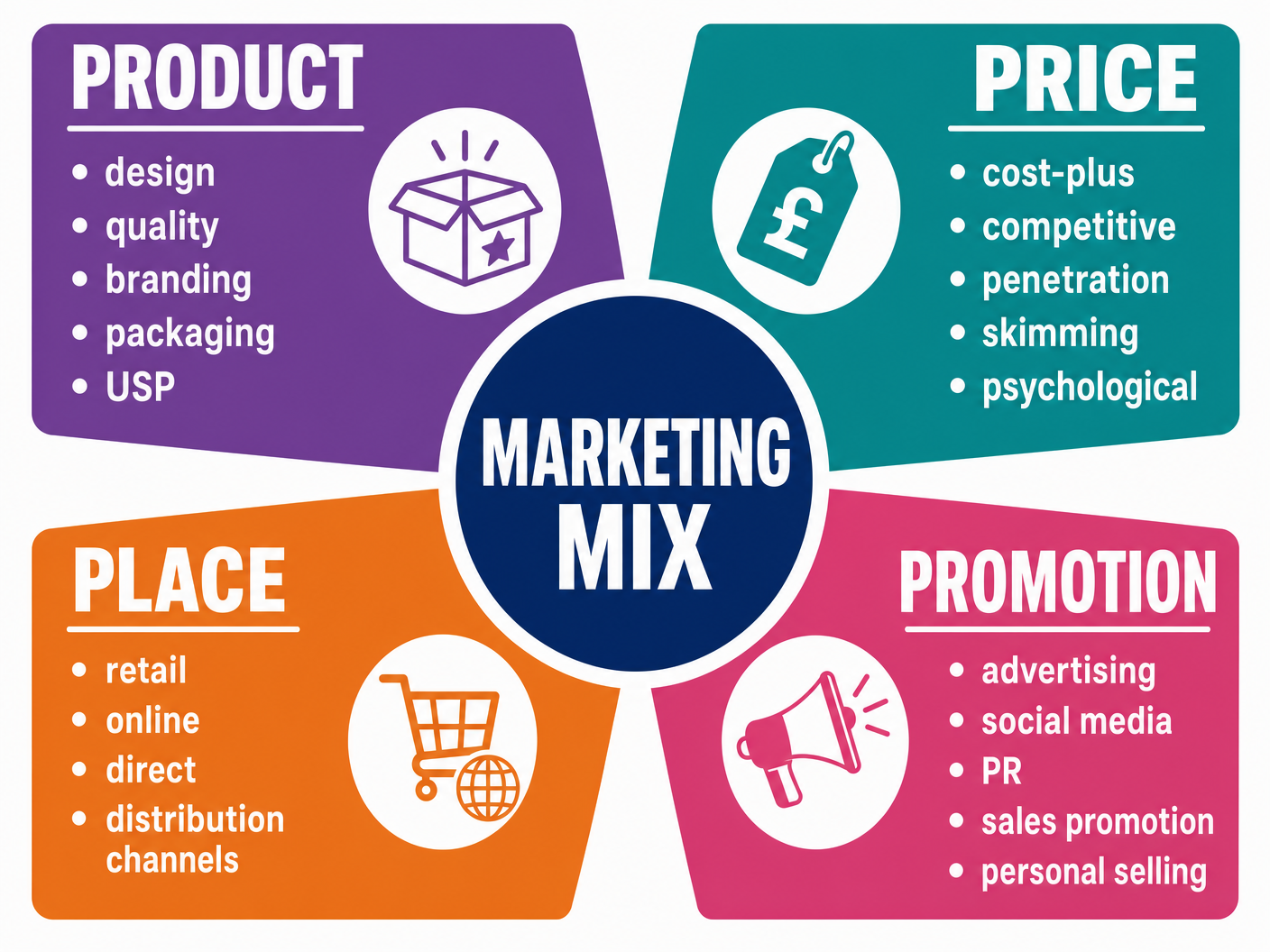
The Marketing Mix represents the four key decisions a business must make to successfully launch and manage a product. These must work together cohesively.
Product: The good or service being sold. Key elements include the design, quality, packaging, and the Unique Selling Point (USP) — the feature that makes it stand out from competitors. Products also move through a Life Cycle: Introduction, Growth, Maturity, and Decline.
Price: The amount charged to customers. Strategies include:
- Cost-plus: Adding a percentage profit to the cost of production.
- Competitive: Pricing in line with rivals.
- Penetration: Starting low to gain market share, then raising prices.
- Skimming: Starting high for early adopters, then lowering prices.
- Psychological: Pricing at £9.99 instead of £10.
Place: How the product reaches the customer (Distribution Channels). This includes physical retail stores, e-commerce (online), or direct selling. The choice depends on the target market's shopping habits.
Promotion: How the business communicates with customers. This includes advertising (TV, social media), sales promotions (BOGOF, discounts), public relations (PR), and personal selling.
Market Research
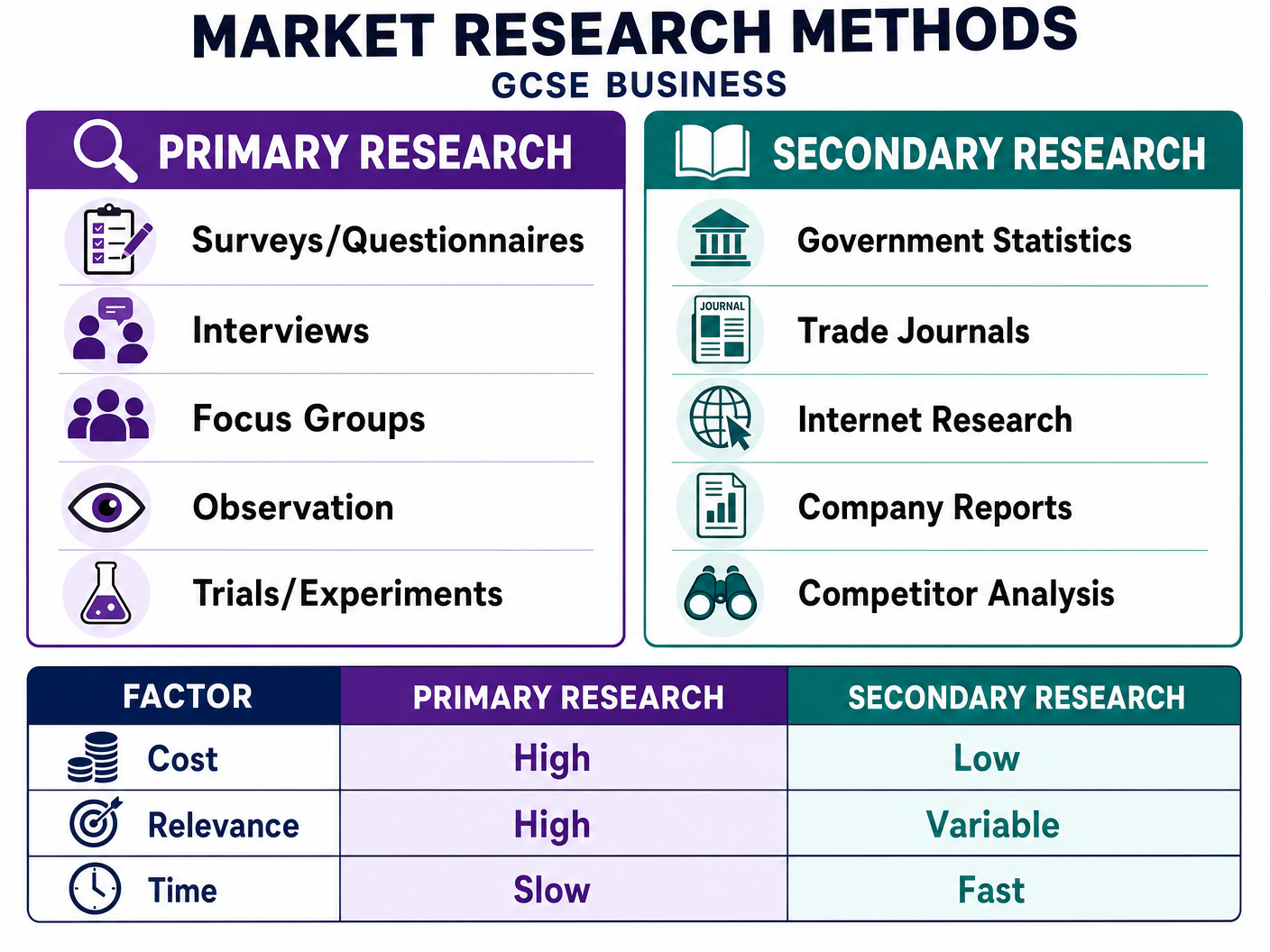
Before making marketing decisions, businesses need data to reduce risk.
Primary Research (Field Research): Collecting new data first-hand.
- Methods: Surveys, focus groups, interviews, observation.
- Pros/Cons: Specific to the business and up-to-date, but expensive and time-consuming.
Secondary Research (Desk Research): Using existing data.
- Methods: Government statistics, competitor websites, trade journals.
- Pros/Cons: Cheap and quick to access, but may be outdated or not specific enough.
Market Segmentation
This involves dividing a broad market into smaller groups of customers with similar characteristics (e.g., by age, income, lifestyle, or gender). By targeting specific segments, businesses can tailor their marketing mix more effectively, leading to higher sales and customer satisfaction.
Audio Revision
Listen to our comprehensive 10-minute podcast covering all these topics, exam tips, and a quick-fire recall quiz.
Worked Examples
3 detailed examples with solutions and examiner commentary
Practice Questions
Test your understanding — click to reveal model answers
A local bakery, 'Sweet Treats', wants to find out what new flavours of cupcakes their customers would like. Recommend whether they should use a focus group or an online questionnaire. Justify your answer. (9 marks)
Hint: Consider the cost, speed, and depth of information each method provides, and apply it to a small local bakery.
Explain how the marketing function of a business links to the finance function. (3 marks)
Hint: Think about how marketing activities cost money, but also how they generate money.
State two pricing strategies a business could use when launching a new product. (2 marks)
Hint: Think of strategies specifically designed for new entries to the market.
Analyse the benefit to a business of segmenting its market by age. (6 marks)
Hint: How does knowing the age of your customers change how you design or promote the product?
Explain one reason why a product's sales might decline. (3 marks)
Hint: Think about the Product Life Cycle and what happens in the market over time.