AQA · GCSE · Chemistry
Course version: 8462 · Version from Sept 2018
Sewage treatment includes: screening and grit removal sedimentation to…
Full specification wording
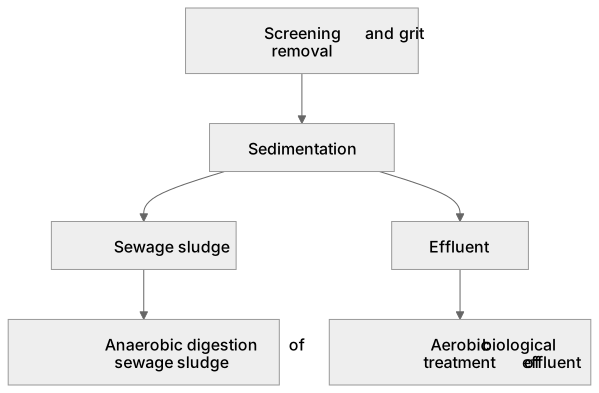
Waste water treatment: Sewage treatment includes: screening and grit removal sedimentation to produce sewage sludge and effluent anaerobic digestion of sewage sludge aerobic biological treatment of effluent.
Sewage treatment is a sequence of stages that removes solids and reduces the organic load before the treated water is released.
Checked against the AQA 8462 specification (opens in a new tab) on .
- Point 4 of 5
- 4 key terms
Study notes
From the checked teaching notes for this specification point.
The idea
Sewage treatment is a sequence of stages that removes solids and reduces the organic load before the treated water is released. Screening and grit removal take out large objects, rags, plastics and dense grit that would damage pumps or block pipes. Sedimentation then lets finer suspended solids settle, producing sewage sludge at the bottom and effluent above. The sludge is treated by anaerobic digestion, in which microorganisms break it down without oxygen, reducing its volume and producing biogas that can be used as fuel. The effluent undergoes aerobic biological treatment, where microorganisms with oxygen break down remaining organic matter. The treated effluent can then be discharged safely to a river or sea, provided it meets quality standards.
What earns the marks
- Screening and grit removal is the first stage and removes large solid objects and dense grit that could damage equipment or block later stages.
- Sedimentation allows suspended solids to settle, producing sewage sludge at the bottom and a liquid effluent above.
- Anaerobic digestion of sewage sludge uses microorganisms in the absence of oxygen to break down organic matter, reducing sludge volume and producing biogas.
- Aerobic biological treatment of effluent uses microorganisms in the presence of oxygen to break down remaining organic matter before the effluent is discharged.
- The stages are ordered so that large solids are removed first, then suspended solids, then dissolved or fine organic matter, making later treatment more effective.
Common mistakes and how to put them right
Reversing the roles of sludge and effluent.
Put it right: Sludge is the settled solid material and effluent is the liquid that remains above it.
Confusing anaerobic digestion with aerobic biological treatment.
Put it right: Anaerobic digestion occurs without oxygen and treats sludge, while aerobic treatment occurs with oxygen and treats effluent.
Thinking screening removes dissolved chemicals.
Put it right: Screening and grit removal only remove large solid objects and dense particles, not dissolved substances.
Exam tips
- Learn the stages in order and be ready to name the product of each stage, especially sludge and effluent.
- Use the words anaerobic and aerobic accurately, linking anaerobic to digestion of sludge and aerobic to treatment of effluent.
- If asked to explain a stage, state what is removed or broken down and why that helps the next stage or the final discharge.
Try the lesson
The start of the Waste water treatment: Sewage treatment includes: screening and grit removal sedimentation to produce sewage sludge and effluent anaerobic digestion of sewage sludge aerobic biological treatment of effluent. lesson, made from checked teaching notes for this specification point.
Have a go first
Which process in sewage treatment produces sewage sludge and effluent?
Listen
Sewage treatment is a sequence of stages that removes solids and reduces the organic load before the treated water is released. Screening and grit removal take out large objects, rags, plastics and dense grit that would damage pumps or block pipes. Sedimentation then lets finer suspended solids settle, producing sewage sludge at the bottom and effluent above. The sludge is treated by anaerobic digestion, in which microorganisms break it down without oxygen, reducing its volume and producing biogas that can be used as fuel. The effluent undergoes aerobic biological treatment, where microorganisms with oxygen break down remaining organic matter. The treated effluent can then be discharged safely to a river or sea, provided it meets quality standards. A strong answer earns marks for these points. Screening and grit removal is the first stage and removes large solid objects and dense grit that could damage equipment or block later stages. Sedimentation allows suspended solids to settle, producing sewage sludge at the bottom and a liquid effluent above. Anaerobic digestion of sewage sludge uses microorganisms in the absence of oxygen to break down organic matter, reducing sludge volume and producing biogas. Aerobic biological treatment of effluent uses microorganisms in the presence of oxygen to break down remaining organic matter before the effluent is discharged. A common slip: Reversing the roles of sludge and effluent. Instead, sludge is the settled solid material and effluent is the liquid that remains above it. Exam tip: Learn the stages in order and be ready to name the product of each stage, especially sludge and effluent.
See it
Key words
Say what each word means before you turn the card.
Sedimentation
Try answering aloud or in your head before turning the card.
Anaerobic digestion
Try answering aloud or in your head before turning the card.
Aerobic biological treatment
Try answering aloud or in your head before turning the card.
Screening and grit removal
Try answering aloud or in your head before turning the card.
See every definition
- Sedimentation
- A stage that lets finer suspended solids settle, producing sewage sludge at the bottom and effluent above.
- Anaerobic digestion
- Treatment of sewage sludge in which microorganisms break it down without oxygen, reducing its volume and producing biogas that can be used as fuel.
- Aerobic biological treatment
- Treatment of effluent where microorganisms with oxygen break down remaining organic matter.
- Screening and grit removal
- The first stage, which takes out large objects, rags, plastics and dense grit that would damage pumps or block pipes.
Label the diagram
Some boxes have lost their names. Pick the right name for each number.
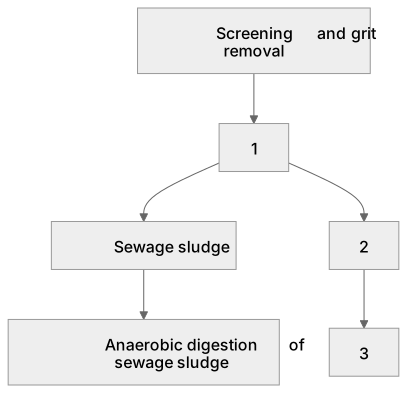
1Box 1
2Box 2
3Box 3
There is more to this lesson
The full lesson goes on to check your understanding and help you earn the marks. Create a free account to carry on, with your progress saved.
A week of Premium from your first lesson · Then the free plan continues · No card, no charge
Test your understanding of Waste water treatment: Sewage treatment includes: screening and grit removal sedimentation to produce sewage sludge and effluent anaerobic digestion of sewage sludge aerobic biological treatment of effluent.
Active recall beats re-reading. Take an instant quiz now to test what you’ve learned and lock it into long-term memory.
A week of Premium from your first lesson · Then the free plan continues · No card, no charge