AQA · GCSE · Chemistry
Course version: 8462 · Version from Sept 2018
Students should be able to evaluate ways of reducing the use of limited…
Full specification wording
Ways of reducing the use of resources: Students should be able to evaluate ways of reducing the use of limited resources, given appropriate information.
Evaluating means weighing up the good and bad points of a method and reaching a supported judgement.
Checked against the AQA 8462 specification (opens in a new tab) on .
- Point 11 of 11
- 4 key terms
Study notes
From the checked teaching notes for this specification point.
The idea
Evaluating means weighing up the good and bad points of a method and reaching a supported judgement. Ways of reducing the use of limited resources include recycling materials such as metals, glass, paper and plastics, reusing items, and designing products that last longer or use less material. Given information such as energy use, cost, emissions or waste produced, you should compare methods rather than simply list them. For example, recycling aluminium saves a large amount of energy compared with extracting it from bauxite, but collecting and sorting the cans also uses energy and money. A strong evaluation uses the data provided, considers more than one factor, and ends with a clear conclusion about which method reduces resource use most effectively in that situation.
What earns the marks
- Identify the limited resource being conserved, such as a metal ore, crude oil or landfill space.
- Describe at least two ways of reducing use, for example recycling, reusing or reducing consumption.
- Use the information given, such as energy values, costs or emissions, as evidence rather than relying on general statements.
- Compare the methods by weighing benefits against drawbacks, for example energy saved against energy used in collection and sorting.
- Reach a justified conclusion that follows from the evidence and states which method is better and why.
- Recognise that the best choice can depend on the material, the location and the product being made.
Common mistakes and how to put them right
Listing ways of reducing resource use without evaluating them.
Put it right: Compare the methods using the data and give a supported judgement.
Giving only advantages or only disadvantages.
Put it right: Include both benefits and drawbacks before concluding.
Ignoring the information provided and writing generic statements about recycling.
Put it right: Quote or use the figures and facts from the question in the comparison.
Exam tips
- Underline the data in the question and refer to specific values in your answer.
- Use comparative words such as 'whereas', 'however' and 'therefore' to show evaluation.
- Finish with a clear conclusion that answers the question directly, for example which method saves the most of the limited resource.
Try the lesson
The start of the Ways of reducing the use of resources: Students should be able to evaluate ways of reducing the use of limited resources, given appropriate information. lesson, made from checked teaching notes for this specification point.
Have a go first
A company is evaluating two methods for obtaining copper. Method 1 extracts copper from ores, requiring 100 MJ of energy per kilogram and producing large amounts of rock waste. Method 2 recycles scrap copper, requiring 15 MJ of energy per kilogram and producing no rock waste. Based on this information, which statement correctly evaluates these methods for reducing the use of limited resources?
Listen
Evaluating means weighing up the good and bad points of a method and reaching a supported judgement. Ways of reducing the use of limited resources include recycling materials such as metals, glass, paper and plastics, reusing items, and designing products that last longer or use less material. Given information such as energy use, cost, emissions or waste produced, you should compare methods rather than simply list them. For example, recycling aluminium saves a large amount of energy compared with extracting it from bauxite, but collecting and sorting the cans also uses energy and money. A strong evaluation uses the data provided, considers more than one factor, and ends with a clear conclusion about which method reduces resource use most effectively in that situation. A strong answer earns marks for these points. Identify the limited resource being conserved, such as a metal ore, crude oil or landfill space. Describe at least two ways of reducing use, for example recycling, reusing or reducing consumption. Use the information given, such as energy values, costs or emissions, as evidence rather than relying on general statements. Compare the methods by weighing benefits against drawbacks, for example energy saved against energy used in collection and sorting. A common slip: Listing ways of reducing resource use without evaluating them. Instead, compare the methods using the data and give a supported judgement. Exam tip: Underline the data in the question and refer to specific values in your answer.
See it
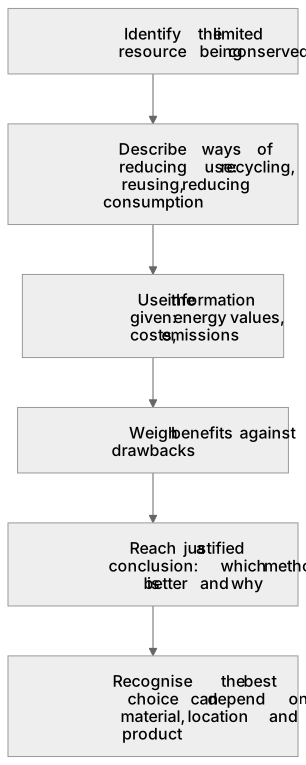
Put it in order
Put these steps in the order they happen.
- 1. Use the information given: energy values, costs, emissions
- 2. Describe ways of reducing use: recycling, reusing, reducing consumption
- 3. Identify the limited resource being conserved
- 4. Recognise the best choice can depend on the material, location and product
- 5. Reach a justified conclusion: which method is better and why
- 6. Weigh benefits against drawbacks
Key words
Say what each word means before you turn the card.
Sustainable use of limited resources
Try answering aloud or in your head before turning the card.
Recycling, reusing and reducing
Try answering aloud or in your head before turning the card.
Evidence-based decision making
Try answering aloud or in your head before turning the card.
Trade-offs between environmental benefit and cost
Try answering aloud or in your head before turning the card.
See every definition
- Sustainable use of limited resources
- Reducing the use of limited resources by recycling materials, reusing items, and designing products that last longer or use less material.
- Recycling, reusing and reducing
- Ways of reducing the use of limited resources, including recycling materials such as metals, glass, paper and plastics, reusing items, and reducing consumption.
- Evidence-based decision making
- Comparing methods using the information given, such as energy values, costs or emissions, rather than relying on general statements.
- Trade-offs between environmental benefit and cost
- Weighing benefits against drawbacks, for example energy saved by recycling aluminium against energy and money used in collecting and sorting the cans.
Label the diagram
Some boxes have lost their names. Pick the right name for each number.
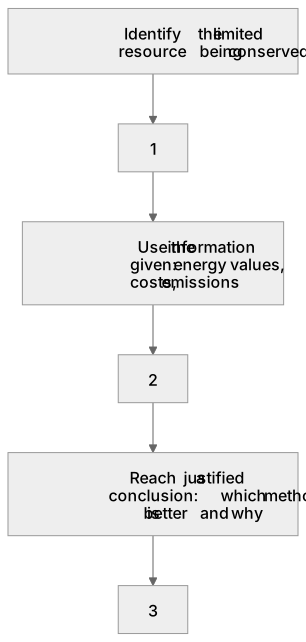
1Box 1
2Box 2
3Box 3
There is more to this lesson
The full lesson goes on to check your understanding and help you earn the marks. Create a free account to carry on, with your progress saved.
A week of Premium from your first lesson · Then the free plan continues · No card, no charge
Test your understanding of Ways of reducing the use of resources: Students should be able to evaluate ways of reducing the use of limited resources, given appropriate information.
Active recall beats re-reading. Take an instant quiz now to test what you’ve learned and lock it into long-term memory.
A week of Premium from your first lesson · Then the free plan continues · No card, no charge