AQA · GCSE · Combined Science
Course version: 8464 · Version from Sept 2018
Aerobic and anaerobic respiration: Anaerobic respiration in plant and yeast cells is represented by the equation:
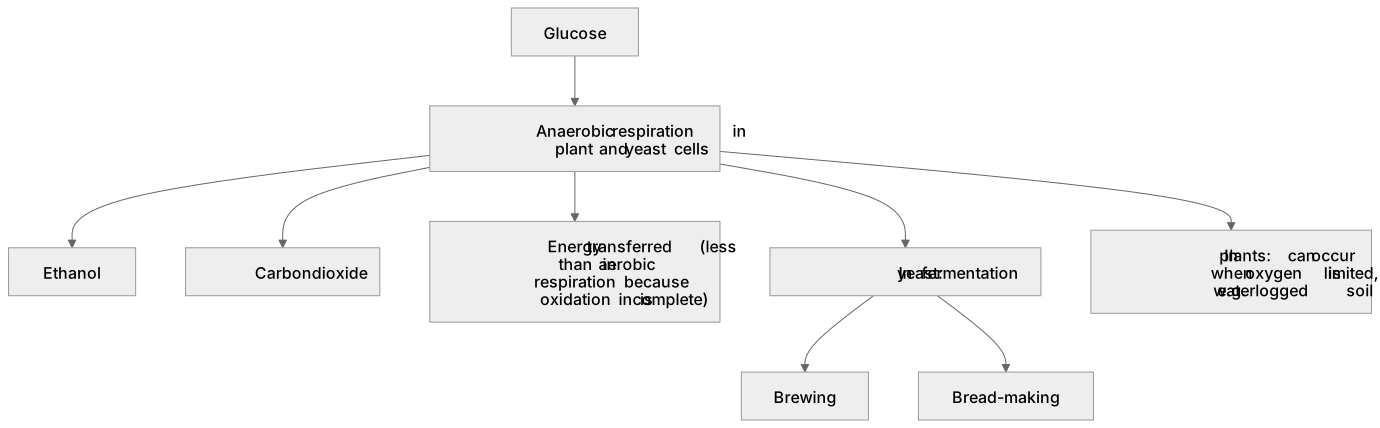
In plant and yeast cells, anaerobic respiration converts glucose into ethanol and carbon dioxide.
- 3 key terms
Study notes
From the checked teaching notes for this specification point.
The idea
In plant and yeast cells, anaerobic respiration converts glucose into ethanol and carbon dioxide. The balanced equation is: C₆H₁₂O₆ → 2C₂H₅OH + 2CO₂. Energy is transferred because glucose is broken down, but the oxidation is incomplete, so less energy is transferred than in aerobic respiration. In yeast this process is called fermentation and is used in brewing and bread-making: carbon dioxide makes bread rise, and ethanol is the alcohol in drinks. In plants, anaerobic respiration can occur in waterlogged roots where oxygen is limited.
What earns the marks
- Glucose is the reactant in anaerobic respiration in plant and yeast cells.
- The products are ethanol and carbon dioxide.
- The balanced symbol equation is C₆H₁₂O₆ → 2C₂H₅OH + 2CO₂.
- Energy is transferred during the reaction, but less than in aerobic respiration because oxidation is incomplete.
- In yeast, this process is fermentation and is used in brewing and bread-making.
- In plants, anaerobic respiration can occur when oxygen is limited, for example in waterlogged soil.
Common mistakes and how to put them right
Writing the products as lactic acid.
Put it right: Lactic acid is produced in animal muscle cells, whereas plants and yeast produce ethanol and carbon dioxide.
Omitting carbon dioxide from the equation.
Put it right: Carbon dioxide is always a product alongside ethanol in plant and yeast anaerobic respiration.
Unbalanced equations such as C₆H₁₂O₆ → C₂H₅OH + CO₂.
Put it right: Balance to 2C₂H₅OH and 2CO₂.
Exam tips
- Learn the balanced equation with coefficients 2 for both products.
- Link the equation to a named use: carbon dioxide in bread-making or ethanol in brewing.
- When comparing with aerobic respiration, state that the same glucose molecule yields less energy here because oxidation is incomplete.
Try the lesson
The start of the Aerobic and anaerobic respiration: Anaerobic respiration in plant and yeast cells is represented by the equation: lesson, made from checked teaching notes for this specification point.
Have a go first
Which product is formed when plant and yeast cells respire anaerobically?
See it
Key words
Say what each word means before you turn the card.
Fermentation
Try answering aloud or in your head before turning the card.
Ethanol
Try answering aloud or in your head before turning the card.
Carbon dioxide
Try answering aloud or in your head before turning the card.
See every definition
- Fermentation
- In yeast, this is the process of anaerobic respiration and is used in brewing and bread-making.
- Ethanol
- One of the products of anaerobic respiration in plant and yeast cells, and the alcohol in drinks.
- Carbon dioxide
- A product of anaerobic respiration in plant and yeast cells that makes bread rise.
Label the diagram
Some boxes have lost their names. Pick the right name for each number.
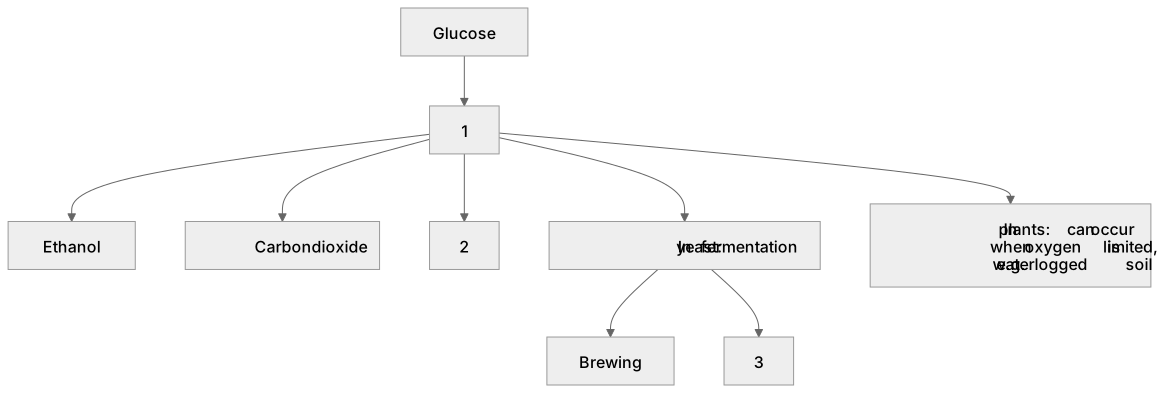
1Box 1
2Box 2
3Box 3
There is more to this lesson
The full lesson goes on to check your understanding and help you earn the marks. Create a free account to carry on, with your progress saved.
A week of Premium from your first lesson · Then the free plan continues · No card, no charge
Test your understanding of Aerobic and anaerobic respiration: Anaerobic respiration in plant and yeast cells is represented by the equation:
Active recall beats re-reading. Take an instant quiz now to test what you’ve learned and lock it into long-term memory.
A week of Premium from your first lesson · Then the free plan continues · No card, no charge