AQA · GCSE · Combined Science
Course version: 8464 · Version from Sept 2018
Aerobic and anaerobic respiration: glucose ethanol + carbon dioxide
This word equation summarises fermentation, the anaerobic respiration carried out by yeast.
Study notes
From the checked teaching notes for this specification point.
The idea
This word equation summarises fermentation, the anaerobic respiration carried out by yeast. Glucose is broken down without oxygen to produce ethanol and carbon dioxide. In words: glucose → ethanol + carbon dioxide. The reaction releases a relatively small amount of energy compared with aerobic respiration because the glucose is not fully oxidised. A useful method is to compare the two equations: aerobic respiration gives carbon dioxide and water, whereas fermentation gives ethanol and carbon dioxide. Yeast cells use this pathway when oxygen is absent, for example in brewing and bread-making. The carbon dioxide makes dough rise, while the ethanol produced is the alcohol in alcoholic drinks.
What earns the marks
- State the correct word equation: glucose → ethanol + carbon dioxide.
- Identify the reactants and products: glucose is the reactant; ethanol and carbon dioxide are the products.
- Recognise that this process is anaerobic, so oxygen is not a reactant and does not appear in the equation.
- Link the equation to yeast cells and to fermentation.
- Explain that less energy is released than in aerobic respiration because glucose is not fully broken down.
- Apply the equation to bread-making (carbon dioxide raises dough) and alcoholic drinks (ethanol is the alcohol).
Common mistakes and how to put them right
Writing water as a product instead of ethanol.
Put it right by remembering that fermentation produces ethanol and carbon dioxide, while aerobic respiration produces water and carbon dioxide.
Including oxygen as a reactant.
Put it right by noting that fermentation is anaerobic, so oxygen must not appear in the equation.
Reversing the products, for example writing carbon dioxide + ethanol → glucose.
Put it right by checking that glucose is the starting substance and the two products are formed from it.
Exam tips
- Write the equation with a clear arrow and use the correct names, not formulae, unless the question asks for symbols.
- If asked to compare, set out aerobic respiration and fermentation side by side so the products and energy release are easy to contrast.
- When explaining an application, name the product responsible: carbon dioxide for raising bread, ethanol for alcoholic drinks.
Try the lesson
The start of the Aerobic and anaerobic respiration: glucose ethanol + carbon dioxide lesson, made from checked teaching notes for this specification point.
Have a go first
Which two products are formed when glucose is broken down by anaerobic respiration in yeast cells?
See it
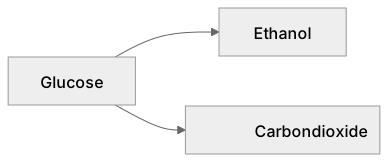
Label the diagram
Some boxes have lost their names. Pick the right name for each number.
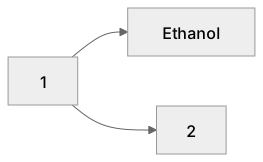
1Box 1
2Box 2
There is more to this lesson
The full lesson goes on to check your understanding and help you earn the marks. Create a free account to carry on, with your progress saved.
A week of Premium from your first lesson · Then the free plan continues · No card, no charge
Test your understanding of Aerobic and anaerobic respiration: glucose ethanol + carbon dioxide
Active recall beats re-reading. Take an instant quiz now to test what you’ve learned and lock it into long-term memory.
A week of Premium from your first lesson · Then the free plan continues · No card, no charge