AQA · GCSE · Combined Science
Course version: 8464 · Version from Sept 2018
Aerobic and anaerobic respiration: glucose + oxygen carbon dioxide + water
Aerobic respiration is the controlled release of energy from glucose using oxygen.
Study notes
From the checked teaching notes for this specification point.
The idea
Aerobic respiration is the controlled release of energy from glucose using oxygen. This word equation summarises the overall change: glucose reacts with oxygen to produce carbon dioxide and water. The reaction happens continuously in the mitochondria of cells, transferring energy that powers processes such as muscle contraction and protein synthesis. The equation is a summary of many enzyme-controlled reactions, but the overall inputs are glucose and oxygen and the overall outputs are carbon dioxide and water.
For example: During exercise, muscle cells respire faster, using more glucose and oxygen and producing more carbon dioxide and water, which is why breathing and heart rate increase to supply reactants and remove waste.
What earns the marks
- Identifies glucose and oxygen as the reactants, with glucose acting as the energy source.
- States that carbon dioxide and water are the products of aerobic respiration.
- Links the equation to energy transfer for cell processes such as muscle contraction, active transport, and protein synthesis.
- Recognises that the equation is a summary of many enzyme-controlled reactions occurring mainly in mitochondria.
- Applies the equation to contexts such as exercise, where increased respiration raises oxygen demand and carbon dioxide production.
Common mistakes and how to put them right
Writing the products as carbon dioxide and water but omitting oxygen from the reactants.
Put it right: Oxygen is a reactant and must appear on the left of the arrow.
Reversing the equation to show carbon dioxide and water reacting.
Put it right: In respiration glucose and oxygen are the reactants, so they appear before the arrow.
Confusing respiration with photosynthesis.
Put it right: Photosynthesis uses carbon dioxide and water with light energy, whereas respiration uses glucose and oxygen and transfers energy.
Exam tips
- Write the word equation with reactants on the left and products on the right, separated by an arrow.
- When asked to explain, link the equation to energy transfer and to a named cell process rather than only naming the products.
- Check that every substance in the equation is named correctly and that oxygen appears as a reactant.
Try the lesson
The start of the Aerobic and anaerobic respiration: glucose + oxygen carbon dioxide + water lesson, made from checked teaching notes for this specification point.
Have a go first
Which two substances are the reactants in aerobic respiration?
See it
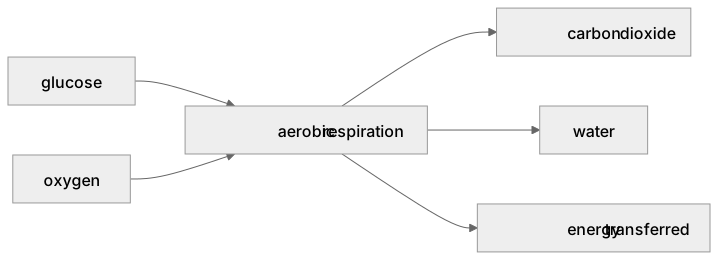
Label the diagram
Some boxes have lost their names. Pick the right name for each number.
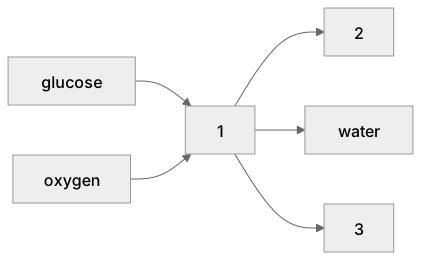
1Box 1
2Box 2
3Box 3
There is more to this lesson
The full lesson goes on to check your understanding and help you earn the marks. Create a free account to carry on, with your progress saved.
A week of Premium from your first lesson · Then the free plan continues · No card, no charge
Test your understanding of Aerobic and anaerobic respiration: glucose + oxygen carbon dioxide + water
Active recall beats re-reading. Take an instant quiz now to test what you’ve learned and lock it into long-term memory.
A week of Premium from your first lesson · Then the free plan continues · No card, no charge