AQA · GCSE · Combined Science
Course version: 8464 · Version from Sept 2018
Alternative methods of extracting metals (HT only): Students should be able to evaluate alternative biological methods of metal extraction, given appropriate information.
Bioleaching and phytomining are biological alternatives to traditional metal extraction.
- 3 key terms
Study notes
From the checked teaching notes for this specification point.
The idea
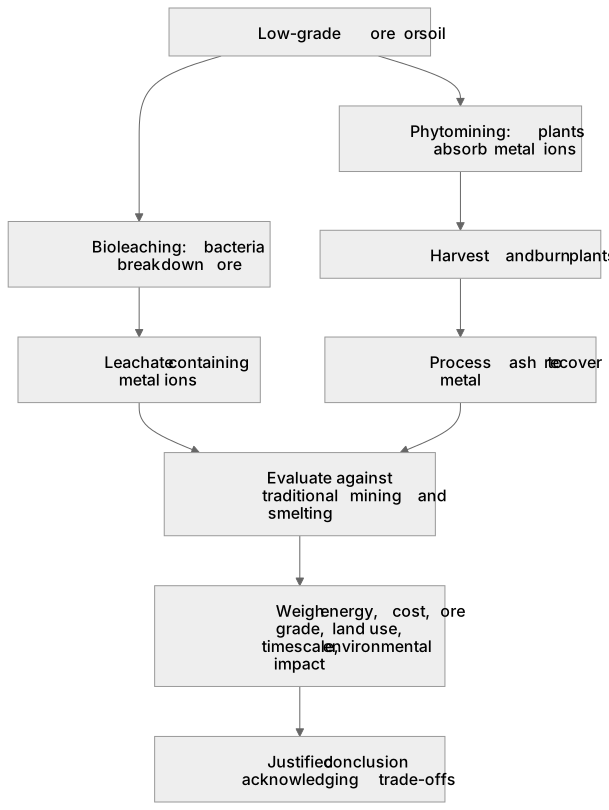
Bioleaching and phytomining are biological alternatives to traditional metal extraction. Bioleaching uses bacteria to break down low-grade ores, producing a leachate containing metal ions. Phytomining grows plants that absorb metal ions from soil; the plants are harvested and burned, and the ash is processed to recover the metal. To evaluate, compare these methods with conventional mining and smelting using supplied information: consider energy demand, cost, ore grade, land use, timescale, and environmental impact. For example, bioleaching can work on low-grade rock that traditional methods cannot economically process, but it is slow. A judgement must weigh benefits against drawbacks and be justified by the data given.
What earns the marks
- Identifies bioleaching as using bacteria to produce a leachate containing metal ions from low-grade ore.
- Identifies phytomining as growing metal-absorbing plants, harvesting and burning them, then processing the ash.
- Compares biological methods with traditional extraction in terms of energy use, cost, timescale, and environmental impact.
- Uses the supplied information as evidence rather than relying only on general knowledge.
- Reaches a justified conclusion about which method is more suitable, acknowledging trade-offs.
Common mistakes and how to put them right
Describing bioleaching as melting ore.
Put it right: Bioleaching uses bacteria to dissolve metal ions into solution, not heat.
Claiming phytomining involves genetically modifying plants to make metal.
Put it right: Plants naturally absorb metal ions from soil, and the metal is recovered from the ash after burning.
Listing advantages and disadvantages without making a judgement.
Put it right: An evaluation must reach a justified conclusion that weighs the evidence.
Exam tips
- Underline the command word evaluate and plan to include both sides plus a final justified judgement.
- Use specific data from the supplied information, such as figures for energy, cost or land use, rather than vague statements.
- Link each point to a named method and a named comparison, for example bioleaching versus smelting, to keep the evaluation focused.
Try the lesson
The start of the Alternative methods of extracting metals (HT only): Students should be able to evaluate alternative biological methods of metal extraction, given appropriate information. lesson, made from checked teaching notes for this specification point.
Have a go first
A company is comparing two biological methods for extracting copper from low-grade ore. Method 1: Plants are grown on the ore, harvested, and burned to produce ash containing copper compounds. This takes 6 months per crop. Method 2: Bacteria break down the ore to produce a leachate solution of copper compounds. This takes several years but requires very little human intervention. Which statement correctly evaluates these methods based on this information?
Listen
Bioleaching and phytomining are biological alternatives to traditional metal extraction. Bioleaching uses bacteria to break down low-grade ores, producing a leachate containing metal ions. Phytomining grows plants that absorb metal ions from soil; the plants are harvested and burned, and the ash is processed to recover the metal. To evaluate, compare these methods with conventional mining and smelting using supplied information: consider energy demand, cost, ore grade, land use, timescale, and environmental impact. For example, bioleaching can work on low-grade rock that traditional methods cannot economically process, but it is slow. A judgement must weigh benefits against drawbacks and be justified by the data given. A strong answer earns marks for these points. Identifies bioleaching as using bacteria to produce a leachate containing metal ions from low-grade ore. Identifies phytomining as growing metal-absorbing plants, harvesting and burning them, then processing the ash. Compares biological methods with traditional extraction in terms of energy use, cost, timescale, and environmental impact. Uses the supplied information as evidence rather than relying only on general knowledge. A common slip: Describing bioleaching as melting ore. Instead, bioleaching uses bacteria to dissolve metal ions into solution, not heat. Exam tip: Underline the command word evaluate and plan to include both sides plus a final justified judgement.
See it
Key words
Say what each word means before you turn the card.
Bioleaching
Try answering aloud or in your head before turning the card.
Phytomining
Try answering aloud or in your head before turning the card.
Environmental and economic evaluation
Try answering aloud or in your head before turning the card.
See every definition
- Bioleaching
- Uses bacteria to break down low-grade ores, producing a leachate containing metal ions.
- Phytomining
- Grows plants that absorb metal ions from soil; the plants are harvested and burned, and the ash is processed to recover the metal.
- Environmental and economic evaluation
- Weighs benefits against drawbacks, considering energy demand, cost, ore grade, land use, timescale and environmental impact, and is justified by the data given.
Label the diagram
Some boxes have lost their names. Pick the right name for each number.
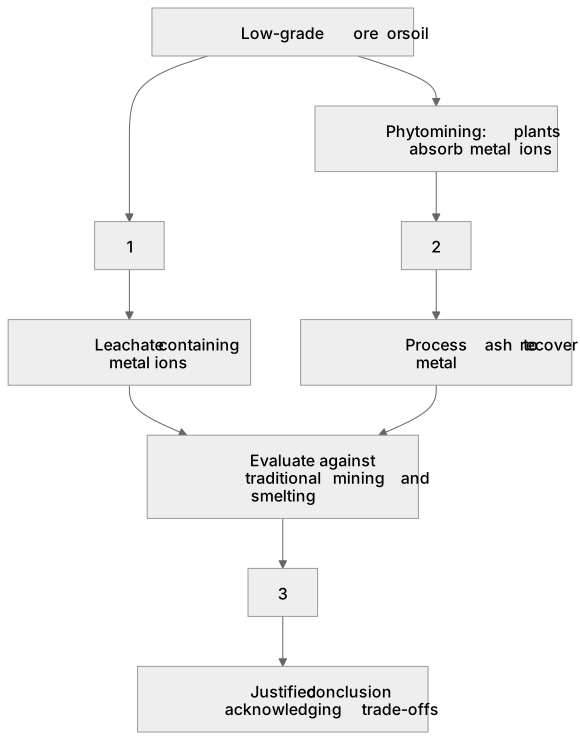
1Box 1
2Box 2
3Box 3
There is more to this lesson
The full lesson goes on to check your understanding and help you earn the marks. Create a free account to carry on, with your progress saved.
A week of Premium from your first lesson · Then the free plan continues · No card, no charge
Test your understanding of Alternative methods of extracting metals (HT only): Students should be able to evaluate alternative biological methods of metal extraction, given appropriate information.
Active recall beats re-reading. Take an instant quiz now to test what you’ve learned and lock it into long-term memory.
A week of Premium from your first lesson · Then the free plan continues · No card, no charge