AQA · GCSE · Combined Science
Course version: 8464 · Version from Sept 2018
Alternative methods of extracting metals (HT only): The metal compounds can be processed to obtain the metal. For example, copper can be obtained from solutions of copper compounds by displacement using scrap iron or by electrolysis.
Leachate from bioleaching contains dissolved metal compounds, not pure metal.
- 3 key terms
Study notes
From the checked teaching notes for this specification point.
The idea
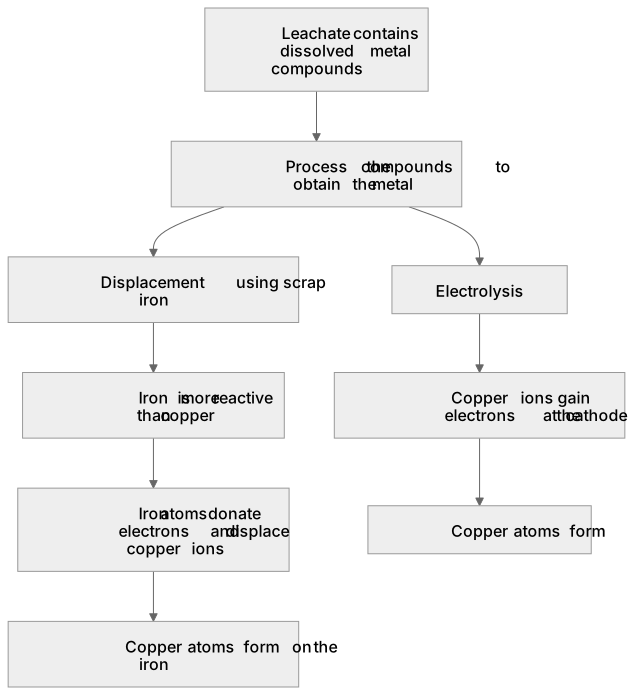
Leachate from bioleaching contains dissolved metal compounds, not pure metal. To obtain the metal, these compounds must be processed. For copper, two common methods are displacement using scrap iron and electrolysis. In displacement, scrap iron is added to the copper compound solution. Iron is more reactive than copper, so iron atoms donate electrons and displace copper ions: Fe(s) + Cu²⁺(aq) → Fe²⁺(aq) + Cu(s). Copper atoms form on the iron. In electrolysis, the solution is electrolysed; copper ions gain electrons at the cathode to form copper atoms. Both methods recover copper, but displacement uses cheap scrap iron, while electrolysis produces higher-purity copper. This processing step is assessed at Higher Tier only.
What earns the marks
- Leachate contains metal compounds that must be processed to obtain the pure metal.
- Displacement uses a more reactive metal, such as scrap iron, to displace copper from solution.
- The ionic equation Fe + Cu²⁺ → Fe²⁺ + Cu demonstrates iron displacing copper via electron transfer.
- Electrolysis of copper solutions deposits solid copper at the negative electrode (cathode).
- Displacement is a redox reaction where iron is oxidised and copper ions are reduced.
Common mistakes and how to put them right
Writing Cu + Fe²⁺ → Cu²⁺ + Fe.
Put it right by placing the more reactive iron on the left as the reducing agent, as copper cannot displace iron.
Confusing displacement with electrolysis.
Put it right by stating displacement uses a more reactive metal (scrap iron) while electrolysis uses an electrical current.
Forgetting that copper ions gain electrons at the cathode.
Put it right by stating reduction (gain of electrons) occurs at the cathode to form copper atoms.
Exam tips
- State explicitly that iron is more reactive than copper when explaining why displacement occurs.
- Remember that alternative methods of extracting metals, including these specific displacement and electrolysis reactions, are assessed at Higher Tier only.
- When writing the displacement equation, include state symbols to show solid iron reacting with aqueous copper ions.
Try the lesson
The start of the Alternative methods of extracting metals (HT only): The metal compounds can be processed to obtain the metal. For example, copper can be obtained from solutions of copper compounds by displacement using scrap iron or by electrolysis. lesson, made from checked teaching notes for this specification point.
Have a go first
Which method can be used to obtain solid copper metal from a solution of copper sulfate?
Listen
Leachate from bioleaching contains dissolved metal compounds, not pure metal. To obtain the metal, these compounds must be processed. For copper, two common methods are displacement using scrap iron and electrolysis. In displacement, scrap iron is added to the copper compound solution. Iron is more reactive than copper, so iron atoms donate electrons and displace copper ions: Fe(s) + Cu²⁺(aq) → Fe²⁺(aq) + Cu(s). Copper atoms form on the iron. In electrolysis, the solution is electrolysed; copper ions gain electrons at the cathode to form copper atoms. Both methods recover copper, but displacement uses cheap scrap iron, while electrolysis produces higher-purity copper. This processing step is assessed at Higher Tier only. A strong answer earns marks for these points. Leachate contains metal compounds that must be processed to obtain the pure metal. Displacement uses a more reactive metal, such as scrap iron, to displace copper from solution. The ionic equation Fe + Cu²⁺ → Fe²⁺ + Cu demonstrates iron displacing copper via electron transfer. Electrolysis of copper solutions deposits solid copper at the negative electrode (cathode). A common slip: Writing Cu + Fe²⁺ → Cu²⁺ + Fe. Instead, placing the more reactive iron on the left as the reducing agent, as copper cannot displace iron. Exam tip: State explicitly that iron is more reactive than copper when explaining why displacement occurs.
See it
Key words
Say what each word means before you turn the card.
Displacement
Try answering aloud or in your head before turning the card.
Electrolysis
Try answering aloud or in your head before turning the card.
Metal extraction
Try answering aloud or in your head before turning the card.
See every definition
- Displacement
- A method where a more reactive metal, such as scrap iron, is added to a solution of a metal compound to obtain the metal.
- Electrolysis
- A method where a solution of a metal compound is electrolysed so that metal ions gain electrons at the cathode to form metal atoms.
- Metal extraction
- Processing metal compounds, such as those in leachate, to obtain the pure metal.
Label the diagram
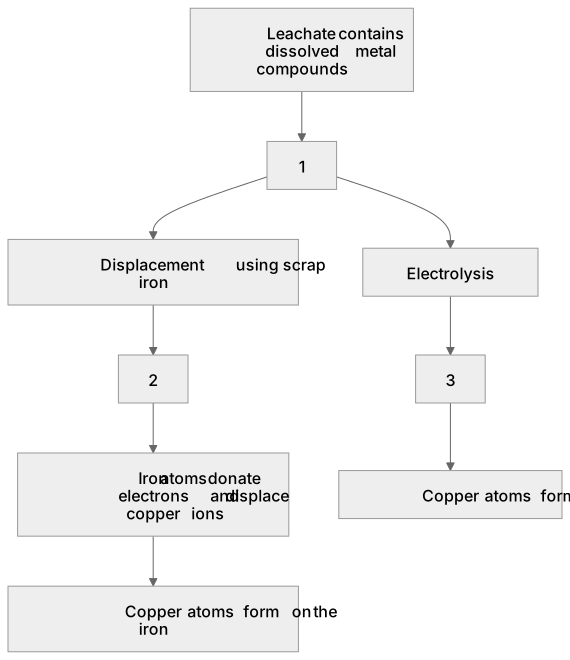
Some boxes have lost their names. Pick the right name for each number.
1Box 1
2Box 2
3Box 3
There is more to this lesson
The full lesson goes on to check your understanding and help you earn the marks. Create a free account to carry on, with your progress saved.
A week of Premium from your first lesson · Then the free plan continues · No card, no charge
Test your understanding of Alternative methods of extracting metals (HT only): The metal compounds can be processed to obtain the metal. For example, copper can be obtained from solutions of copper compounds by displacement using scrap iron or by electrolysis.
Active recall beats re-reading. Take an instant quiz now to test what you’ve learned and lock it into long-term memory.
A week of Premium from your first lesson · Then the free plan continues · No card, no charge