AQA · GCSE · Combined Science
Course version: 8464 · Version from Sept 2018
Antibiotics and painkillers: Painkillers and other medicines are used to treat the symptoms of disease but do not kill pathogens.
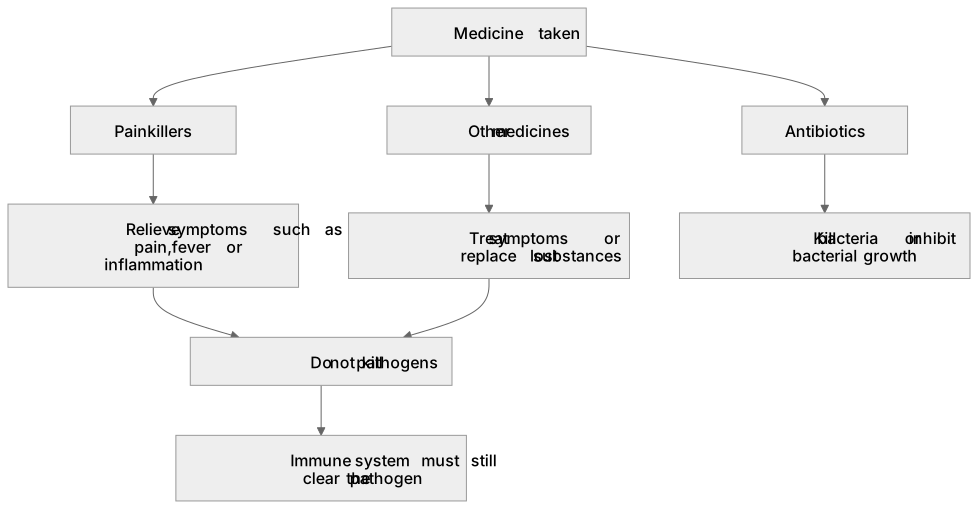
Painkillers such as paracetamol relieve symptoms like headache, fever or pain, but they do not destroy the pathogen causing the infection.
- 4 key terms
Study notes
From the checked teaching notes for this specification point.
The idea
Painkillers such as paracetamol relieve symptoms like headache, fever or pain, but they do not destroy the pathogen causing the infection. They act on the body's pain and temperature pathways rather than on bacteria or viruses, so the immune system must still clear the pathogen. Other medicines may also treat symptoms without killing pathogens; for example, oral rehydration solutions replace water and ions lost through diarrhoea, and antihistamines reduce allergic symptoms. This contrasts with antibiotics, which kill bacteria or stop their growth. A patient with a bacterial throat infection may take a painkiller to reduce soreness while an antibiotic kills the bacteria. Understanding this distinction prevents the misconception that any medicine that makes you feel better is fighting the infection itself.
What earns the marks
- Painkillers relieve symptoms such as pain, fever or inflammation but do not kill pathogens.
- Painkillers act on the body's symptoms rather than on the pathogen itself.
- Other medicines, such as oral rehydration solutions, treat symptoms or replace lost substances without killing pathogens.
- Antibiotics are different because they kill bacteria or inhibit bacterial growth.
- The immune system still has to destroy the pathogen when only symptom-relieving medicines are used.
- A named example, such as paracetamol for a headache, can illustrate symptom relief without pathogen destruction.
Common mistakes and how to put them right
Thinking that painkillers kill the pathogen because the patient feels better.
Put it right: Painkillers only relieve symptoms, and the immune system or another medicine must remove the pathogen.
Confusing painkillers with antibiotics.
Put it right: Antibiotics target bacteria, whereas painkillers do not kill bacteria or viruses.
Assuming all medicines are antibiotics.
Put it right: Medicines include symptom relievers such as painkillers and rehydration solutions as well as antibiotics.
Exam tips
- State clearly that painkillers treat symptoms and do not kill pathogens, using the word 'symptom' explicitly.
- Contrast painkillers with antibiotics in one sentence to show the difference in action.
- Use a named example such as paracetamol or ibuprofen to support the explanation.
Try the lesson
The start of the Antibiotics and painkillers: Painkillers and other medicines are used to treat the symptoms of disease but do not kill pathogens. lesson, made from checked teaching notes for this specification point.
Have a go first
What is the main purpose of painkillers when treating a disease?
See it
Key words
Say what each word means before you turn the card.
Painkillers
Try answering aloud or in your head before turning the card.
Antibiotics
Try answering aloud or in your head before turning the card.
Symptom relief versus pathogen destruction
Try answering aloud or in your head before turning the card.
Role of the immune system in clearing infection
Try answering aloud or in your head before turning the card.
See every definition
- Painkillers
- Medicines that treat the symptoms of disease but do not kill pathogens.
- Antibiotics
- Medicines that kill bacteria or stop their growth, unlike medicines that only relieve symptoms.
- Symptom relief versus pathogen destruction
- Medicines may treat symptoms such as pain or fever without killing the pathogen, so the immune system must still clear it.
- Role of the immune system in clearing infection
- When only symptom-relieving medicines are used, the immune system still has to destroy the pathogen.
Label the diagram
Some boxes have lost their names. Pick the right name for each number.
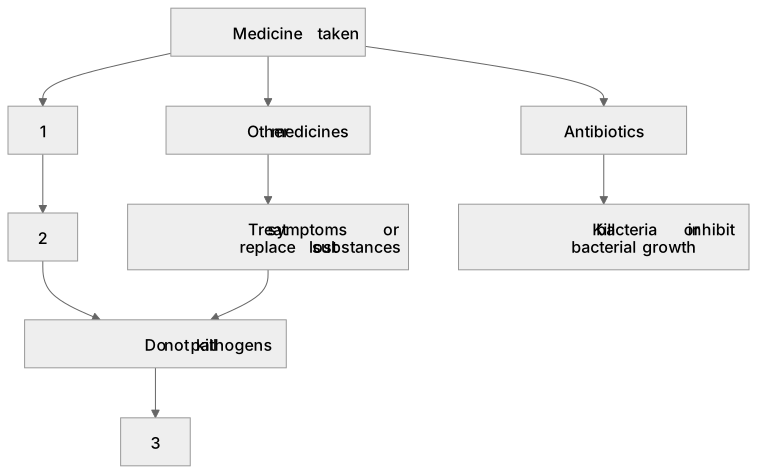
1Box 1
2Box 2
3Box 3
There is more to this lesson
The full lesson goes on to check your understanding and help you earn the marks. Create a free account to carry on, with your progress saved.
A week of Premium from your first lesson · Then the free plan continues · No card, no charge
Test your understanding of Antibiotics and painkillers: Painkillers and other medicines are used to treat the symptoms of disease but do not kill pathogens.
Active recall beats re-reading. Take an instant quiz now to test what you’ve learned and lock it into long-term memory.
A week of Premium from your first lesson · Then the free plan continues · No card, no charge