AQA · GCSE · Combined Science
Course version: 8464 · Version from Sept 2018
Antibiotics and painkillers: Students should be able to explain the use of antibiotics and other medicines in treating disease.
Antibiotics are medicines that treat bacterial infections by killing infective bacteria or stopping their growth inside the body.
- 3 key terms
Study notes
From the checked teaching notes for this specification point.
The idea
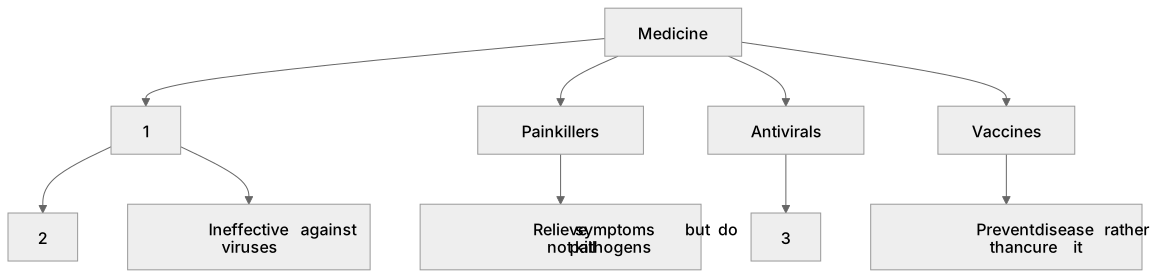
Antibiotics are medicines that treat bacterial infections by killing infective bacteria or stopping their growth inside the body. They are ineffective against viruses, so treating influenza or the common cold with penicillin wastes medicine and can encourage resistance. Other medicines treat disease in different ways: painkillers such as paracetamol relieve symptoms but do not kill pathogens, while antivirals slow viral replication and vaccines prevent disease rather than cure it. For example, a patient with a chest infection caused by Streptococcus bacteria may be prescribed amoxicillin, whereas a patient with a viral sore throat needs rest, fluids and symptom relief. Understanding the target of each medicine lets you explain why a treatment is chosen and why finishing a prescribed course matters.
What earns the marks
- Antibiotics kill infective bacteria inside the body or prevent their growth, so they cure bacterial disease rather than merely masking symptoms.
- Antibiotics do not kill viruses, so they cannot cure viral diseases such as influenza, measles or the common cold.
- Painkillers such as paracetamol or aspirin relieve pain and lower fever but do not destroy pathogens, so the immune system still has to clear the infection.
- Other medicines act differently: antivirals slow viral replication, and vaccines stimulate immunity to prevent disease rather than treat an existing infection.
- Choosing the correct medicine depends on identifying the type of pathogen, because a bacterial infection and a viral infection need different treatments.
- Completing a prescribed course of antibiotics reduces the chance that surviving bacteria multiply and spread, including resistant strains.
Common mistakes and how to put them right
Stating that antibiotics cure viral diseases such as influenza.
Put it right: Antibiotics act on bacteria, so viral infections need antivirals, rest and symptom relief instead.
Claiming painkillers kill the bacteria causing an infection.
Put it right: Painkillers only relieve symptoms such as pain and fever; they do not destroy pathogens.
Saying all medicines are antibiotics.
Put it right: Antibiotics are one class of medicine; antivirals, painkillers and vaccines work by different mechanisms.
Exam tips
- Name the pathogen type first, then name a suitable medicine and state its action, for example 'bacterial infection, so penicillin kills the bacteria'.
- Use the phrase 'relieves symptoms' for painkillers and 'kills bacteria' for antibiotics so the distinction is explicit.
- When asked to explain, link the medicine to the disease and to the reason it works, rather than listing medicine names alone.
Try the lesson
The start of the Antibiotics and painkillers: Students should be able to explain the use of antibiotics and other medicines in treating disease. lesson, made from checked teaching notes for this specification point.
Have a go first
Which type of medicine is used to treat a bacterial infection inside the body?
See it

Key words
Say what each word means before you turn the card.
Antibiotics
Try answering aloud or in your head before turning the card.
Painkillers
Try answering aloud or in your head before turning the card.
Vaccines
Try answering aloud or in your head before turning the card.
See every definition
- Antibiotics
- Medicines that treat bacterial infections by killing infective bacteria or stopping their growth inside the body.
- Painkillers
- Medicines that relieve symptoms such as pain and fever but do not kill pathogens, so the immune system still has to clear the infection.
- Vaccines
- Medicines that stimulate immunity to prevent disease rather than treat an existing infection.
Label the diagram
Some boxes have lost their names. Pick the right name for each number.
1Box 1
2Box 2
3Box 3
There is more to this lesson
The full lesson goes on to check your understanding and help you earn the marks. Create a free account to carry on, with your progress saved.
A week of Premium from your first lesson · Then the free plan continues · No card, no charge
Test your understanding of Antibiotics and painkillers: Students should be able to explain the use of antibiotics and other medicines in treating disease.
Active recall beats re-reading. Take an instant quiz now to test what you’ve learned and lock it into long-term memory.
A week of Premium from your first lesson · Then the free plan continues · No card, no charge