AQA · GCSE · Combined Science
Course version: 8464 · Version from Sept 2018
Antibiotics and painkillers: The use of antibiotics has greatly reduced deaths from infectious bacterial diseases. However, the emergence of strains resistant to antibiotics is of great concern.
Antibiotics are medicines that kill bacteria or stop them growing, so they treat infectious bacterial diseases such as tuberculosis and bacterial meningitis.
- 4 key terms
Study notes
From the checked teaching notes for this specification point.
The idea
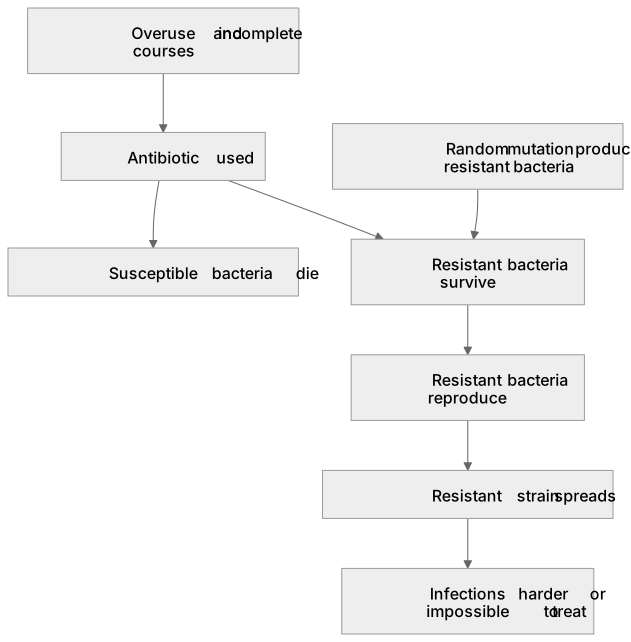
Antibiotics are medicines that kill bacteria or stop them growing, so they treat infectious bacterial diseases such as tuberculosis and bacterial meningitis. Their widespread use since the mid-20th century has greatly reduced deaths from these diseases. However, bacteria reproduce rapidly and mutations can produce strains that are not affected by an antibiotic. When antibiotics are used, susceptible bacteria die but resistant bacteria survive and reproduce, so the resistant strain spreads. Overuse and incomplete courses increase this selection pressure. This is of great concern because infections caused by resistant strains, such as MRSA, are harder to treat and may become untreatable.
What earns the marks
- Antibiotics kill bacteria or inhibit their growth, so they treat bacterial infections such as tuberculosis.
- Antibiotic use has greatly reduced deaths from infectious bacterial diseases.
- Random mutation can produce bacteria that are resistant to an antibiotic.
- When an antibiotic is used, susceptible bacteria die while resistant bacteria survive and reproduce, so the resistant strain increases in frequency.
- The emergence of resistant strains is of great concern because infections become harder or impossible to treat.
- Overuse of antibiotics and not completing a prescribed course increase the chance of resistance developing.
Common mistakes and how to put them right
Saying antibiotics kill viruses.
Put it right by stating that antibiotics act on bacteria, not viruses.
Thinking resistance develops because the body becomes used to the antibiotic.
Put it right by explaining that bacteria mutate and resistant strains are selected.
Believing a person can become resistant rather than the bacterial population.
Put it right by saying the bacterial strain becomes resistant.
Exam tips
- Use the phrase 'resistant strain' rather than saying a person is resistant.
- Link each point to natural selection: mutation, survival, reproduction and spread.
- Give a named example such as MRSA to show the concern is real.
Try the lesson
The start of the Antibiotics and painkillers: The use of antibiotics has greatly reduced deaths from infectious bacterial diseases. However, the emergence of strains resistant to antibiotics is of great concern. lesson, made from checked teaching notes for this specification point.
Have a go first
What type of pathogen do antibiotics kill?
Listen
Antibiotics are medicines that kill bacteria or stop them growing, so they treat infectious bacterial diseases such as tuberculosis and bacterial meningitis. Their widespread use since the mid-20th century has greatly reduced deaths from these diseases. However, bacteria reproduce rapidly and mutations can produce strains that are not affected by an antibiotic. When antibiotics are used, susceptible bacteria die but resistant bacteria survive and reproduce, so the resistant strain spreads. Overuse and incomplete courses increase this selection pressure. This is of great concern because infections caused by resistant strains, such as MRSA, are harder to treat and may become untreatable. A strong answer earns marks for these points. Antibiotics kill bacteria or inhibit their growth, so they treat bacterial infections such as tuberculosis. Antibiotic use has greatly reduced deaths from infectious bacterial diseases. Random mutation can produce bacteria that are resistant to an antibiotic. When an antibiotic is used, susceptible bacteria die while resistant bacteria survive and reproduce, so the resistant strain increases in frequency. A common slip: Saying antibiotics kill viruses. Instead, stating that antibiotics act on bacteria, not viruses. Exam tip: Use the phrase 'resistant strain' rather than saying a person is resistant.
See it
Key words
Say what each word means before you turn the card.
Antibiotics
Try answering aloud or in your head before turning the card.
Resistant strain
Try answering aloud or in your head before turning the card.
Natural selection of resistant bacteria
Try answering aloud or in your head before turning the card.
Overuse
Try answering aloud or in your head before turning the card.
See every definition
- Antibiotics
- Medicines that kill bacteria or stop them growing, so they treat infectious bacterial diseases.
- Resistant strain
- Bacteria that are not affected by an antibiotic, produced by mutation, which survive and reproduce when the antibiotic is used.
- Natural selection of resistant bacteria
- When an antibiotic is used, susceptible bacteria die while resistant bacteria survive and reproduce, so the resistant strain spreads.
- Overuse
- Using antibiotics too much, which increases the selection pressure so resistant strains spread.
Label the diagram
Some boxes have lost their names. Pick the right name for each number.
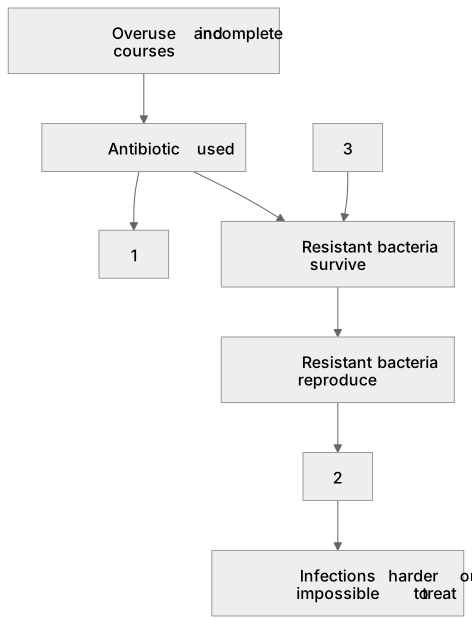
1Box 1
2Box 2
3Box 3
There is more to this lesson
The full lesson goes on to check your understanding and help you earn the marks. Create a free account to carry on, with your progress saved.
A week of Premium from your first lesson · Then the free plan continues · No card, no charge
Test your understanding of Antibiotics and painkillers: The use of antibiotics has greatly reduced deaths from infectious bacterial diseases. However, the emergence of strains resistant to antibiotics is of great concern.
Active recall beats re-reading. Take an instant quiz now to test what you’ve learned and lock it into long-term memory.
A week of Premium from your first lesson · Then the free plan continues · No card, no charge