AQA · GCSE · Combined Science
Course version: 8464 · Version from Sept 2018
Atoms, elements and compounds: name compounds of these elements from given formulae or symbol equations
This skill requires reading a chemical formula or symbol equation to give the correct compound name.
Study notes
From the checked teaching notes for this specification point.
The idea
This skill requires reading a chemical formula or symbol equation to give the correct compound name. You use element names and symbols, including the first 20 elements, Groups 1 and 7, and transition metals. For ionic compounds like NaCl, name it sodium chloride. Transition metals may need Roman numerals to show valency, such as iron(II) chloride for FeCl₂. For covalent compounds, Greek prefixes indicate the number of atoms: 'mono-' for one, 'di-' for two, and 'tri-' for three. For example, CO₂ is carbon dioxide. In equations like 2Mg + O₂ → 2MgO, identify MgO as magnesium oxide. Split the formula into symbols, name the first element, then the second, applying prefixes or numerals where appropriate.
What earns the marks
- Identifies each element symbol in a given formula, for example Na and Cl in NaCl or Mg and O in MgO.
- Names simple two-element ionic compounds correctly without prefixes, for example sodium chloride from NaCl.
- Uses prefixes such as di- and tri- correctly for covalent compounds, and mono- for one atom, for example carbon monoxide from CO.
- Applies Roman numerals to indicate the valency of transition metals, for example iron(II) chloride for FeCl₂ or copper(II) sulfate for CuSO₄.
- Names compounds from symbol equations by identifying the formula of each product, distinguishing compounds from elements.
Common mistakes and how to put them right
Applying Greek prefixes to ionic compounds, such as calling MgCl₂ magnesium dichloride.
Put it right: Name it magnesium chloride as prefixes are typically for covalent compounds.
Misunderstanding the prefix 'mono-', thinking it means more than one atom.
Put it right: Recognise 'mono-' means exactly one atom, as in carbon monoxide.
Omitting Roman numerals for transition metals with variable valency, such as calling FeCl₂ iron chloride.
Put it right: Write iron(II) chloride to specify the +2 charge on the iron ion.
Exam tips
- Check if the compound is ionic or covalent before naming; only use prefixes like di- or tri- for covalent compounds.
- When naming compounds containing transition metals like iron or copper, always determine the charge of the metal ion and include it as a Roman numeral in brackets.
Try the lesson
The start of the Atoms, elements and compounds: name compounds of these elements from given formulae or symbol equations lesson, made from checked teaching notes for this specification point.
Have a go first
A compound has the formula NaCl. What is the name of this compound?
See it
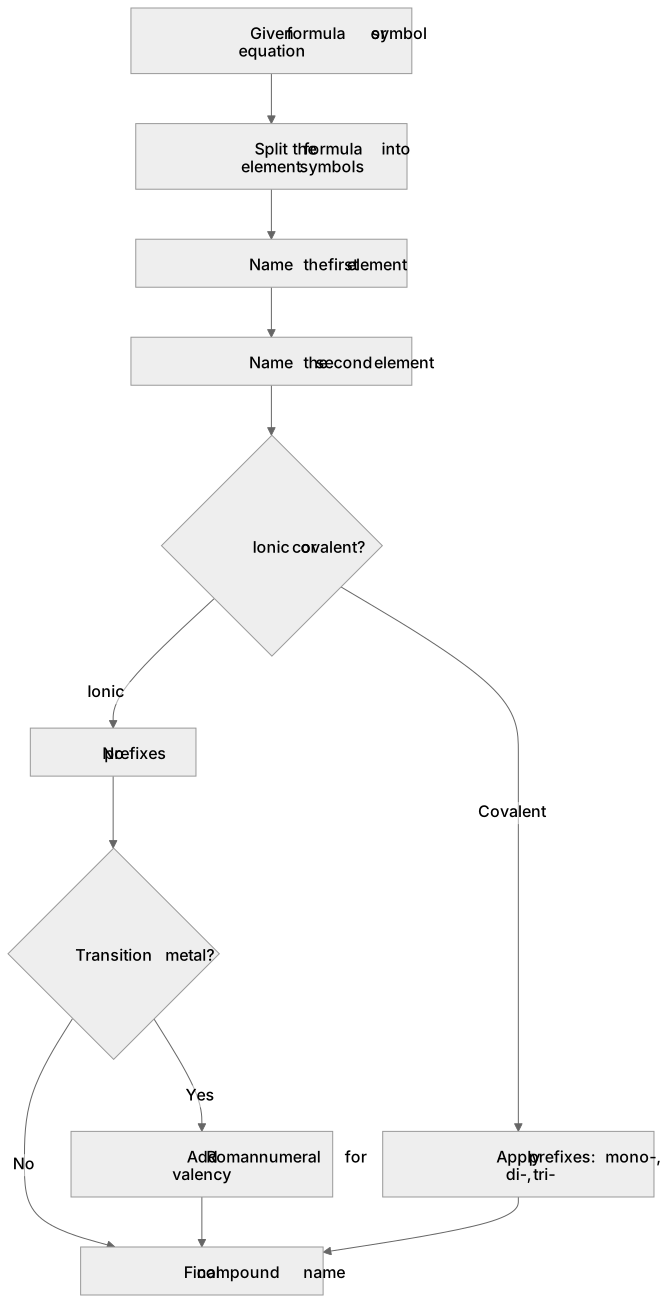
Label the diagram
Some boxes have lost their names. Pick the right name for each number.
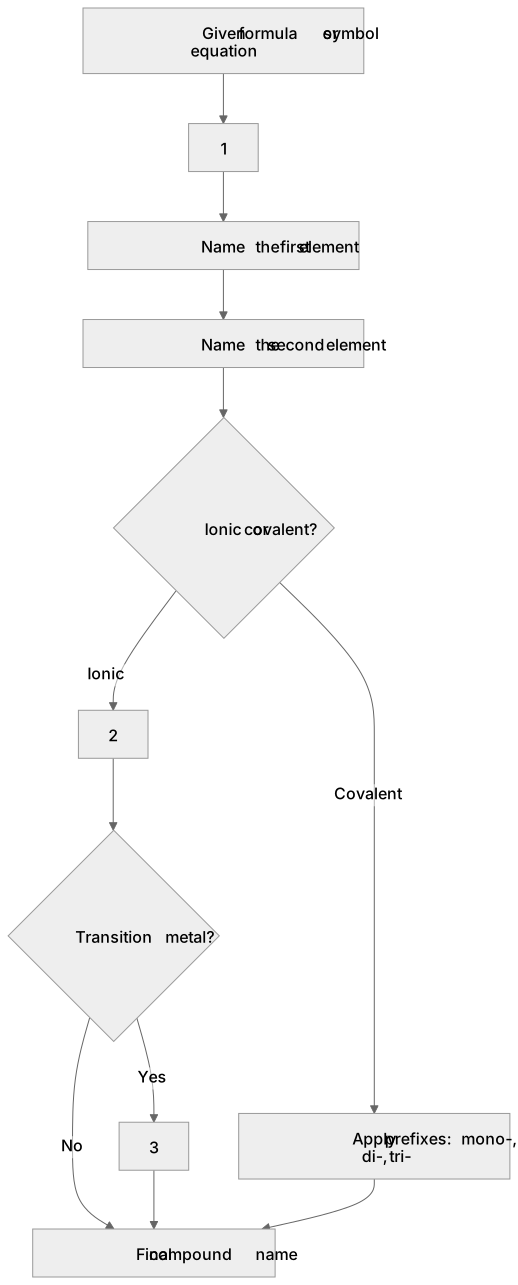
1Box 1
2Box 2
3Box 3
There is more to this lesson
The full lesson goes on to check your understanding and help you earn the marks. Create a free account to carry on, with your progress saved.
A week of Premium from your first lesson · Then the free plan continues · No card, no charge
Test your understanding of Atoms, elements and compounds: name compounds of these elements from given formulae or symbol equations
Active recall beats re-reading. Take an instant quiz now to test what you’ve learned and lock it into long-term memory.
A week of Premium from your first lesson · Then the free plan continues · No card, no charge