AQA · GCSE · Combined Science
Course version: 8464 · Version from Sept 2018
Biodiversity: Biodiversity is the variety of all the different species of organisms on earth, or within an ecosystem.
Biodiversity means the variety of all the different species of organisms on earth, or within an ecosystem.
- 3 key terms
Study notes
From the checked teaching notes for this specification point.
The idea
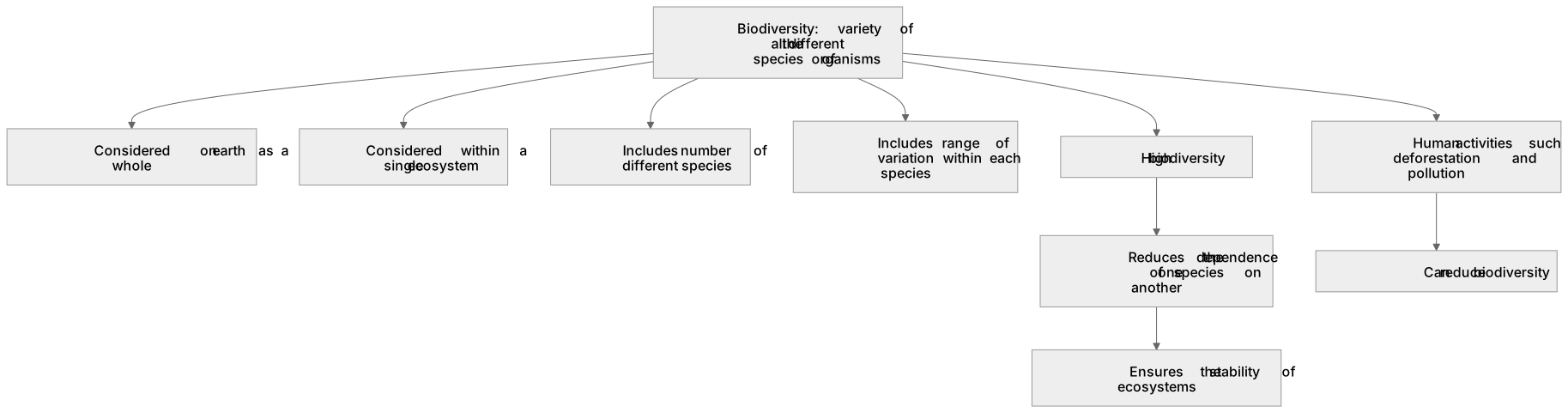
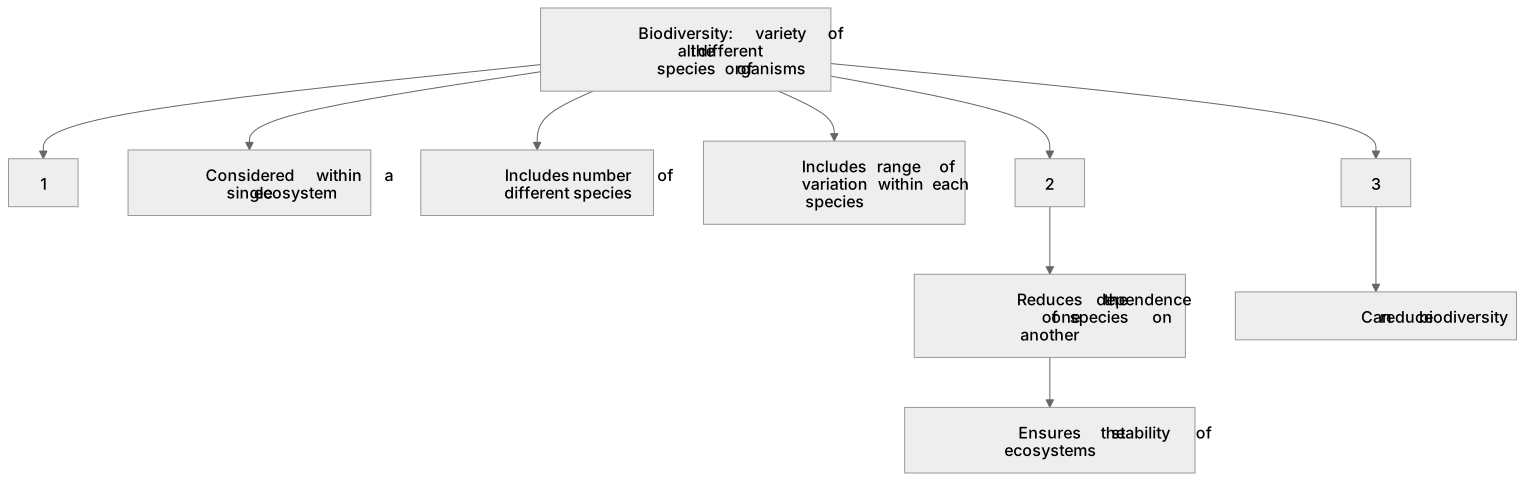
Biodiversity means the variety of all the different species of organisms on earth, or within an ecosystem. It includes the number of different species present and the range of variation within each species. A woodland with many plant, insect, bird and fungal species has high biodiversity, while a field growing only one crop has low biodiversity. Biodiversity can be considered at different scales: the whole earth, a biome, or a single ecosystem such as a pond. High biodiversity ensures the stability of ecosystems by reducing the dependence of one species on another for food, shelter and the maintenance of the physical environment, so the loss of one species has less impact.
What earns the marks
- Biodiversity is the variety of all the different species of organisms.
- High biodiversity ensures ecosystem stability by reducing the dependence of one species on another.
- Human activities such as deforestation and pollution can reduce biodiversity.
Common mistakes and how to put them right
Defining biodiversity as simply the number of organisms.
Put it right: It is the variety of different species, not the total count of individuals.
Thinking biodiversity applies only to the whole earth.
Put it right: It can also describe a single ecosystem such as a pond or woodland.
Stating that high biodiversity increases species dependence.
Put it right: High biodiversity actually reduces the dependence of one species on another, increasing stability.
Exam tips
- Use the phrase 'variety of all the different species' to secure the definition mark.
- When explaining stability, explicitly state that high biodiversity reduces the dependence of one species on another.
Try the lesson
The start of the Biodiversity: Biodiversity is the variety of all the different species of organisms on earth, or within an ecosystem. lesson, made from checked teaching notes for this specification point.
Have a go first
A student is studying the biodiversity of a local pond. Which of the following is the correct definition of biodiversity in this ecosystem?
See it
Key words
Say what each word means before you turn the card.
Biodiversity
Try answering aloud or in your head before turning the card.
Ecosystem stability
Try answering aloud or in your head before turning the card.
Human impact on biodiversity
Try answering aloud or in your head before turning the card.
See every definition
- Biodiversity
- The variety of all the different species of organisms on earth, or within an ecosystem.
- Ecosystem stability
- Ensured by high biodiversity, which reduces the dependence of one species on another for food, shelter and the maintenance of the physical environment.
- Human impact on biodiversity
- Human activities such as deforestation and pollution can reduce biodiversity.
Label the diagram
Some boxes have lost their names. Pick the right name for each number.
1Box 1
2Box 2
3Box 3
There is more to this lesson
The full lesson goes on to check your understanding and help you earn the marks. Create a free account to carry on, with your progress saved.
A week of Premium from your first lesson · Then the free plan continues · No card, no charge
Test your understanding of Biodiversity: Biodiversity is the variety of all the different species of organisms on earth, or within an ecosystem.
Active recall beats re-reading. Take an instant quiz now to test what you’ve learned and lock it into long-term memory.
A week of Premium from your first lesson · Then the free plan continues · No card, no charge