AQA · GCSE · Combined Science
Course version: 8464 · Version from Sept 2018
Biotic factors: new pathogens
A pathogen is a microorganism that causes disease, such as a bacterium, virus, fungus or protist.
- 4 key terms
Study notes
From the checked teaching notes for this specification point.
The idea
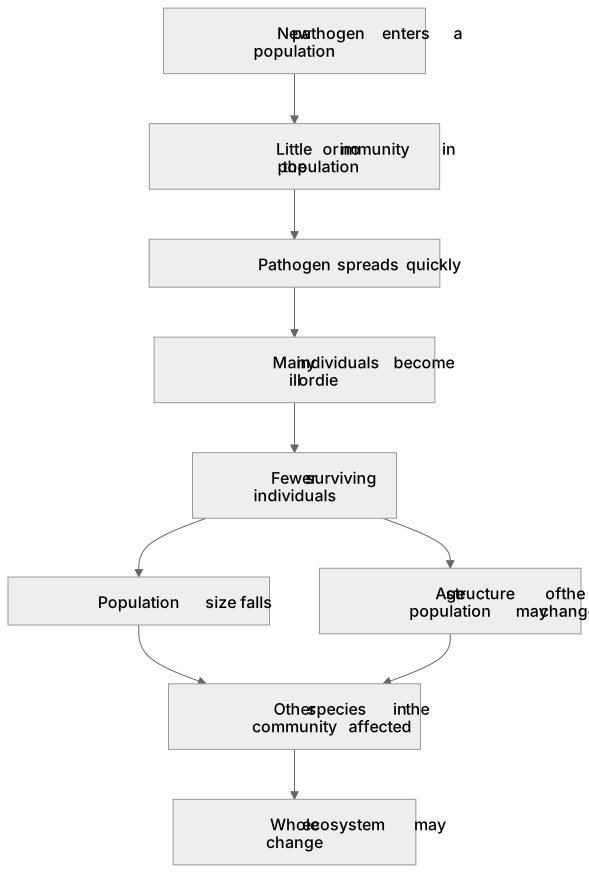
A pathogen is a microorganism that causes disease, such as a bacterium, virus, fungus or protist. When a new pathogen arrives in a population, it is a biotic factor because it is a living (or virus) influence from another organism. If individuals have no inherited or acquired immunity, the pathogen can spread rapidly, cause illness and reduce population numbers. For example, if a new virus enters a rabbit population, many rabbits may die, so fewer compete for food and the population size falls. The effect depends on how easily the pathogen is transmitted, how harmful it is and how many individuals are resistant. New pathogens therefore change population sizes and can also change the distribution of species in a habitat.
What earns the marks
- A pathogen is a disease-causing microorganism, including bacteria, viruses, fungi and protists.
- A new pathogen is a biotic factor because it comes from another living organism or virus and affects the population.
- If the population has little or no immunity, the pathogen can spread quickly and cause many individuals to become ill or die.
- A fall in the number of surviving individuals reduces population size and may change the age structure of the population.
- The size of the effect depends on transmission rate, virulence and the proportion of resistant individuals.
- New pathogens can also affect other species in the community, for example predators or competitors, so the whole ecosystem may change.
Common mistakes and how to put them right
Calling a pathogen an abiotic factor.
Put it right by stating that pathogens are living organisms or viruses and are therefore biotic.
Assuming all pathogens kill their host.
Put it right by explaining that some cause illness but the host survives, so the effect on population size varies.
Confusing a pathogen with a non-infectious cause of disease such as a vitamin deficiency.
Put it right by defining a pathogen as a disease-causing microorganism.
Exam tips
- Link the pathogen to a named population and state the effect on numbers, for example fewer rabbits survive to breed.
- Use the term immunity when explaining why a new pathogen can spread quickly through a population.
- If asked to suggest a biotic factor, name the pathogen and explain its effect rather than just writing disease.
Try the lesson
The start of the Biotic factors: new pathogens lesson, made from checked teaching notes for this specification point.
Have a go first
A disease spreads quickly through a population of rabbits because the rabbits have not met that disease before. What name is given to a disease-causing organism that arrives in a population for the first time?
See it
Key words
Say what each word means before you turn the card.
Pathogen
Try answering aloud or in your head before turning the card.
Biotic factor
Try answering aloud or in your head before turning the card.
Immunity
Try answering aloud or in your head before turning the card.
Population size
Try answering aloud or in your head before turning the card.
See every definition
- Pathogen
- A microorganism that causes disease, such as a bacterium, virus, fungus or protist.
- Biotic factor
- A living (or virus) influence from another organism, such as a new pathogen arriving in a population.
- Immunity
- Inherited or acquired protection that, when absent, allows a pathogen to spread rapidly and cause illness.
- Population size
- The number of individuals, which falls when a pathogen causes many individuals to become ill or die.
Label the diagram
Some boxes have lost their names. Pick the right name for each number.
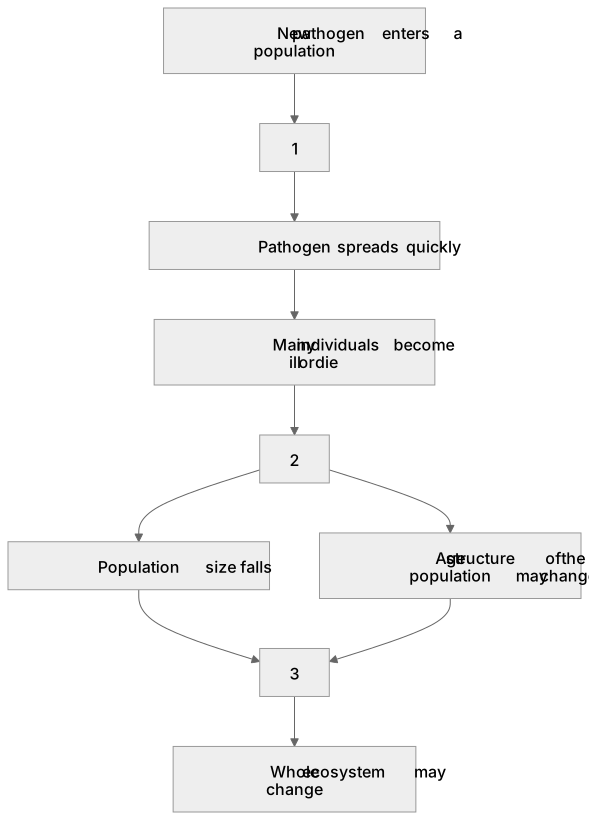
1Box 1
2Box 2
3Box 3
There is more to this lesson
The full lesson goes on to check your understanding and help you earn the marks. Create a free account to carry on, with your progress saved.
A week of Premium from your first lesson · Then the free plan continues · No card, no charge
Test your understanding of Biotic factors: new pathogens
Active recall beats re-reading. Take an instant quiz now to test what you’ve learned and lock it into long-term memory.
A week of Premium from your first lesson · Then the free plan continues · No card, no charge