AQA · GCSE · Combined Science
Course version: 8464 · Version from Sept 2018
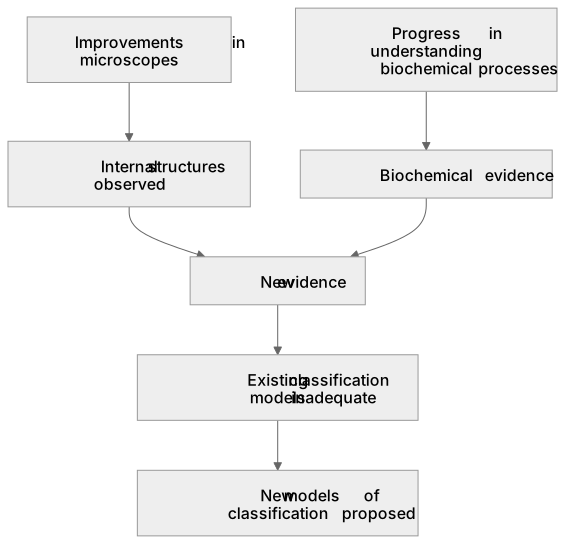
Classification of living organisms: As evidence of internal structures became more developed due to improvements in microscopes, and the understanding of biochemical processes progressed, new models of classification were proposed.
Classification systems are human models that change as technology and knowledge improve.
Study notes
From the checked teaching notes for this specification point.
The idea
Classification systems are human models that change as technology and knowledge improve. Early microscopes revealed cell structure, so organisms once grouped only by visible features could be separated by internal detail. Later, biochemistry showed differences in molecules such as proteins and DNA, revealing relationships invisible under a lens. For example, bacteria and archaea look similar under a light microscope, but chemical analysis of their cell membranes and enzymes shows major differences, so a new model was needed. Thus evidence drives classification: better microscopes and biochemical techniques produce new data, and scientists revise the groups to fit that evidence. The statement links technological improvement, biochemical understanding and the proposal of new classification models.
What earns the marks
- Improvements in microscopes increased magnification and resolution, allowing scientists to observe internal structures such as cells, nuclei and organelles.
- New observations of internal structures provided evidence that some organisms previously grouped together were structurally different.
- Progress in understanding biochemical processes, including analysis of molecules such as DNA, proteins and cell membrane chemicals, provided additional evidence about relationships.
- As evidence accumulated, existing classification models became inadequate and new models were proposed to fit the new data.
- Classification is a scientific model that is revised when new evidence conflicts with the existing system, rather than being fixed permanently.
Common mistakes and how to put them right
Thinking classification systems are permanent and never change.
Put it right: They are models that are revised as new evidence becomes available.
Believing microscopes alone caused all classification changes.
Put it right: Biochemical evidence, such as DNA and protein analysis, also drove new models.
Assuming organisms that look similar must be closely related.
Put it right: Internal structure and biochemical evidence can show they are only distantly related.
Exam tips
- Link each change in classification to a specific type of new evidence, such as improved microscope images or biochemical data.
- Use the phrase ‘new evidence led to a new model’ to show cause and effect clearly.
- When describing microscope improvements, mention increased magnification and resolution rather than just ‘better microscopes’.
Try the lesson
The start of the Classification of living organisms: As evidence of internal structures became more developed due to improvements in microscopes, and the understanding of biochemical processes progressed, new models of classification were proposed. lesson, made from checked teaching notes for this specification point.
Have a go first
Which piece of equipment allowed scientists to see the internal structures of cells in more detail, leading to new classification models?
See it
Label the diagram
Some boxes have lost their names. Pick the right name for each number.
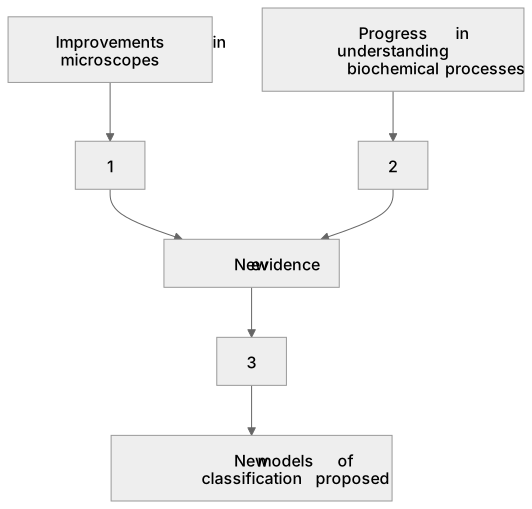
1Box 1
2Box 2
3Box 3
There is more to this lesson
The full lesson goes on to check your understanding and help you earn the marks. Create a free account to carry on, with your progress saved.
A week of Premium from your first lesson · Then the free plan continues · No card, no charge
Test your understanding of Classification of living organisms: As evidence of internal structures became more developed due to improvements in microscopes, and the understanding of biochemical processes progressed, new models of classification were proposed.
Active recall beats re-reading. Take an instant quiz now to test what you’ve learned and lock it into long-term memory.
A week of Premium from your first lesson · Then the free plan continues · No card, no charge