AQA · GCSE · Combined Science
Course version: 8464 · Version from Sept 2018
Contraception: barrier methods such as condoms and diaphragms which prevent the sperm reaching an egg
Barrier contraception works physically: it places a latex or silicone barrier between the penis and the vagina, or across the cervix, so that sperm cannot swim to meet the egg.
Study notes
From the checked teaching notes for this specification point.
The idea
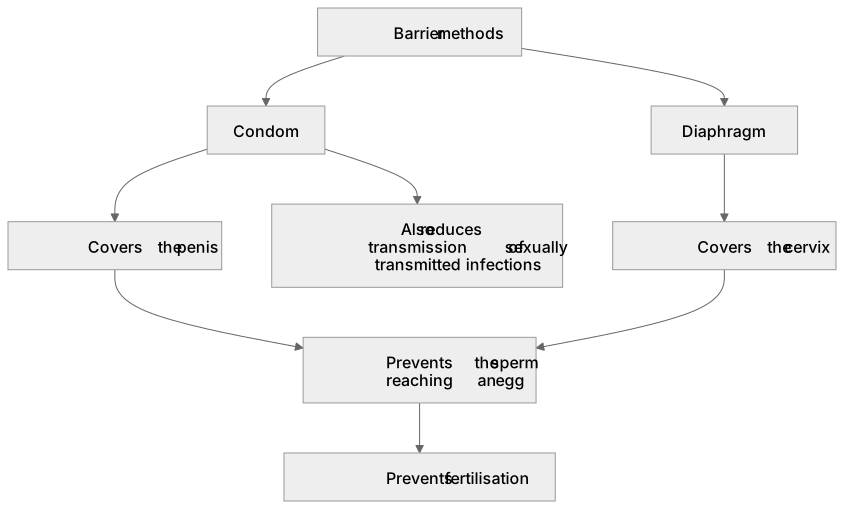
Barrier contraception works physically: it places a latex or silicone barrier between the penis and the vagina, or across the cervix, so that sperm cannot swim to meet the egg. A condom is rolled onto the erect penis and also reduces the transmission of sexually transmitted infections because it stops fluids mixing. A diaphragm is a shallow dome inserted into the vagina before intercourse to cover the cervix, usually with spermicide. Both are non-hormonal, so they do not alter the menstrual cycle, and they act only during that act of intercourse. Their effectiveness depends on correct and consistent use: a torn condom or a diaphragm left in place for too short a time allows sperm through. This is why barrier methods are described as preventing fertilisation rather than preventing implantation.
What earns the marks
- State that barrier methods are physical, non-hormonal methods that stop sperm and egg meeting.
- Name condoms and diaphragms as examples and describe where each is placed.
- Explain that a condom covers the penis and a diaphragm covers the cervix, so sperm cannot reach the egg.
- Link correct use to effectiveness, for example a split condom or a diaphragm inserted too late allows sperm through.
- Recognise that condoms also reduce the spread of sexually transmitted infections, whereas diaphragms do not.
- Compare barrier methods with hormonal methods, noting that barriers do not change the menstrual cycle.
Common mistakes and how to put them right
Saying barrier methods kill sperm.
Put it right: They physically block sperm, although a diaphragm may be used with a spermicide that does kill sperm.
Confusing a diaphragm with a contraceptive pill.
Put it right: A diaphragm is a physical barrier placed over the cervix, while the pill is hormonal and taken daily.
Claiming barrier methods prevent implantation.
Put it right: They prevent fertilisation by stopping sperm reaching the egg, so no embryo forms.
Exam tips
- Use the phrase 'prevents the sperm reaching the egg' when explaining how a barrier method works.
- Give one named example and its position, such as 'a diaphragm covers the cervix', to show precise knowledge.
- If asked to evaluate, mention that barrier methods do not affect hormones and that condoms also reduce STI transmission.
Try the lesson
The start of the Contraception: barrier methods such as condoms and diaphragms which prevent the sperm reaching an egg lesson, made from checked teaching notes for this specification point.
Have a go first
What is the main way that a condom prevents pregnancy?
See it
Label the diagram
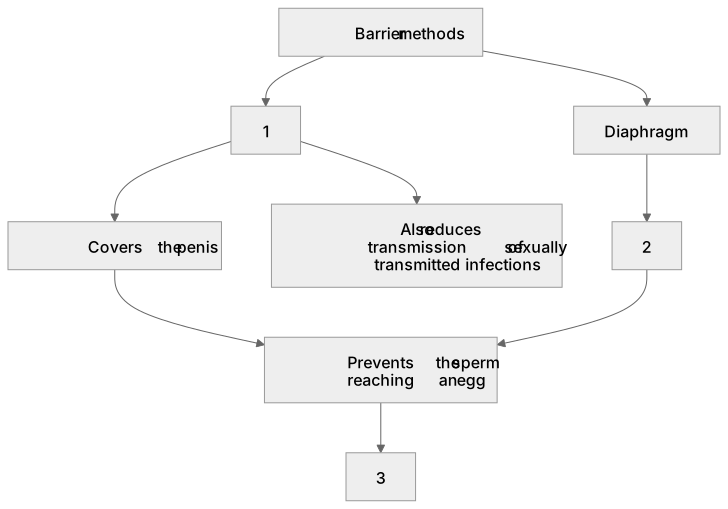
Some boxes have lost their names. Pick the right name for each number.
1Box 1
2Box 2
3Box 3
There is more to this lesson
The full lesson goes on to check your understanding and help you earn the marks. Create a free account to carry on, with your progress saved.
7 days Premium · Then the free plan continues · No card, no charge
Test your understanding of Contraception: barrier methods such as condoms and diaphragms which prevent the sperm reaching an egg
Active recall beats re-reading. Take an instant quiz now to test what you’ve learned and lock it into long-term memory.
7 days Premium · Then the free plan continues · No card, no charge